JOURNAL / FIELD NOTES
Notes from the workshop
Material, process and the practical side of living with heavy objects. Written for architects, collectors and anyone specifying one of these into a room.
Lexicon — 27 terms →LATEST NOTE
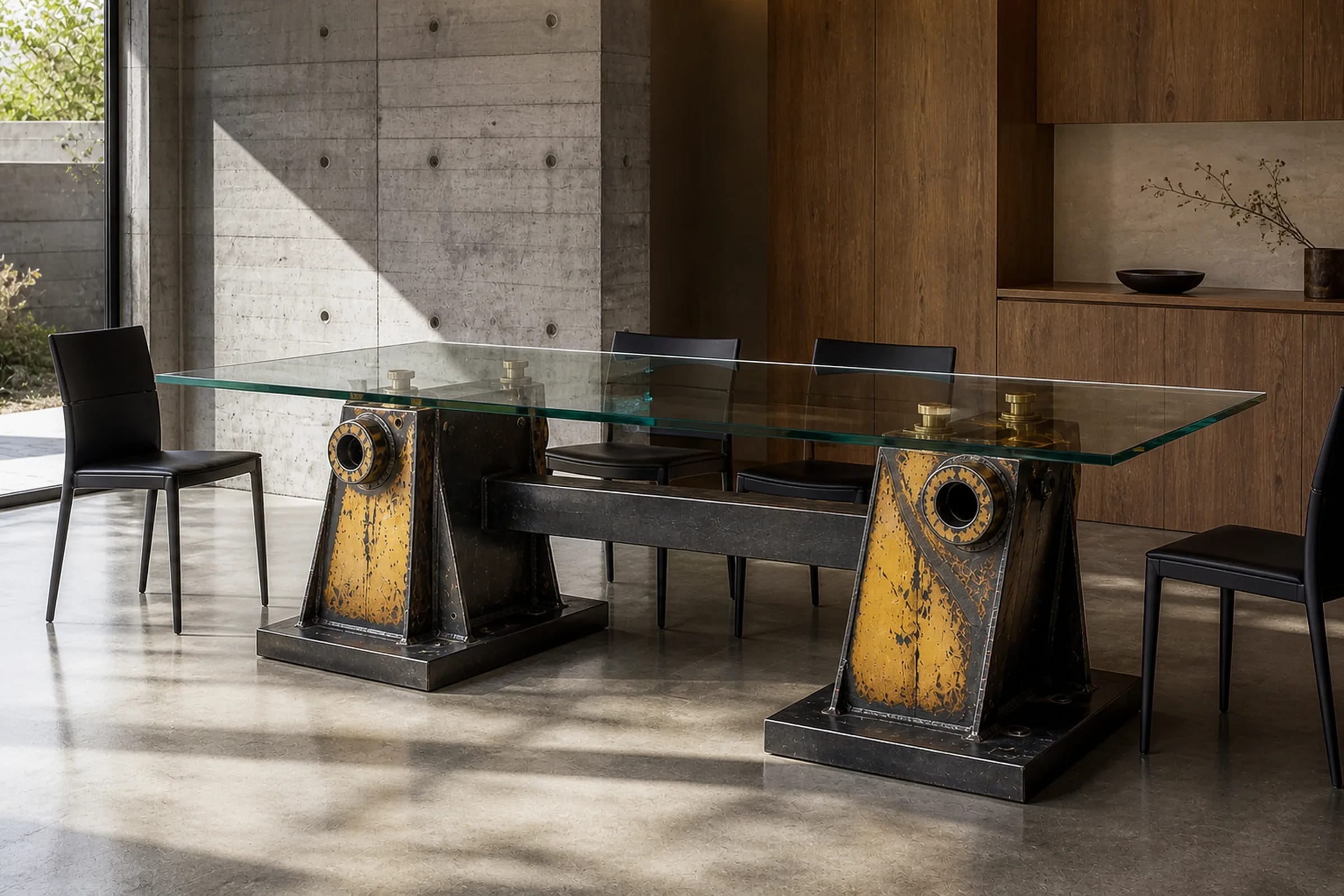
Brutalist furniture: what it is, and what it is not
Brutalism is a set of rules about honesty in material and structure, not a colour palette. Knowing them tells you why some heavy furniture reads as serious and some reads as costume.
ALL NOTES
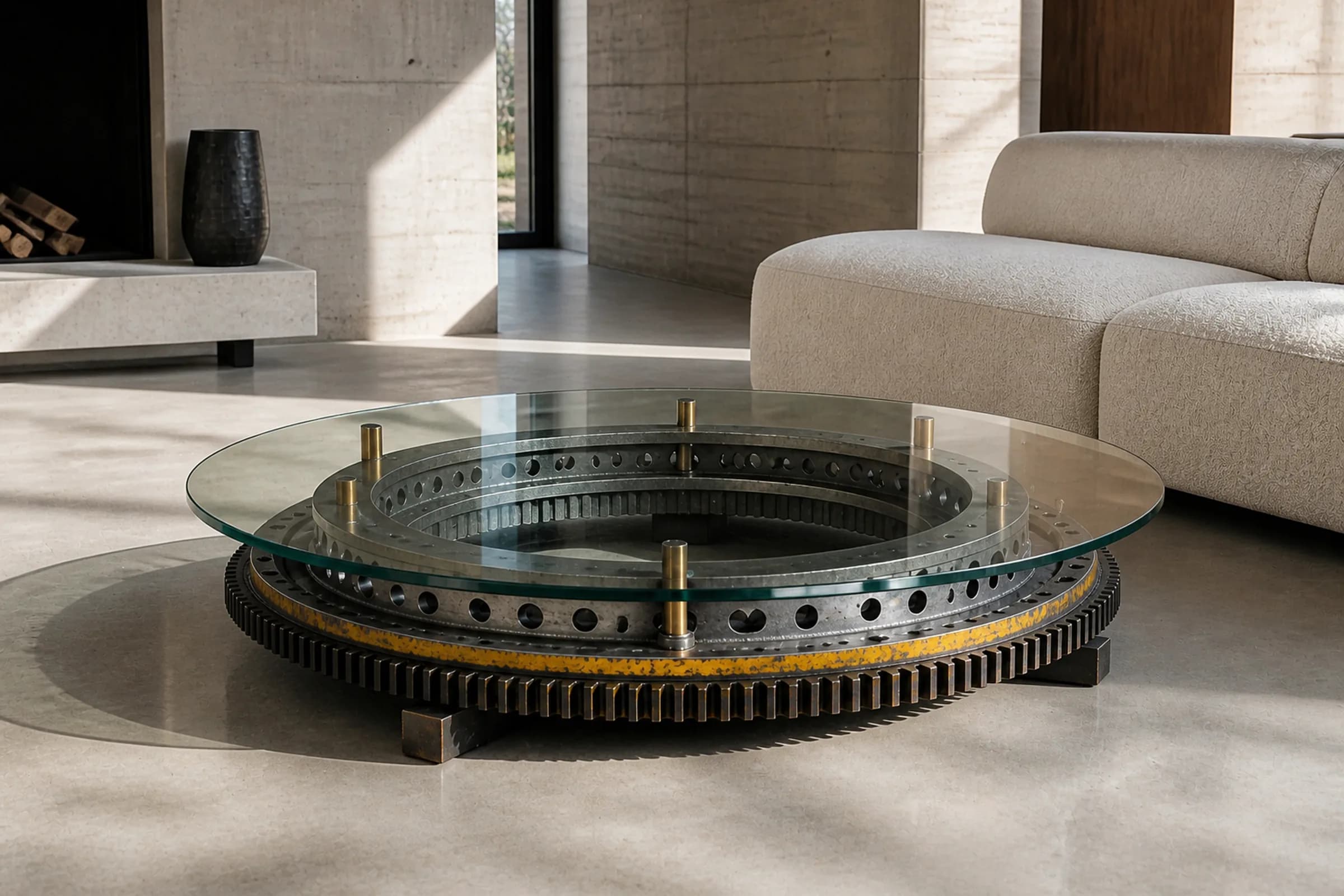
Will your floor take it? Reading load limits before you commit
A residential floor is designed around 150–200 kg/m² of live load. A heavy object concentrates its mass into four small feet. Here is how to check the difference before anything is delivered.
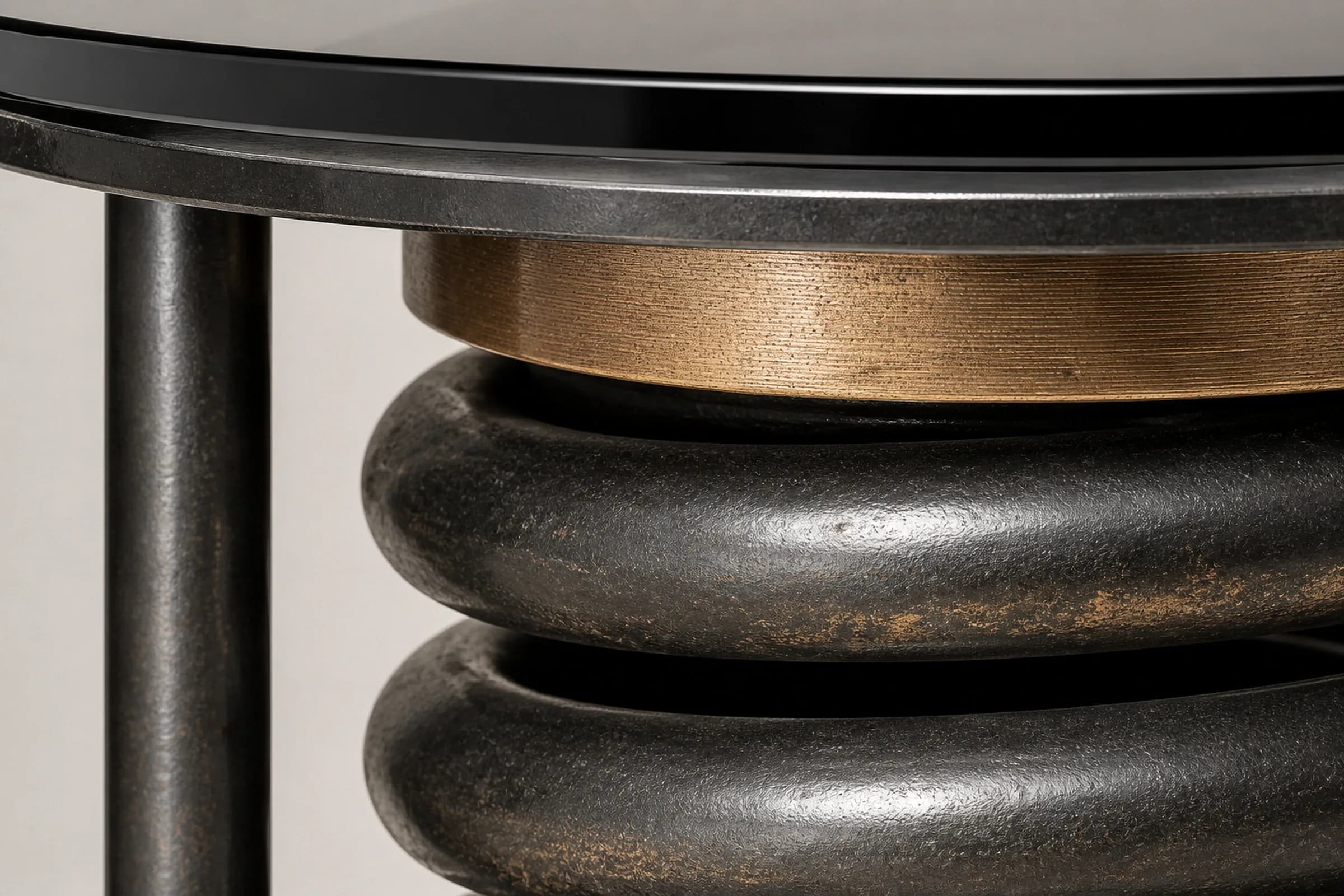
Upcycled, reclaimed, salvaged, recycled: what the words mean
Four words are used interchangeably in furniture listings and they do not mean the same thing. The differences decide what you are actually buying.
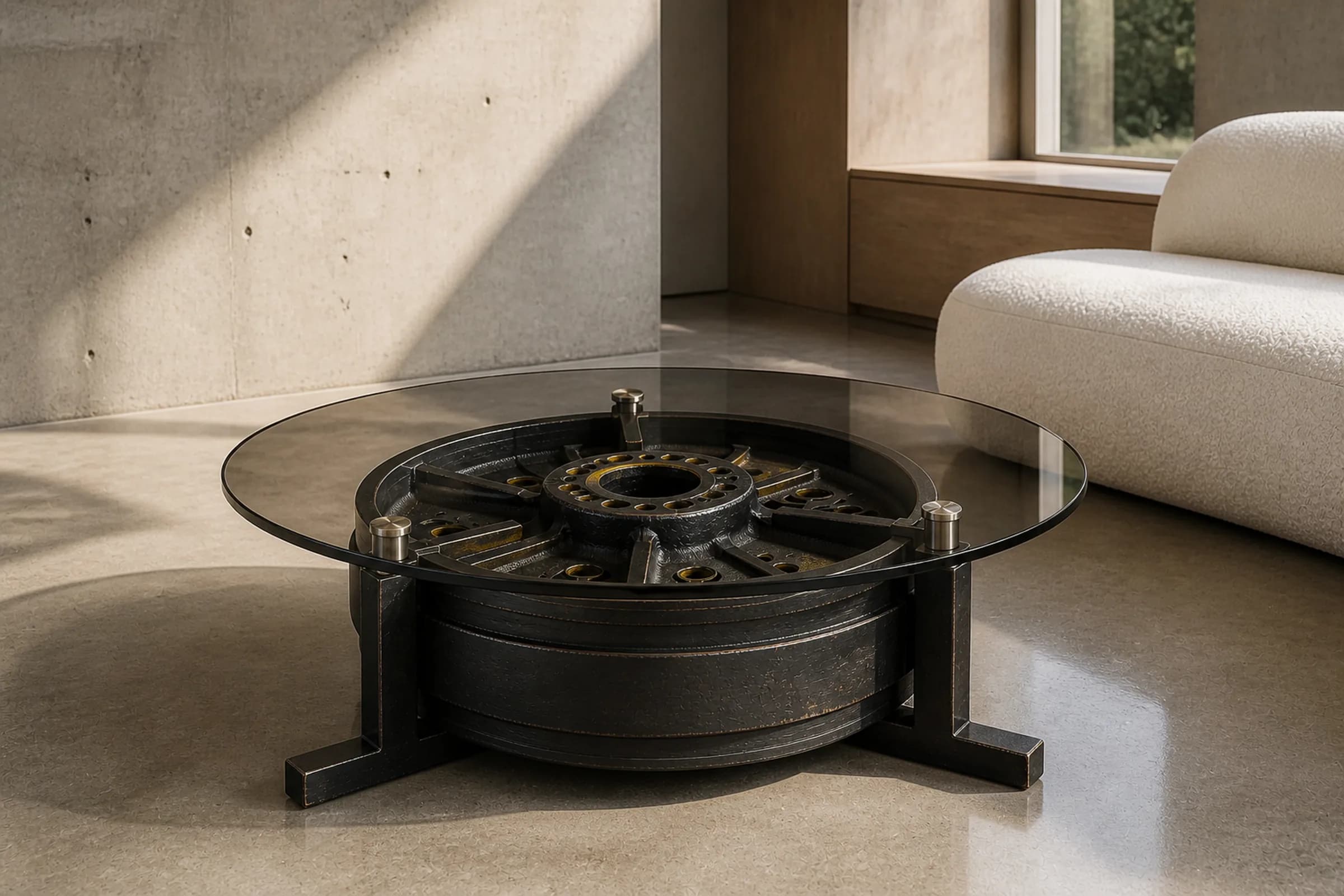
How to style a coffee table that is already the subject
Most styling advice assumes the table is a stage. When the table is the sculpture, almost all of it is wrong — and the correct answer is usually to put less on it.
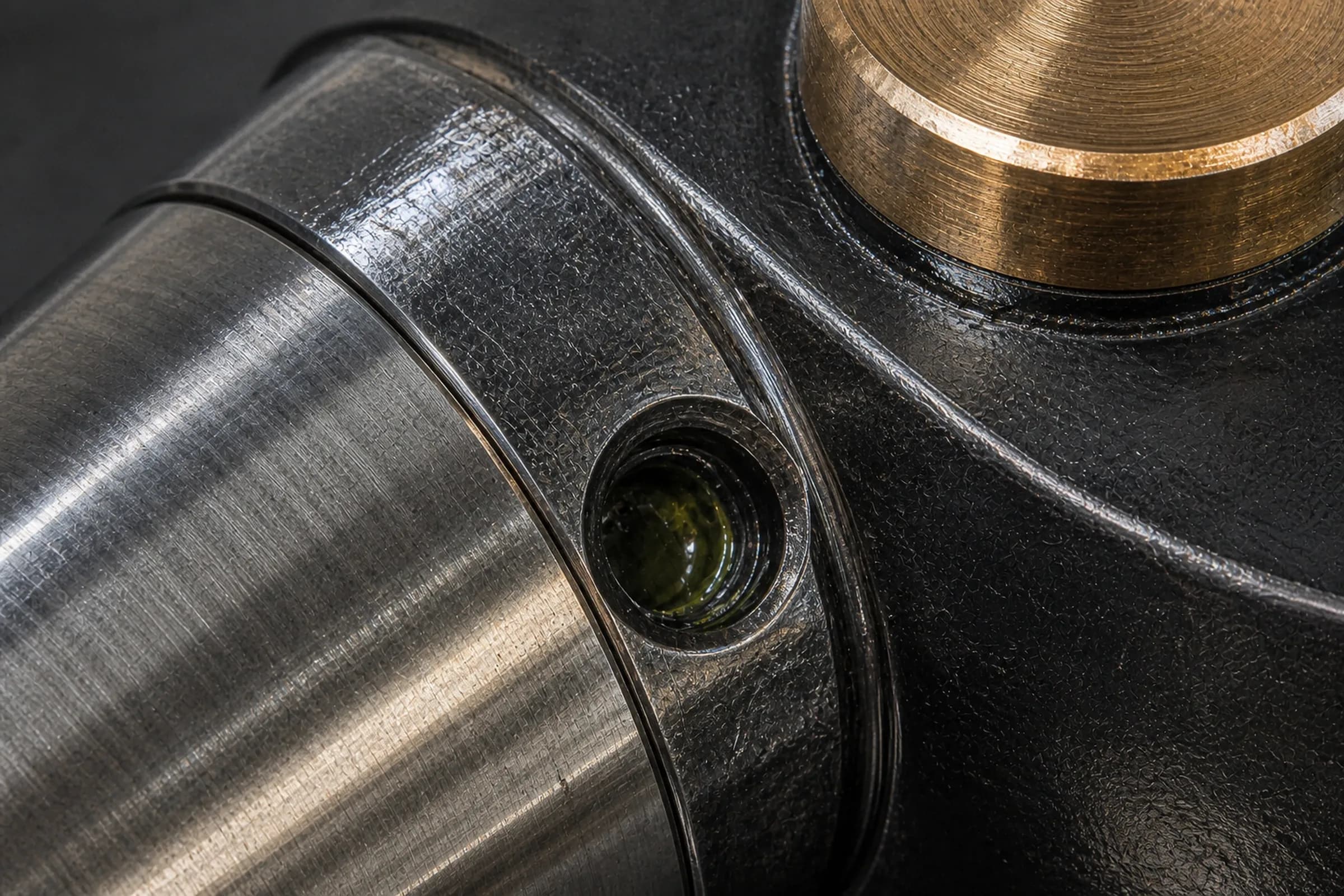
Industrial design furniture: the real thing against the look
Six checks separate furniture built from genuine industrial components from furniture built to resemble it. All six can be run in a showroom, in about a minute.
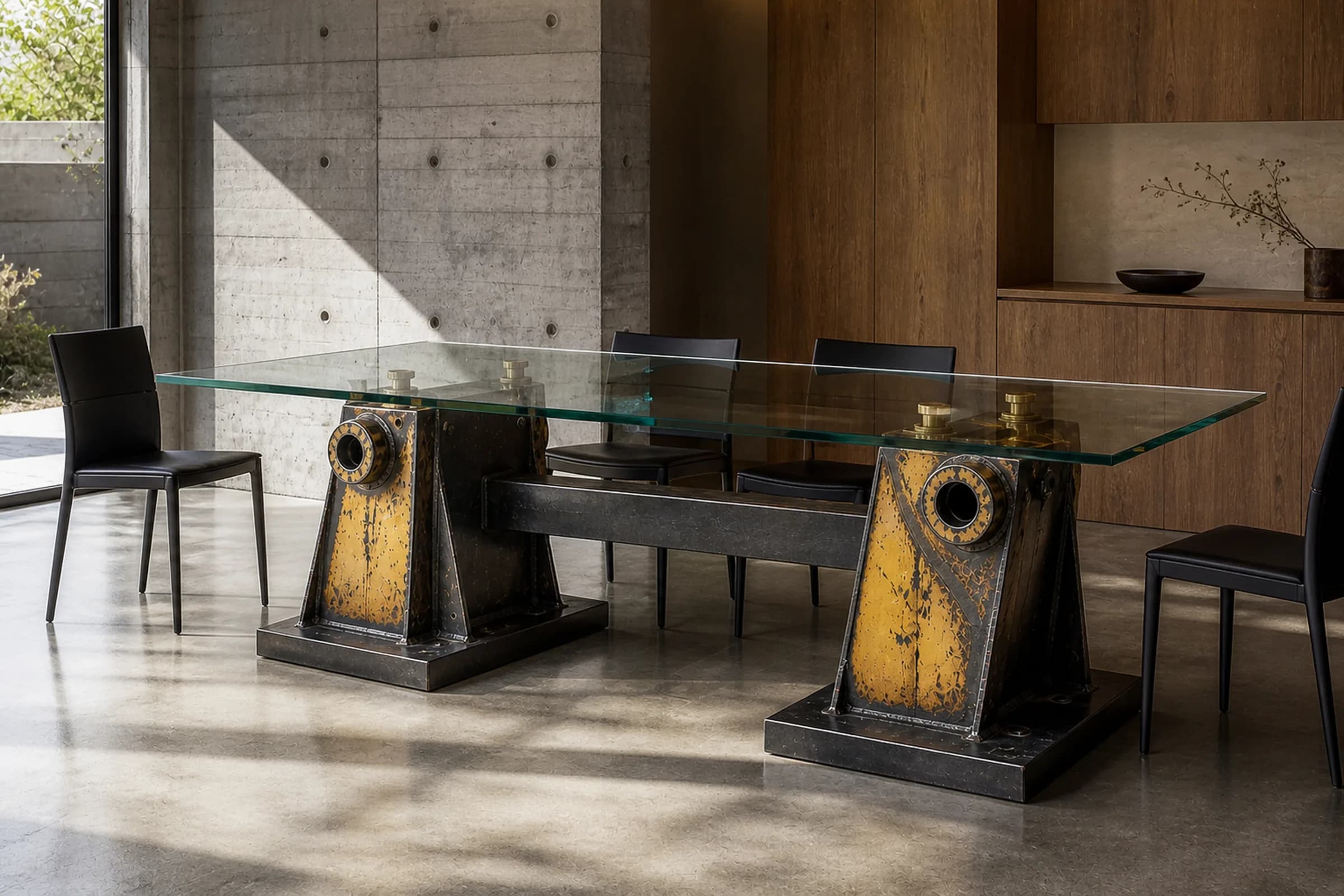
Getting it inside: the access survey nobody does until it is too late
Most delivery problems are not weight problems. They are geometry problems — a lift car, a turn on a landing, a door leaf that does not come off. Measure these six things before you order.
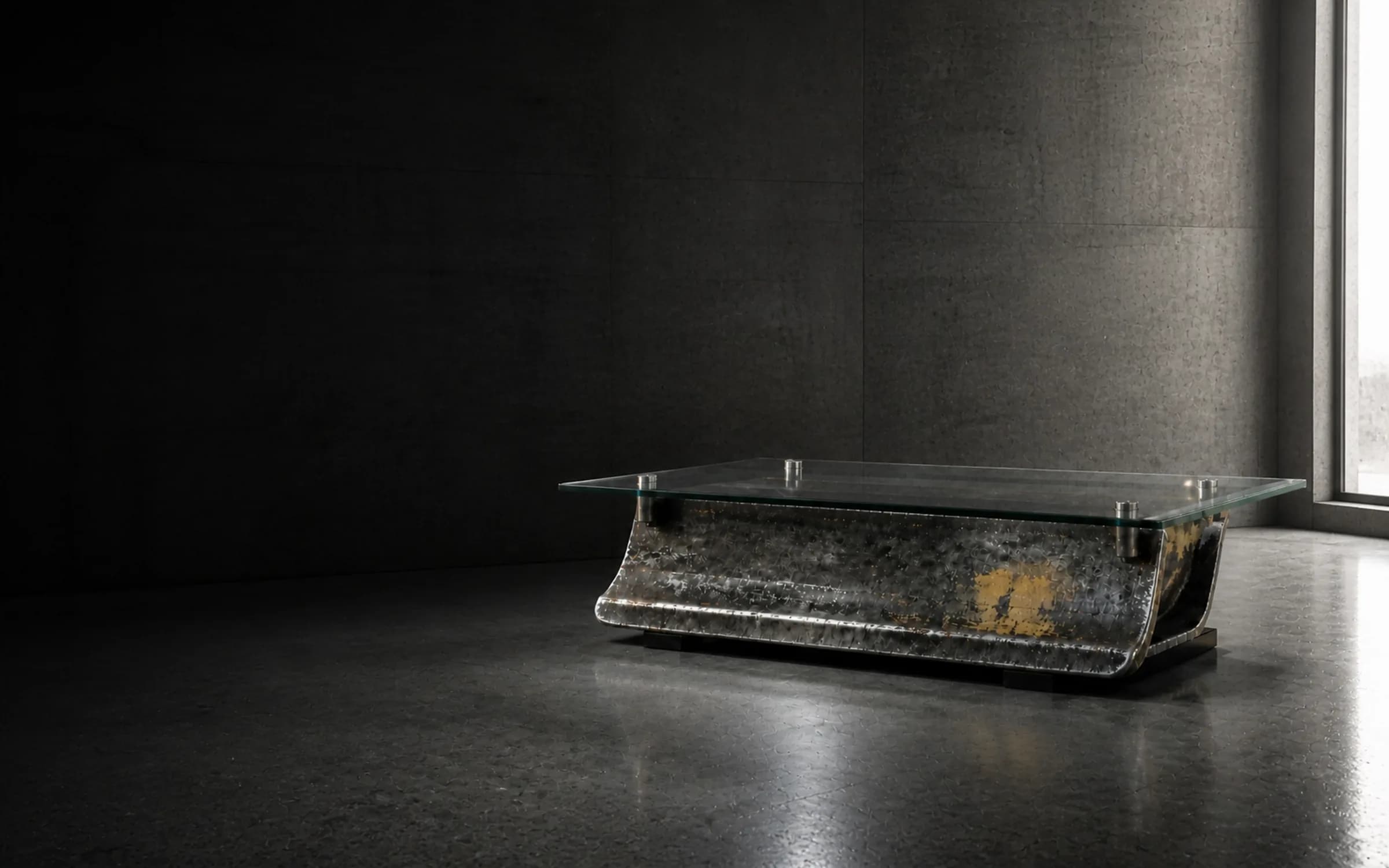
What makes design collectible, and what only makes it expensive
Collectible design is a category with rules, not a compliment. Edition size, documentation, authorship and irreversibility decide whether an object holds meaning — and whether it holds value.

Clear or smoked: choosing the top over a steel base
The glass is not neutral. Clear puts the steel on display and shows every mark; smoked mutes it, hides dust and changes how heavy the object reads in a room. Here is how to choose.
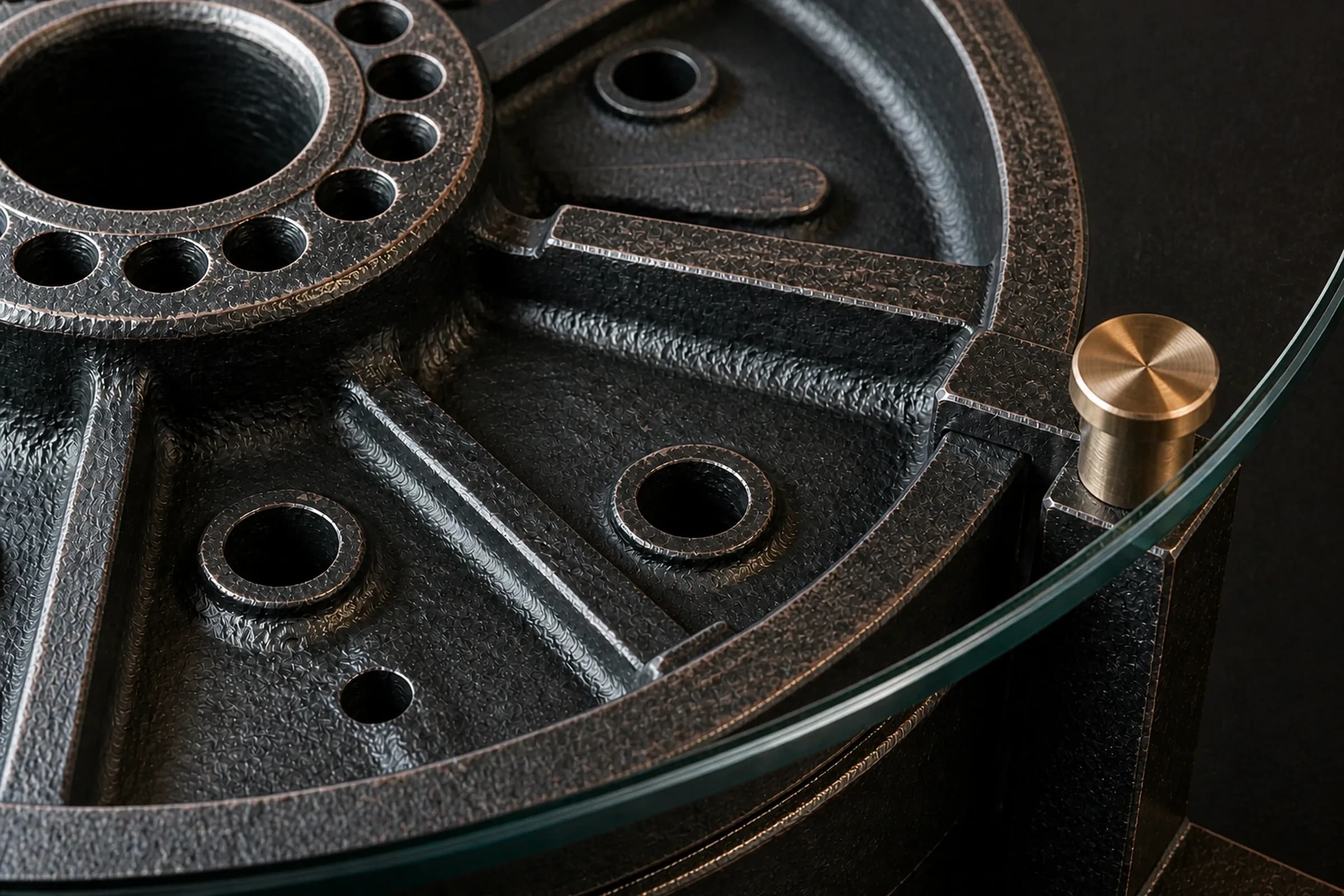
Provenance for salvaged objects: what can honestly be documented and what cannot
A certificate that claims more than it can prove is worse than no certificate. Here is exactly what is knowable about a reclaimed machine component, and where the record genuinely stops.
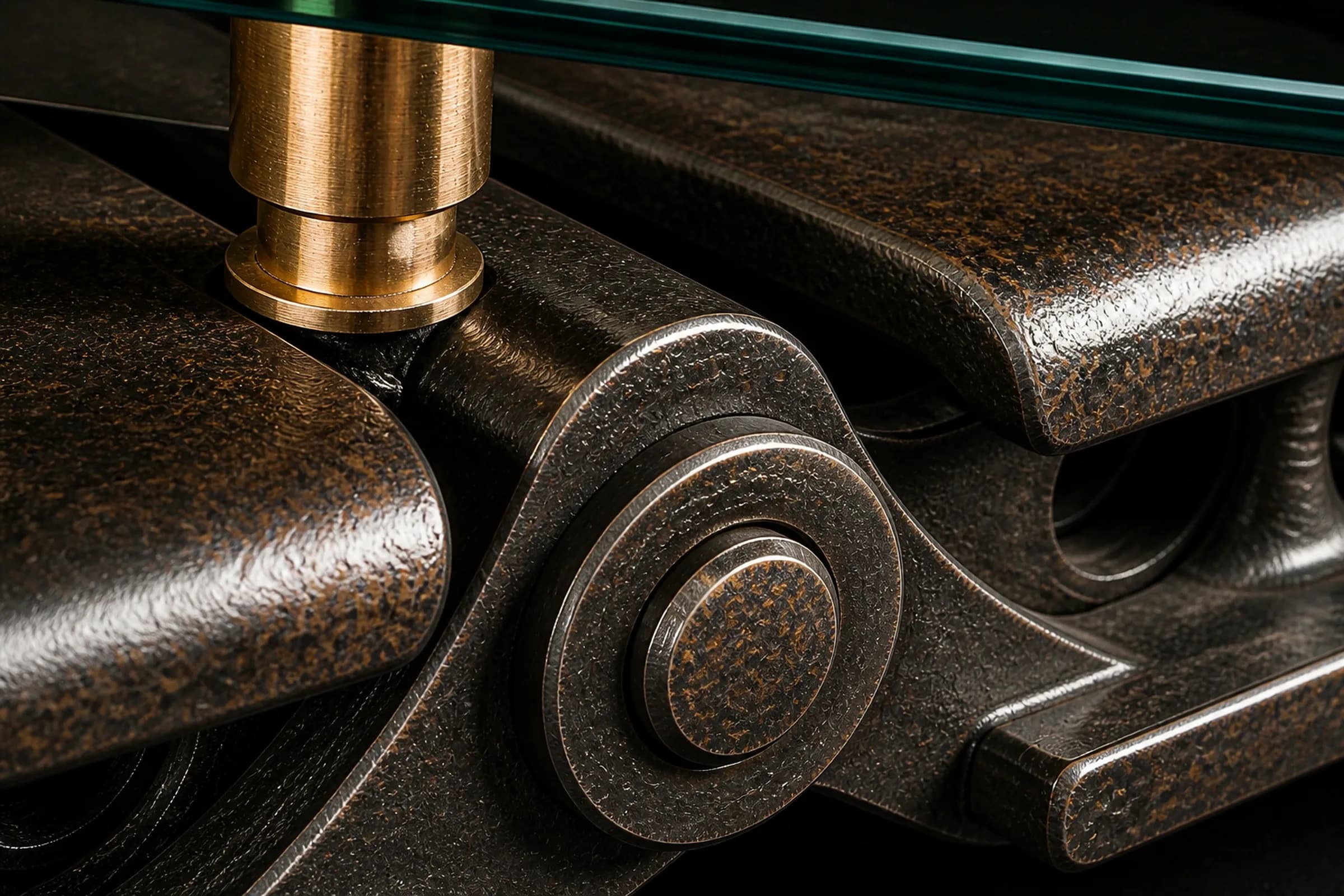
Reading a machine part: what a track idler, bogie and sprocket actually did
Every object in this collection was a component with a job. Knowing the job explains the shape, the wear pattern and why some parts survive transformation while others never should.
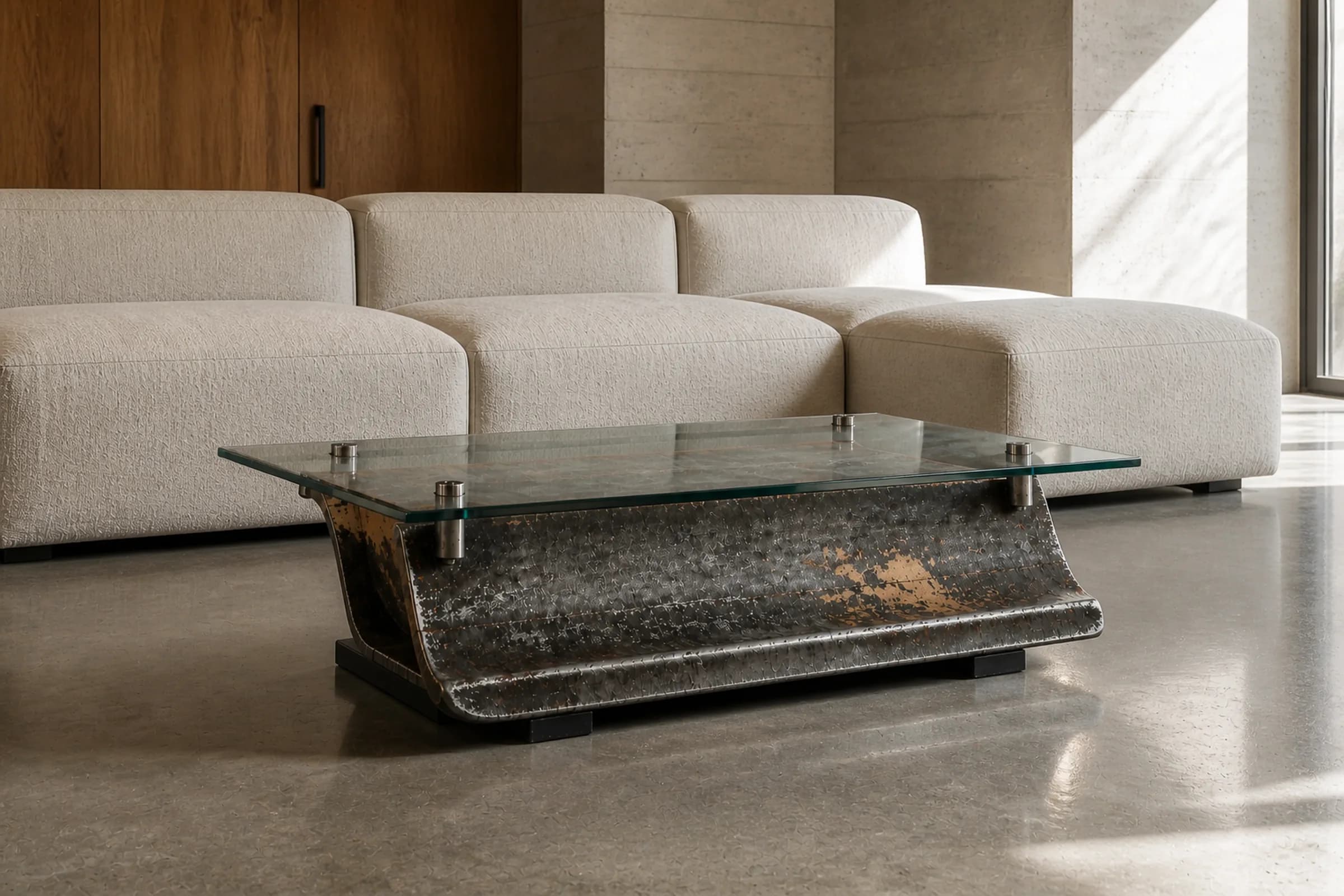
Sizing a coffee table: height, length and the gap that decides everything
Two numbers matter more than the rest — the height relative to your seat, and the gap between table and sofa. Get those right and almost any length works.
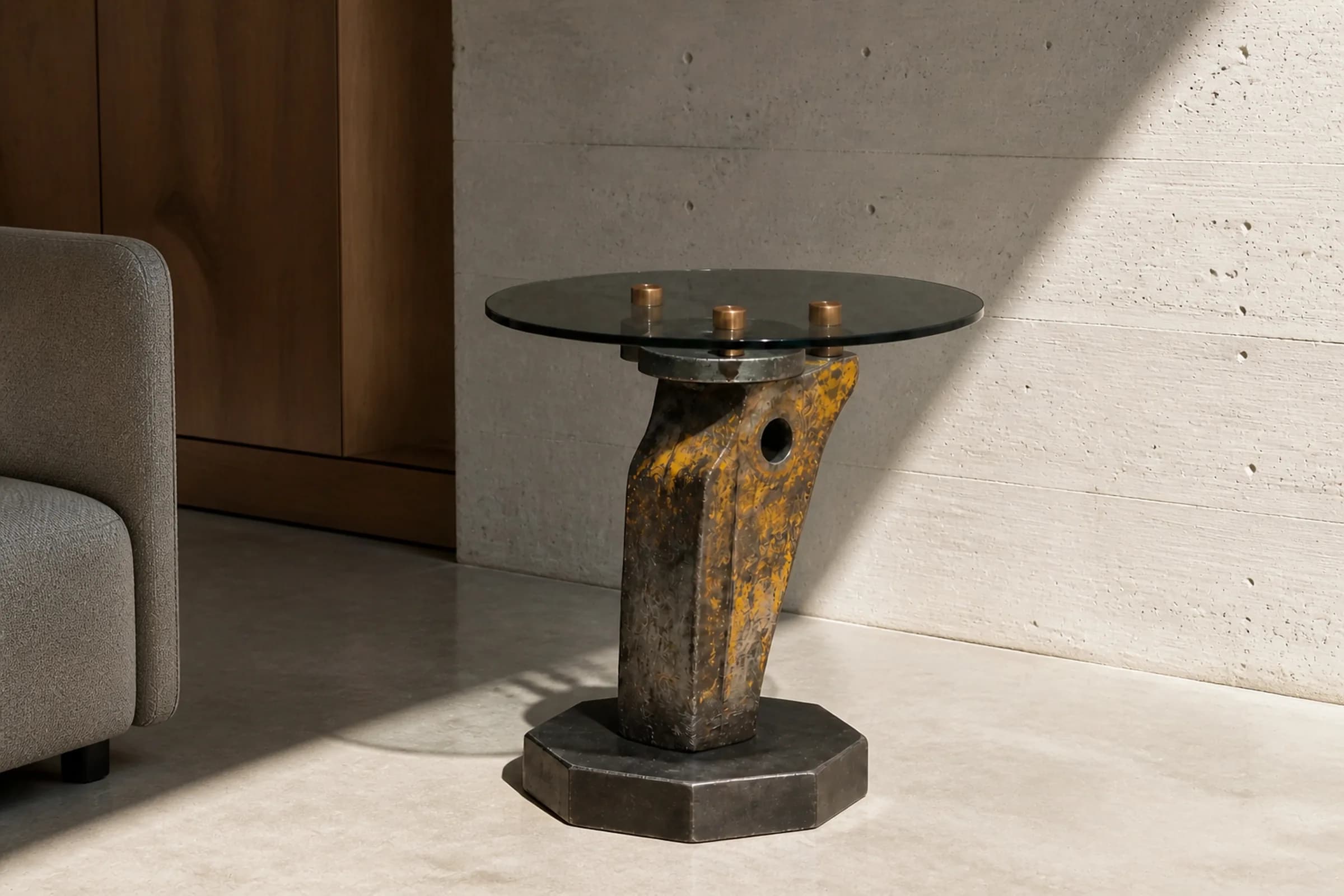
Commissioning a one-off: how the process actually runs, and where it goes wrong
A commission built around salvaged material cannot be specified the way a bespoke sofa can. The form follows a component nobody has found yet, and the timeline follows the machine that has not been retired yet.
Reclaimed machine steel or a cut stone slab: how the two actually differ
A marble slab is quarried to be uniform. A dozer blade is shaped by twenty thousand hours of load. Both make a serious table, and they fail in completely different ways.
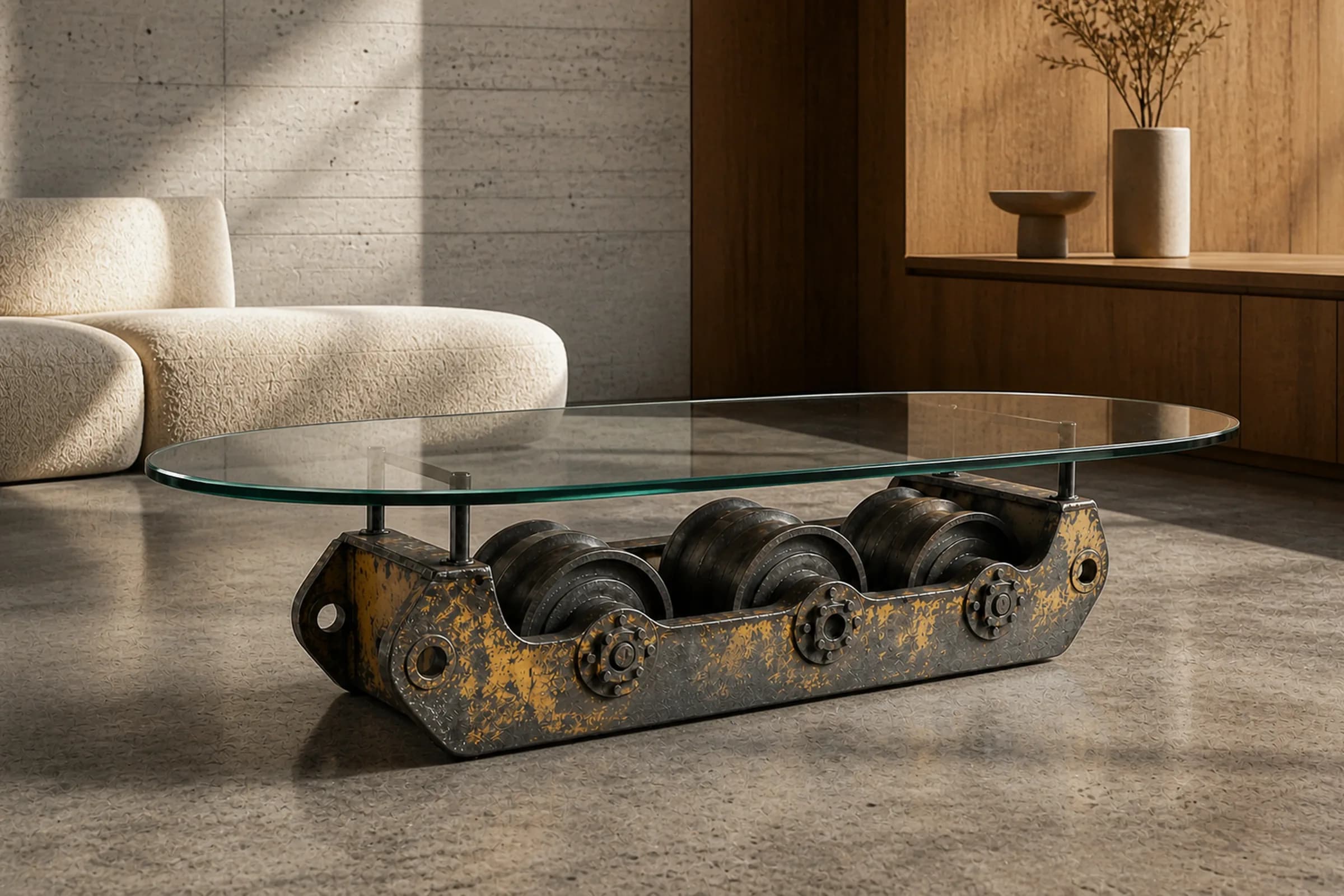
Heavy steel over underfloor heating: what actually matters
Underfloor heating changes two things about placing a dense object — where the point loads land, and how the floor finish behaves under sustained pressure. Neither is a reason to avoid steel.
Why there is no price list
Every object starts as a specific part with a specific condition, and finishes in a specific room. A single number would be either wrong or padded. Here is what a quotation actually contains.
Clear lacquer, wax, oil or powder coat: choosing a finish for reclaimed steel
Every finish is a trade between how much of the surface you keep and how little maintenance you accept. There is no option that gives you both.
Specifying heavy objects for hotels, lobbies and offices
Contract use changes the questions. Safety, cleaning regimes, insurance and replaceability matter more than they do at home — and a reclaimed part answers some of them better than new furniture does.
Living with sealed steel: cleaning, marks and what never to use
A sealed patina is durable, not delicate — but it fails in one specific way. Three habits keep an object looking exactly as delivered for decades.
How we document the origin of every part
A certificate that says “reclaimed steel” says nothing. Ours names the machine class, the sourcing location and the condition of the part before we touched it.
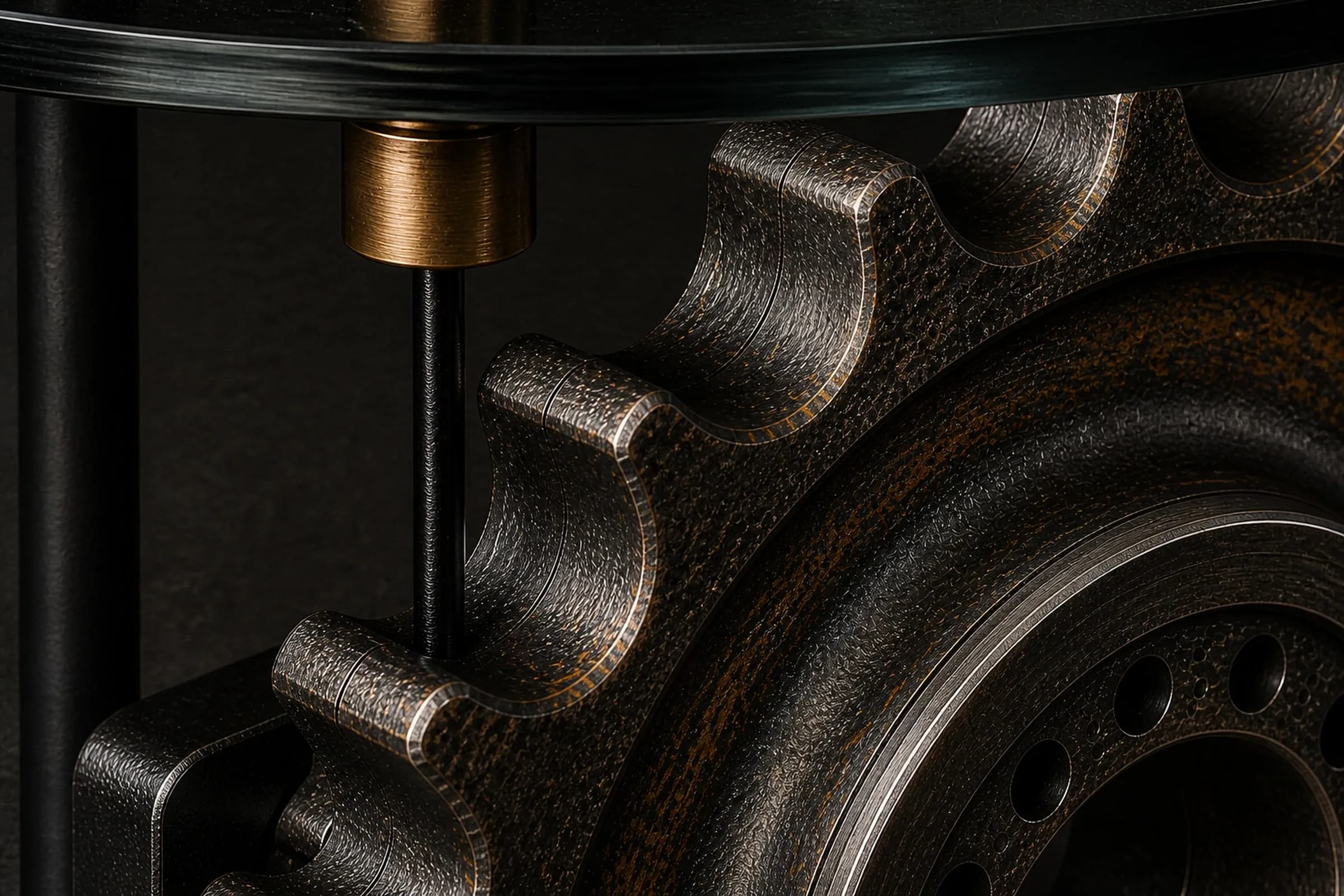
Cast iron, cast steel and cast aluminium: three metals people treat as one
They look similar in a photograph and behave nothing alike. One is brittle, one is tough, one is light — and the difference decides whether a heavy object can be repaired or is simply finished.
Glass on steel: why we never clamp the plate
Reclaimed steel moves with temperature and is never truly flat. A rigid clamp turns both facts into a crack. The answer is four points and an interface that gives.
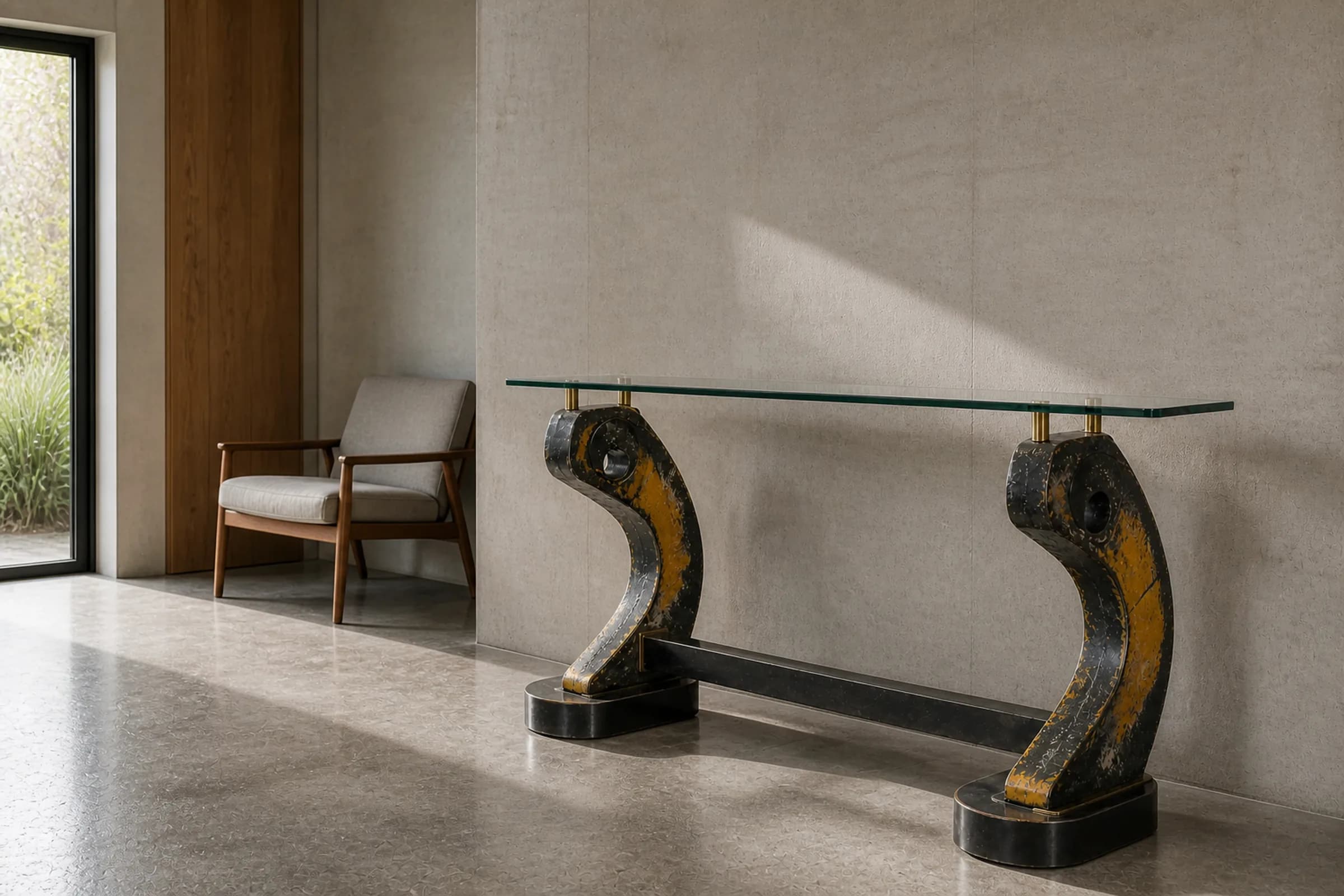
Sculptural furniture: when a table stops being a table
The term covers everything from a curvy sideboard to work that barely functions. The useful question is not whether an object is sculptural, but which of its two jobs it does first.
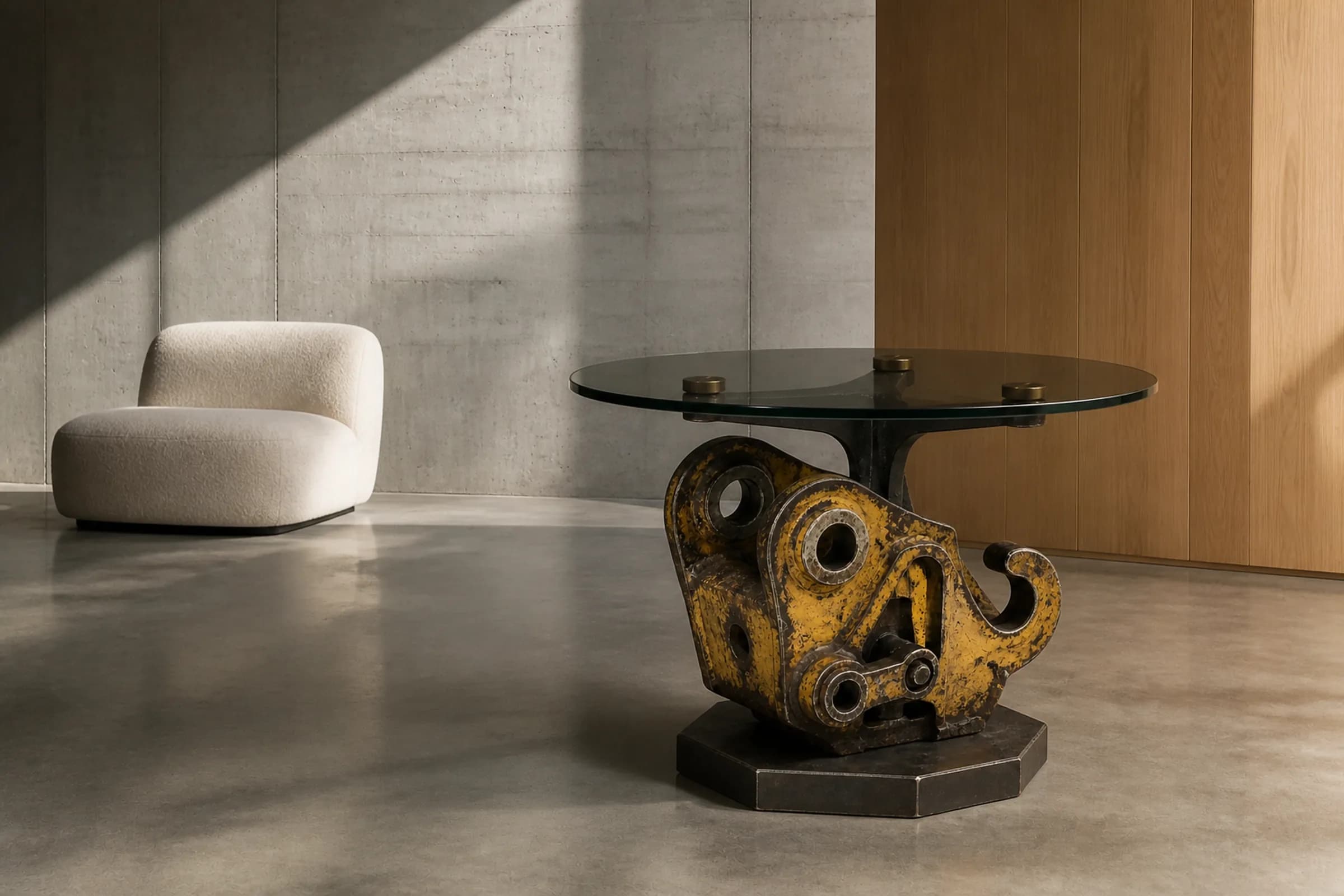
Stainless or carbon steel: which one belongs in a living room
Stainless resists corrosion because of chromium, not because it is a different metal. It costs more, works harder and looks colder — and for most interior objects it is the wrong answer.
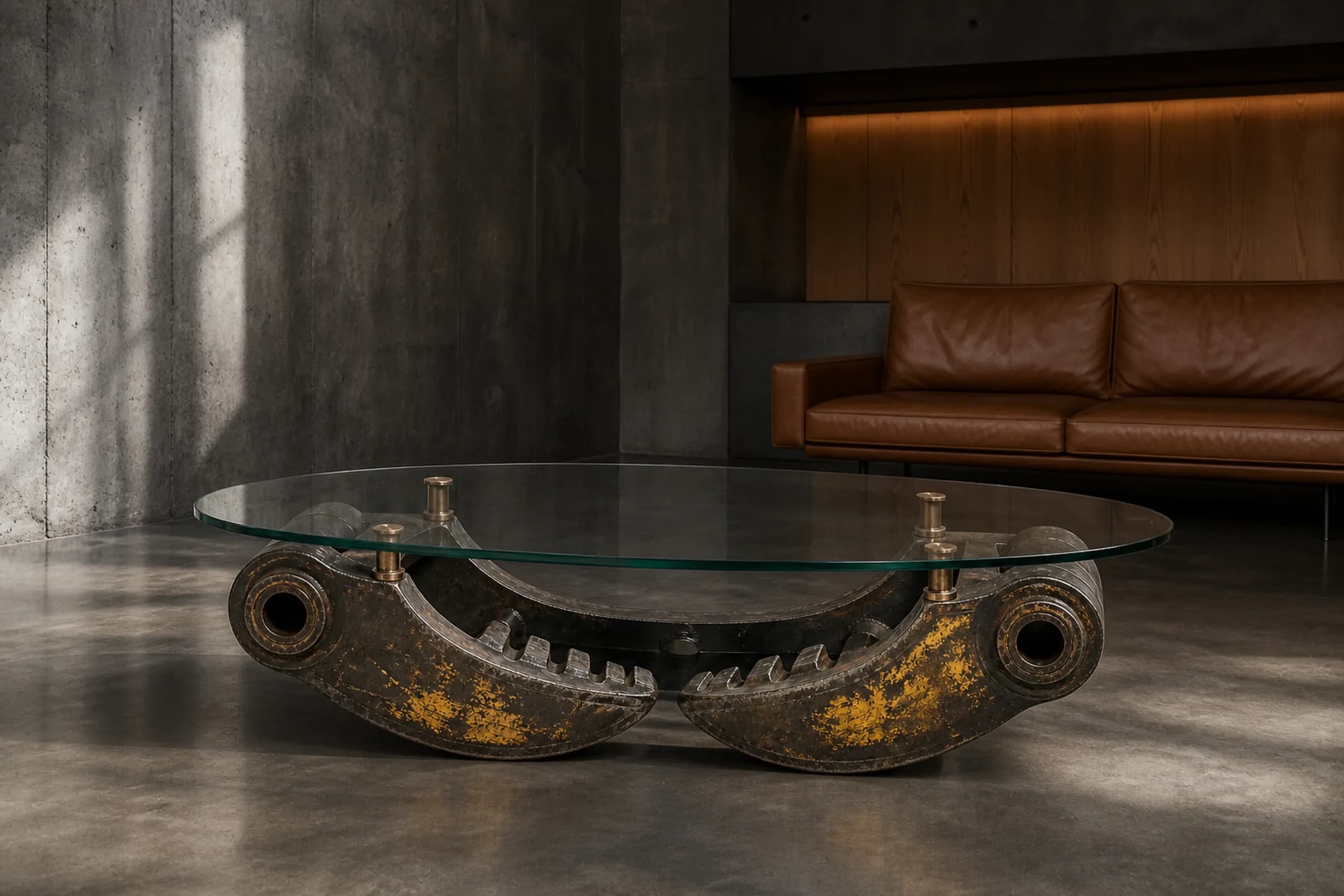
One-off, limited edition or made to order: what the words are supposed to mean
Three terms used loosely across the trade, with genuinely different consequences for scarcity, resale and what you can ask for. Here is how to read them and what to ask when a seller is vague.
Specifying heavy objects: floor loads, lifts and door widths
A written brief for architects. The three questions that decide whether an object can enter a space at all — asked before the object is chosen, not after.
Glass table top thickness: how thick, which type, and why the edge matters most
Ten, twelve, fifteen or nineteen millimetres. The number depends on span and support, not on the size of the table — and the failure that actually happens is almost never a broken span.
Hardox and wear plate: the steel inside a digging bucket
The cutting edge of an excavator bucket is not ordinary steel. It is quenched abrasion-resistant plate at 400–500 Brinell — and that hardness dictates everything about how such a part can be turned into furniture.
Edition, made to order, bespoke — what the difference buys you
Three routes into the same workshop. They differ in how much of the object is already decided at the moment you commission it.
Corten versus mild steel: what weathering steel actually does, and where it fails
Weathering steel forms a protective rust layer and never needs painting — outdoors, in the right climate, with the right detailing. Indoors, most of that advantage disappears and one drawback remains.
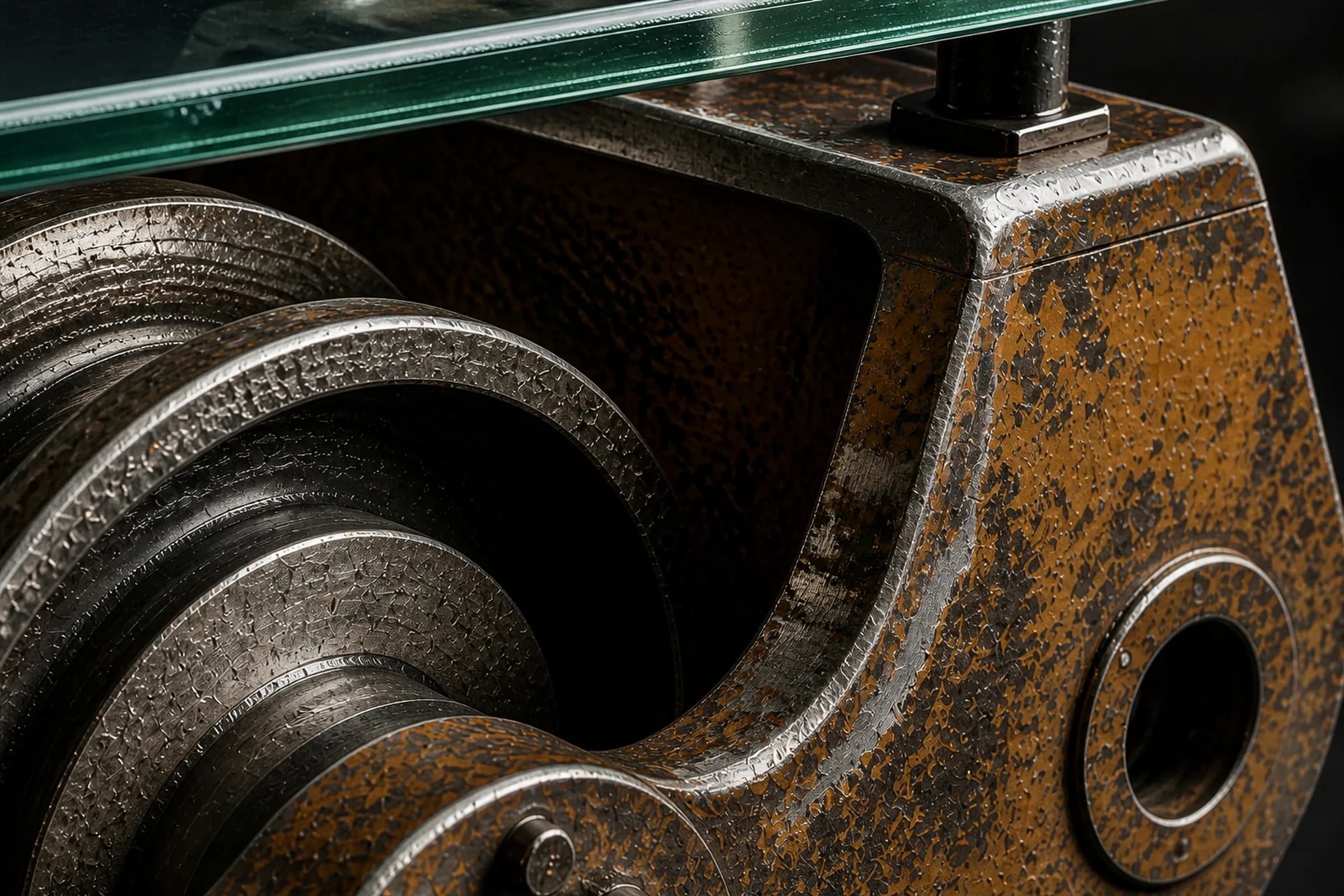
Sealed, not repainted: what stays on the steel
The difference between a restored part and a preserved one is a decision made in the first hour of work, and it cannot be reversed later.
Where collectible design is actually bought: fairs, galleries and what happens at each
The category has a small number of places that set its prices and reputations. Knowing what each one is for saves a great deal of time, whether you are buying one object or building a collection.
Styling a large rectangular coffee table without filling it up
A 1400 mm top invites decoration and punishes it. The larger the surface, the more a scattered arrangement reads as neglect rather than abundance.
How to style a round coffee table when the table is the sculpture
Standard advice — trays, stacks, a tall thing and a low thing — assumes the table is a background. When the base is a slewing ring and the top is glass, most of that advice actively harms the room.
Industrial coffee tables: what separates the real ones from the reproductions
The category runs from flat-pack pipe-and-plank to one-off salvage weighing a quarter of a tonne. The price gap is enormous and mostly explicable. Here is what you are paying for at each level.
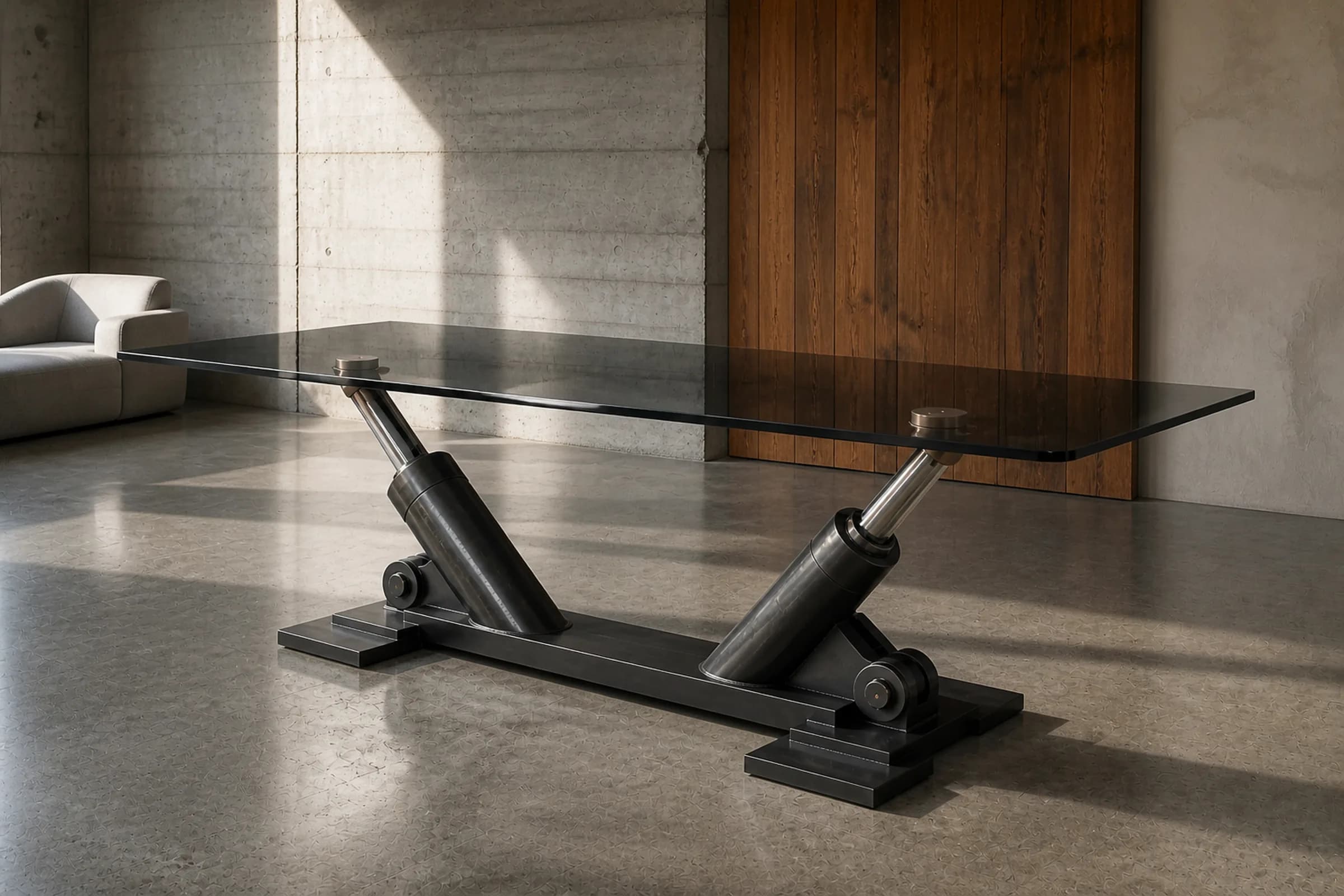
What is collectible design, and how is it different from expensive furniture
Collectible design is furniture bought the way art is bought: in editions, through galleries, with documentation, and on the assumption that the object matters beyond its function.
Steel patina: what the colours mean and which ones you can keep
Blue, straw, brown, black. The colours on a steel surface are not decoration — they are a record of heat, oxygen and time, and each one behaves differently once the object is indoors.
Brutalist interior design without the bunker
Brutalism is a structural argument, not a colour scheme. Concrete walls are one way to make it; a single honest object in an otherwise soft room is another, and it works in flats that will never be poured in situ.
Modern brutalism in a small flat: one object, everything else quiet
Under sixty square metres you cannot afford a heavy room. You can afford one heavy thing. Here is how to choose it, where to stand it, and what has to get out of its way.
Furnishing a warehouse loft when the building is already the loudest thing
A converted industrial space arrives with brick, steel and ceilings near four metres already in place. Adding more industrial furniture is the obvious move and usually the wrong one.
Wabi-sabi and salvaged steel: imperfection that was earned, not applied
Wabi-sabi interiors usually reach for handmade ceramics and undyed linen. Worn industrial steel belongs in the same argument, and it makes the case more honestly than most of what is sold under the label.