Sculptural furniture: when a table stops being a table
The term covers everything from a curvy sideboard to work that barely functions. The useful question is not whether an object is sculptural, but which of its two jobs it does first.
01A term worth defining before using
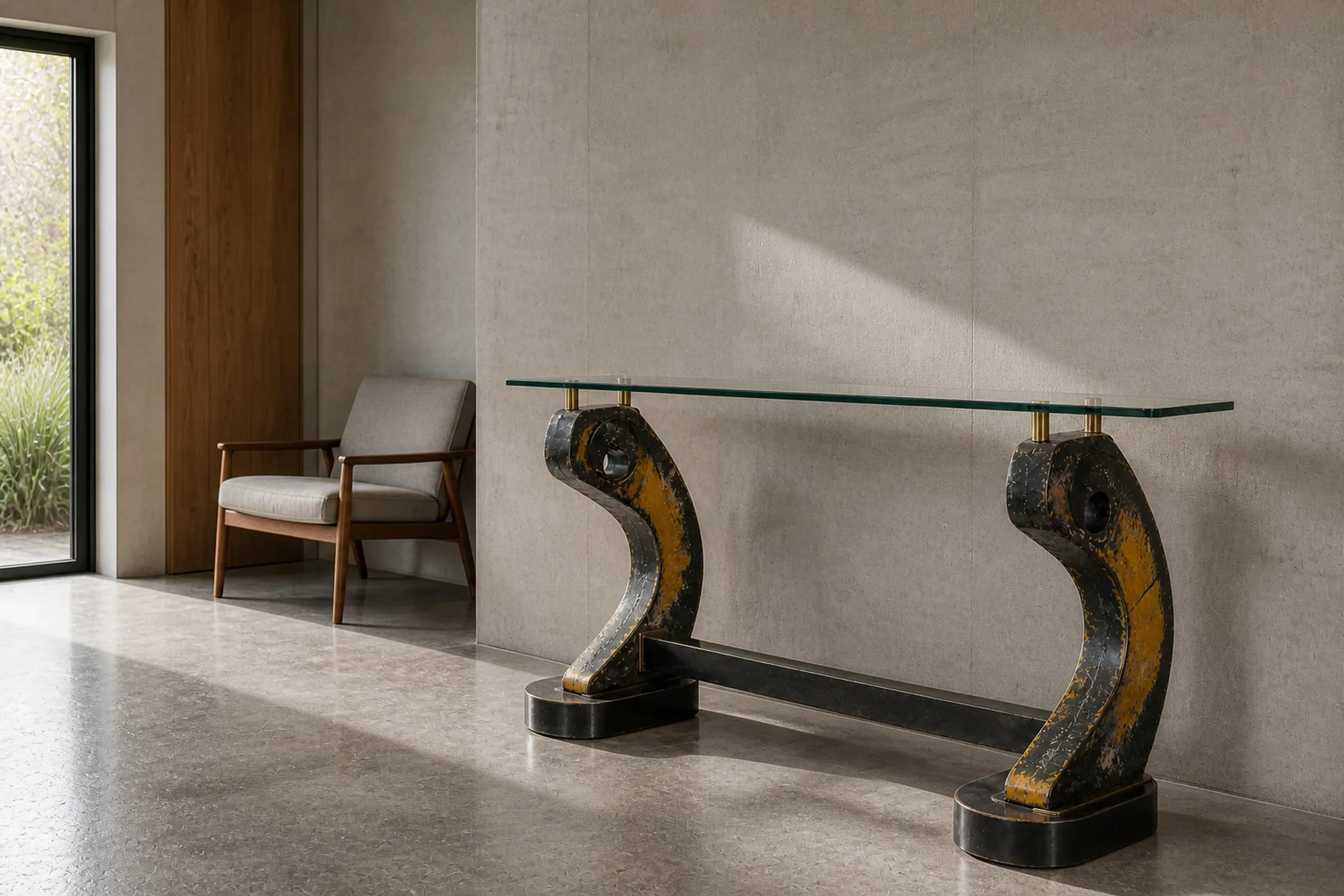
Sculptural furniture describes functional objects whose form is driven by composition, mass and silhouette rather than by efficient use of material or ease of production. Sculpture proper has no functional obligation. Furniture has nothing but. Sculptural furniture accepts both, which means it can be judged twice — and honestly assessing it means asking whether it works as an object to look at and whether it still does the job the category names. Most pieces sold under the term fail one test or the other, and it is usually obvious which.
02The lineage, briefly
The idea is not new. Isamu Noguchi's 1947 coffee table is a sculpture that happens to hold a glass top. Wendell Castle spent a career making furniture that was carved rather than assembled. Ron Arad's early welded steel work in the 1980s used industrial material as an expressive medium. Rick Owens and Vincenzo De Cotiis brought the position into contemporary interiors, and the current interest in raw and salvaged materials is a continuation of that argument rather than a new one. Knowing this lineage is useful when assessing new work, because much of it repeats an existing move without adding to it.
Furniture that fails at function is not sculpture. It is furniture that failed.
03Why heavy salvaged components suit the category
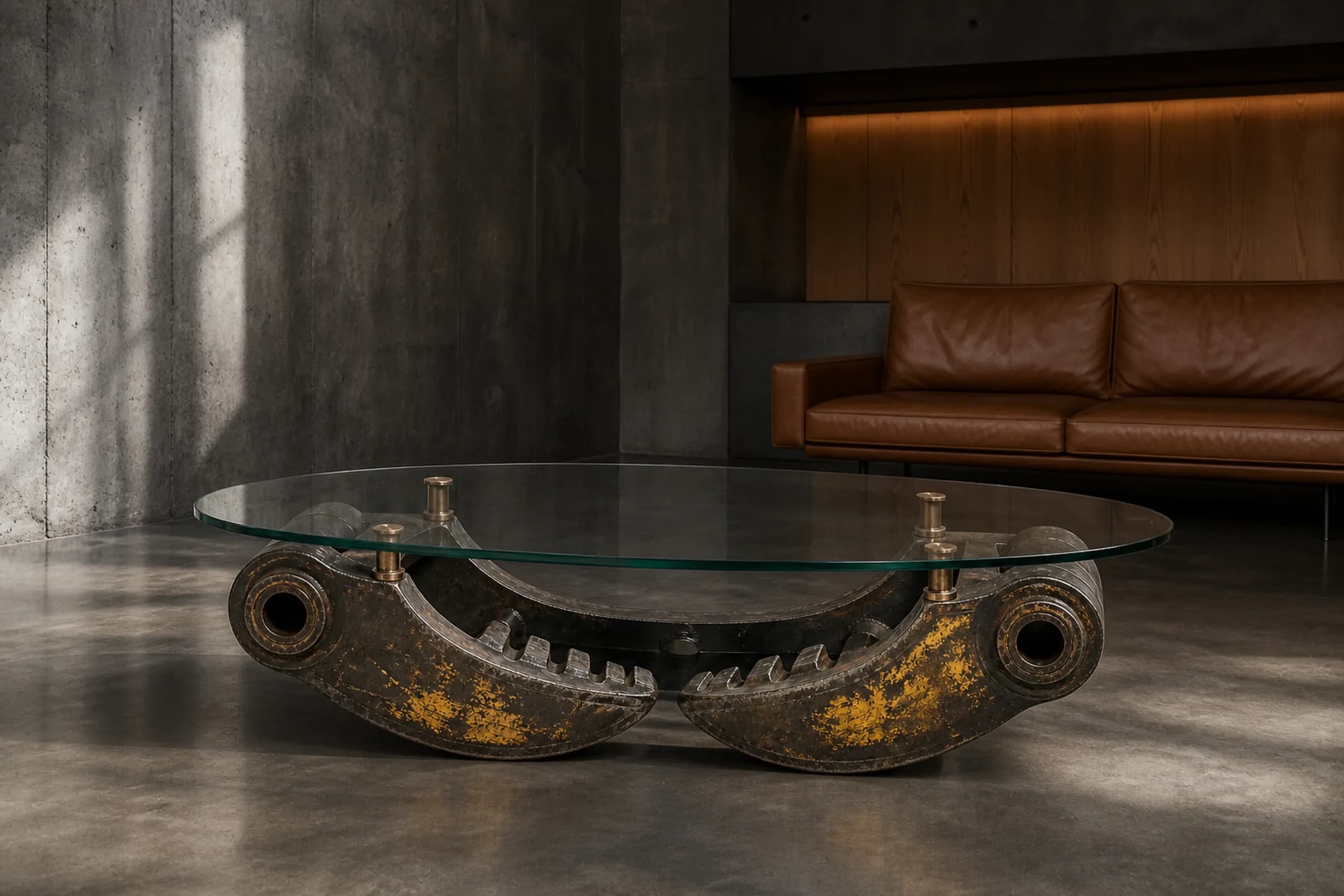
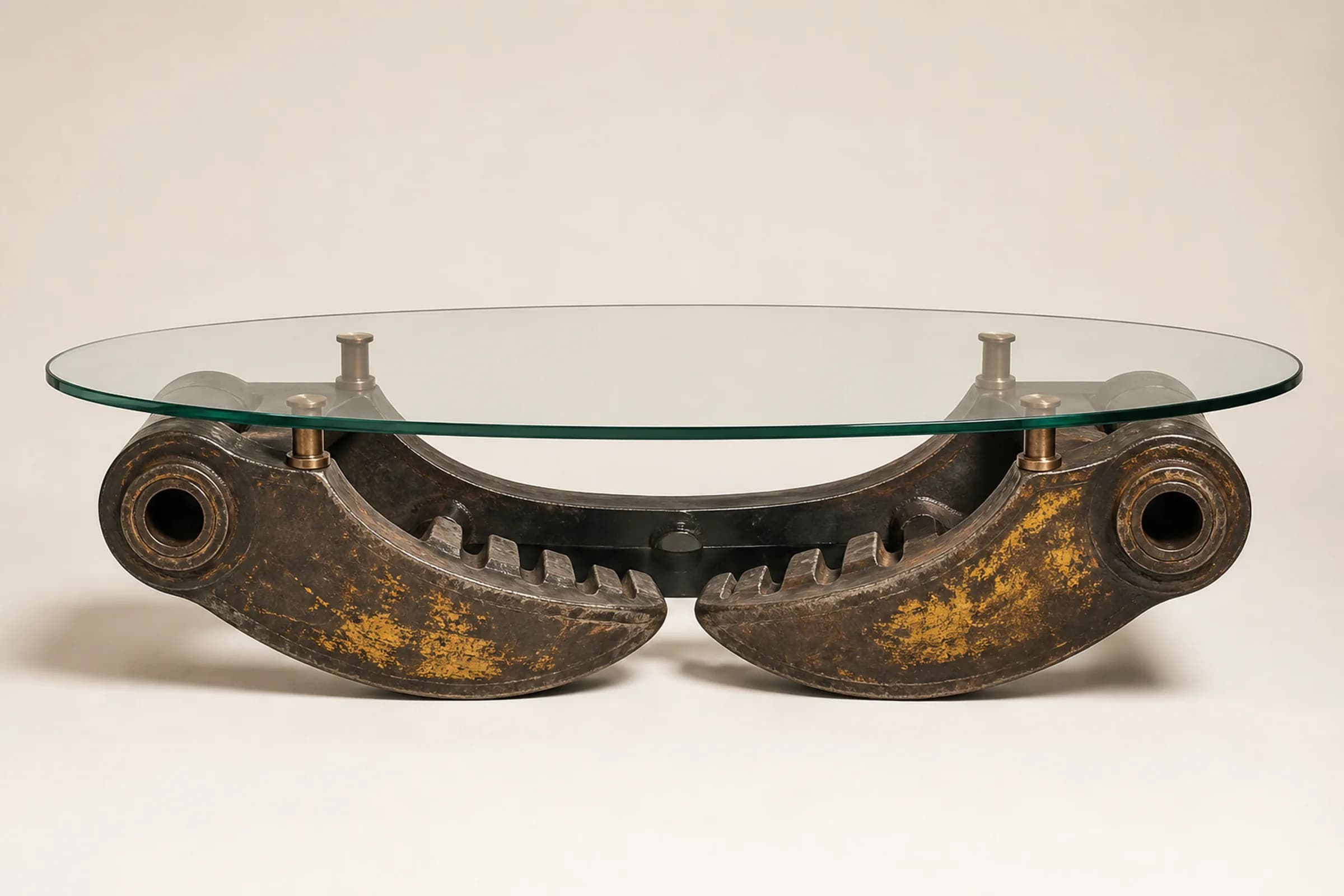
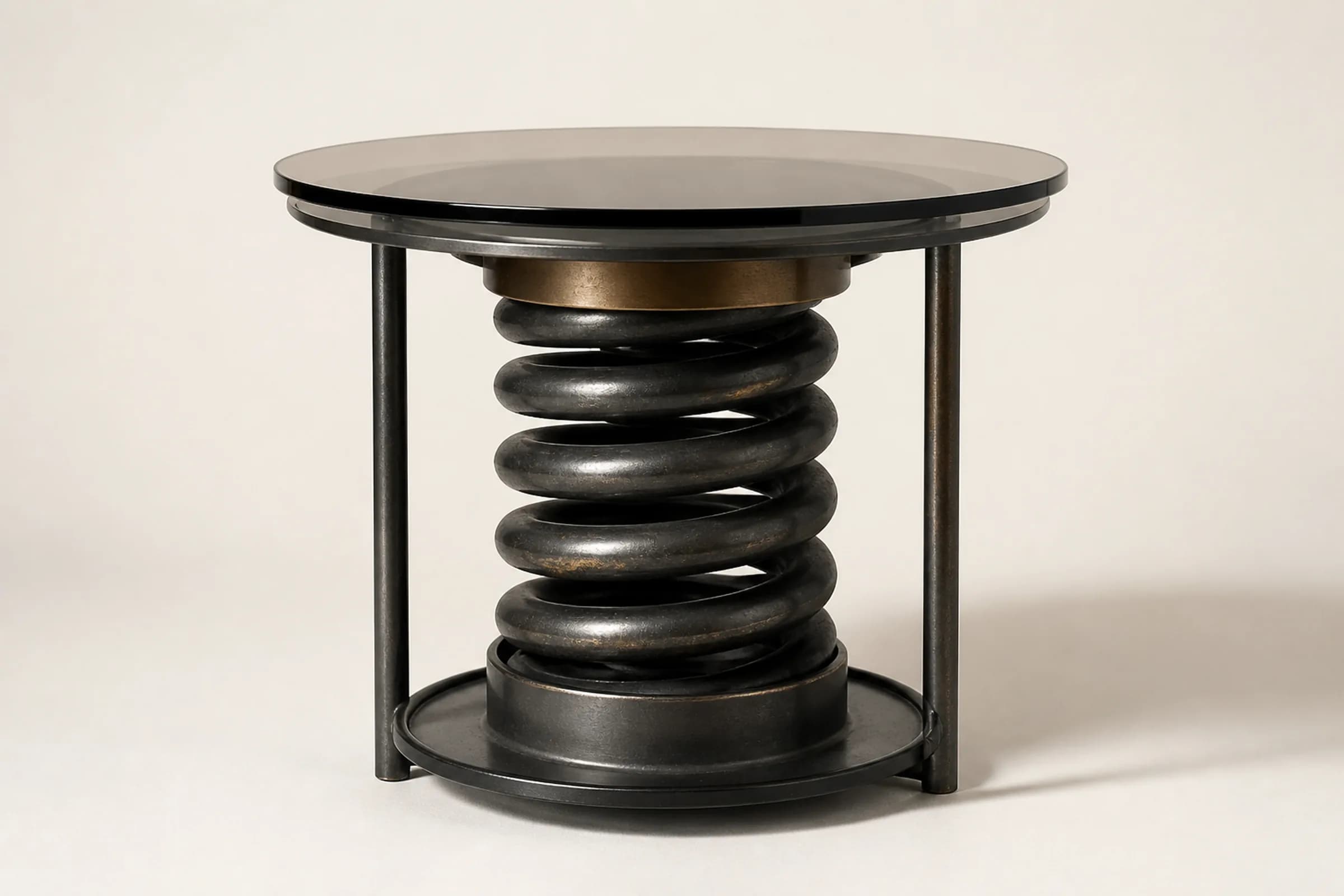
A machine part arrives with a composition already resolved by engineering: ribs where stress required them, curves where a load path demanded them, wear where the work happened. None of it was styled, and it therefore has a coherence that deliberate sculptural design finds difficult to fake. The maker's job becomes selection, editing and support rather than invention — deciding what to keep, how to stand it, and what the object needs in order to function as furniture without losing the form that made it worth using.
04The functional test, applied strictly
For a low table, the tests are specific: is the top at a usable height, is it level, is it stable against a knock, are there sharp edges at shin and hand level, can a cup be set down without balancing, and can the object be cleaned. A piece that fails these is not making a bolder statement; it is making a table badly. We hold to them because a heavy object that is unpleasant to live with gets moved to a hallway within a year, and that is the real failure — an object nobody uses stops being furniture regardless of how it is described.
05Where sculptural furniture belongs in a room
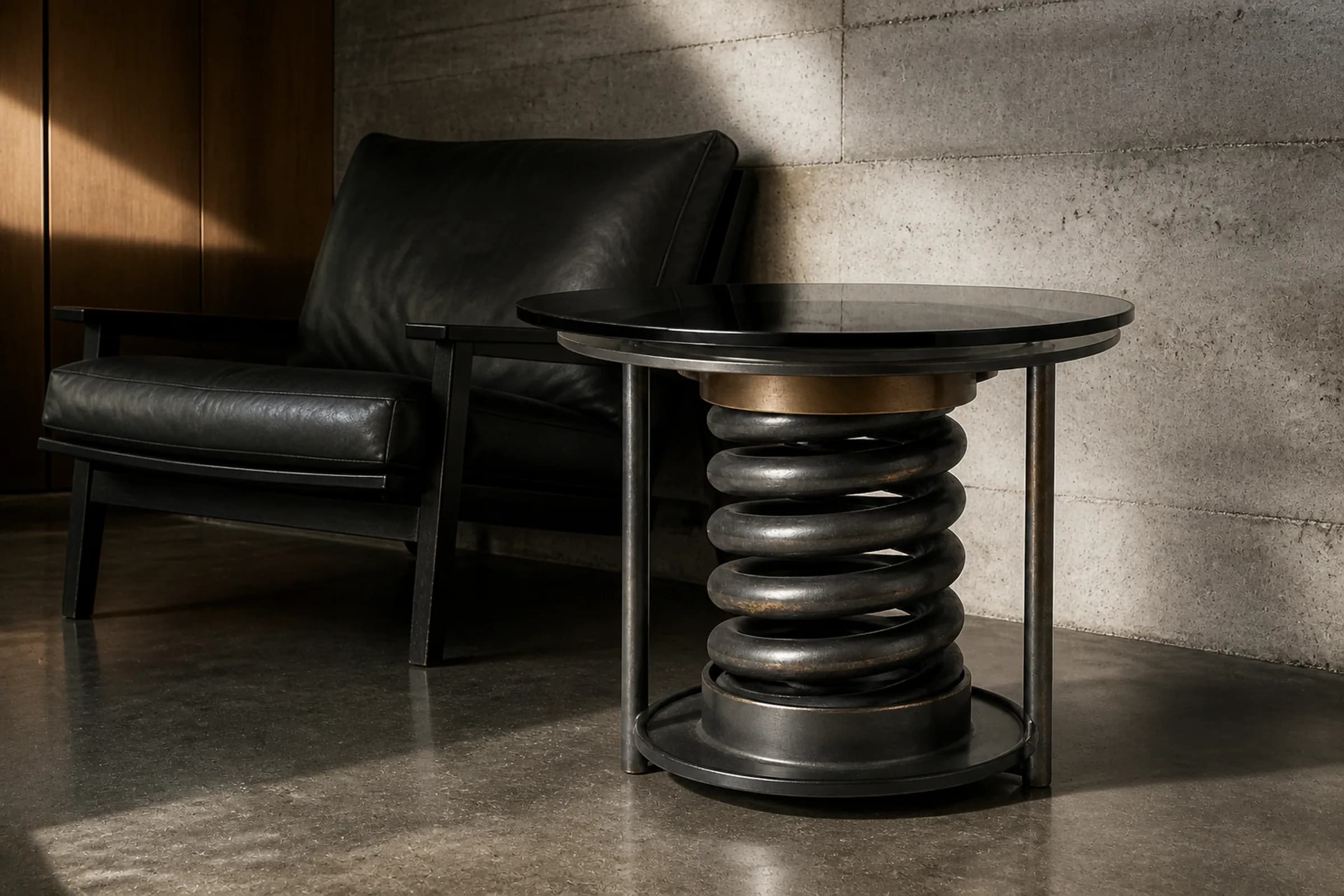
One piece per room, given space and light, and preferably visible from the entrance so the room is organised by it. Sculptural objects want the same conditions as sculpture: a clear approach, a plain background, and lighting that rakes across form rather than flattening it from above. Two such pieces in one space compete, and the room reads as a showroom. The discipline is not in choosing the object; it is in refusing the second one.
Objects in this note
Considering a commission?
Tell us about the space and the location. We answer with availability, customisation scope and a transport estimate.