Industrial design furniture: the real thing against the look
Six checks separate furniture built from genuine industrial components from furniture built to resemble it. All six can be run in a showroom, in about a minute.
01Check the wear pattern
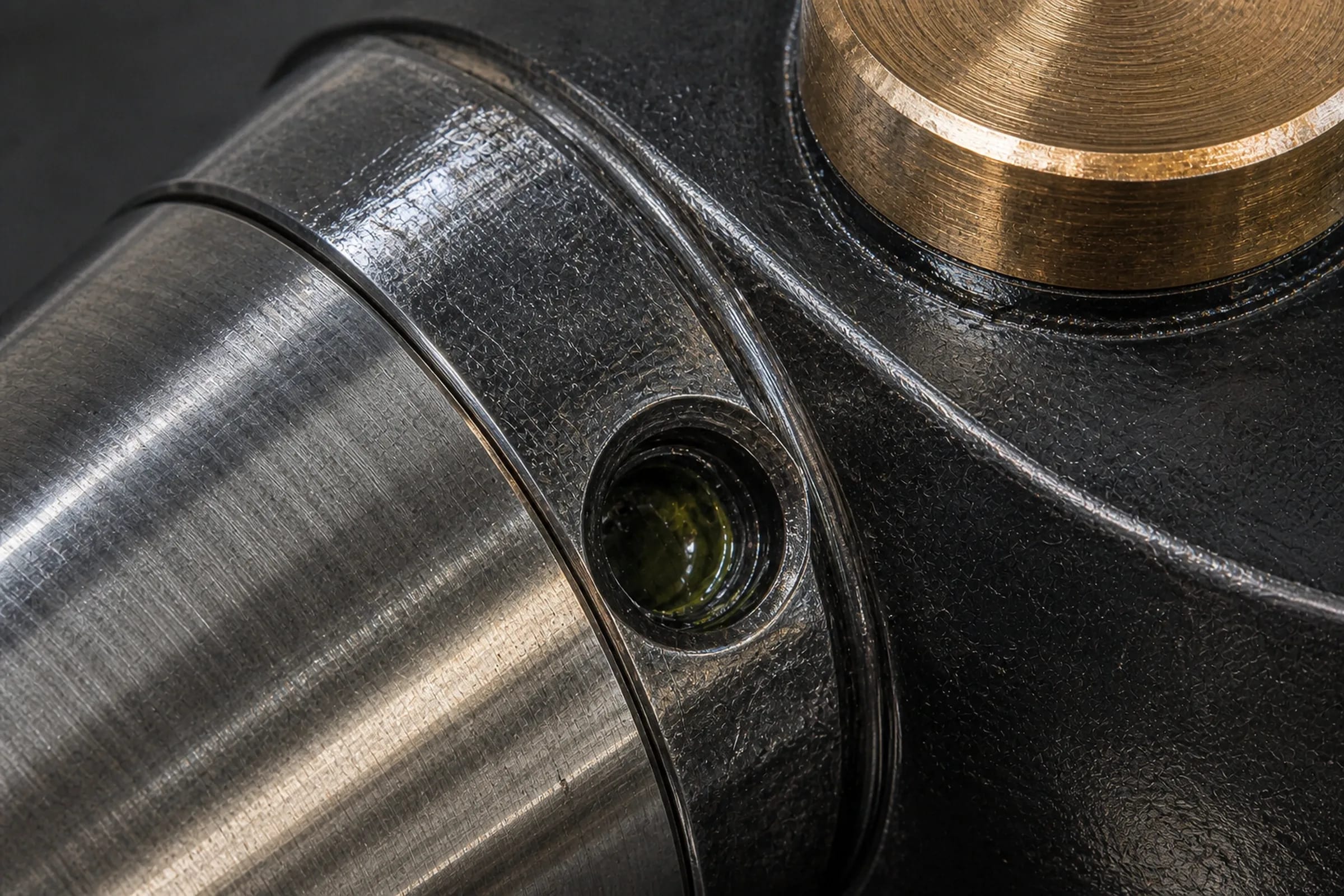
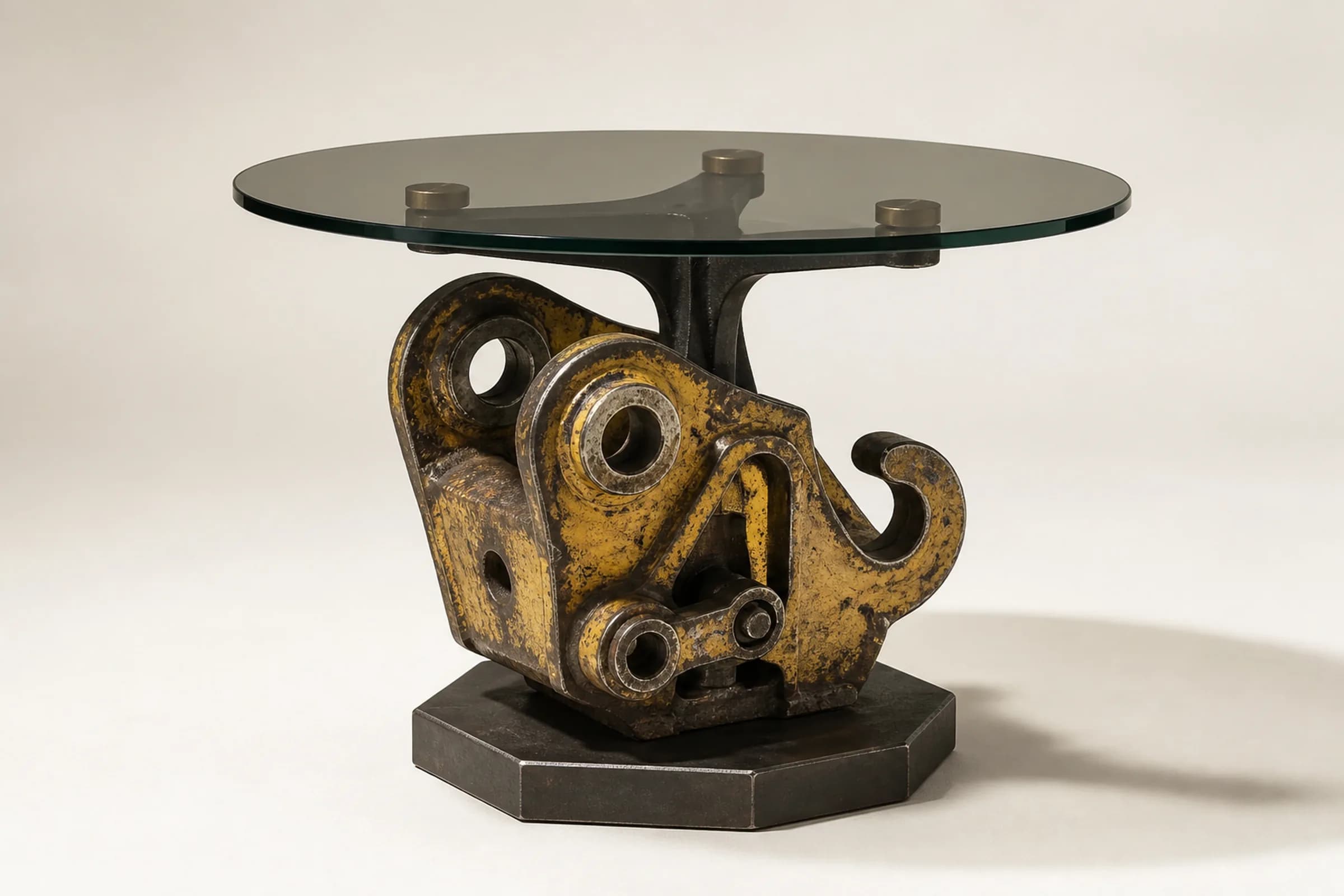
Genuine wear is not uniform, and it is not random either — it corresponds to how the part was loaded. A roller wears in a band around its running surface. A blade polishes on the face that met the ground and keeps coating on its back. Applied “distressing” is either even across the whole piece or scattered without logic, because nobody was modelling a force when they did it. Look for a wear pattern that tells you which way the load went.
02Check whether the fixings work
On a real component, every hole, boss and lug was there to carry something. On a styled piece, bolt heads are often glued on, and holes are decorative. Push on a bolt head. Look at whether a lug lines up with anything. Ask which fixings hold the glass and which are original to the part — a serious maker knows exactly which is which and will say so without being pressed.
New steel aged with acid has no history. It has a finish.
03Check the mass against the size
Real industrial components are dense in a way that furniture never is, because they were sized for load and fatigue rather than for handling. A styled piece of the same dimensions will be dramatically lighter, and it will move when you push it. If a large “industrial” table can be slid across a floor with one hand, its steel is thin sheet over a frame.
04Check the surface under the finish
Sealed original patina looks different from paint or powder coat: it varies within a single face, it has depth, and where coating survives it has hard edges where it flaked rather than soft edges where it was sprayed. Run a fingertip across a boundary. An applied finish is smooth across the transition; a genuine flake boundary has a step you can feel.
05Check the paperwork, then the answer to one question
Ask what machine class the part came from, where it was sourced, and what condition it was in before transformation. Genuine reclaimed work has those answers written down, because the record is part of the value. Then ask the question that settles it: what would it cost to make this again? A real reclaimed object cannot be remade, only approximated with a different part — and a maker who says otherwise is selling a product line, not a piece.
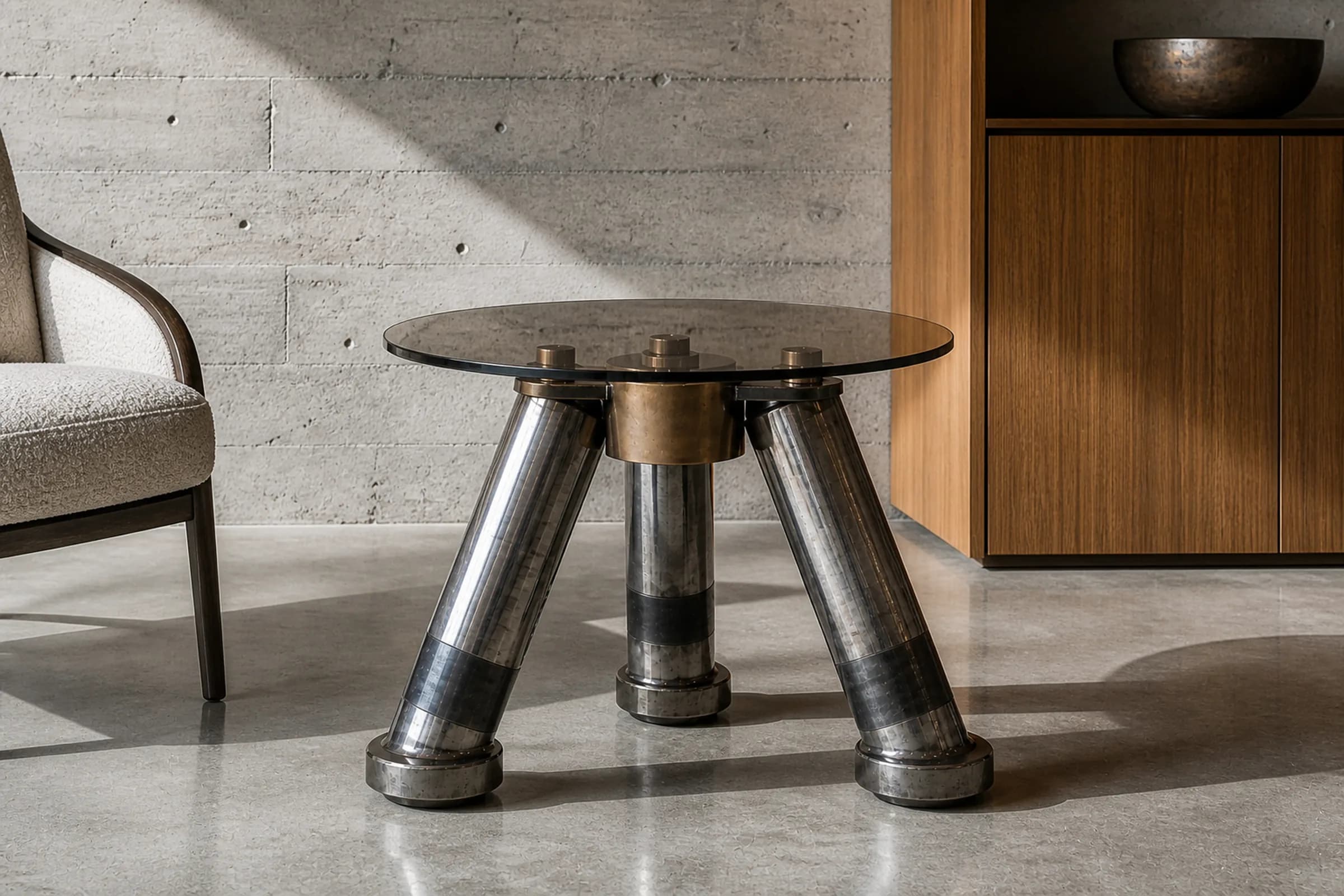
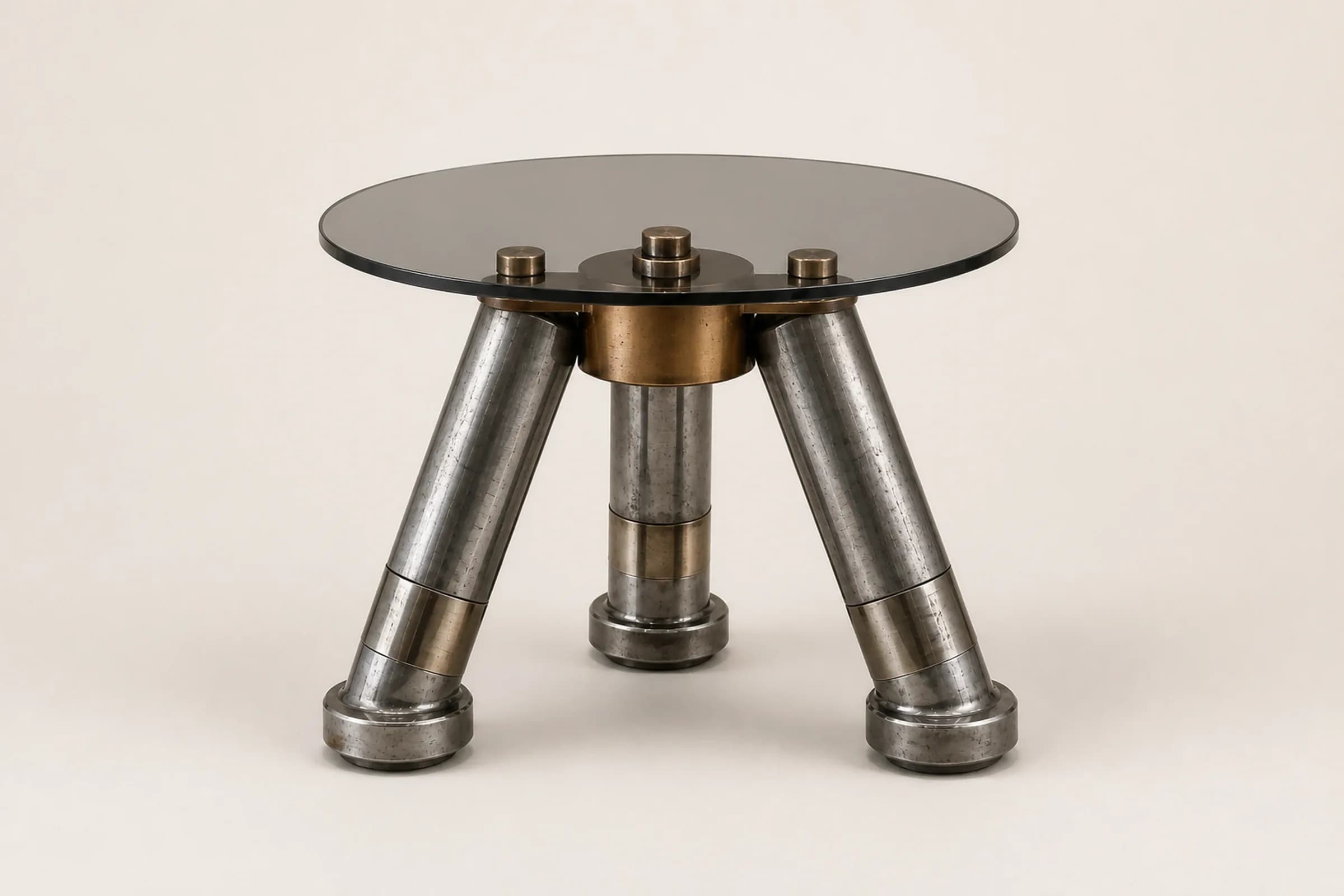
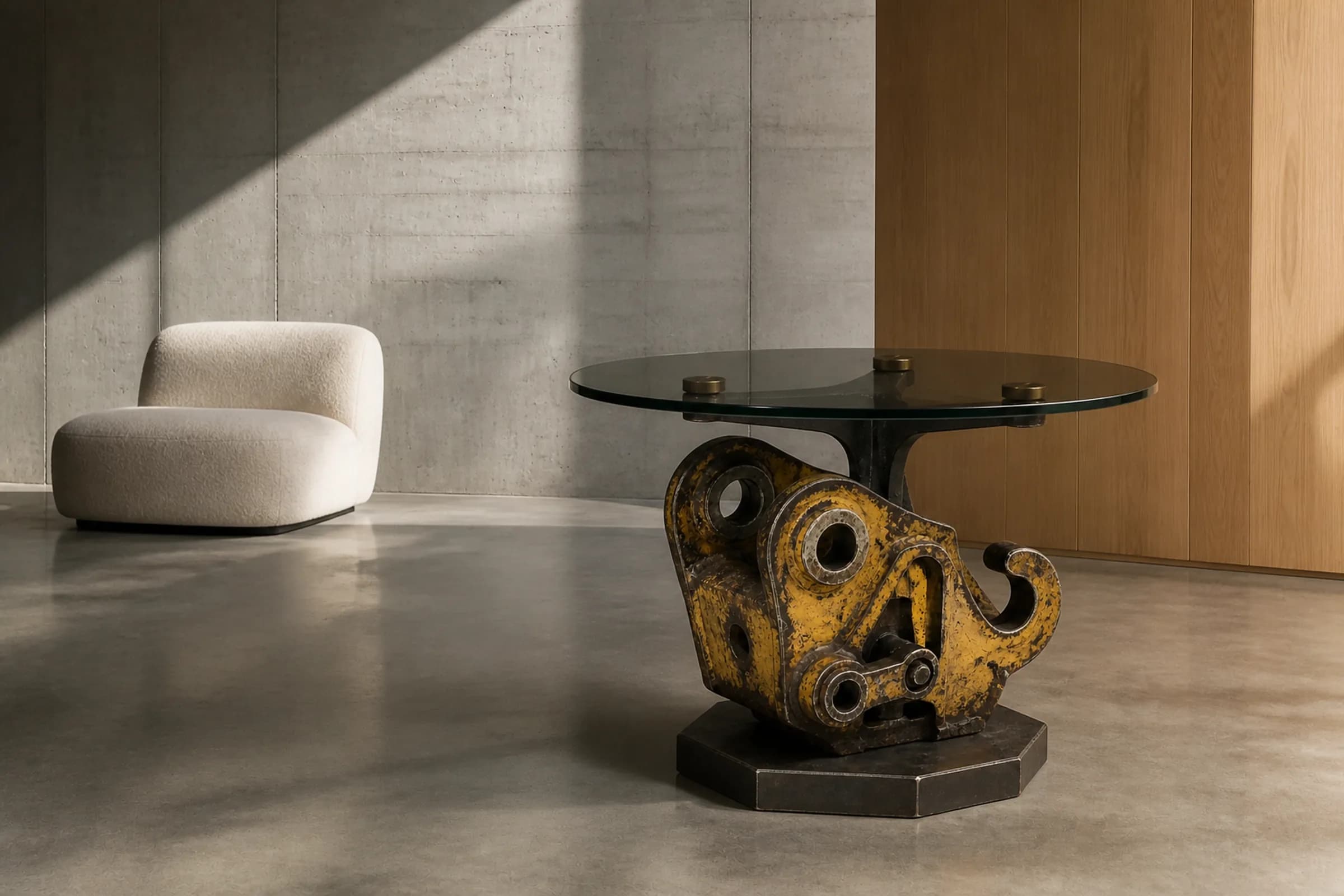
Objects in this note
Considering a commission?
Tell us about the space and the location. We answer with availability, customisation scope and a transport estimate.