Brutalist furniture: what it is, and what it is not
Brutalism is a set of rules about honesty in material and structure, not a colour palette. Knowing them tells you why some heavy furniture reads as serious and some reads as costume.
01What brutalism actually means
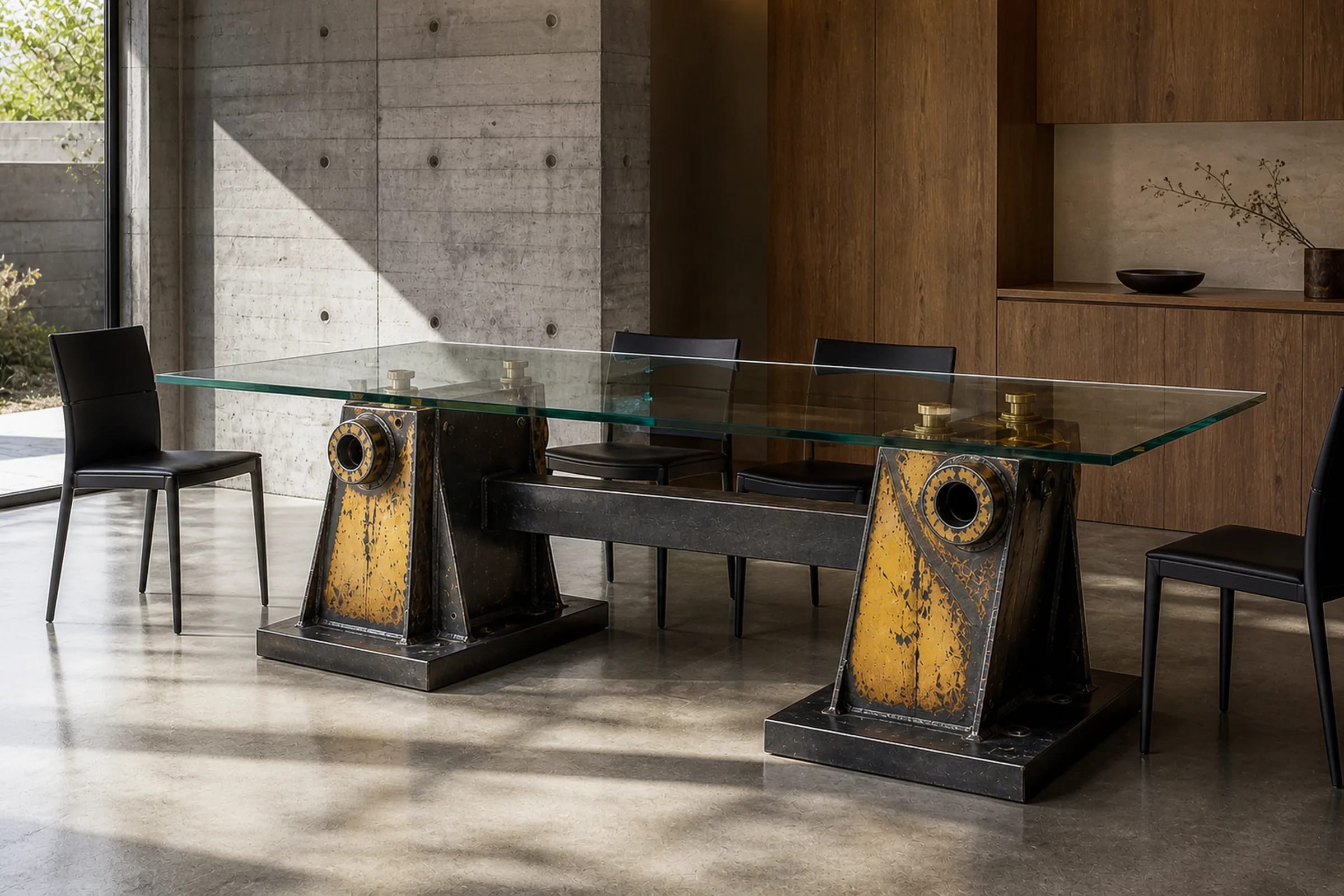
The word comes from béton brut — raw concrete — and describes an architectural position, not a look: material shown as it is, structure left legible, no cladding to disguise how a thing stands up. Applied to furniture it produces objects that are massive, plainly jointed and frank about their material. Wear is not hidden. Fixings are visible. Nothing pretends to be lighter or more precious than it is. The style dates from the 1950s to the 1970s, and its furniture is now firmly in the collectible market.
02How to tell it from industrial style
The commercial category called “industrial” borrows the appearance and drops the discipline: new steel aged with chemicals, bolt heads that fasten nothing, pipe frames sized for looks rather than load. Brutalist objects fail that test in reverse — they are heavier than they need to look, their joints do real work, and their surface is whatever the material actually did. The quickest check is to ask what a detail is for. If the answer is “to look industrial”, it is a style, not a position.
Brutalism does not decorate structure. It admits it.
03Why reclaimed machine parts fit the argument
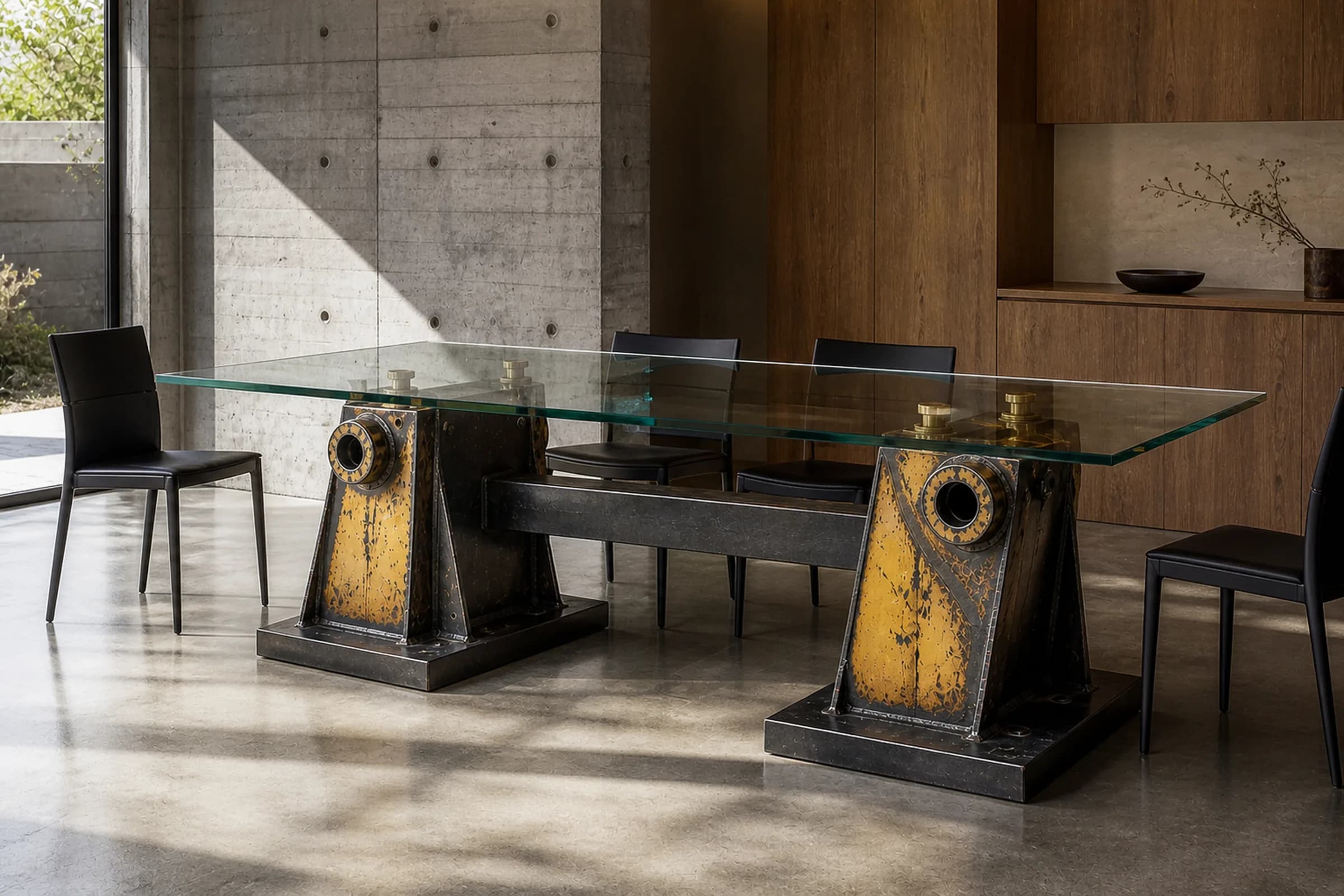
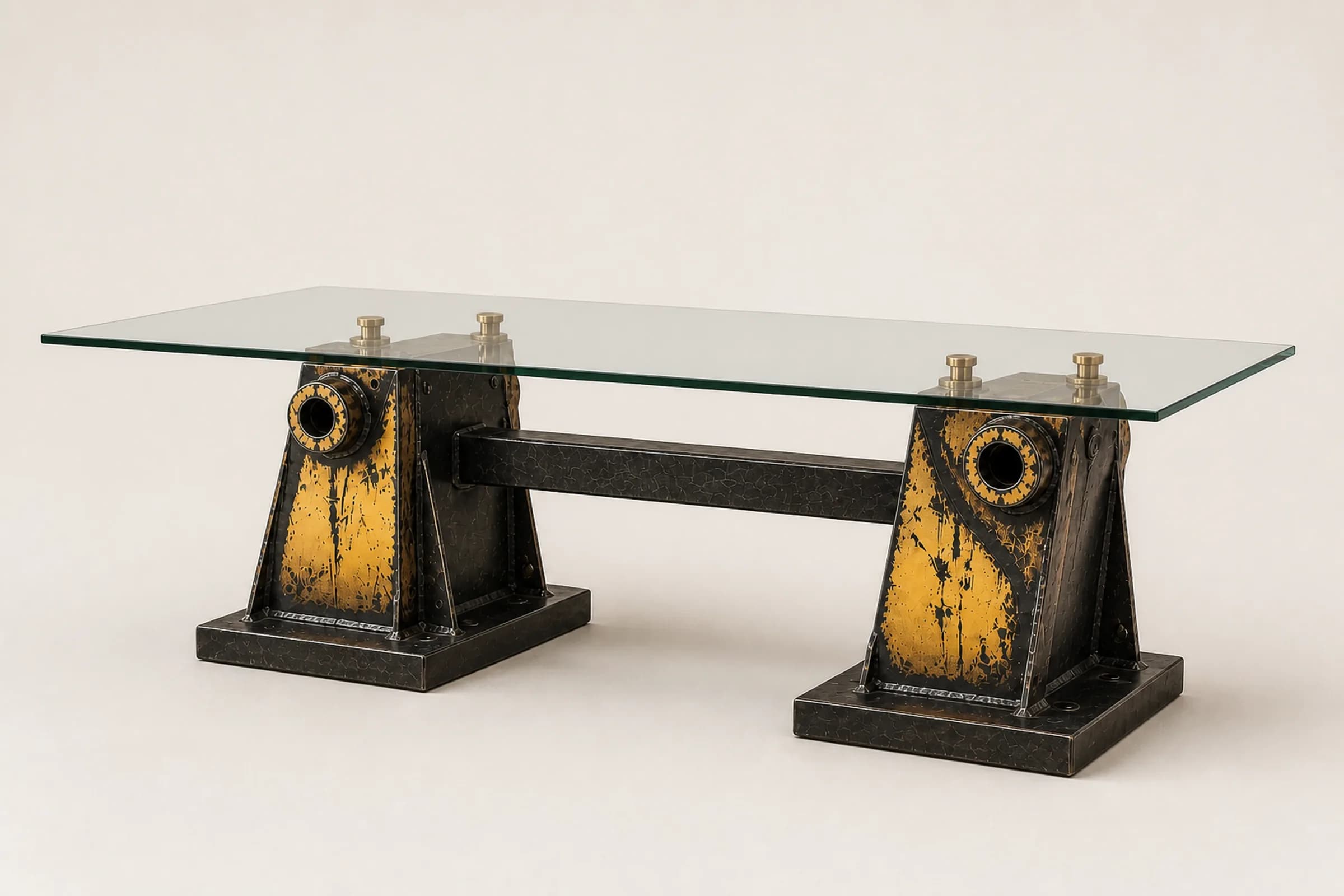
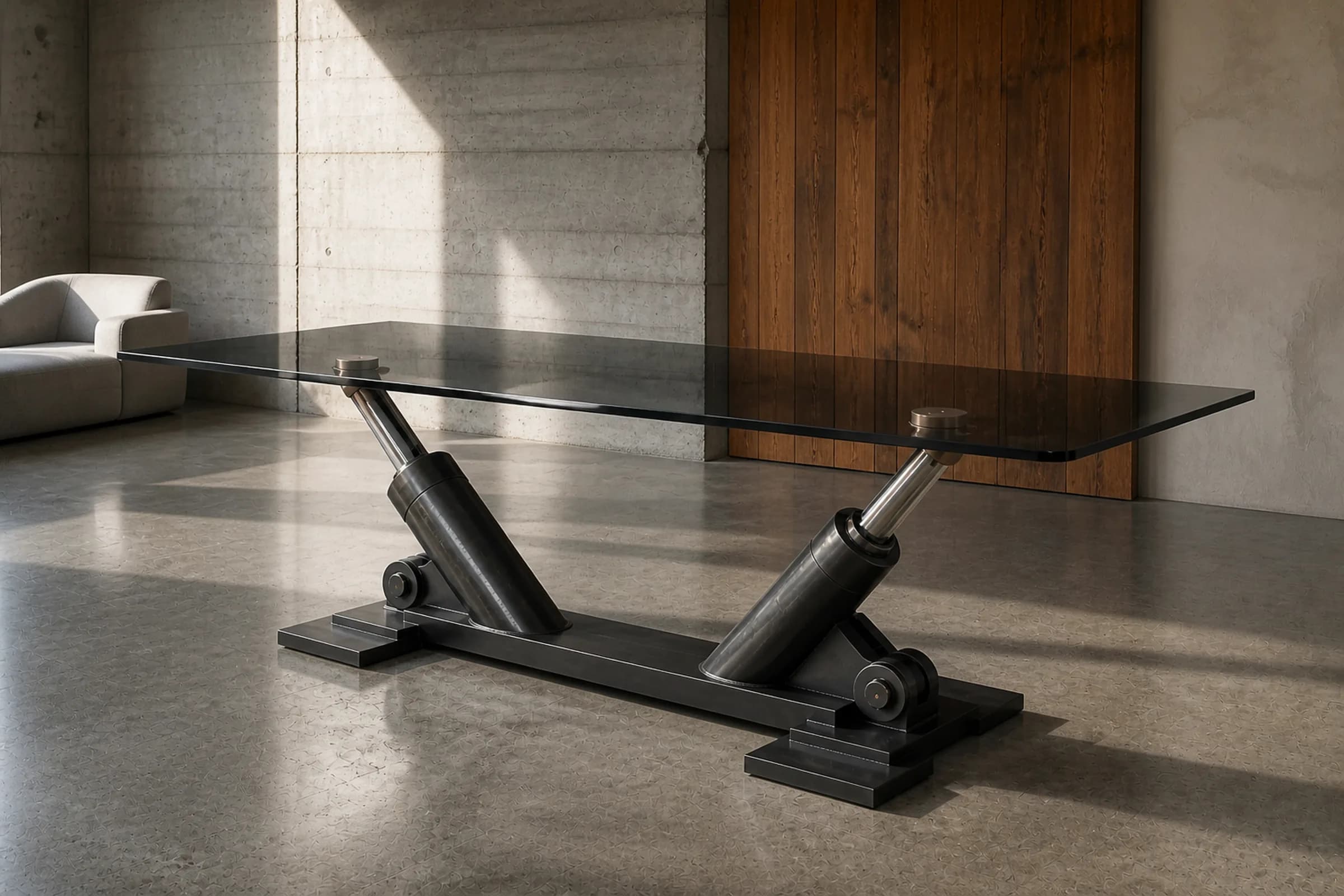
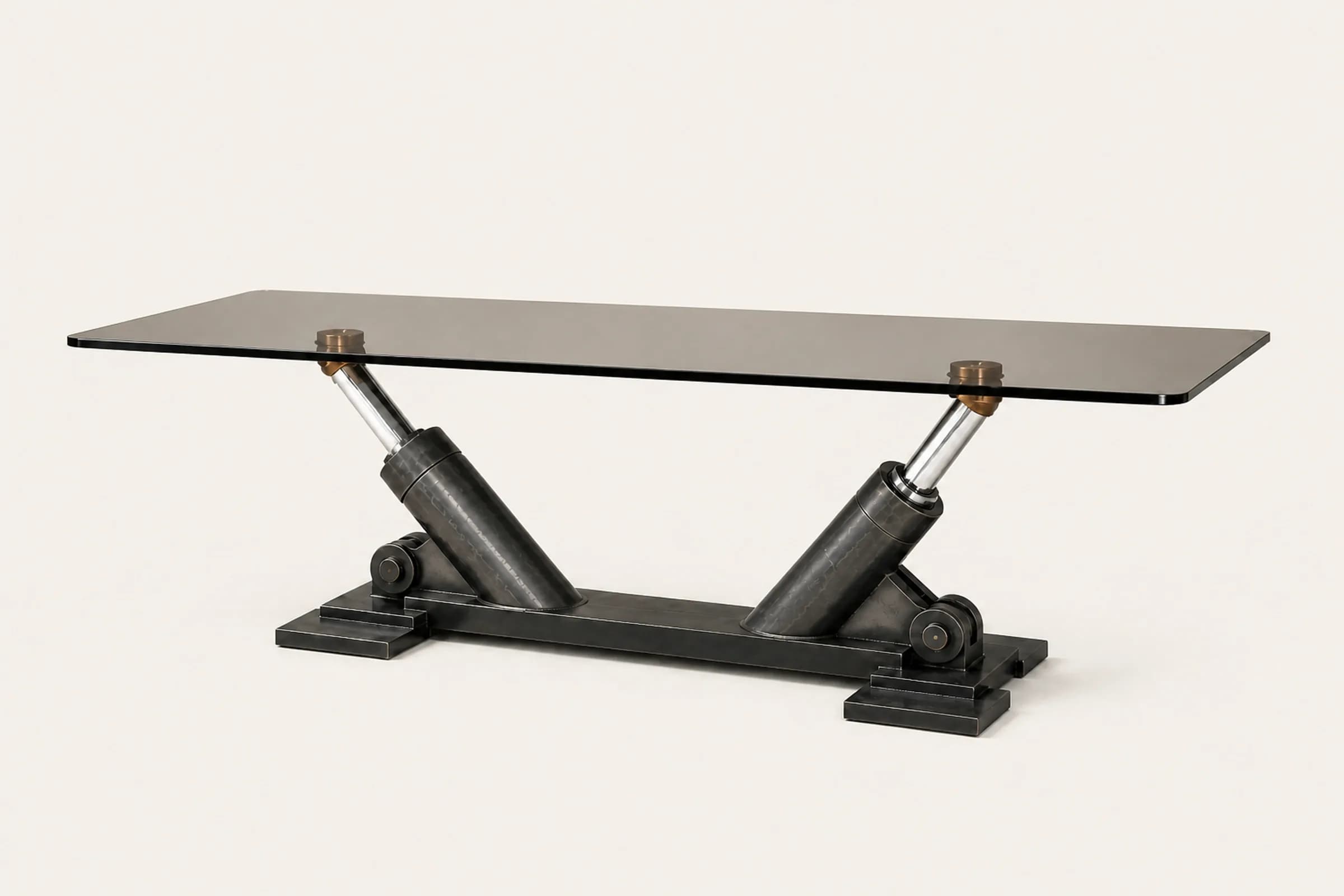
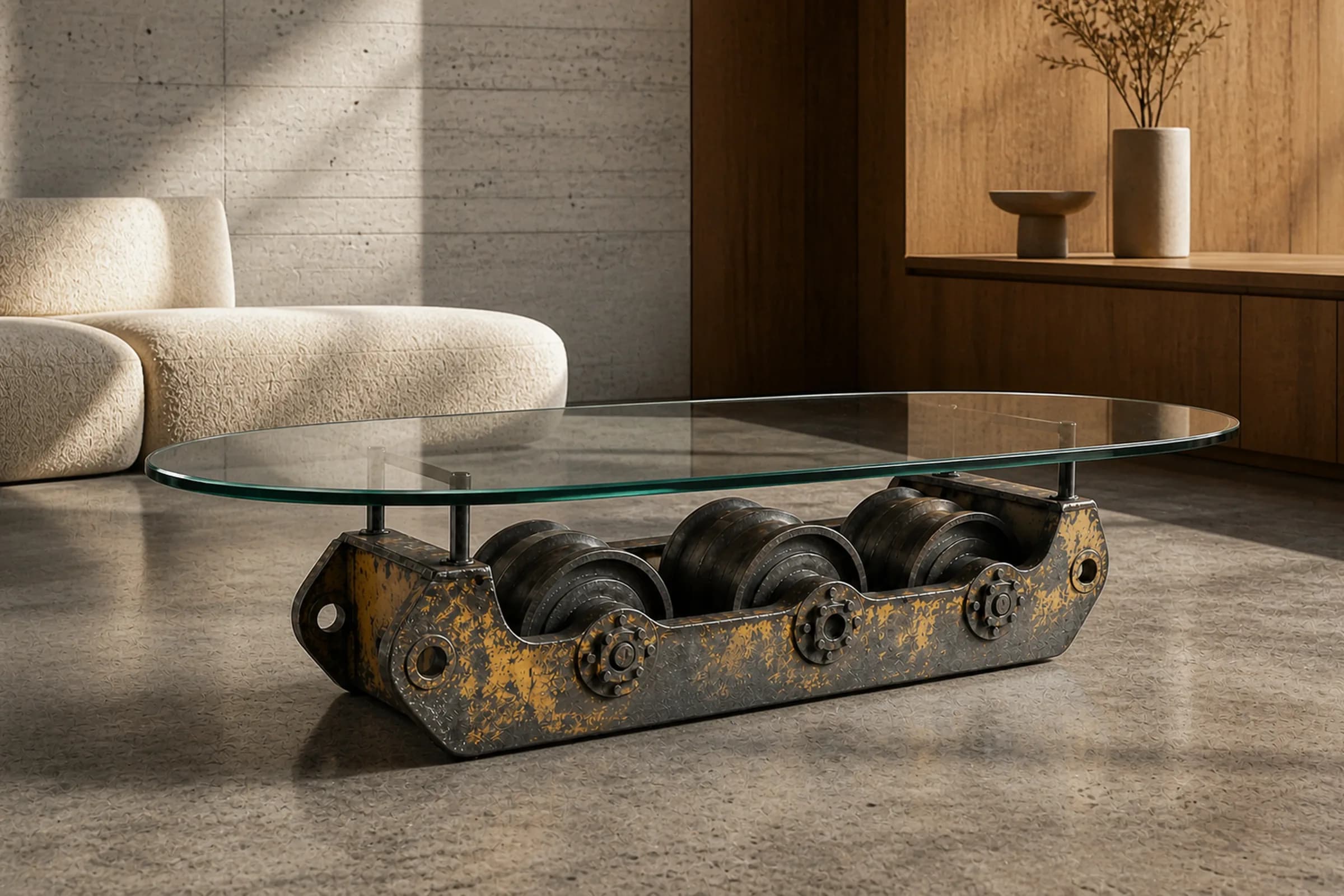
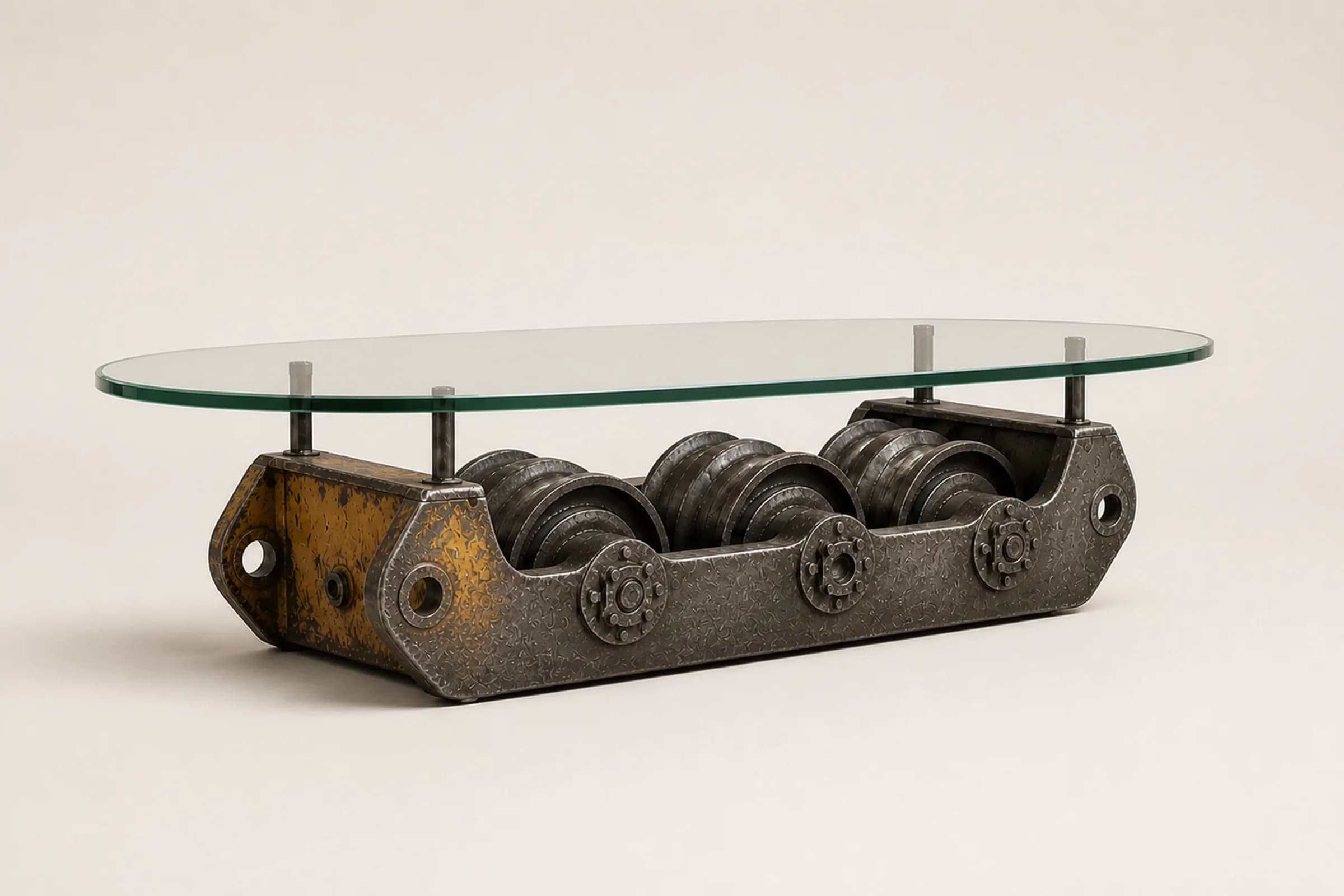
A component taken from a working machine arrives having already satisfied every brutalist requirement without being asked. Its proportions were set by load, not taste. Its surface records what happened to it. Its structure is legible because it had to be inspected and repaired. Nothing about it is decorative, which is exactly why it reads as serious in a room. The design work is restraint: stabilise, smooth the contact zones, add glass, and stop.
04Living with a brutalist object
Give it space and a single light source. These objects are read by their silhouette and by the raking light across their surface, and both are destroyed by clutter and by even, overhead lighting. Keep the surrounding palette quiet — concrete, oak, plaster, wool — and let the object be the only loud thing. One brutalist piece per room is usually the limit; two start arguing with each other.
05Buying without being sold a costume
Ask what the material was before. Ask whether the patina is original or applied. Ask which fixings carry load and which are decorative. Ask for the edition size and who keeps the register. A studio working in this tradition will answer all four in a sentence each, because the answers are the product. A vendor selling the look will change the subject to how it was styled.
Objects in this note
Considering a commission?
Tell us about the space and the location. We answer with availability, customisation scope and a transport estimate.