Provenance for salvaged objects: what can honestly be documented and what cannot
A certificate that claims more than it can prove is worse than no certificate. Here is exactly what is knowable about a reclaimed machine component, and where the record genuinely stops.
01Why provenance matters more here than elsewhere
For most furniture, provenance is a formality. For an object whose value rests on having had a previous working life, it is the substance of the claim — remove the history and you are left with a heavy metal shape. That asymmetry creates an obvious temptation to embroider, and the category contains a good deal of invented backstory. The counter is to state precisely what is known, precisely how it is known, and precisely where knowledge ends.
02What can be established reliably
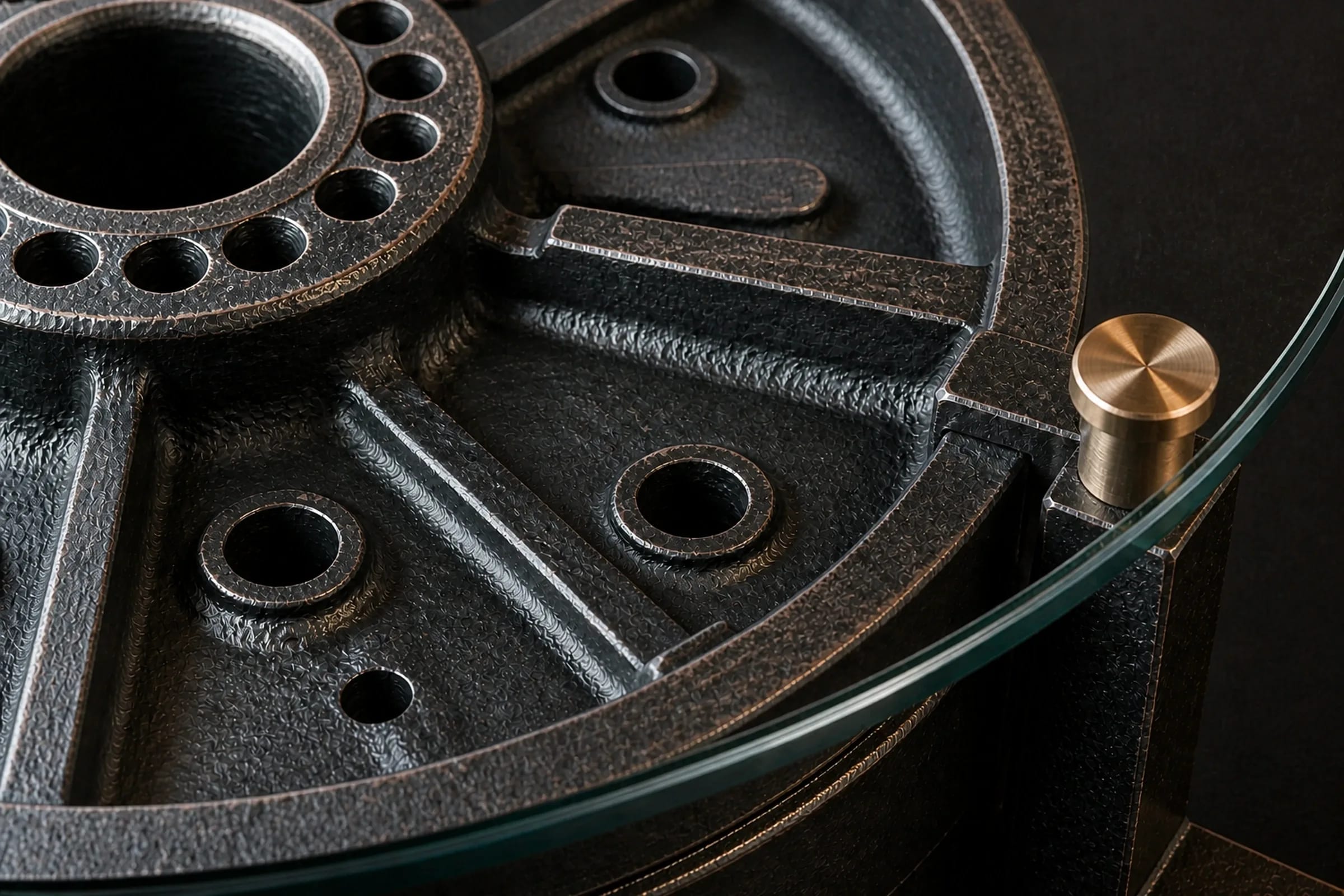
Four things are genuinely determinable. The component type, from its geometry and function — a track idler, a slewing ring, a bucket tooth are unmistakable to anyone who knows the machinery. The machine class it came from, from dimensions and mounting details, which narrows it to a weight category and often a manufacturer family. The approximate service period, from wear depth, corrosion character and casting or forging marks. And the material class, from hardness testing and, where it matters, spark or spectrographic checks. These four are what our documentation states.
We can tell you what the part is and roughly how long it worked. We cannot tell you the serial number of the machine, and we will not pretend otherwise.
03What cannot, and where sellers overclaim
A specific machine serial number is almost never recoverable, because components are routinely swapped between machines during a working life and identification plates live on the chassis, not the wear parts. The precise site the machine worked on is not recoverable either, unless the part came directly from an identified operator with records — which occasionally happens and is then stated as such. Exact dates of manufacture are usually unavailable. Any certificate offering all of these for a generic salvaged part is describing a level of traceability that the salvage chain does not support.
04What a useful certificate contains
A specific identifier for the object. Its dimensions and mass. The component type and its original function. The donor machine class and the approximate service period, with the basis for each stated. The material class and finish specification. The date of making and the maker. A statement of whether the piece is unique or repeatable. And a clear note of what is not known. That last line is the one that makes the rest credible — a document that admits its limits is far more trustworthy than one that does not.
05Keeping the record alive
Provenance is only useful if it survives with the object. Keep the documentation somewhere it will not be lost in a move, photograph the object on arrival for insurance, and record any repair or refinishing with dates — future condition assessments depend on knowing what was original and what was later work. If the piece is ever sold, the documentation goes with it. An object of this kind without its record loses most of what distinguished it, and the record cannot be reconstructed after the fact by anyone, including us.
Objects in this note
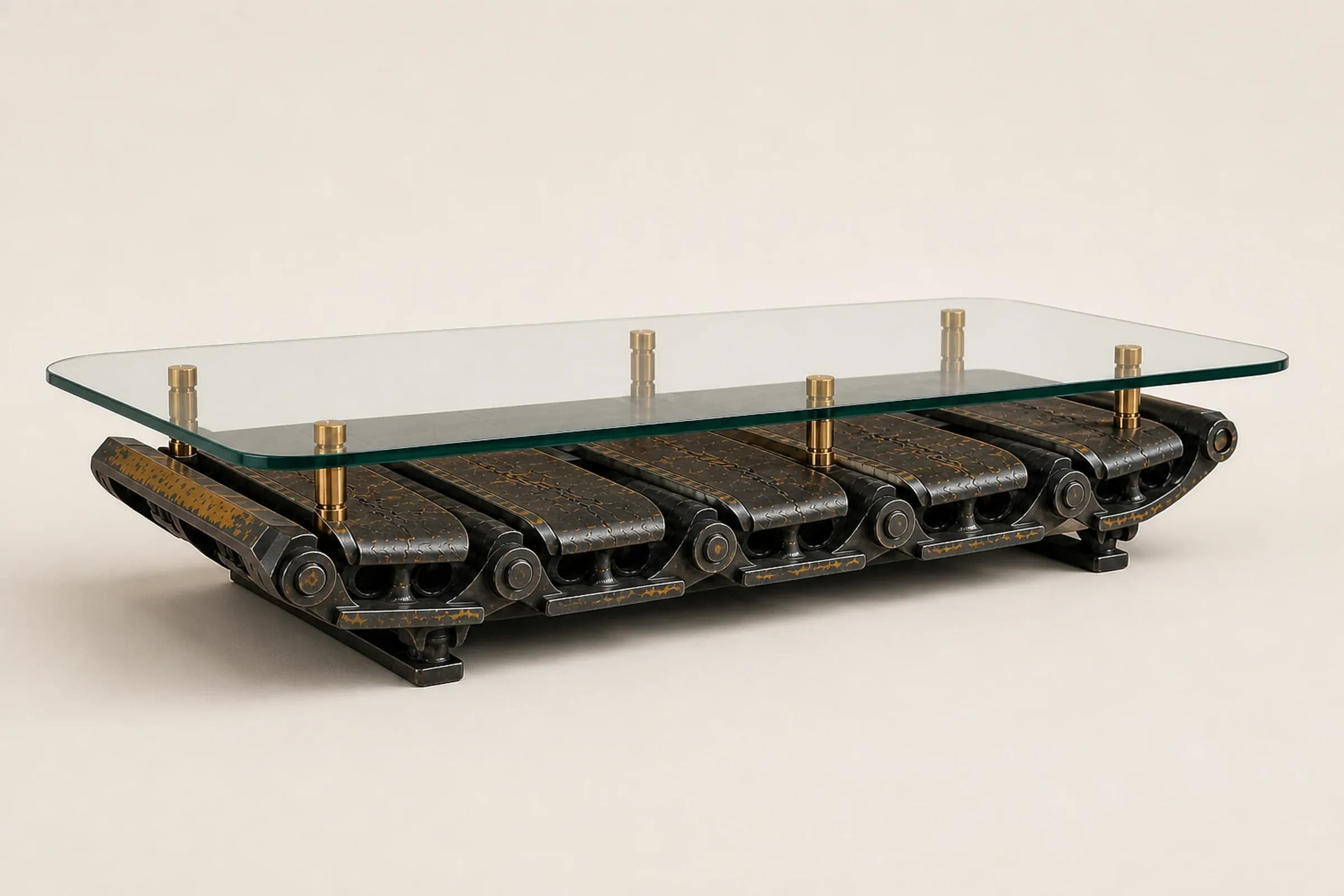

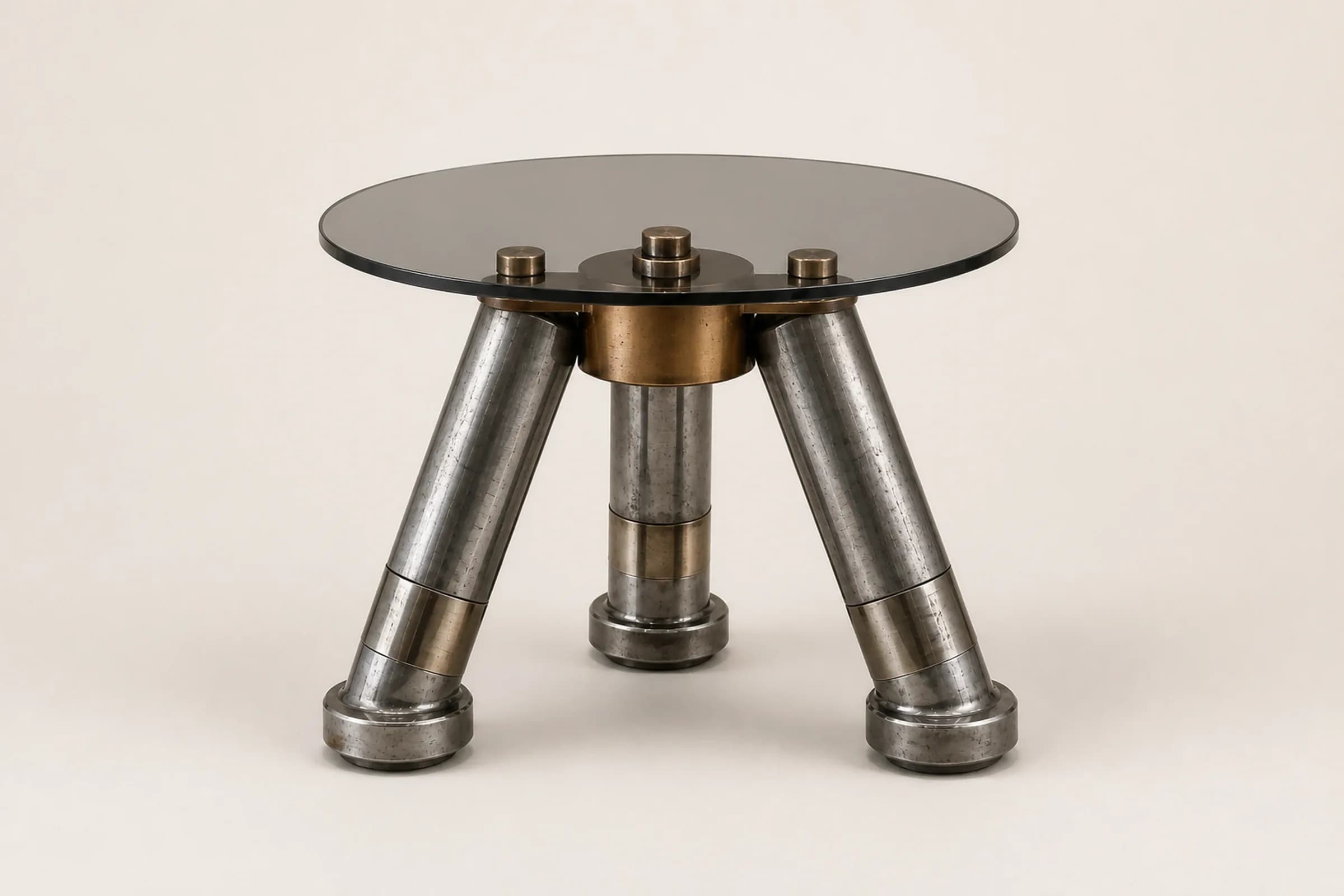
Considering a commission?
Tell us about the space and the location. We answer with availability, customisation scope and a transport estimate.