Clear or smoked: choosing the top over a steel base
The glass is not neutral. Clear puts the steel on display and shows every mark; smoked mutes it, hides dust and changes how heavy the object reads in a room. Here is how to choose.

01What each one does to the steel below
Clear glass is a window. Every weld, every worn face and every trace of original coating stays fully visible, and the object reads as something being shown rather than something being used. Smoked glass is a filter. It lowers contrast, pushes the steel into shadow and lets the silhouette dominate instead of the detail. On a part with a busy surface — a sprocket, a track section, a bogie — smoked glass calms the composition. On a part whose value is a single clean face, clear glass is usually the right answer.
02Light in the room decides more than taste
In a north-facing room with limited daylight, smoked glass can pull a dark object into near-invisibility; clear glass keeps the steel legible. In a bright south-facing space, clear glass over dark steel produces strong reflections at certain hours, and smoked glass reduces them noticeably. Look at where the object will stand at the two times of day you actually use the room, not at the time you happen to be choosing.
Clear glass makes the object an exhibit. Smoked glass makes it furniture.
03Living with each surface
Clear glass shows dust, fingerprints and the ring from a cold glass within an hour of cleaning. Smoked glass hides all three, which is why it tends to win in rooms that get real use. Both wipe clean the same way — a damp cloth, then dry — and neither should meet an abrasive or an ammonia-heavy cleaner near the steel, because overspray attacks the sealant on the patina long before it does anything to the glass.
04The specification behind both
Every top in the collection is tempered, and the larger spans are laminated as well. Tempering is what makes a failure safe: the pane breaks into blunt granules instead of shards. Lamination adds an interlayer that holds those granules in place, which matters on any surface at seating height in a room used by children. Thickness follows span and support geometry rather than preference, and the glass is specified and signed by the supplier against the relevant standards, not by us.
05A simple way to decide
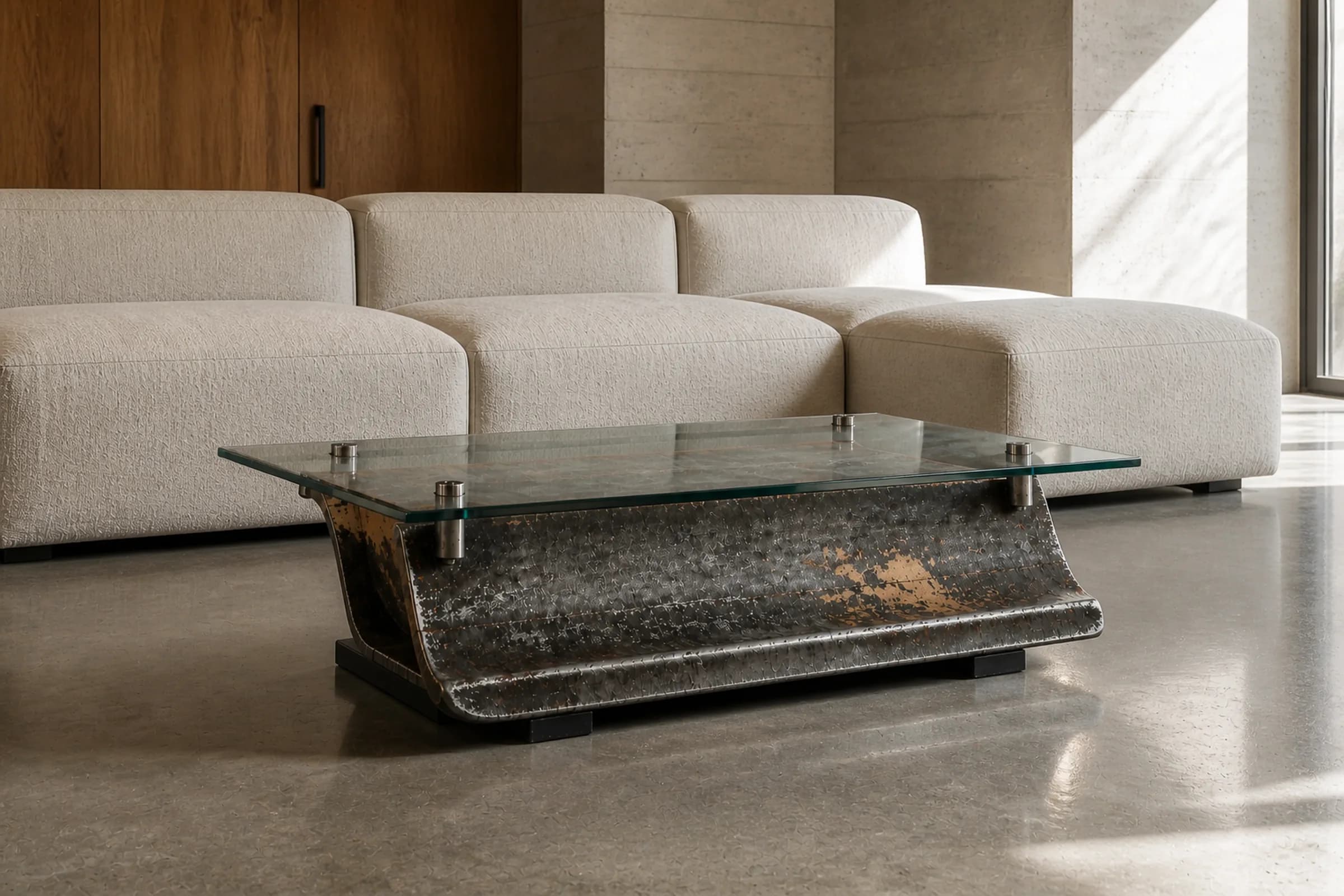
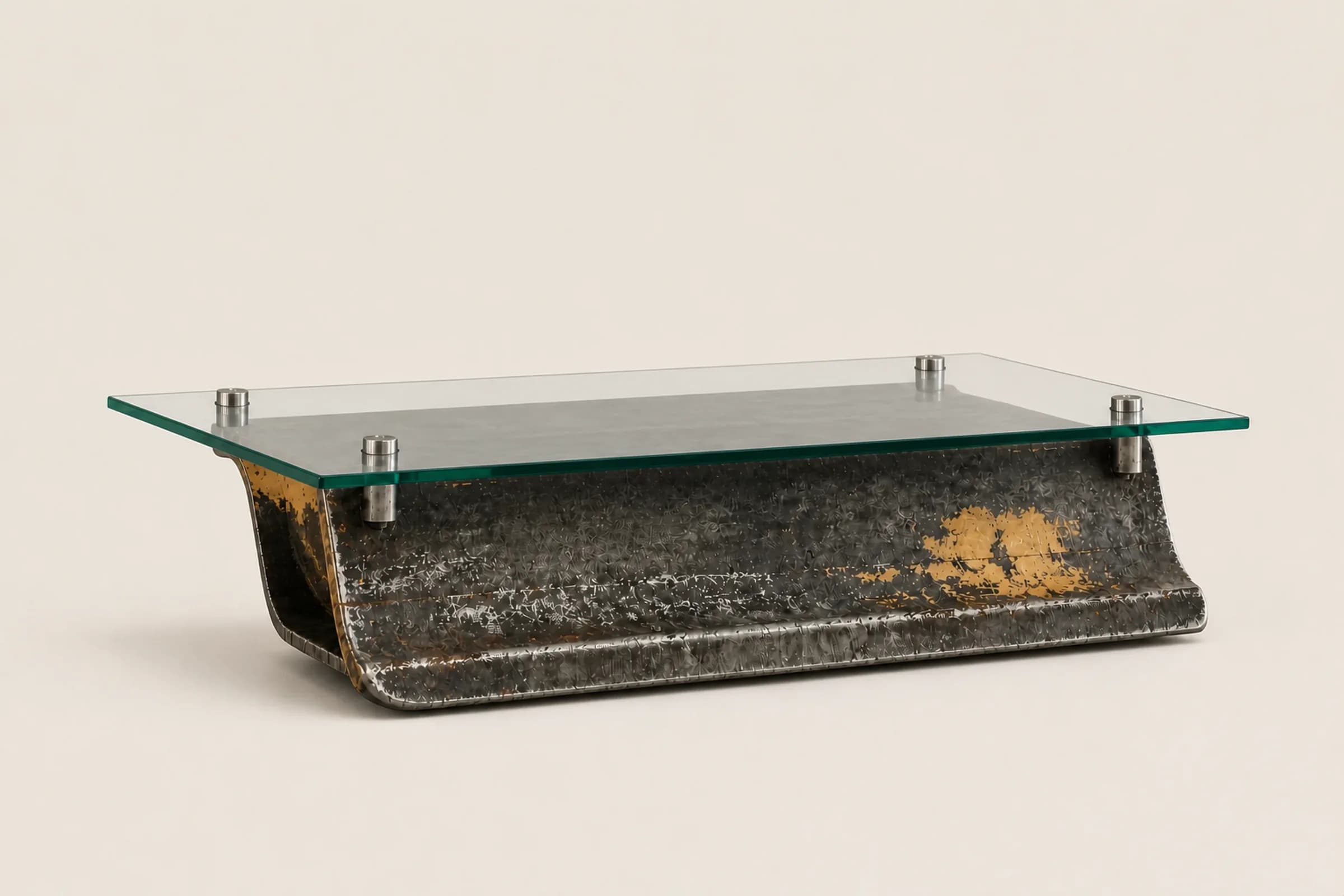
If the object is the point of the room, choose clear and accept the maintenance. If the object has to coexist with a sofa, a rug and daily use, choose smoked and let the silhouette carry it. If you cannot decide, look at the packshot and the in-situ photograph of the same object side by side — the difference between those two images is almost exactly the difference the glass makes.
Objects in this note




Considering a commission?
Tell us about the space and the location. We answer with availability, customisation scope and a transport estimate.