Stainless or carbon steel: which one belongs in a living room
Stainless resists corrosion because of chromium, not because it is a different metal. It costs more, works harder and looks colder — and for most interior objects it is the wrong answer.
01The chromium film, and what it actually does
Stainless steels contain at least 10.5 % chromium, which reacts with oxygen to form a very thin, transparent, self-repairing chromium-oxide layer. That passive film is the entire mechanism. Damage it mechanically and it reforms within minutes in air; damage it chemically — with chlorides, or by covering it with a stagnant deposit that excludes oxygen — and it does not, which is how stainless develops pitting. The common grades are 304, the general-purpose austenitic, and 316, which adds molybdenum for chloride resistance and is what coastal and marine work specifies.
02Where each material makes sense
Stainless earns its price where there is water, food, chemistry or salt: kitchen and gastronomy fit-outs, laboratory and medical furniture, outdoor and poolside work, and anywhere hygiene requires repeated aggressive cleaning. This is why the category exists commercially and why a stainless kitchen bench costs several times a painted one. In a dry heated living room, none of those conditions apply. Carbon steel with a considered finish will be stable indefinitely there, costs less, and offers something stainless cannot: a surface with depth and history rather than a uniform bright one.
Stainless steel is not stain-proof. It is stain-resistant, and only while its oxide film is intact.
03Appearance is the real deciding factor
Stainless has a cool, even, slightly blue-grey character and reflects light uniformly. It is excellent in that role and genuinely hard to make warm. Carbon steel takes on almost any surface — mill-scale blue-black, blued and oiled, blackened, waxed to a soft graphite, or left with a service patina — and reads warmer next to timber, wool and plaster. In a room where the object is meant to have presence rather than disappear, carbon steel gives more to work with. In a room built around a clean bright palette, stainless is the coherent choice.
04Working and repairing them
Carbon steel is easier to weld, cut, drill and dress, and it can be locally repaired: a scratch can be reworked and re-blackened by hand, and a damaged area can be blended into the surrounding surface. Stainless work-hardens rapidly, needs dedicated tooling to avoid iron contamination, and requires post-weld passivation to restore corrosion resistance; a scratch on a brushed stainless panel is hard to blend without reworking the whole face. For a one-off object that will be lived with for decades, repairability matters more than most buyers expect.
05Why our objects are carbon steel
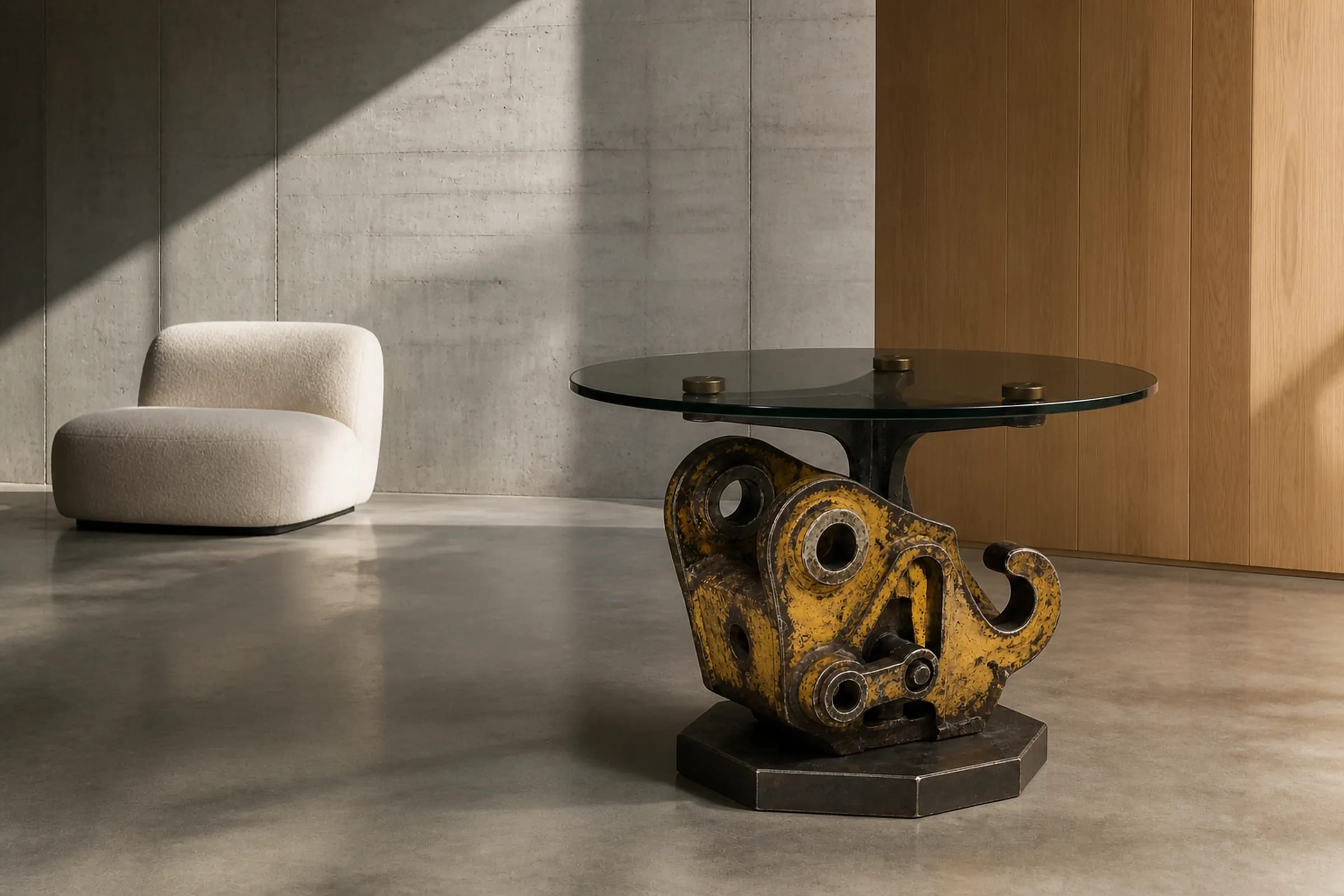
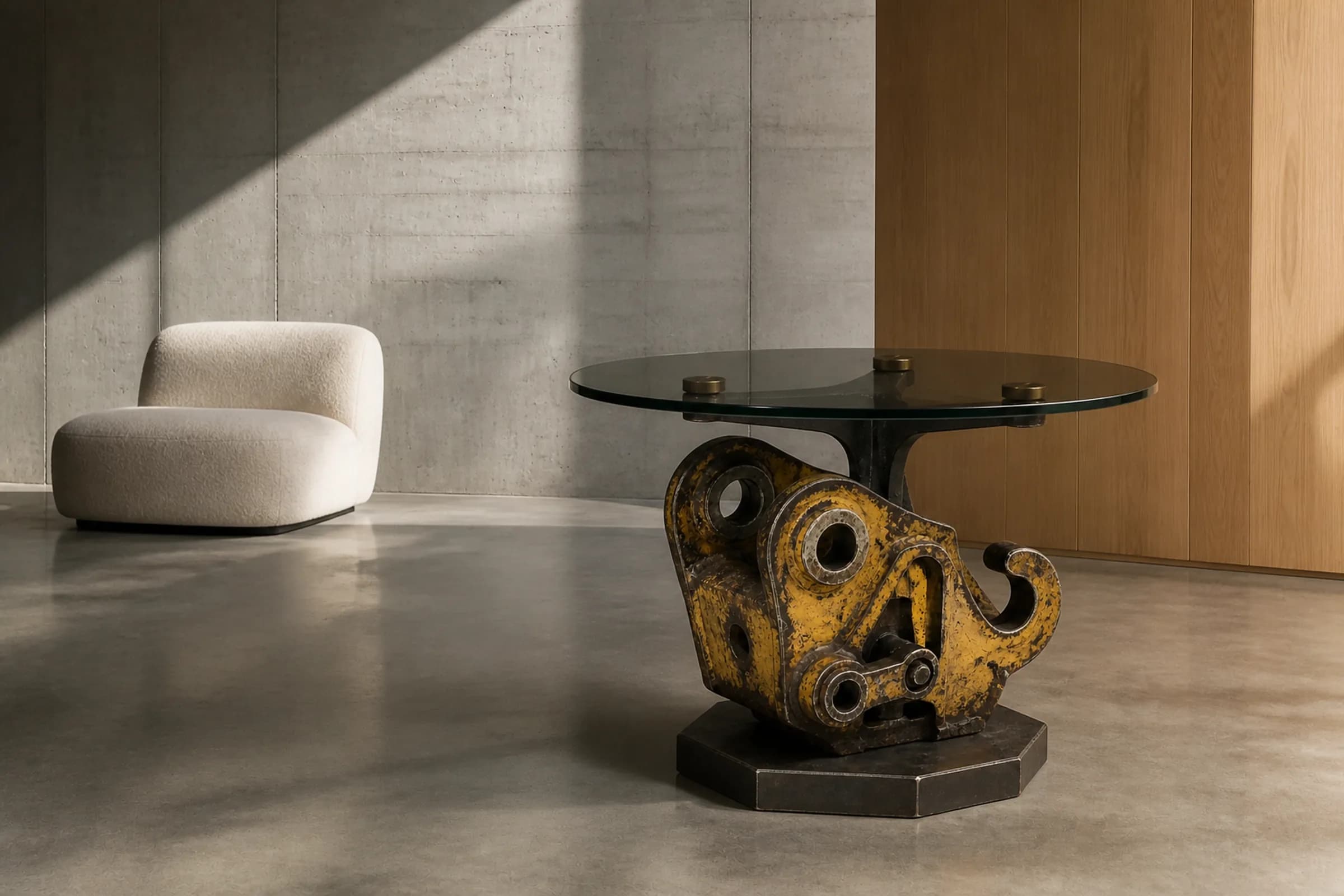
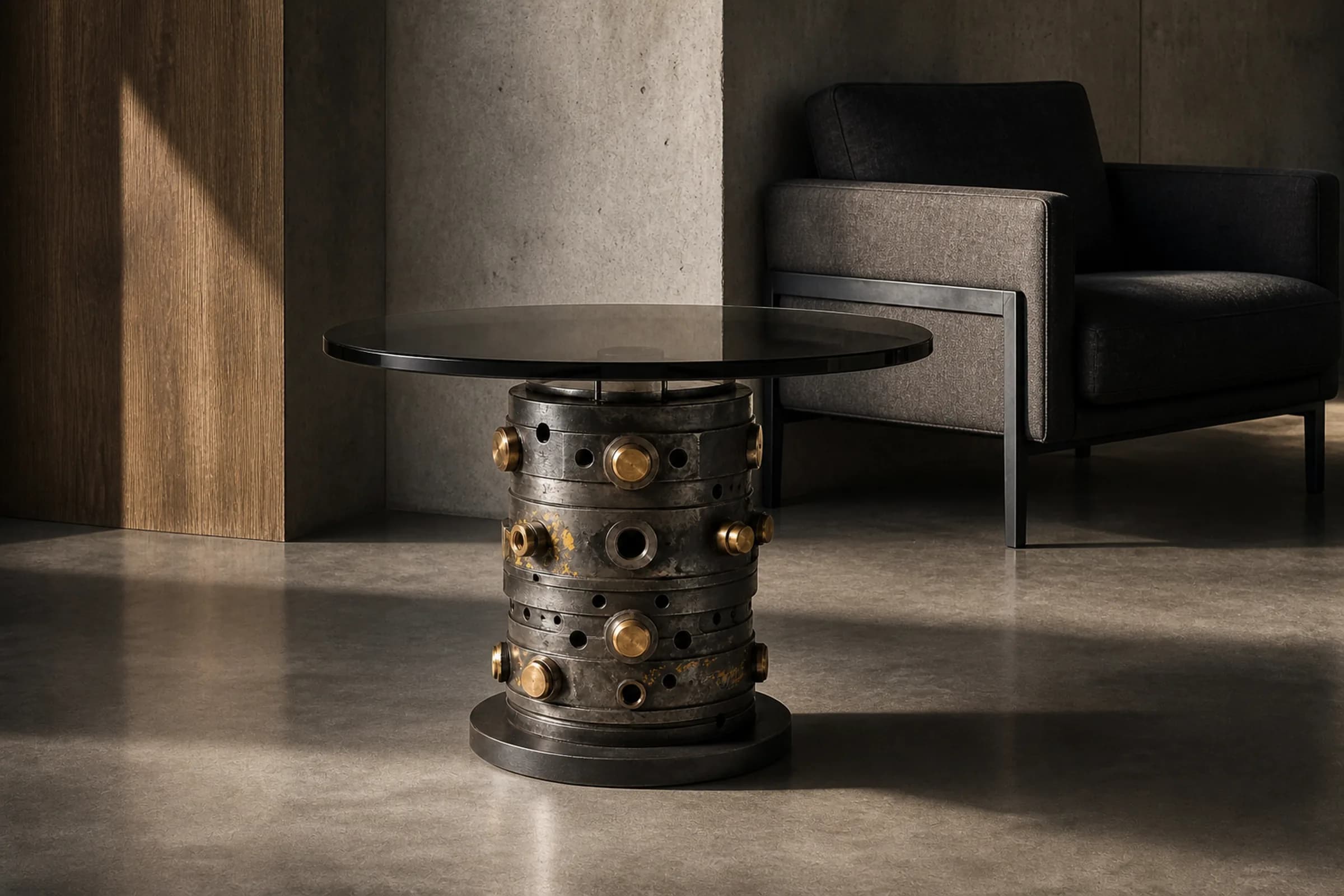
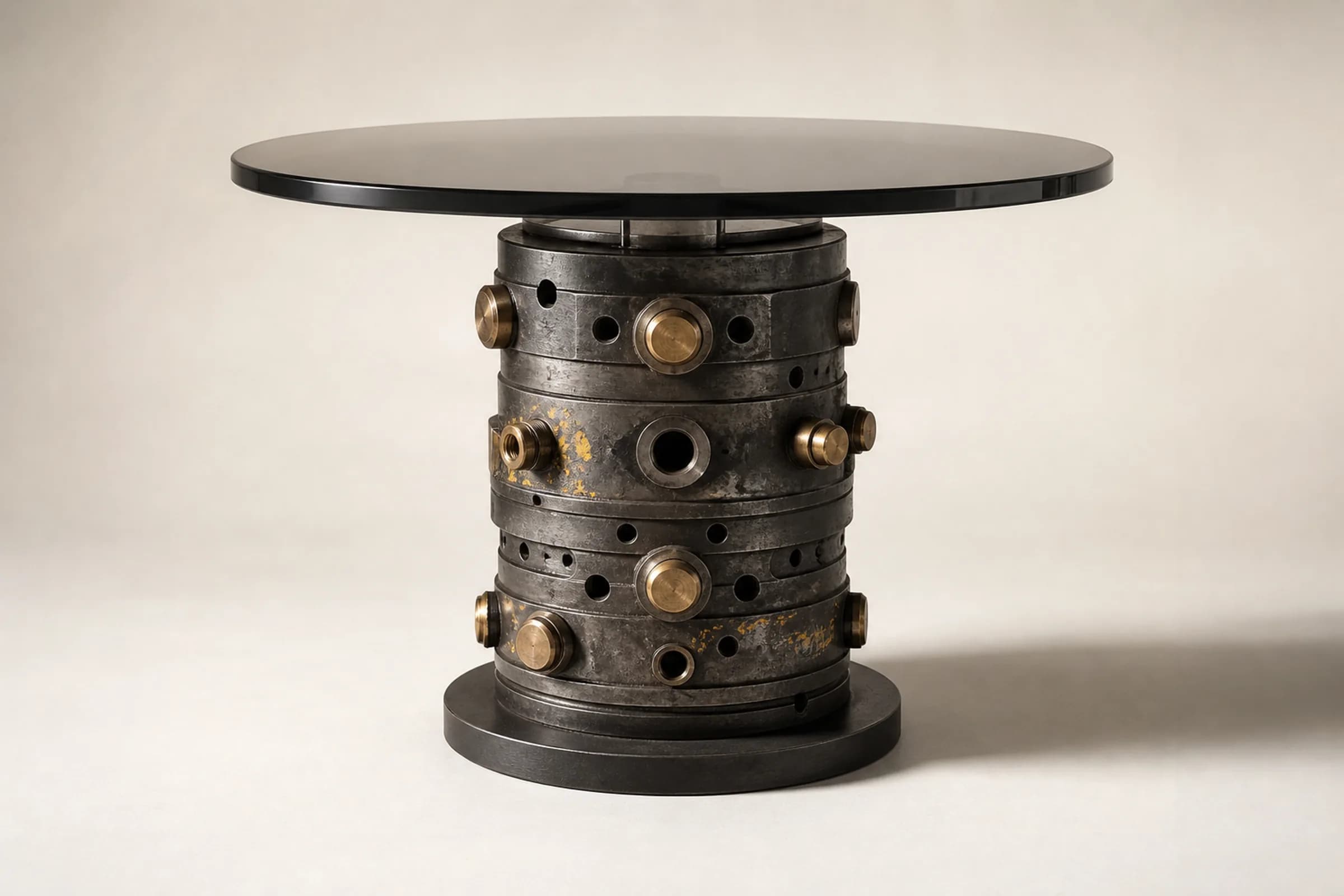
The components we work with came from earth-moving machinery, and that machinery is built almost entirely from carbon and low-alloy steels — structural plate, quenched wear plate, case-hardened pins, cast steel bodies. Using the material as it arrived is not a stylistic decision but a factual one: the object is what it was. It is sealed rather than plated, so the wear record stays readable. Care is a dry cloth and nothing else: the matte clear coat is the protection, and wax or oil applied over it only builds a film that holds dust. That is the trade against stainless, and indoors it is a small one.
Objects in this note

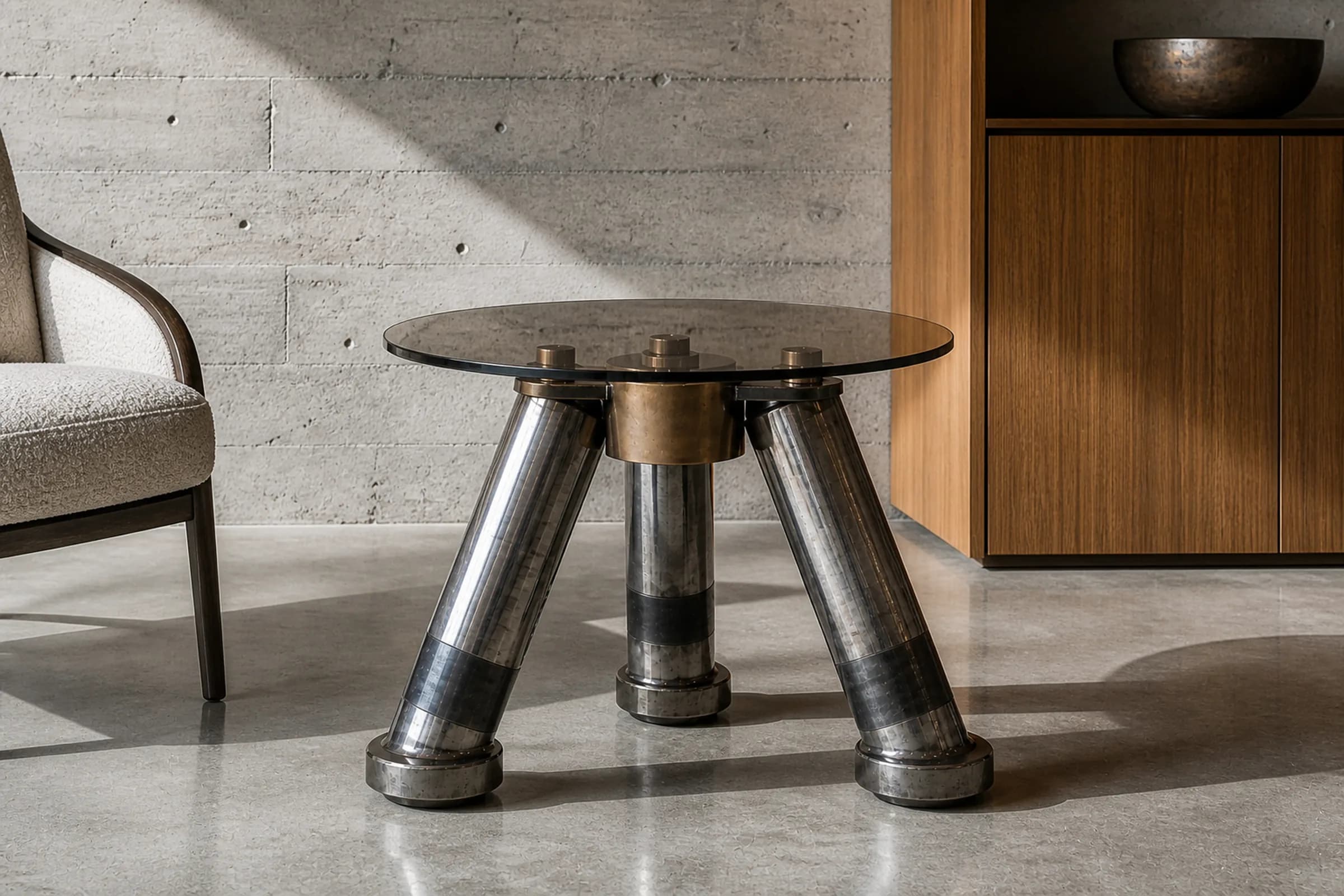
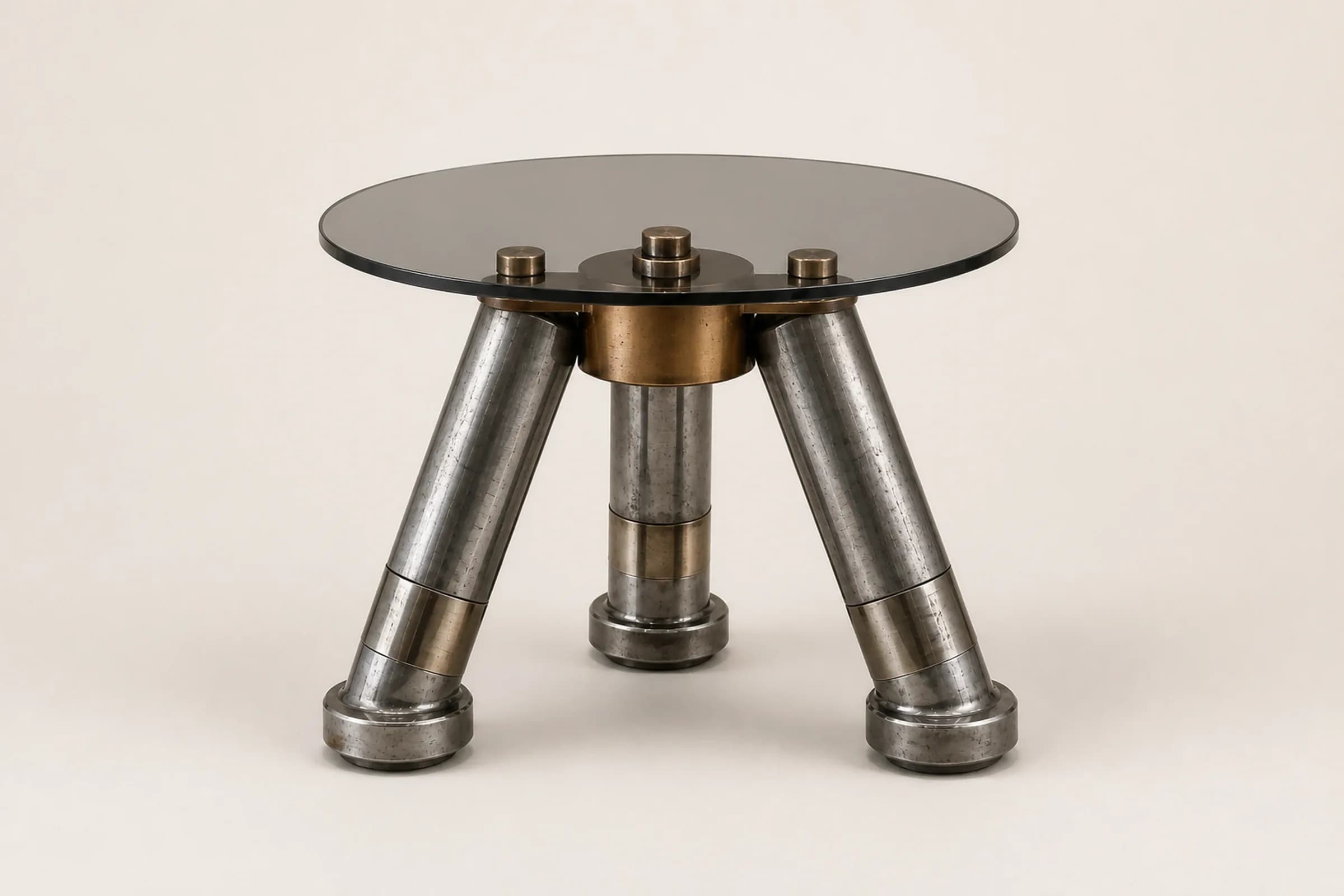
Considering a commission?
Tell us about the space and the location. We answer with availability, customisation scope and a transport estimate.