Brutalist interior design without the bunker
Brutalism is a structural argument, not a colour scheme. Concrete walls are one way to make it; a single honest object in an otherwise soft room is another, and it works in flats that will never be poured in situ.
01Where the word comes from, and what it actually claimed
Brutalism takes its name from béton brut — raw concrete — the term Le Corbusier used for surfaces left exactly as the formwork made them, board marks and all. Reyner Banham gave it a manifesto in 1955, and the claim was narrower and more interesting than the buildings it produced: a structure should show how it stands up, materials should appear as themselves, and services should not be hidden behind a decorative skin. Nothing in that argument requires concrete. It requires that you stop lying about construction. That is why the idea survives long after the buildings fell out of fashion, and why it translates into a room that has no concrete in it at all.
02The mistake most brutalist interiors make
The common failure is treating brutalism as a palette: grey walls, grey sofa, grey rug, a concrete-effect render over plasterboard. That produces a room that is simultaneously heavy and fake — it has the gloom of the style with none of the honesty that justified it. A concrete-look laminate is precisely the decorative skin Banham objected to. The second failure is uniformity. The buildings that still hold up — the Barbican, Boston City Hall, Trellick Tower — are relentless on the outside and full of warmth, timber, textiles and light inside. Contrast was always part of the method.
Béton brut meant raw concrete. The word that mattered was raw, not concrete.
03One heavy object does more than ten grey surfaces
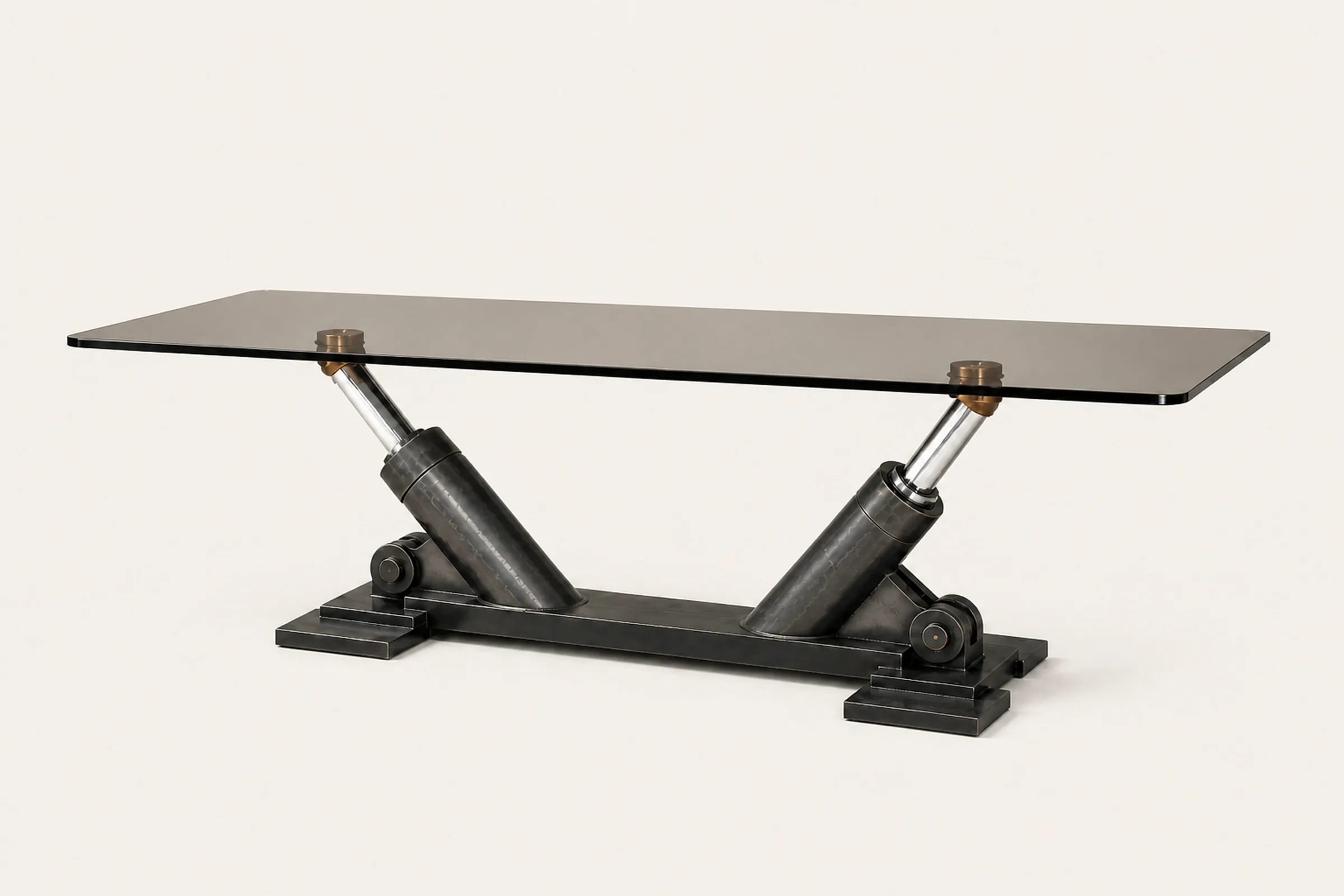
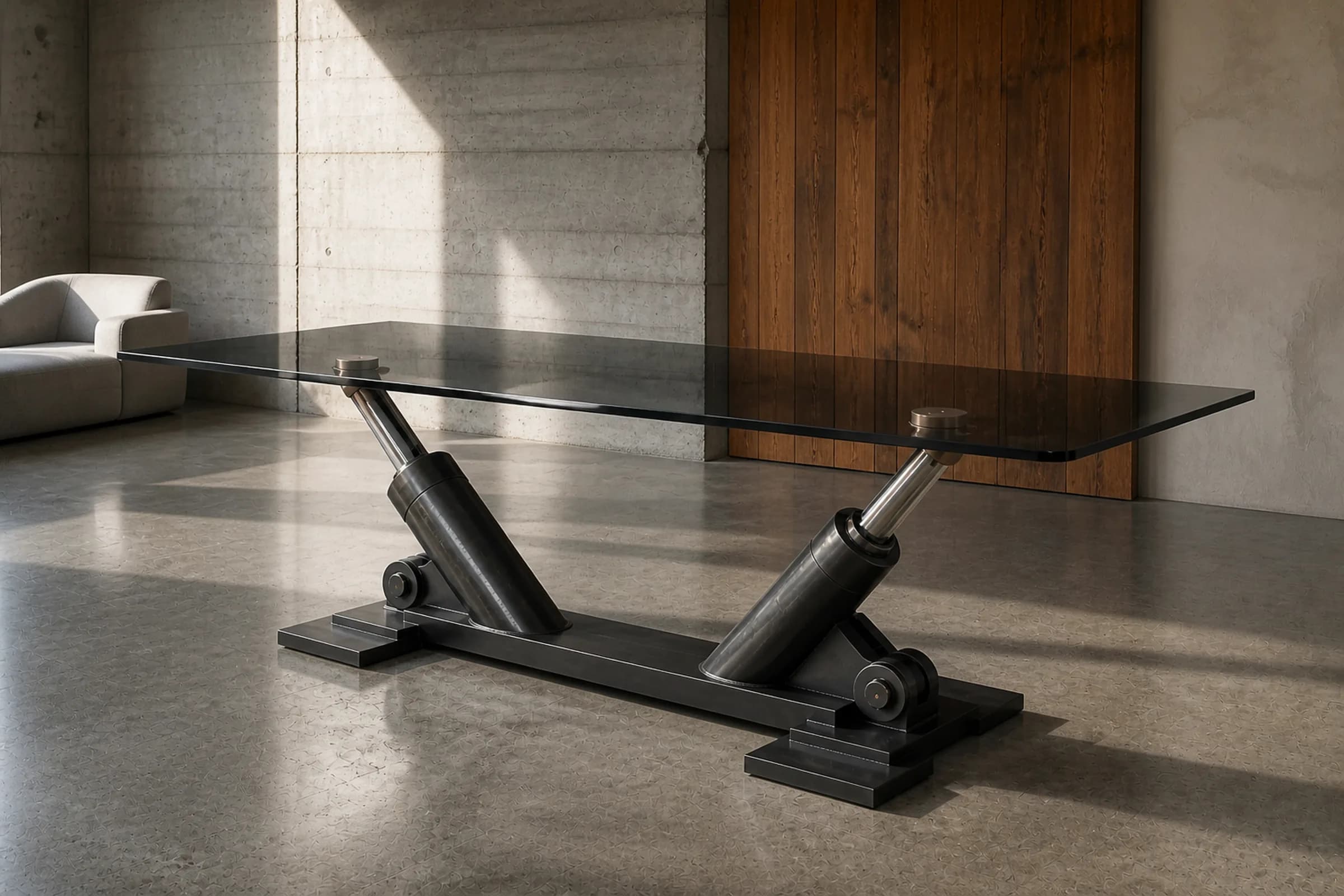
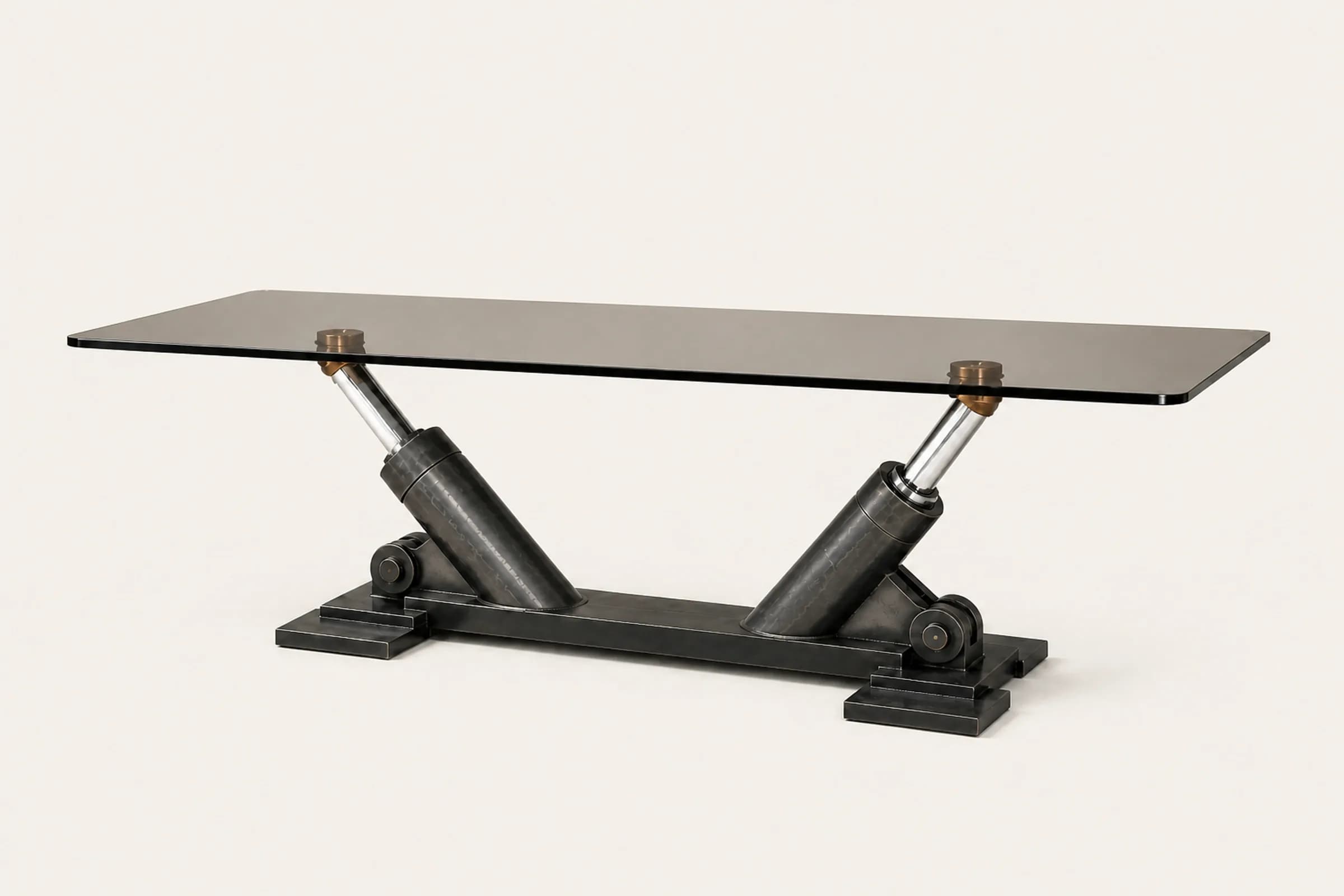
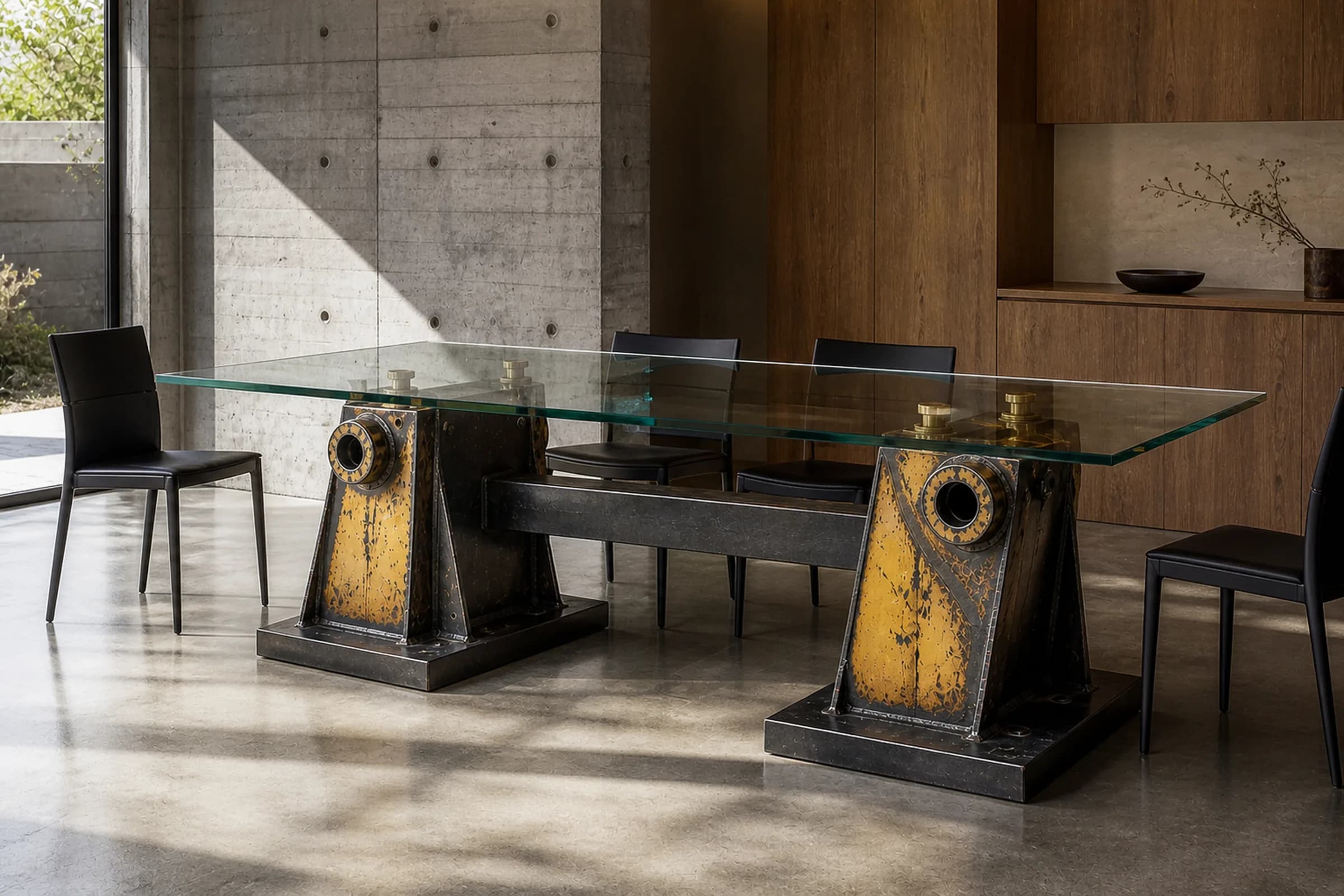
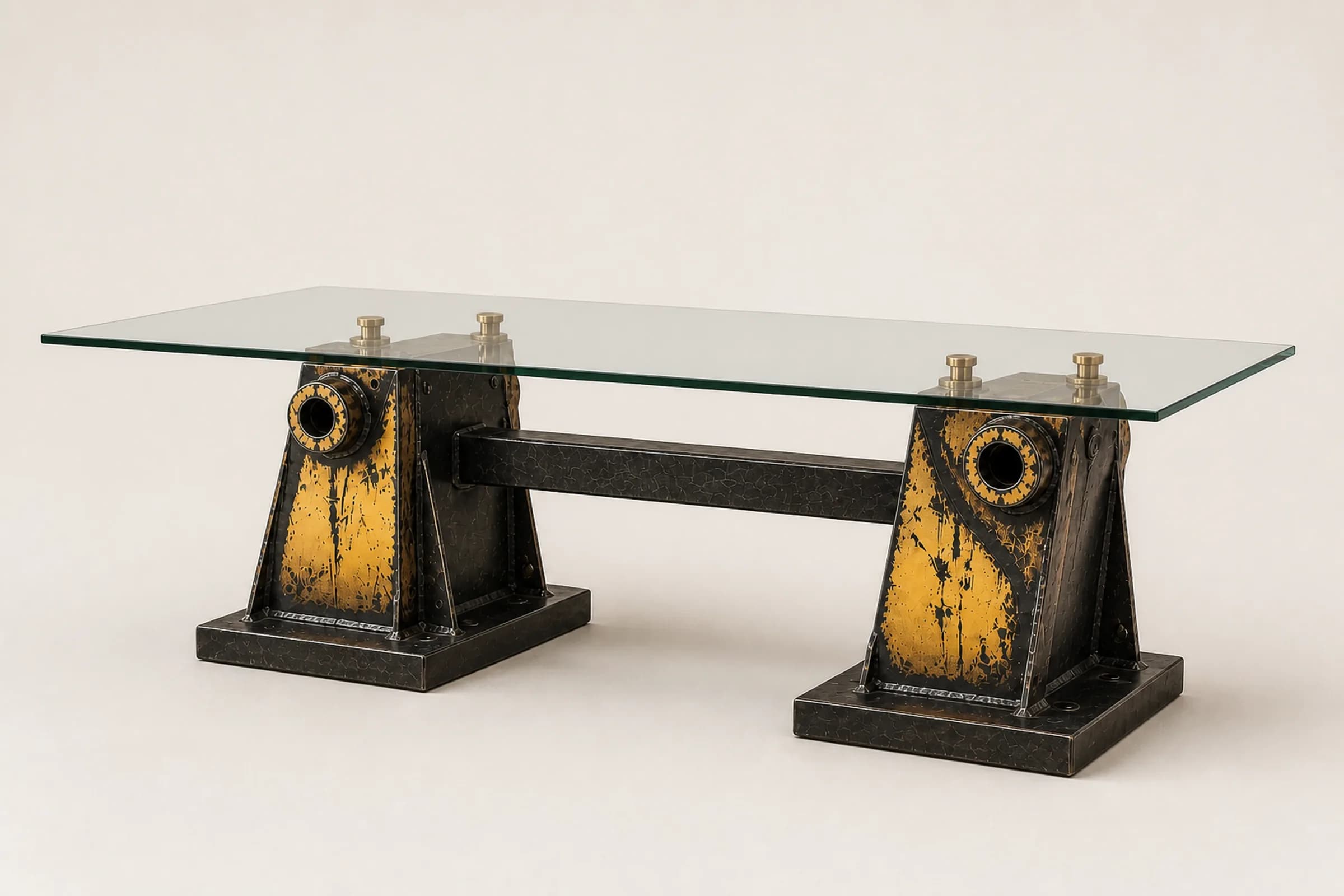
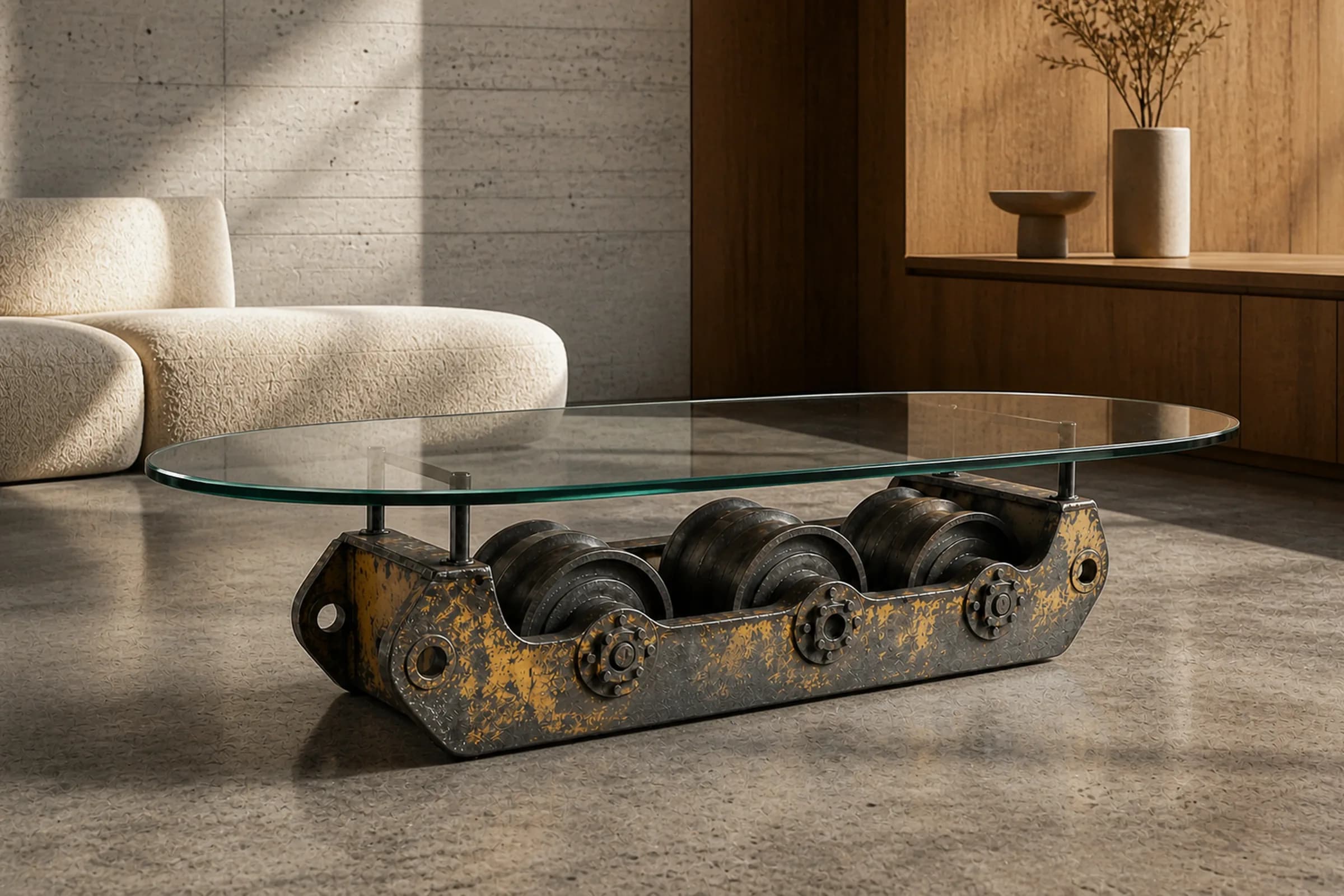
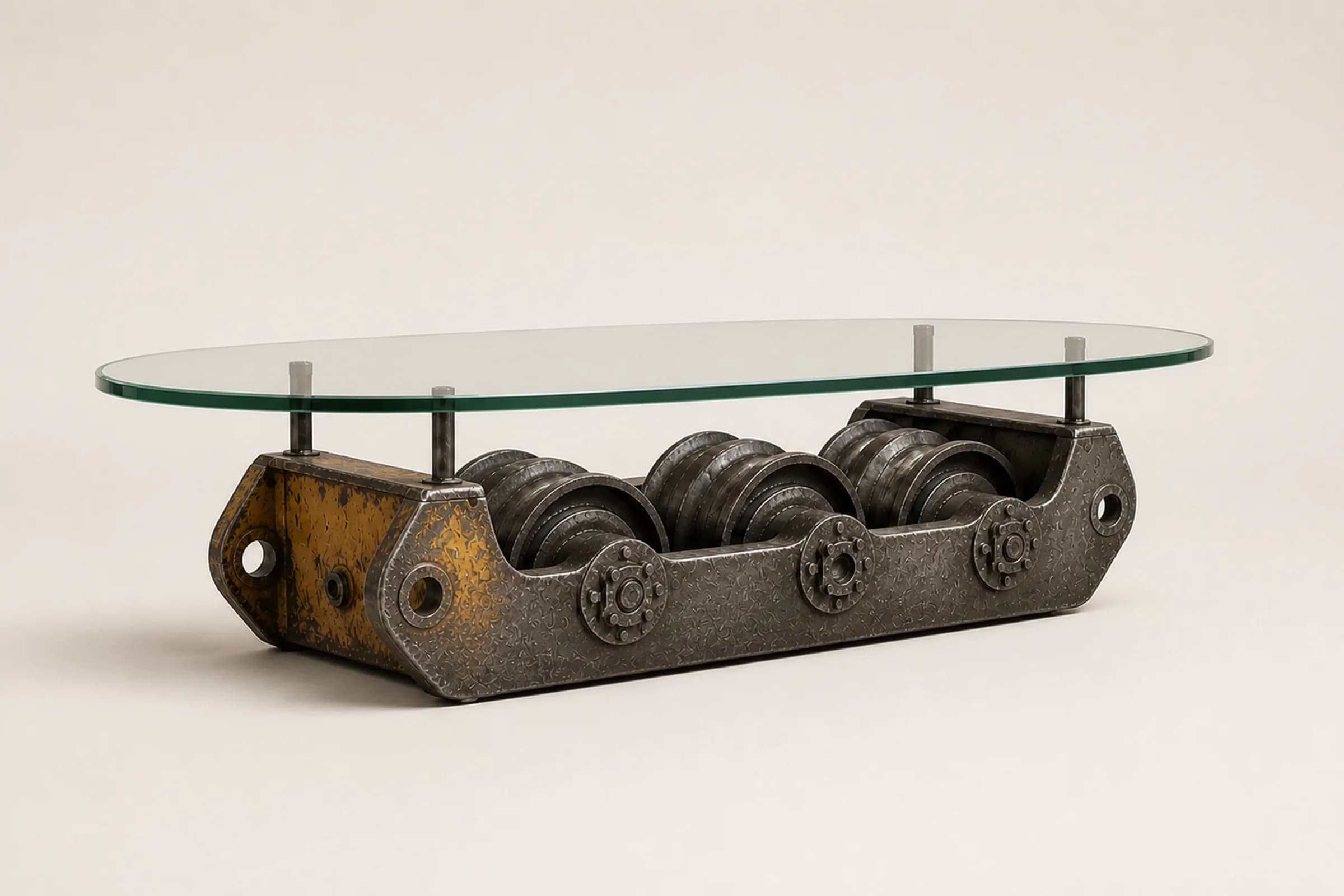
In a normal flat with plaster walls and an oak floor, the efficient way to make the argument is a single object that is unambiguously structural and unambiguously real. A hydraulic ram assembly weighing 380 kg under a glass top does the work that an entire wall treatment attempts and fails: it is genuinely load-bearing, it shows its own construction, it carries the marks of the job it did. Everything else in the room can stay soft. The tension between a wool rug and a machined steel cylinder is the point, and it is far more convincing than a room where everything shouts at once.
04Light, texture and why the room still needs warmth
Heavy materials eat light, so plan for more of it and from lower down. Two or three warm sources at table height read better than a single bright ceiling fitting, which flattens texture and turns steel into a grey blob. Keep at least one genuinely soft layer — a thick rug, heavy curtains, a bouclé or wool upholstery — within a metre of the heavy object. Wood helps more than people expect: oak or walnut next to blackened steel gives the eye somewhere to rest, and it is historically accurate, because the interiors of the canonical buildings were full of it.
05A practical test before you commit
Ask of every element: is this what it appears to be, and does it do a job? A steel object that carries the glass passes. A concrete-effect panel that carries nothing fails. Applied to a whole room the test tends to reduce the number of items rather than increase them, which is the correct direction — brutalism is a subtractive style. If you can remove something and the room becomes calmer, it was decoration. What remains should be few, heavy, honest and well lit.
Objects in this note
Considering a commission?
Tell us about the space and the location. We answer with availability, customisation scope and a transport estimate.