Sizing a coffee table: height, length and the gap that decides everything
Two numbers matter more than the rest — the height relative to your seat, and the gap between table and sofa. Get those right and almost any length works.
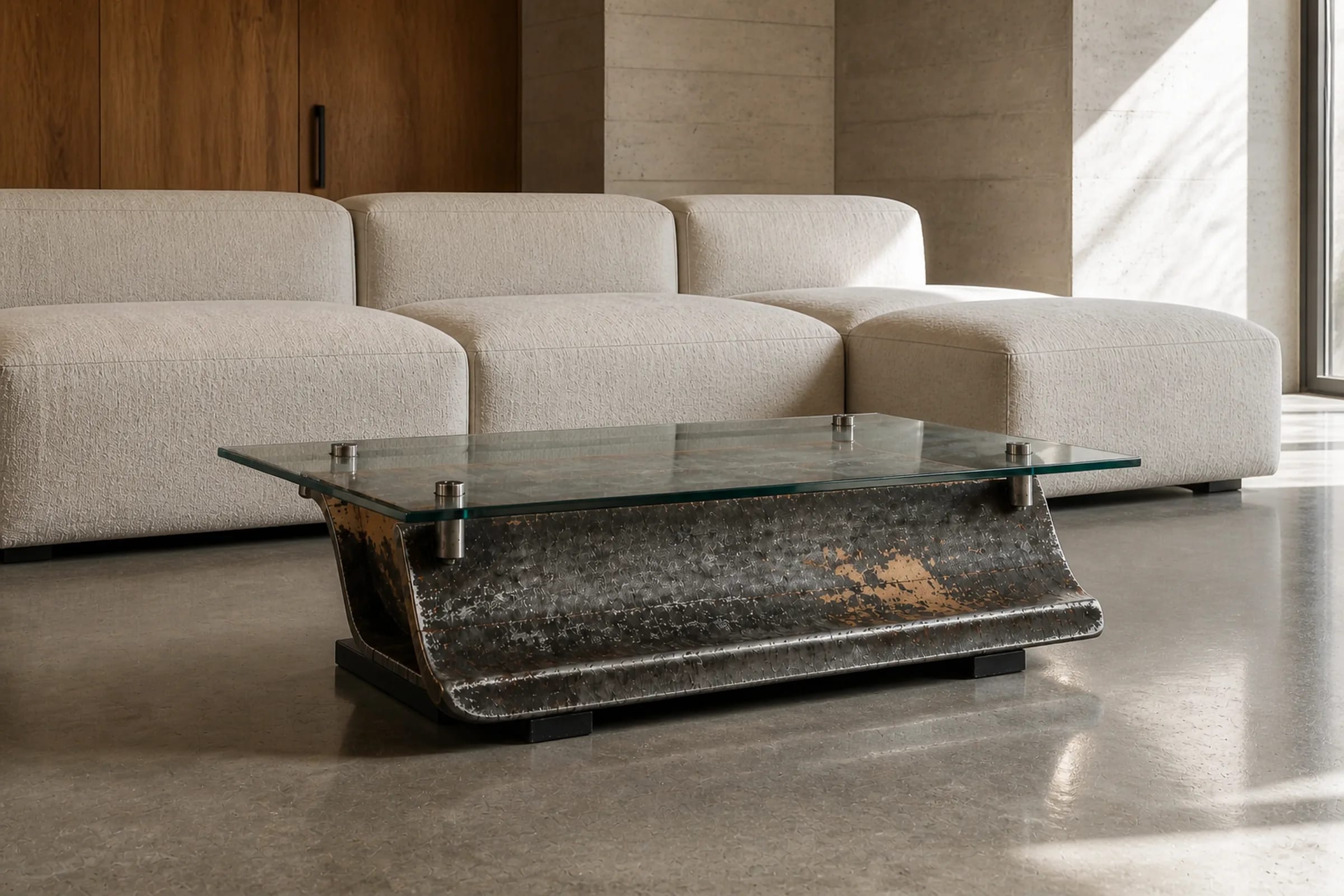
01How high should a coffee table be?
The usual advice is 400–450 mm, and it is only half true. What matters is the relationship to the seat height of the sofa it serves: level with the cushion, or up to 30 mm below it. A deep lounge sofa with a 380 mm seat wants a lower table than an upright 460 mm sofa. Measure the compressed seat height — sit on it, then measure — because an uncompressed cushion can read 40 mm higher than it will ever be in use.
02How big should a coffee table be next to a sofa?
A coffee table generally reads well at roughly two-thirds of the length of the sofa it faces. A 3000 mm sofa takes a 1800–2000 mm table comfortably; a 2200 mm sofa is better served by 1200–1400 mm. Going shorter than half the sofa makes the arrangement look accidental. Going longer than the sofa itself makes the table the room’s subject, which is a legitimate decision for a sculptural object but should be a decision rather than an accident.
A coffee table is not sized against the room. It is sized against the sofa it serves.
03How far should a coffee table be from the couch?
Leave 300–450 mm between the sofa edge and the table. Below 300 mm people cannot pass or stretch their legs; above 450 mm nobody can reach a cup without standing. This single dimension governs whether a room feels resolved. It also constrains length: measure the clear floor area first, subtract twice the gap, and what remains is the honest maximum length — not what the catalogue photograph suggests.
04What size coffee table works with a sectional?
Depth wants roughly half the table’s length for a rectangle, and any round object should leave at least 700–900 mm of circulation on its open sides. With a heavy object there is one further constraint: it will not be nudged aside casually, so the position you choose is effectively permanent. Plan the walking route around it as though it were built in, because in practice it is.
05How do I read the dimensions on this site?
Every object lists dimensions as length × depth × height in millimetres, and round objects list diameter × height. Those are the finished figures including glass, not the base alone. Take the height straight to your sofa’s compressed seat, and take the length to the free floor area minus twice your intended gap. If the two answers disagree, height wins — a table at the wrong height is uncomfortable every day, while a table 100 mm short of ideal is simply a slightly smaller table.
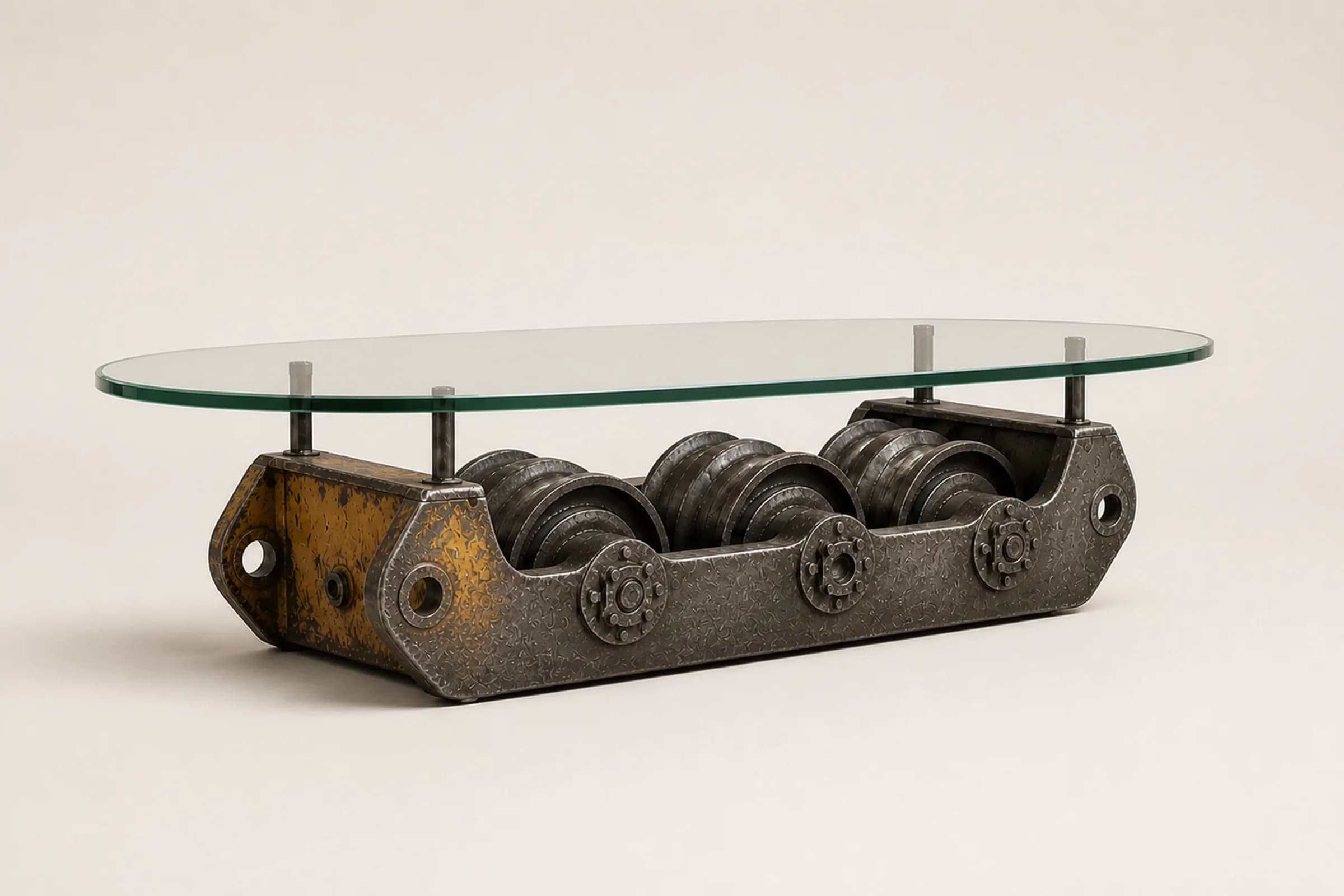
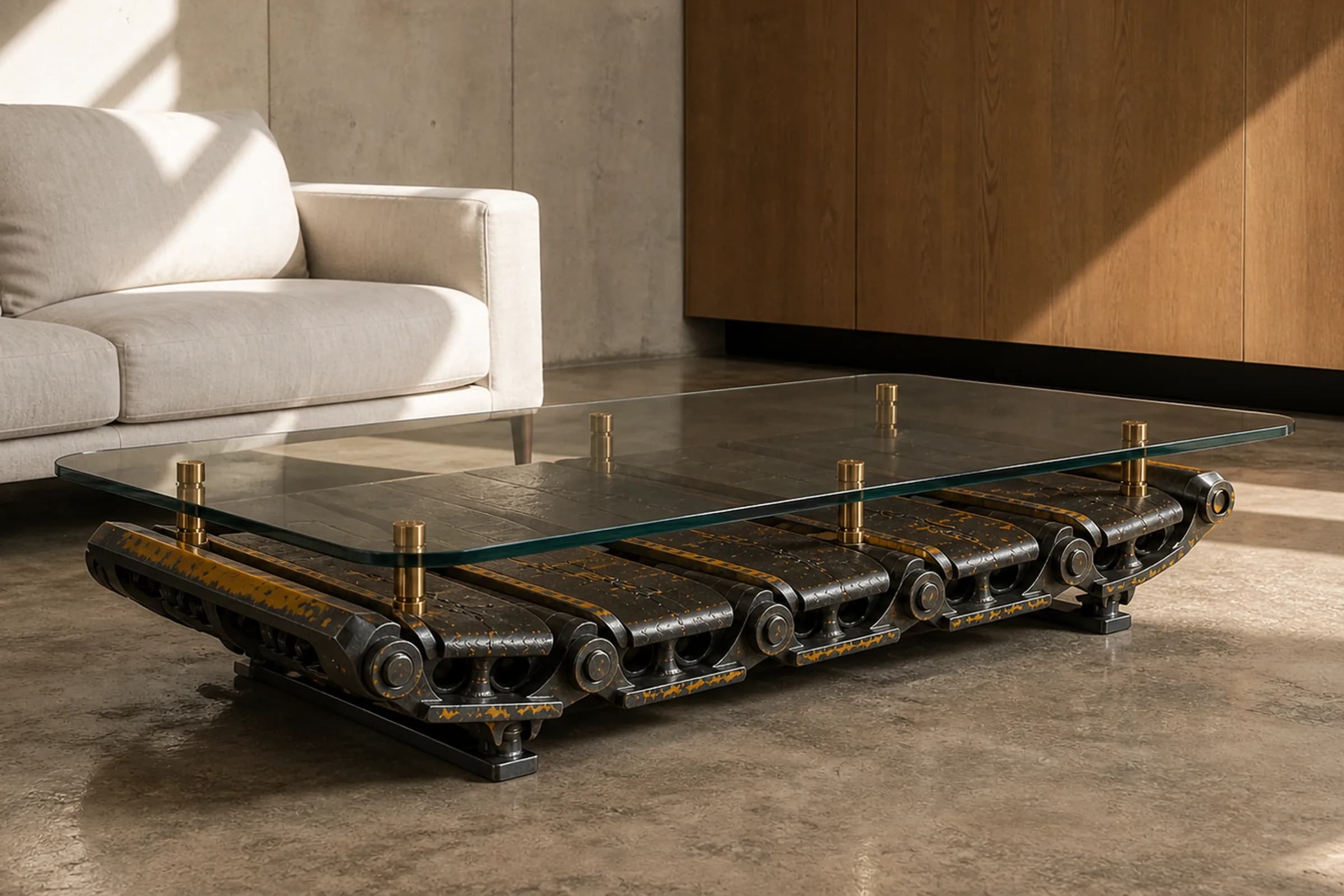
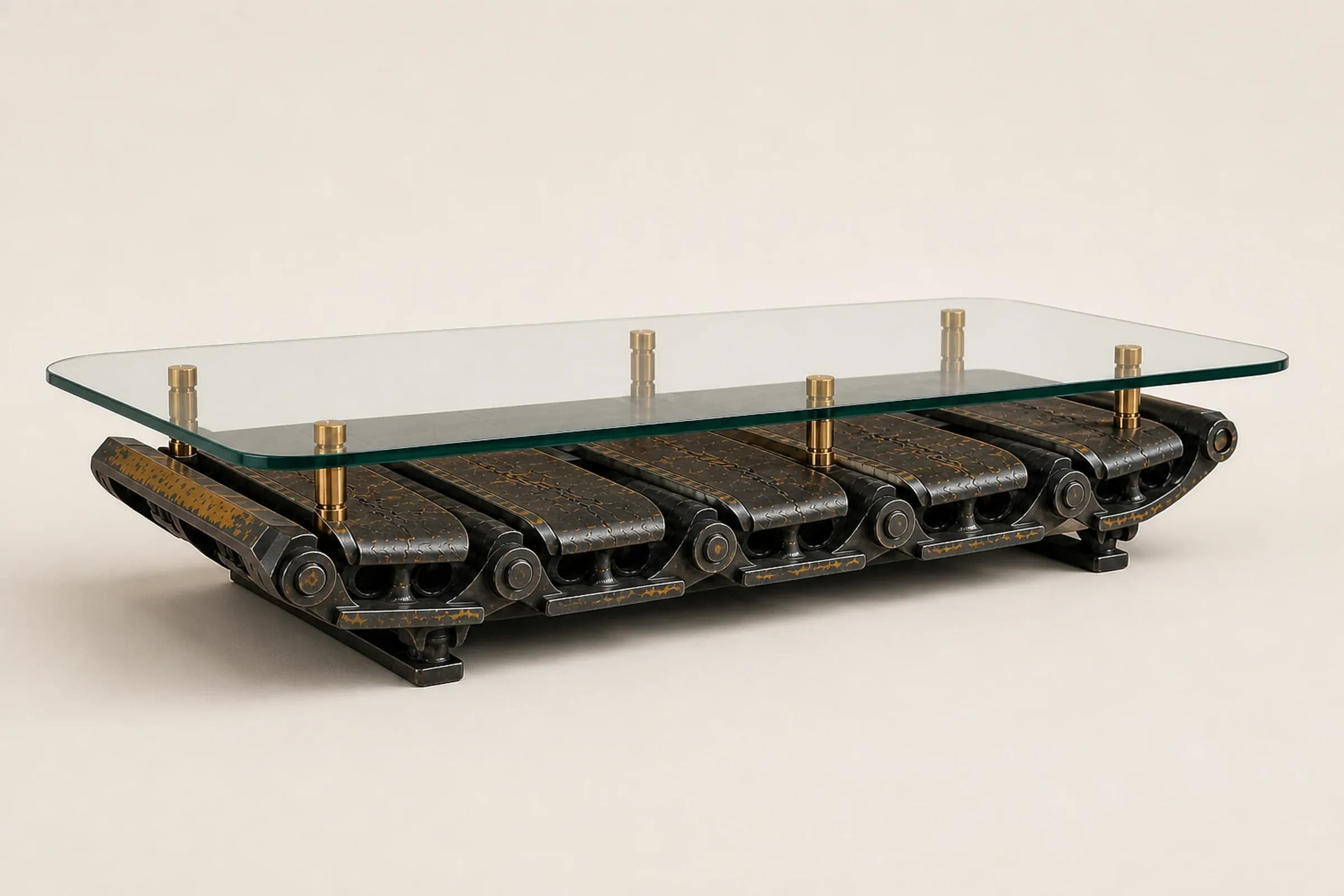
Objects in this note
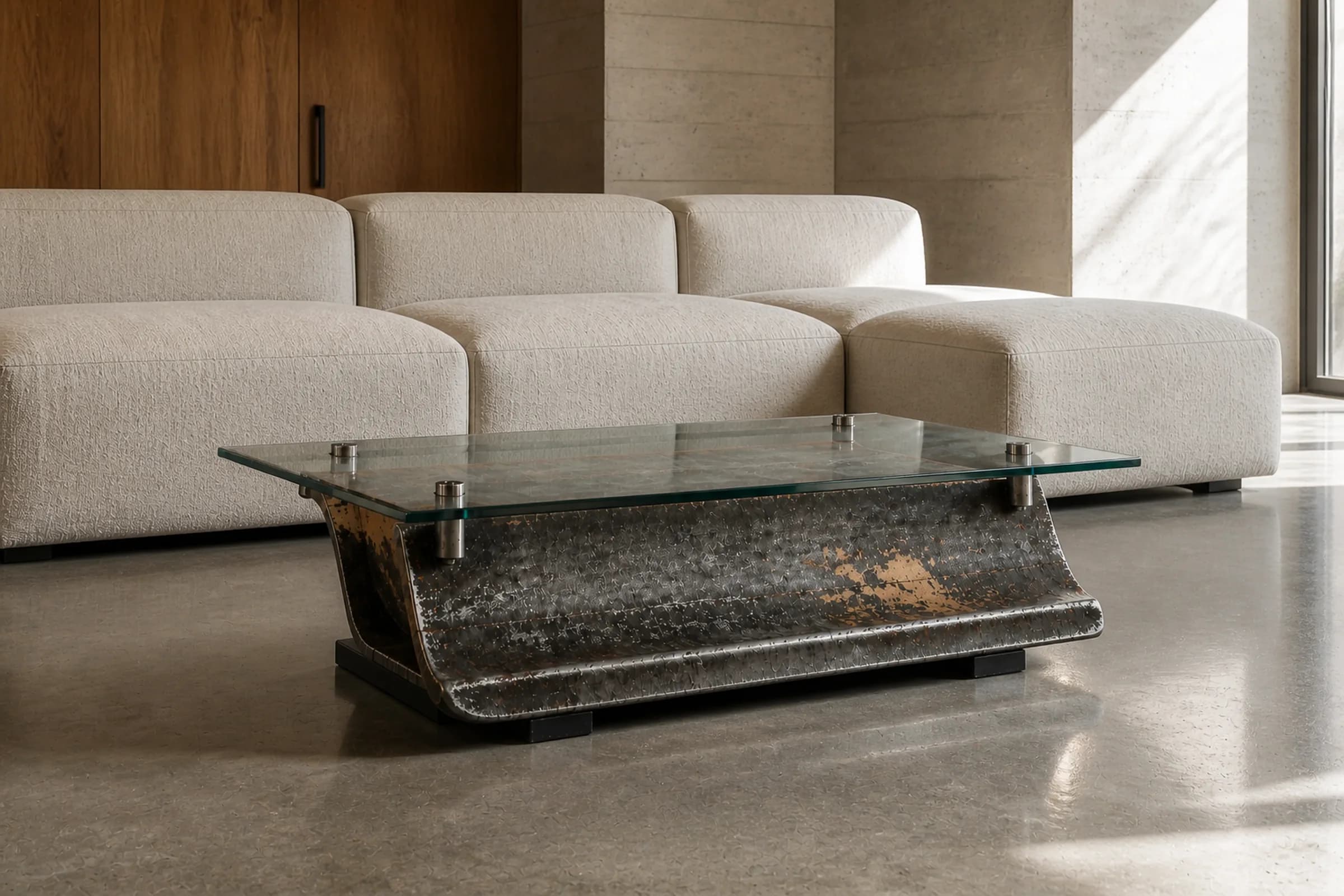
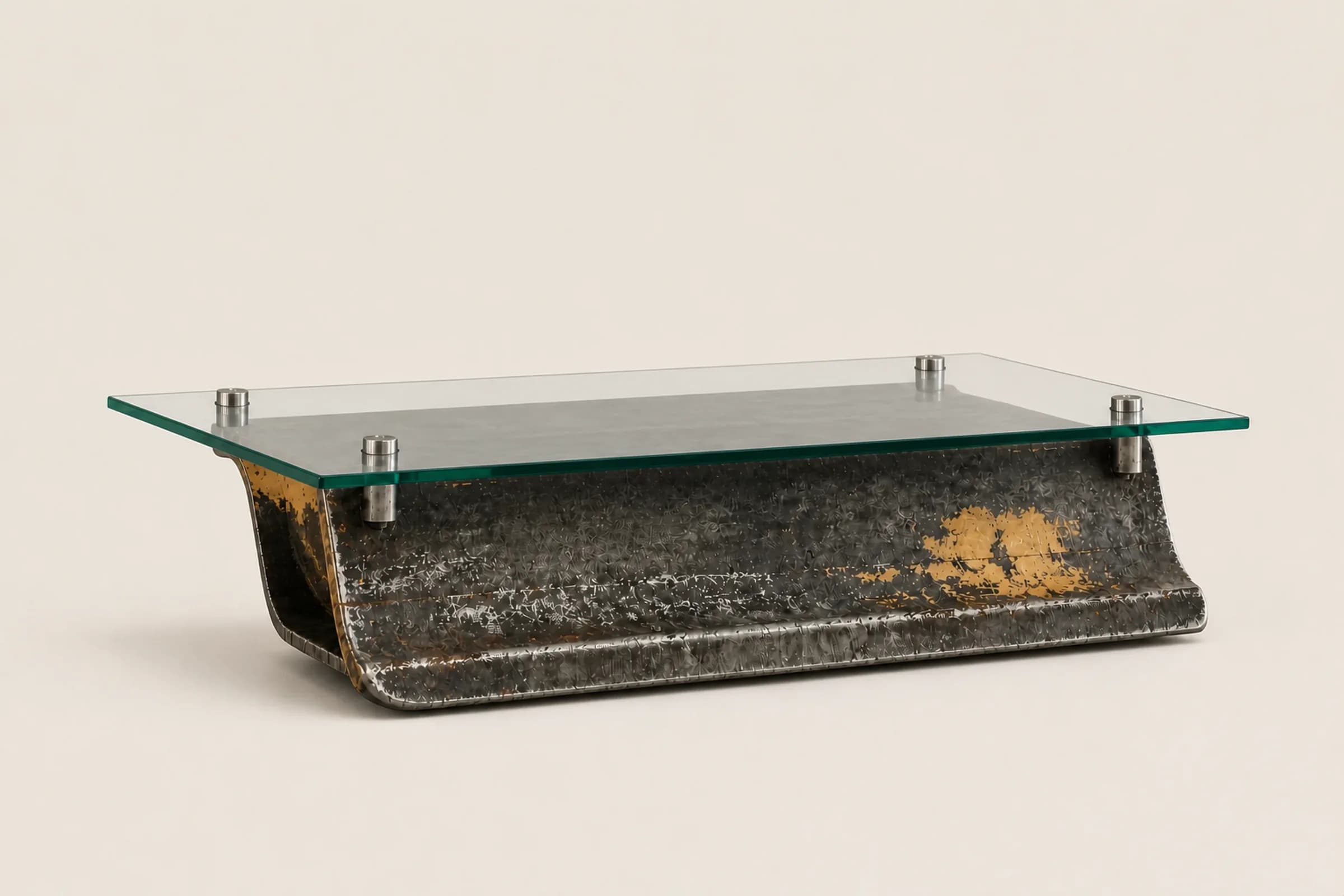
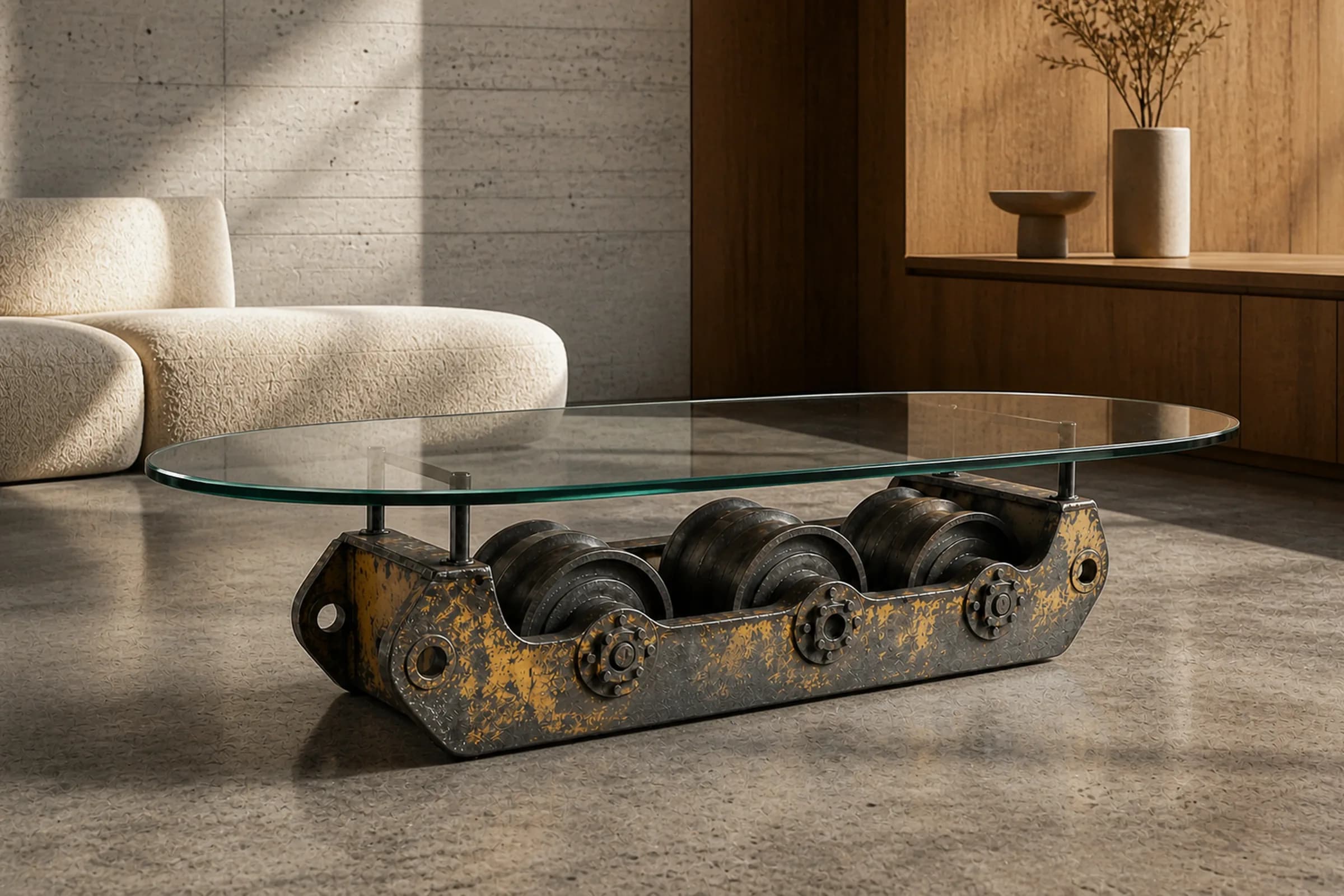
Considering a commission?
Tell us about the space and the location. We answer with availability, customisation scope and a transport estimate.