Industrial coffee tables: what separates the real ones from the reproductions
The category runs from flat-pack pipe-and-plank to one-off salvage weighing a quarter of a tonne. The price gap is enormous and mostly explicable. Here is what you are paying for at each level.
01Four tiers, and how to tell them apart
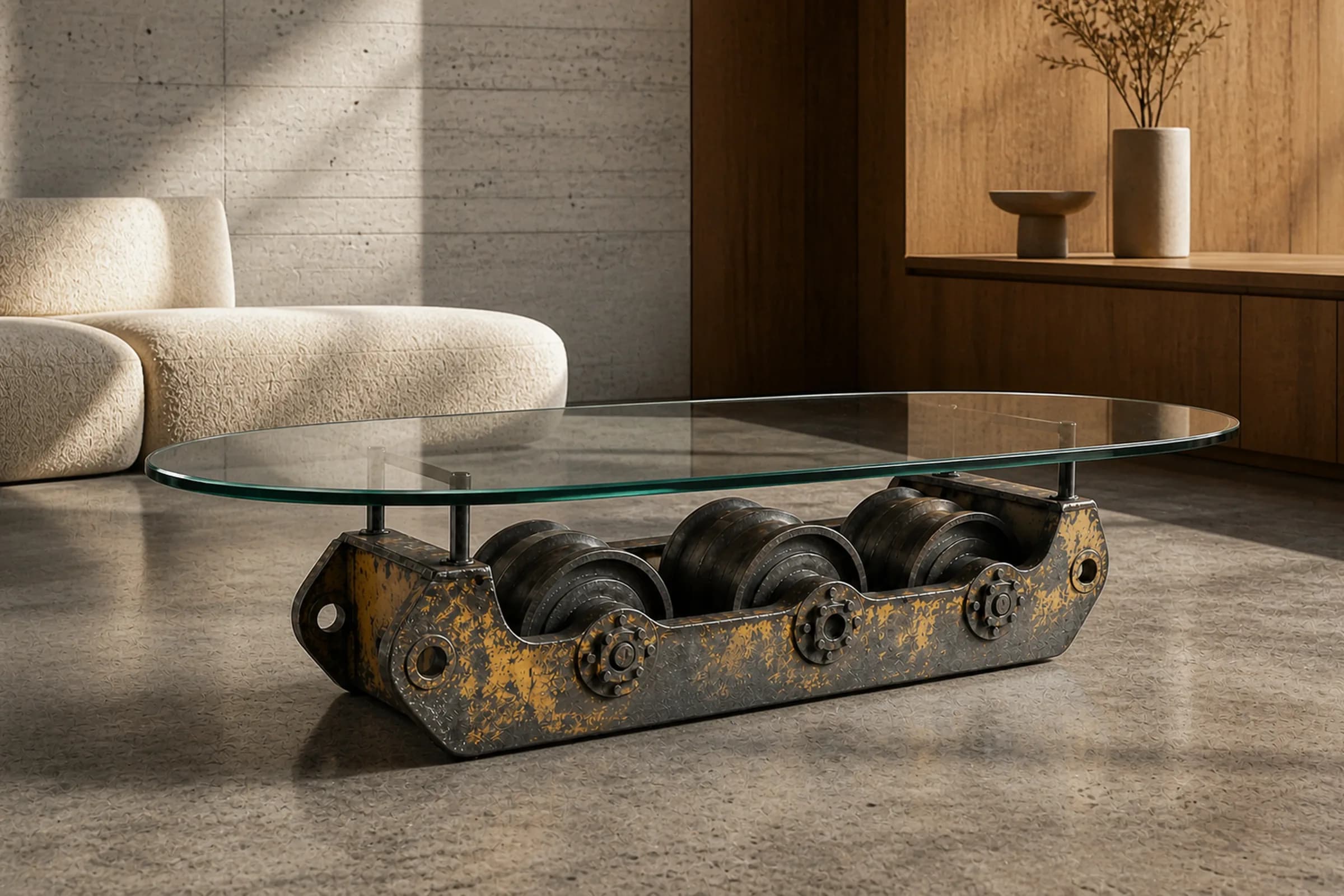
The first tier is industrial-styled flat-pack: powder-coated tube, a laminate or veneer top, 15–25 kg, made in volume. The second is solid-material reproduction: real steel plate and real hardwood, often 40–70 kg, genuinely well built but designed from scratch to look old. The third is refurbished genuine industrial equipment — factory trolleys, machine bases, workbenches — actual salvage, repeatable only until the supply runs out. The fourth is one-off work built around a specific reclaimed component. Weight, repeatability and documentation separate them, and a single question usually resolves which you are looking at: was this steel ever anything else?
02What the weight tells you
Mass is the most reliable proxy in the category because it cannot be faked cheaply — steel costs money to buy and money to ship. A 1200 mm table at 20 kg is tube and board. The same footprint at 60–90 kg is solid plate. At 200 kg and above you are looking at structural components that were engineered to survive loads no furniture ever experiences, and the price includes two-person delivery, sometimes a hoist, and occasionally a floor check. If a listing avoids stating weight, that is itself informative.
Ask where the steel was before it was furniture. The answer sorts the whole category in one sentence.
03Provenance, and why it changes the object
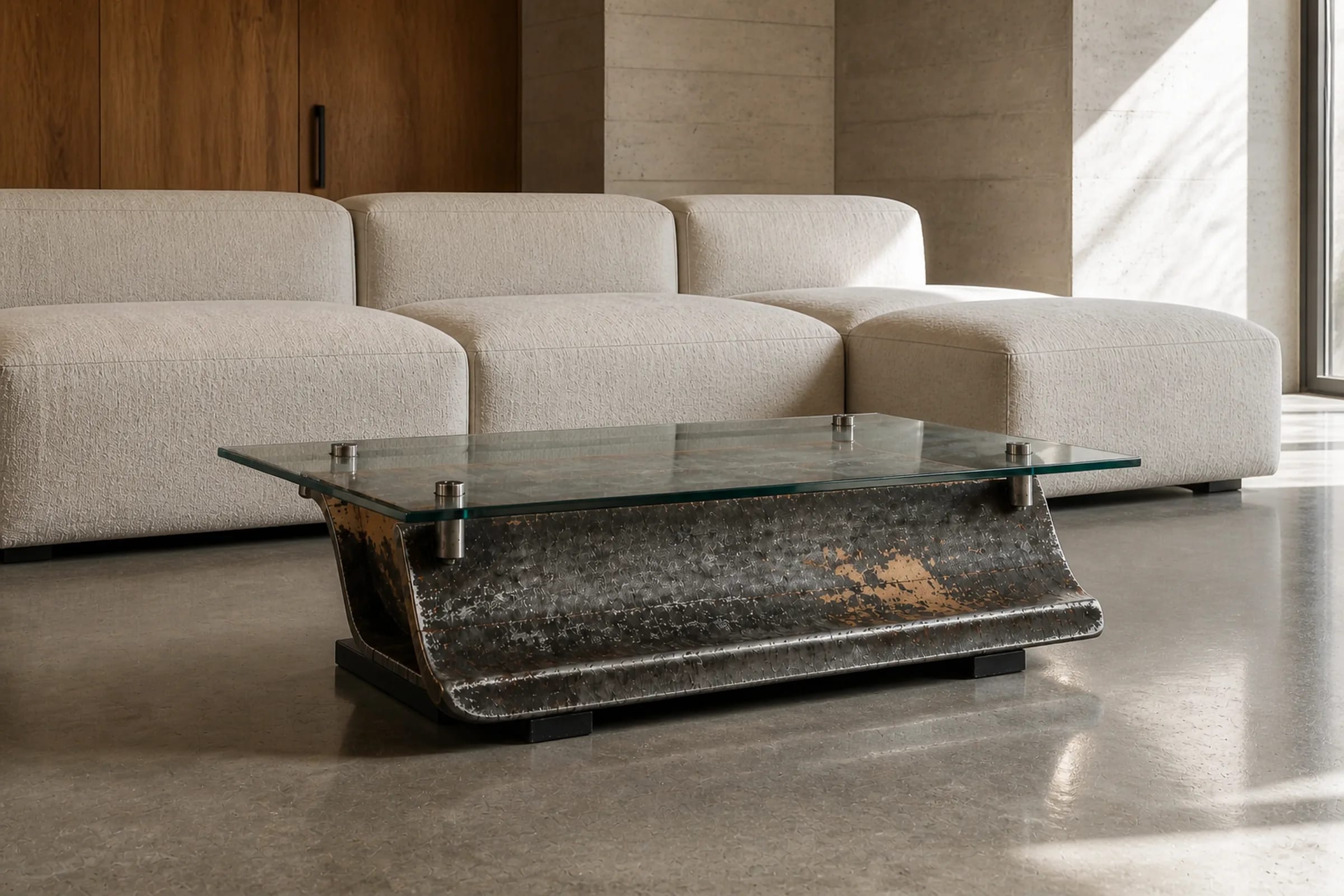
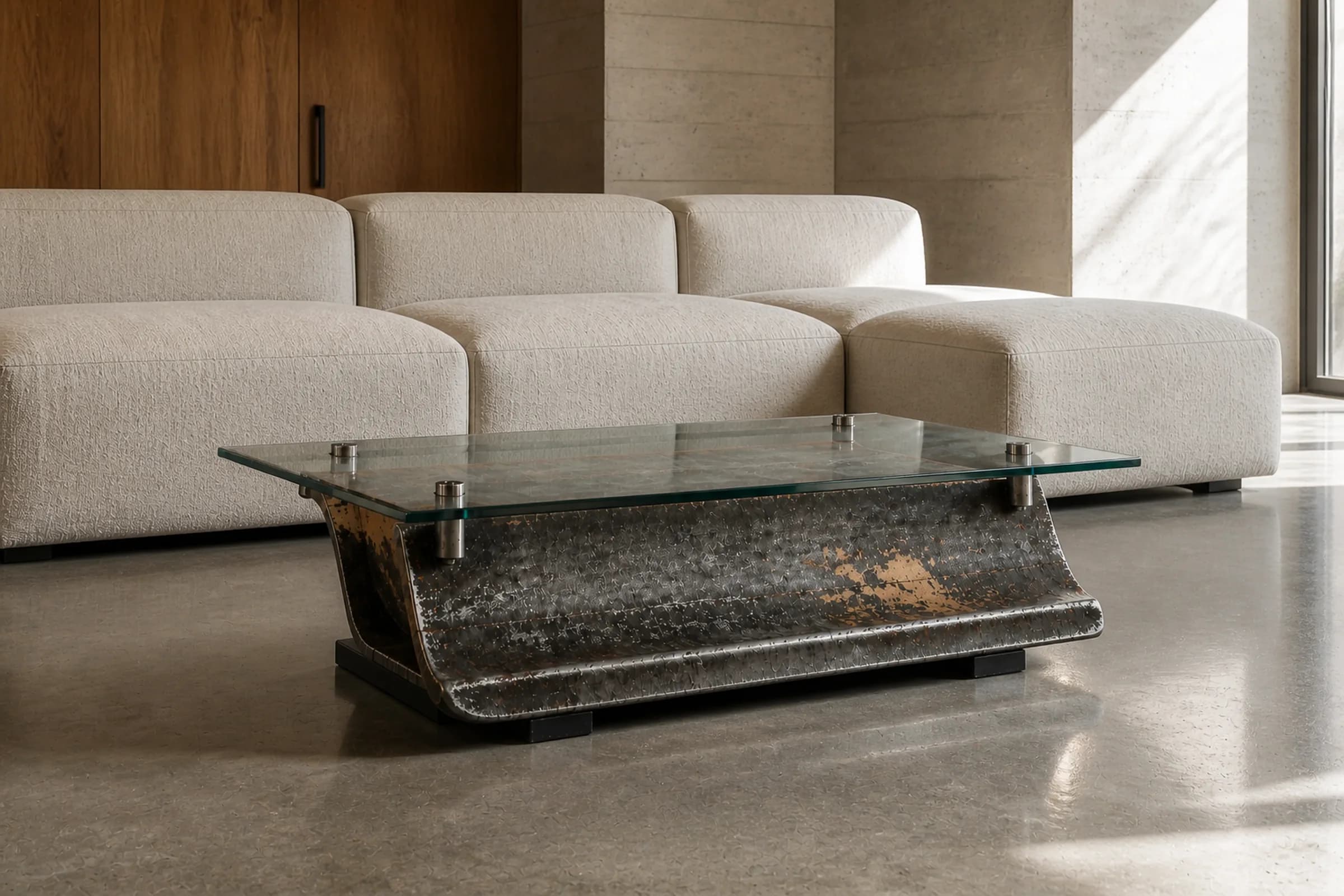
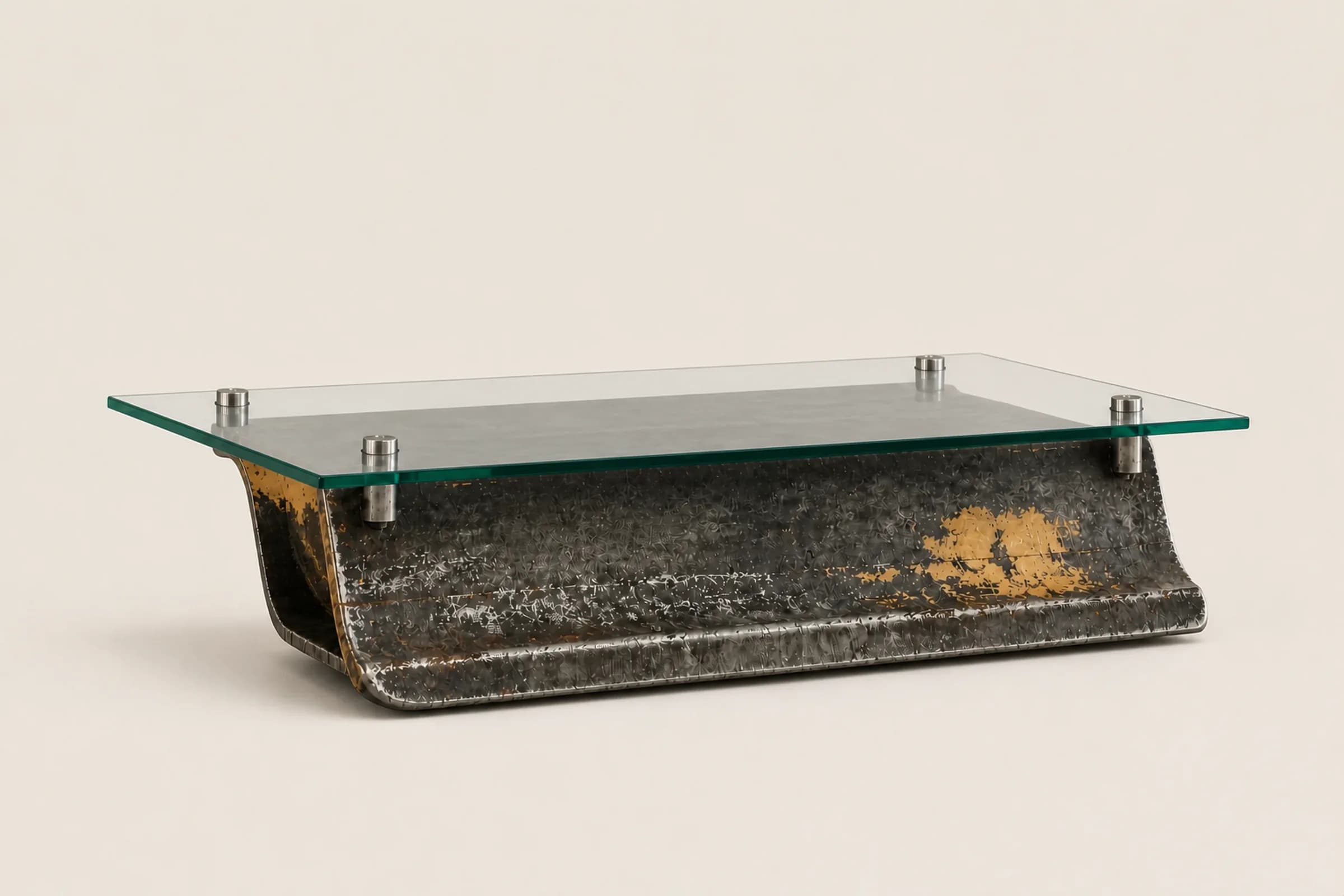
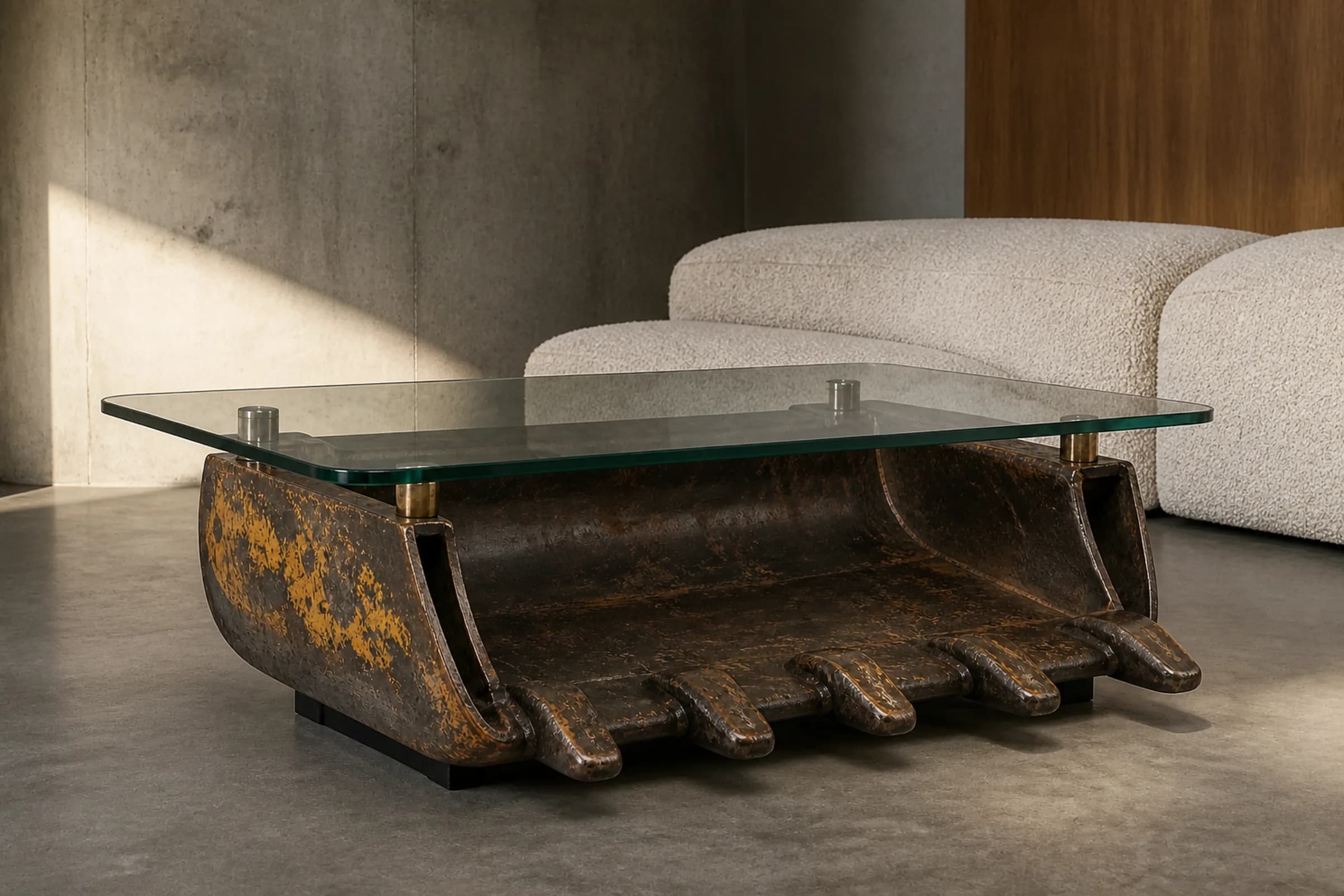
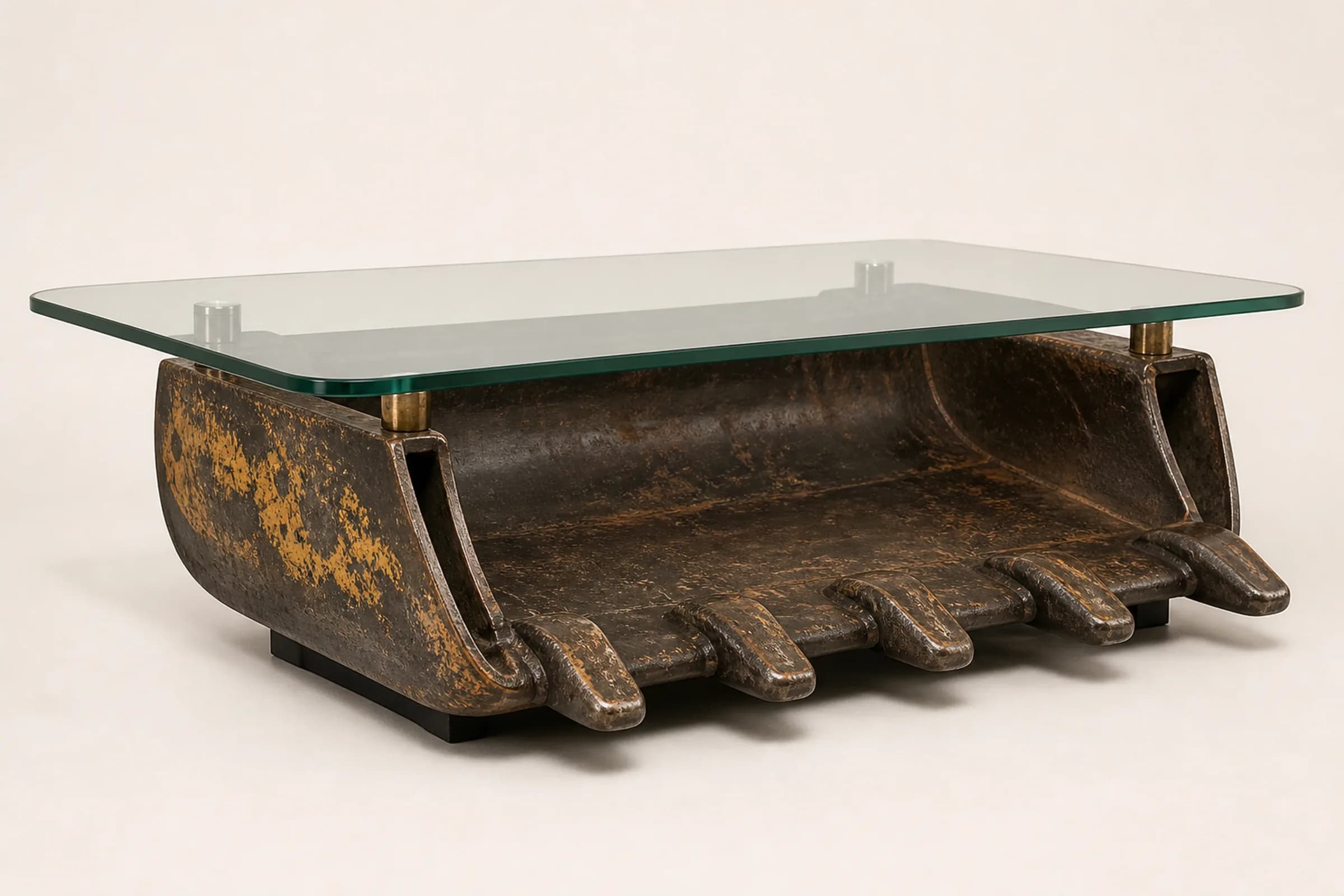
A reproduction can be beautiful and well made; what it cannot have is a history. A cutting edge that spent years on a bulldozer blade carries wear that is specific, unrepeatable and directly readable — the abrasion pattern shows which way the earth moved across it. That is why we state the donor machine class, the approximate service period and the component's original function for every object, and why documentation is part of the delivery rather than a marketing flourish. If a seller cannot say what the part was, it either does not know or the part was never anything.
04Practical specification that applies at every tier
Height 380–450 mm for a standard sofa, and closer to the low end if the seat is deep. Length roughly two-thirds of the sofa. Clearance 350–450 mm between sofa edge and table. Then the two questions particular to heavy pieces: what is the contact area of the feet, and what is your floor made of. A 260 kg object on four 80 × 80 mm pads applies about 10,000 kg/m² at the contact points, which a concrete slab absorbs without comment and a pre-war timber floor may not. Ask before, not after.
05Where the money actually goes
At the top of the category, cost is dominated by labour and by irreducible risk. Sourcing a specific component means waiting for one to be retired. Preparation is slow: de-greasing, arresting corrosion, stabilising without erasing wear. Glass is toughened, made to size, and rejected if the polish is imperfect. Every object is engineered individually because no two donor parts are alike, and if a piece fails inspection there is no second identical unit to fall back on. That is the real reason this tier is not priced from a list — and it is also why the object cannot be repeated for the next buyer.
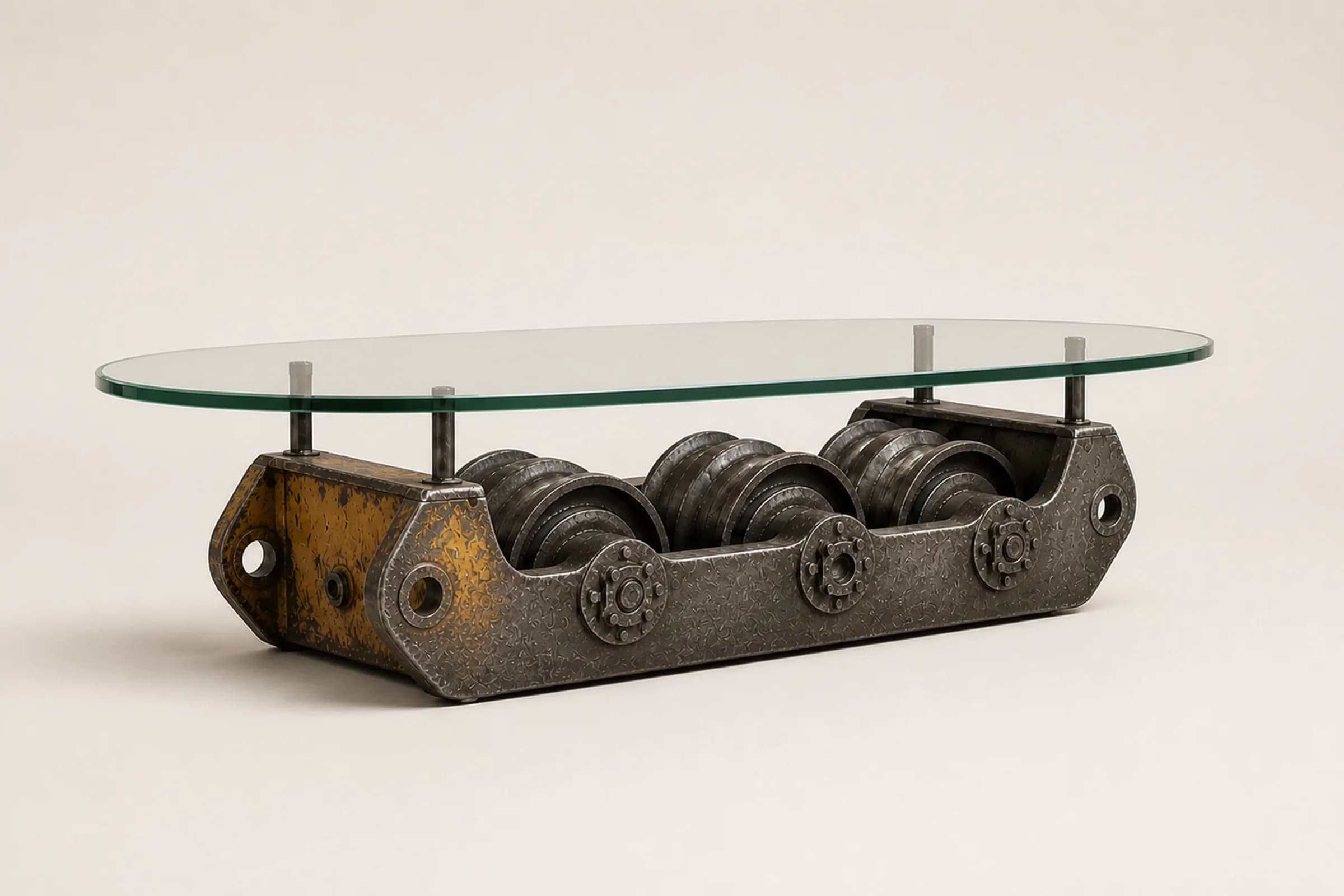
Objects in this note
Considering a commission?
Tell us about the space and the location. We answer with availability, customisation scope and a transport estimate.