Wabi-sabi and salvaged steel: imperfection that was earned, not applied
Wabi-sabi interiors usually reach for handmade ceramics and undyed linen. Worn industrial steel belongs in the same argument, and it makes the case more honestly than most of what is sold under the label.
01What wabi-sabi actually asks for
Wabi-sabi is a Japanese aesthetic sensibility with roots in fifteenth-century tea practice, and it values three things that most interior styling ignores: impermanence, incompleteness and imperfection. Objects should show their age, their making and their use. The famous illustration is kintsugi — a broken bowl repaired with gold so the repair becomes the most valuable part of the object. What it is not is a colour palette of beige and off-white, and it is not the same as minimalism, which prizes an absence of marks that wabi-sabi would consider a loss.
02Why an excavator part qualifies and a distressed finish does not
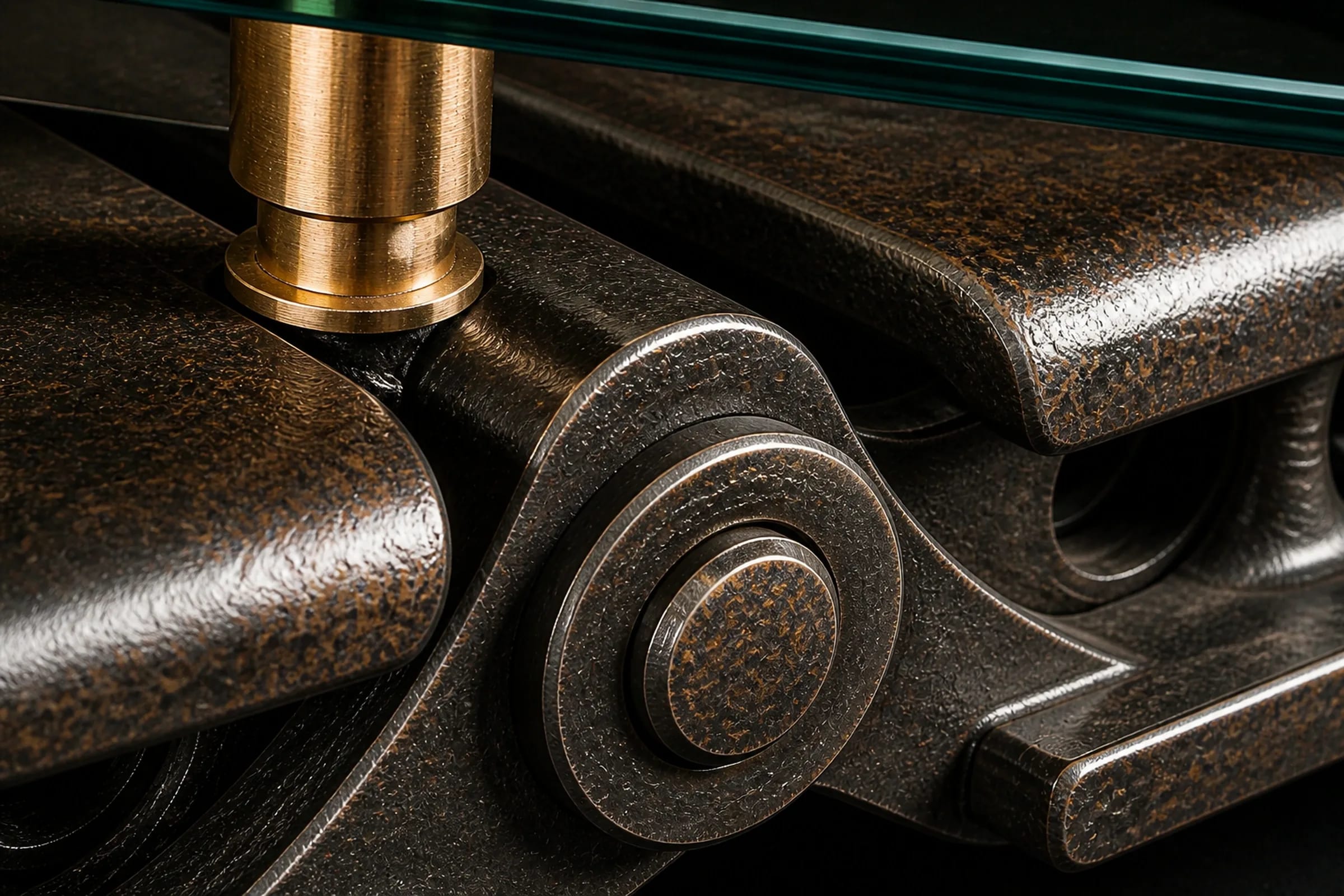
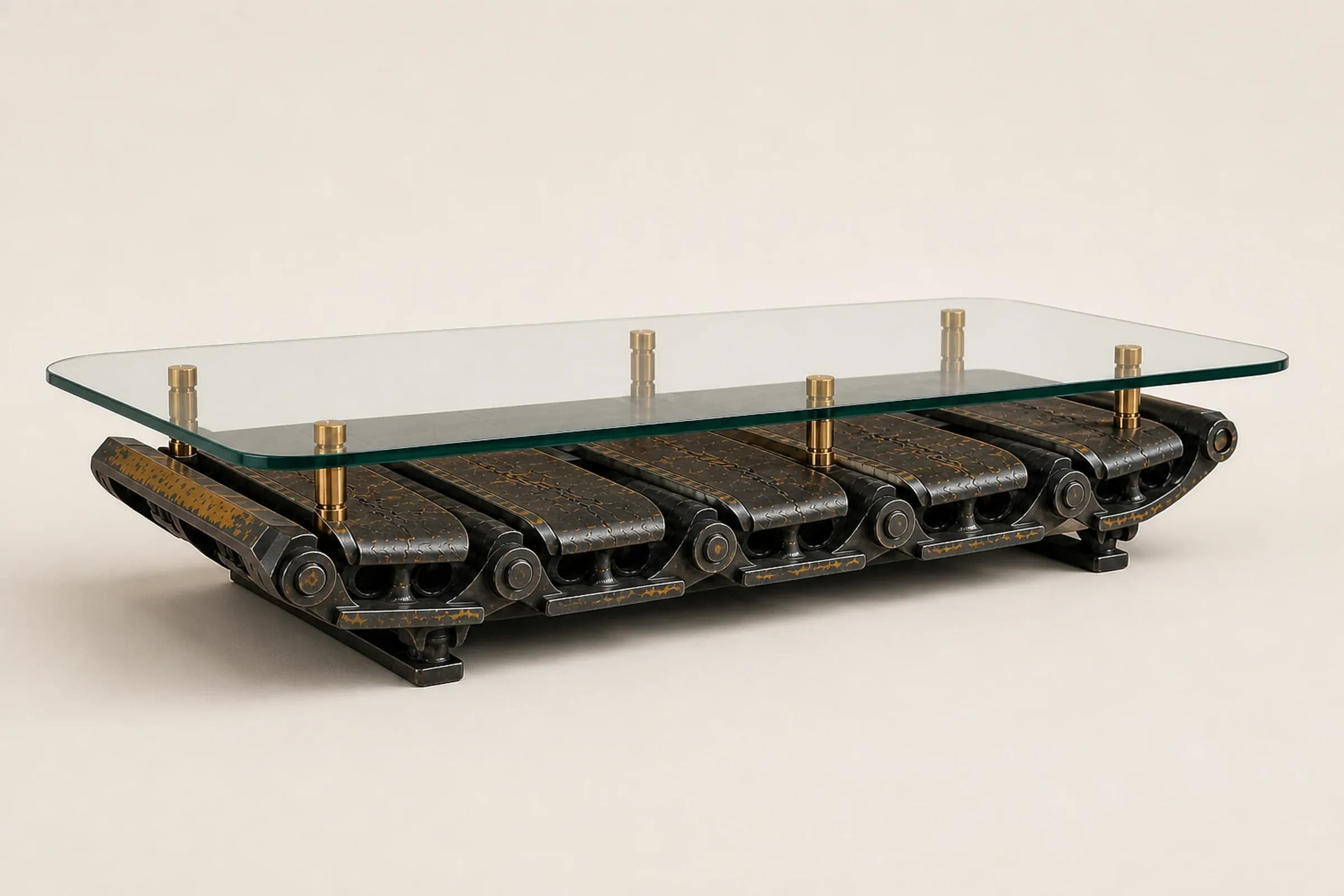
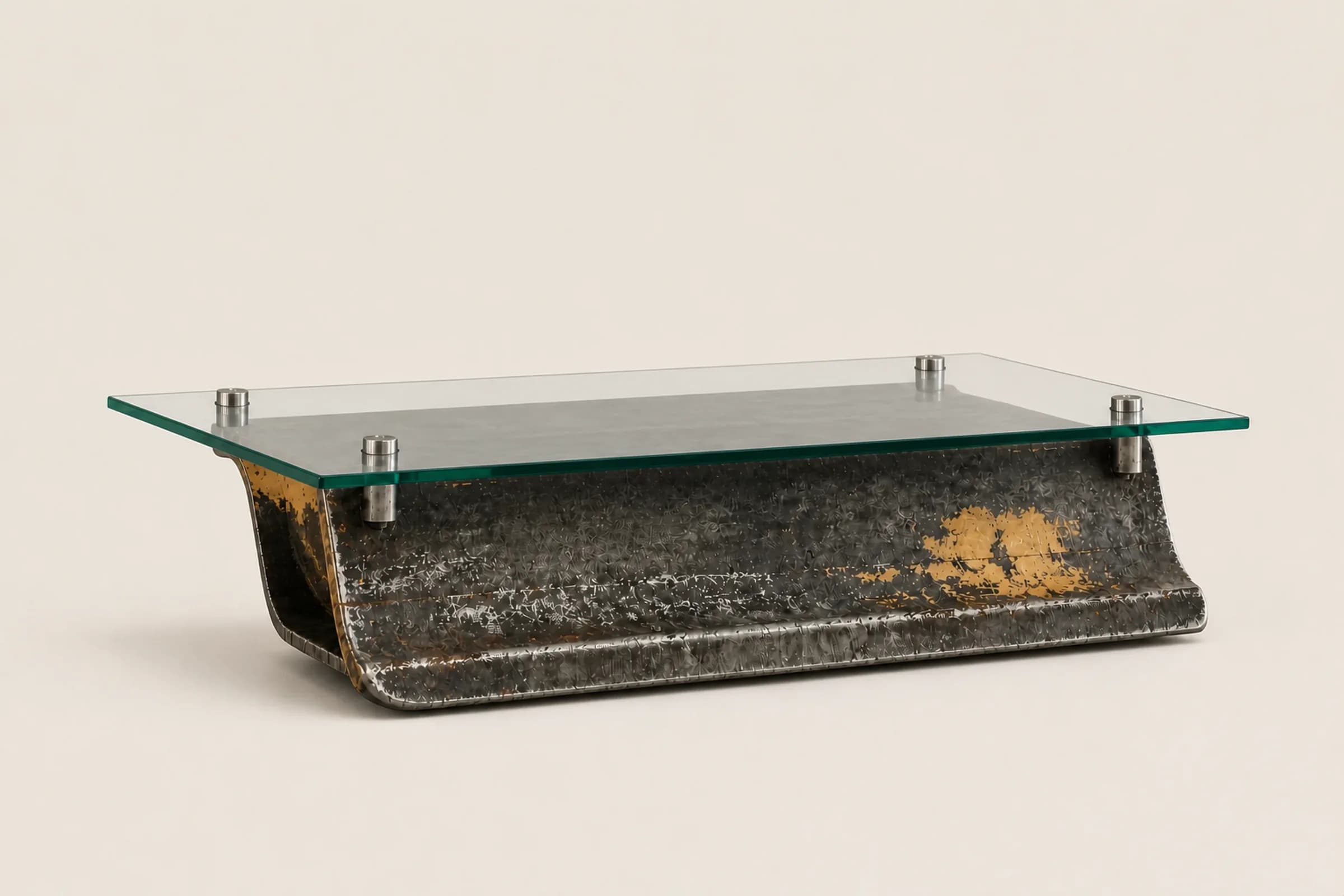
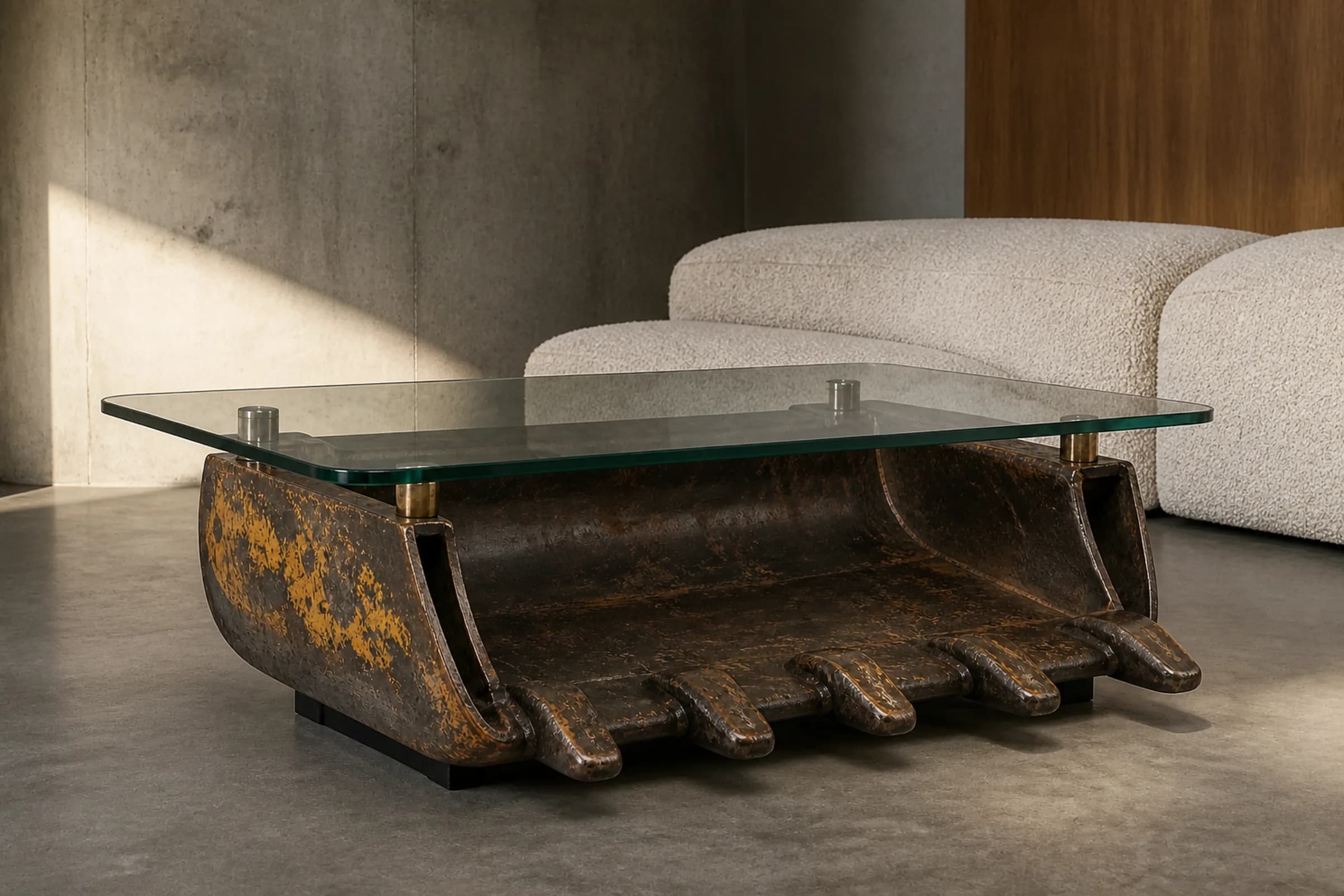
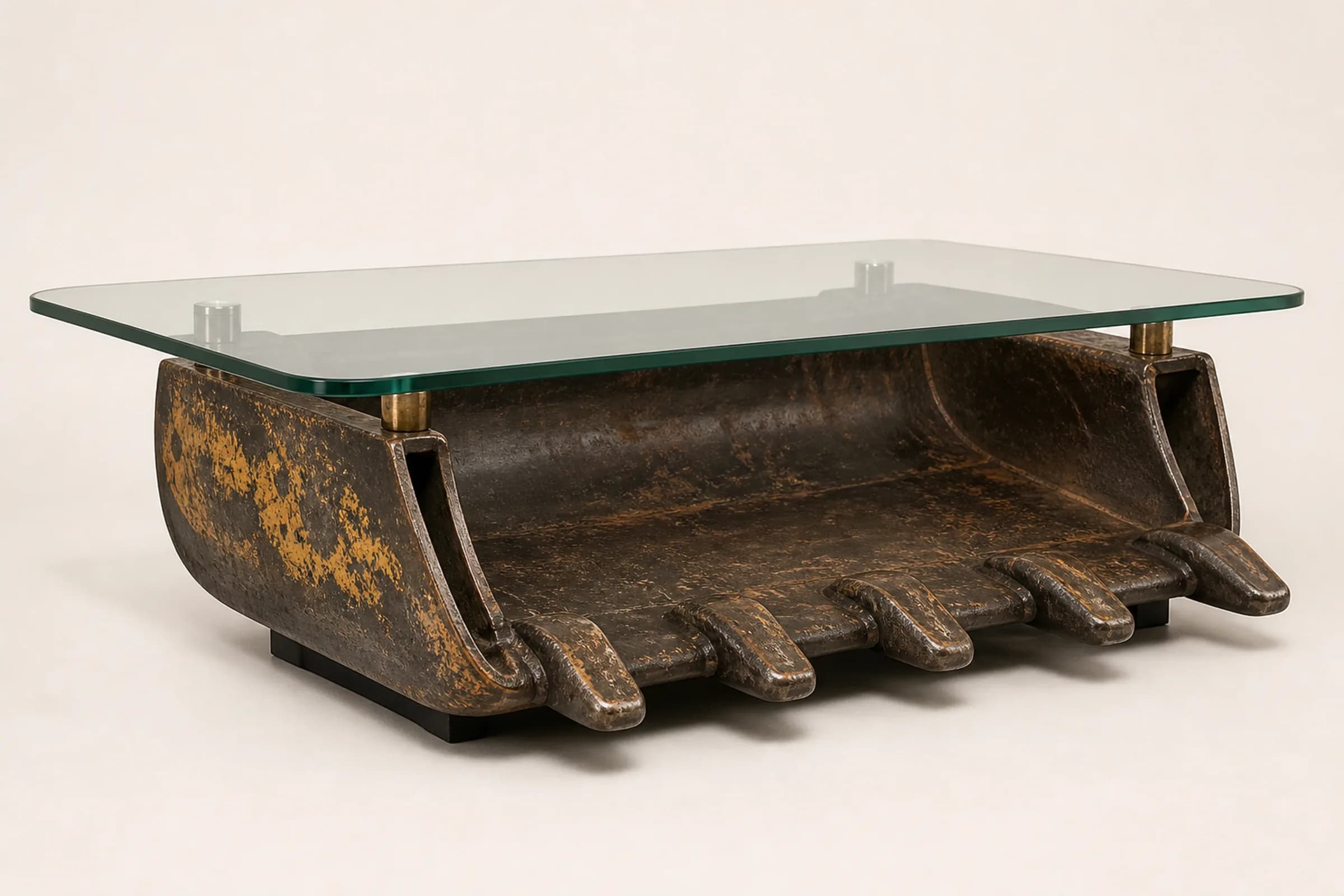
The commercial version of the style leans on manufactured age: sandblasted timber, artificially crazed glaze, paint applied and then rubbed back. These are depictions of time rather than instances of it, and at close range they read as costume. A track shoe that spent nine years under a machine is the other case entirely. Its edges are rounded because abrasive ground wore them, its face is polished where the roller ran, and its pitting follows where water sat. None of that was designed, and none of it can be repeated on a second piece. That is precisely the quality wabi-sabi is pointing at.
A distressed finish imitates time. A worn machine part contains it.
03Keeping the marks: a finishing question
How a piece is sealed decides whether the history survives. A thick pigmented coating buries the surface and turns a specific object into a generic dark one. We de-grease, arrest active corrosion, and seal with a matte clear that changes the colour as little as possible, so the pitting still catches light and the polished patch still reads as polished. The test we use is simple: photograph the surface before and after, and if the marks lost definition, the finish was wrong.
04Composing a room around it
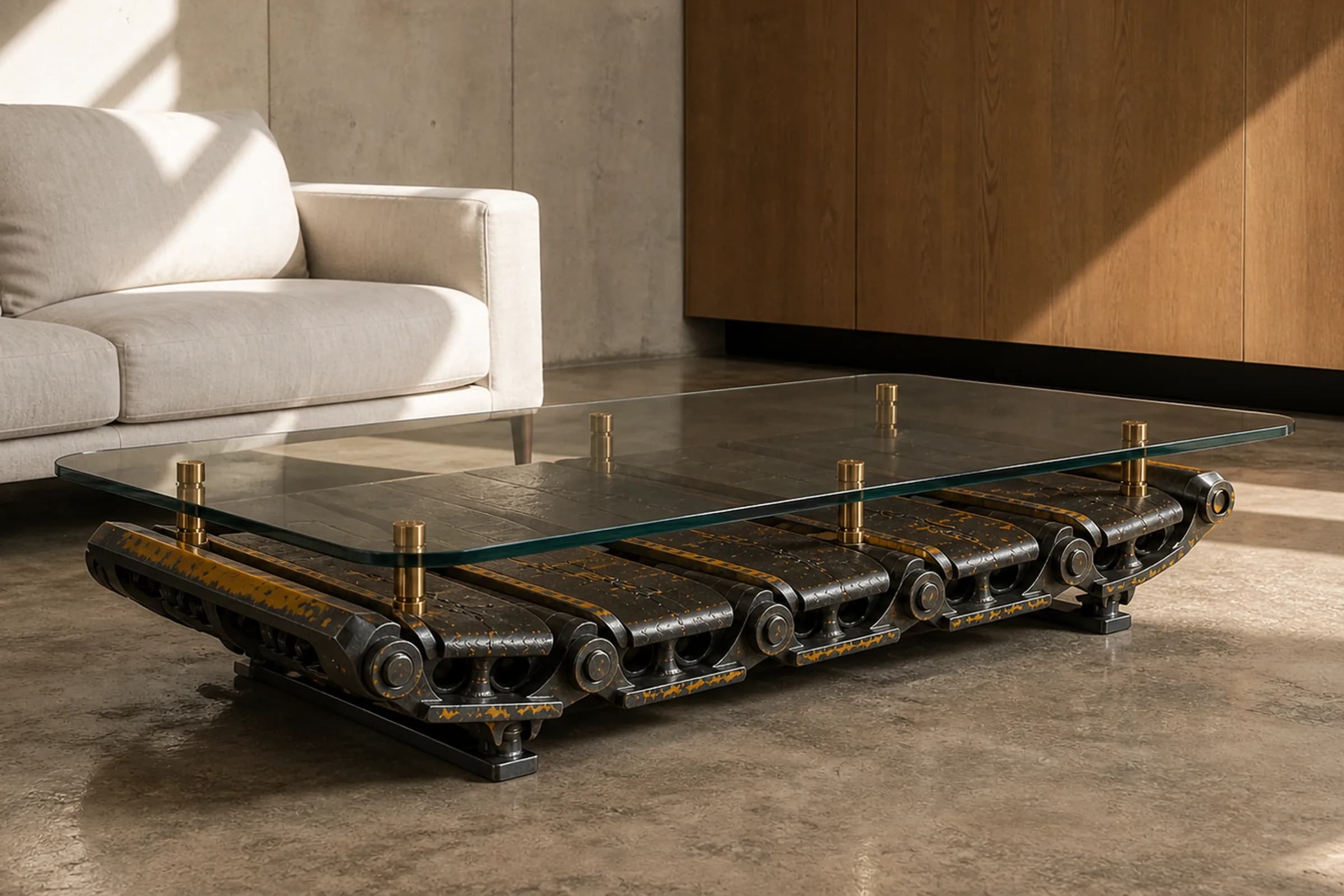
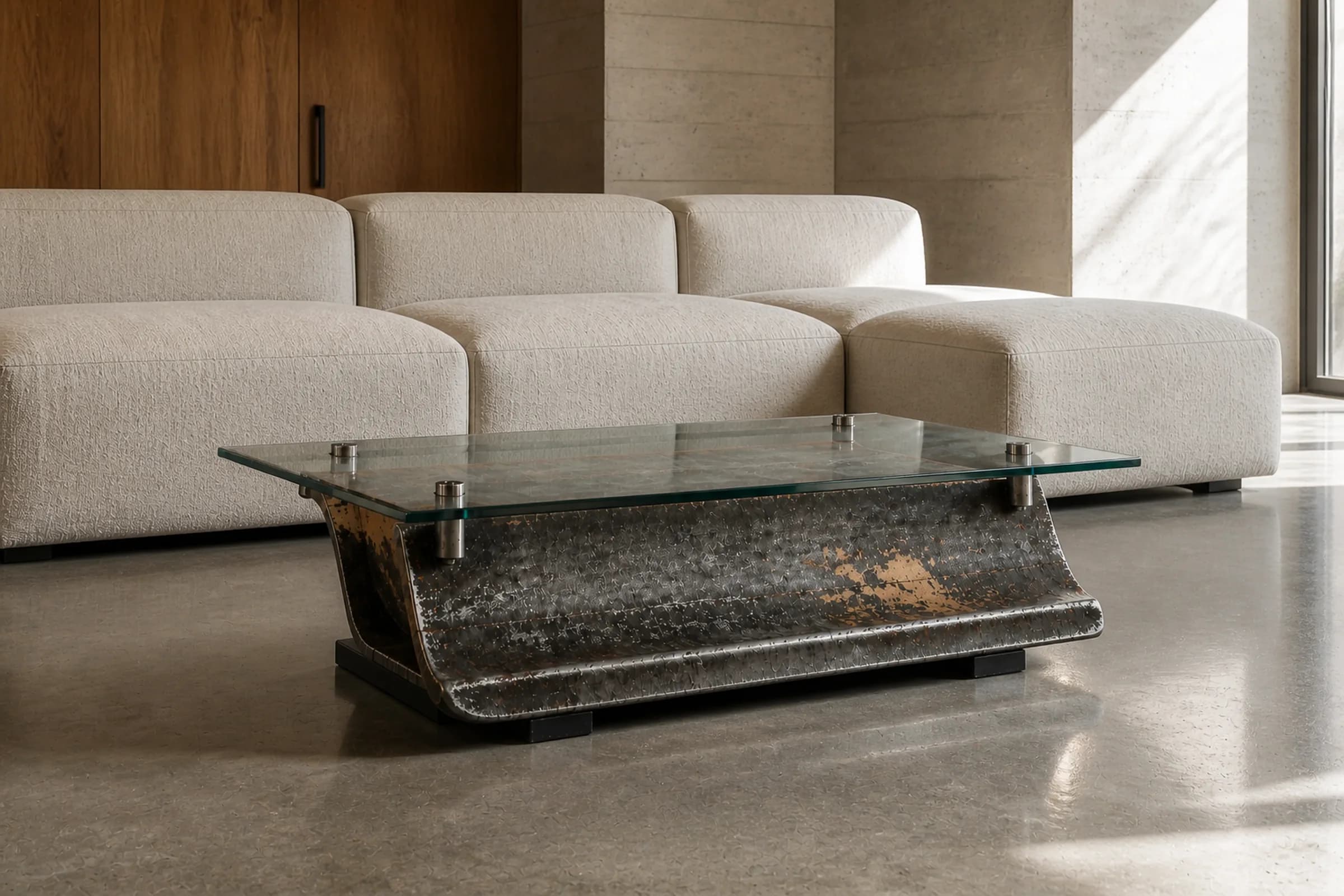
Wabi-sabi rooms want asymmetry and empty space, and both suit heavy objects. Set the piece off-centre. Leave one wall genuinely bare. Use materials that will also age visibly — unlacquered brass, oiled oak, wool, unglazed stoneware, plaster — and avoid anything that will look identical in ten years, because a room where only one element ages reads as an accident rather than an intention. Restrict the palette and let variation come from surface rather than colour.
05The part people find difficult
Living with this means accepting that the object will keep changing, and that some of the changes will not be to your taste. Sealed steel shifts slightly in tone under strong daylight over several years. A glass top will collect fine scratches. Neither is damage in the wabi-sabi frame, and neither is reversible in any honest way — you can refinish, but refinishing erases the history that made the piece worth having. The style asks you to prefer the record over the reset, and that is a genuine decision, not a decorative one.
Objects in this note
Considering a commission?
Tell us about the space and the location. We answer with availability, customisation scope and a transport estimate.