Reading a machine part: what a track idler, bogie and sprocket actually did
Every object in this collection was a component with a job. Knowing the job explains the shape, the wear pattern and why some parts survive transformation while others never should.
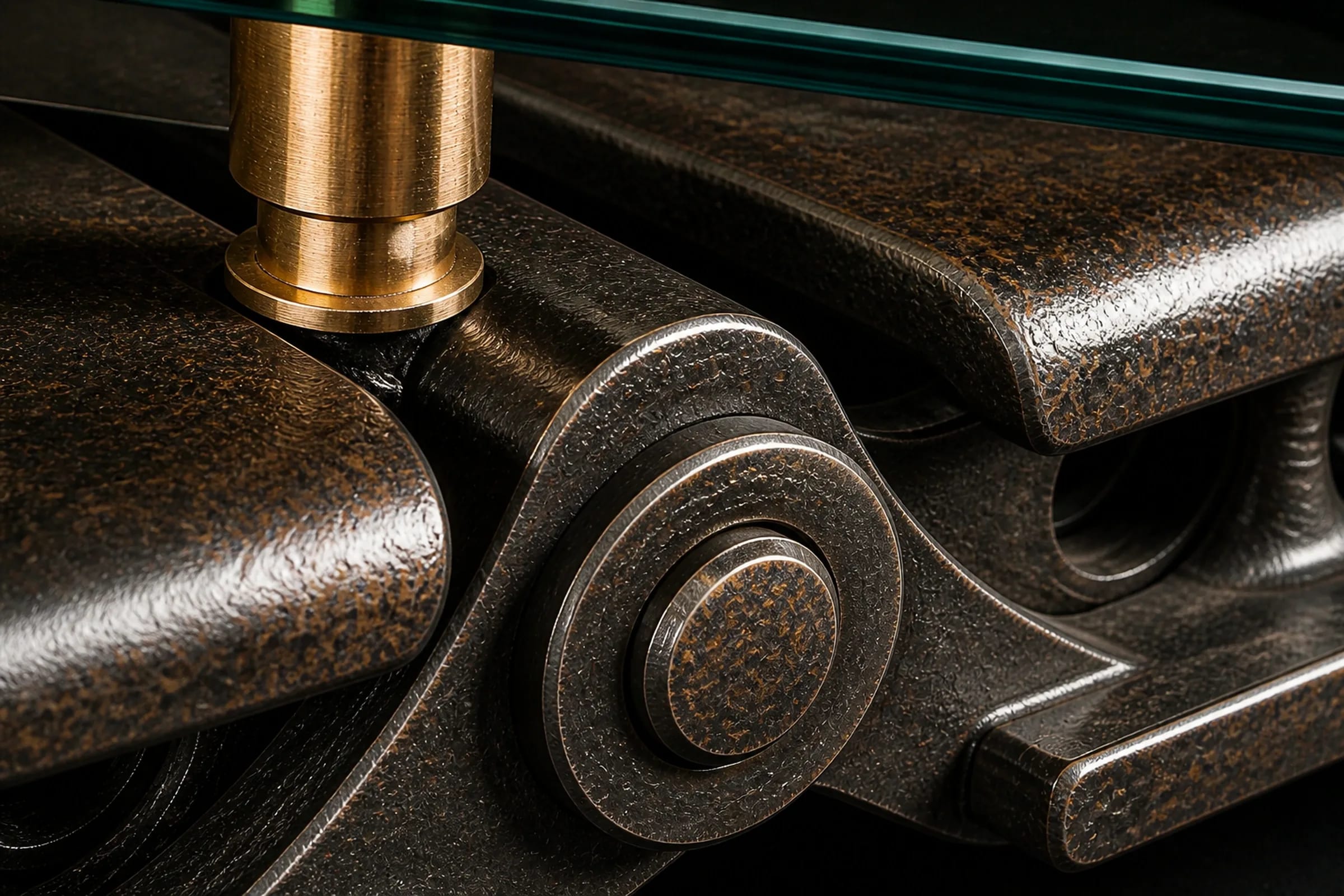
01Undercarriage: the parts that carry the machine
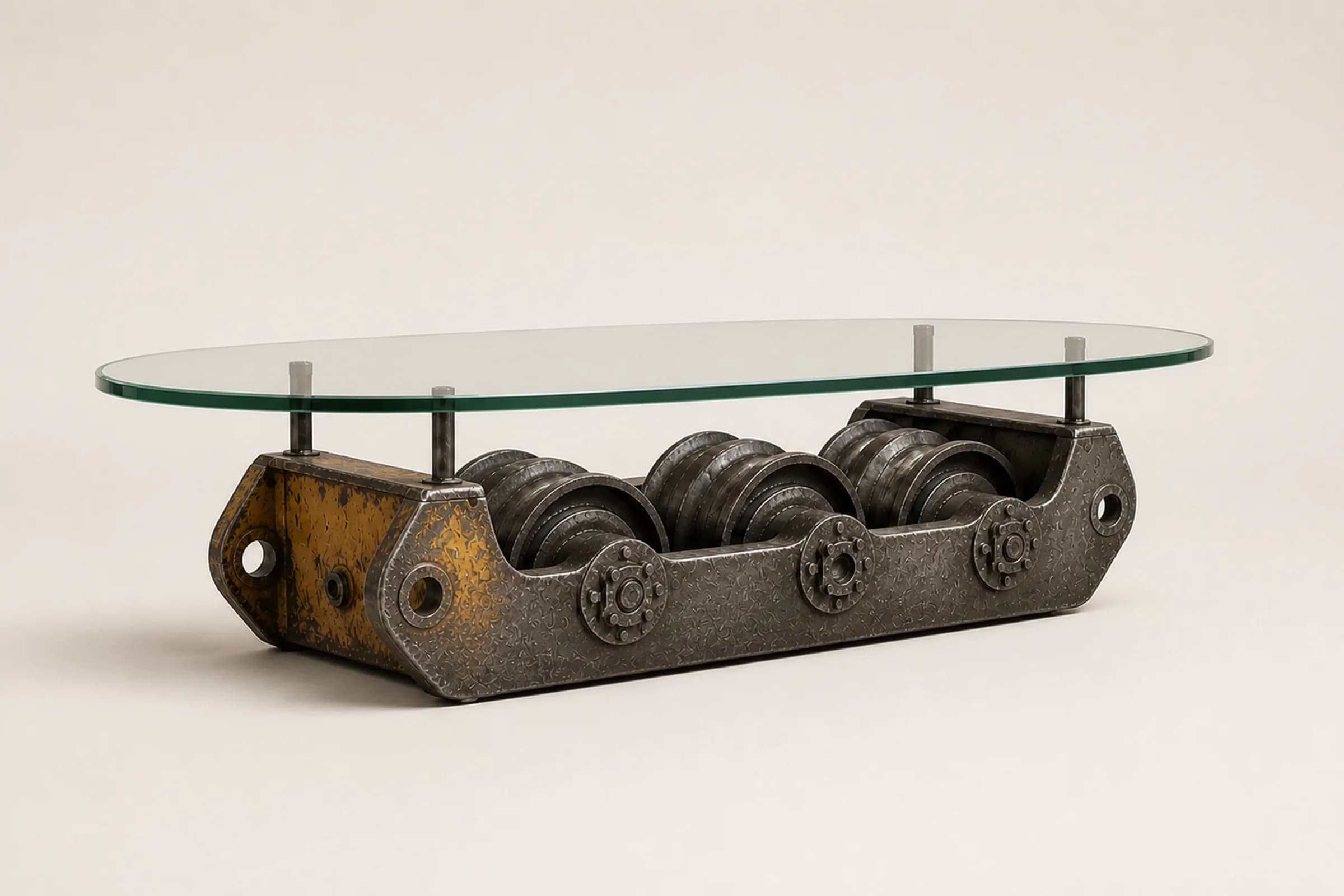
A tracked machine rides on an undercarriage, and most of its mass passes through a small family of components. The track chain is a loop of linked shoes. Bogies — also called track rollers — sit under the frame and carry the machine's weight onto that loop, which is why a bogie is compact, dense and symmetrical: it is a load path, nothing else. Their wear is even and circular, concentrated on the running surface, and it is the most honest wear in the whole collection because it comes from pure repetition.
02Idler and sprocket: tension and drive
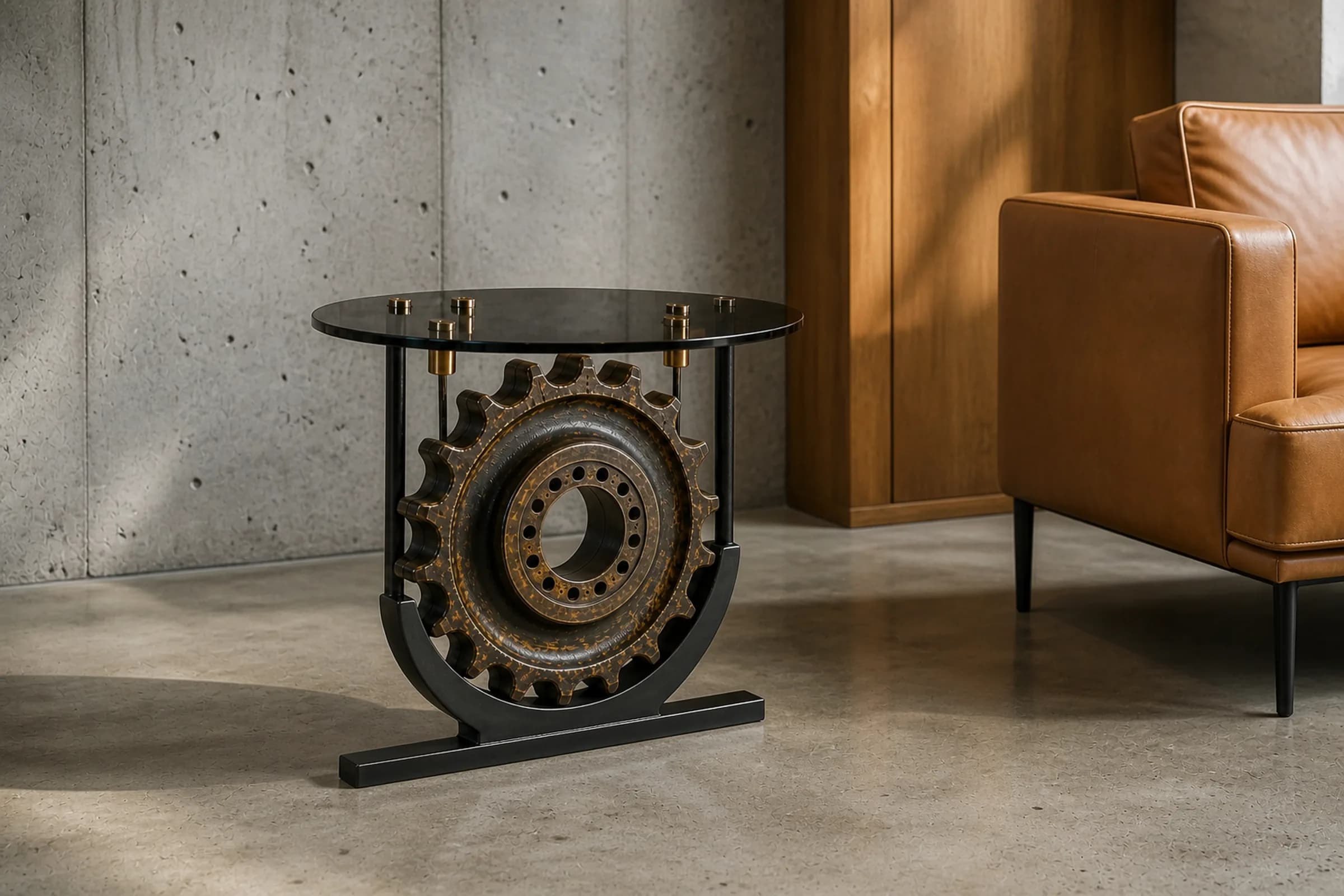
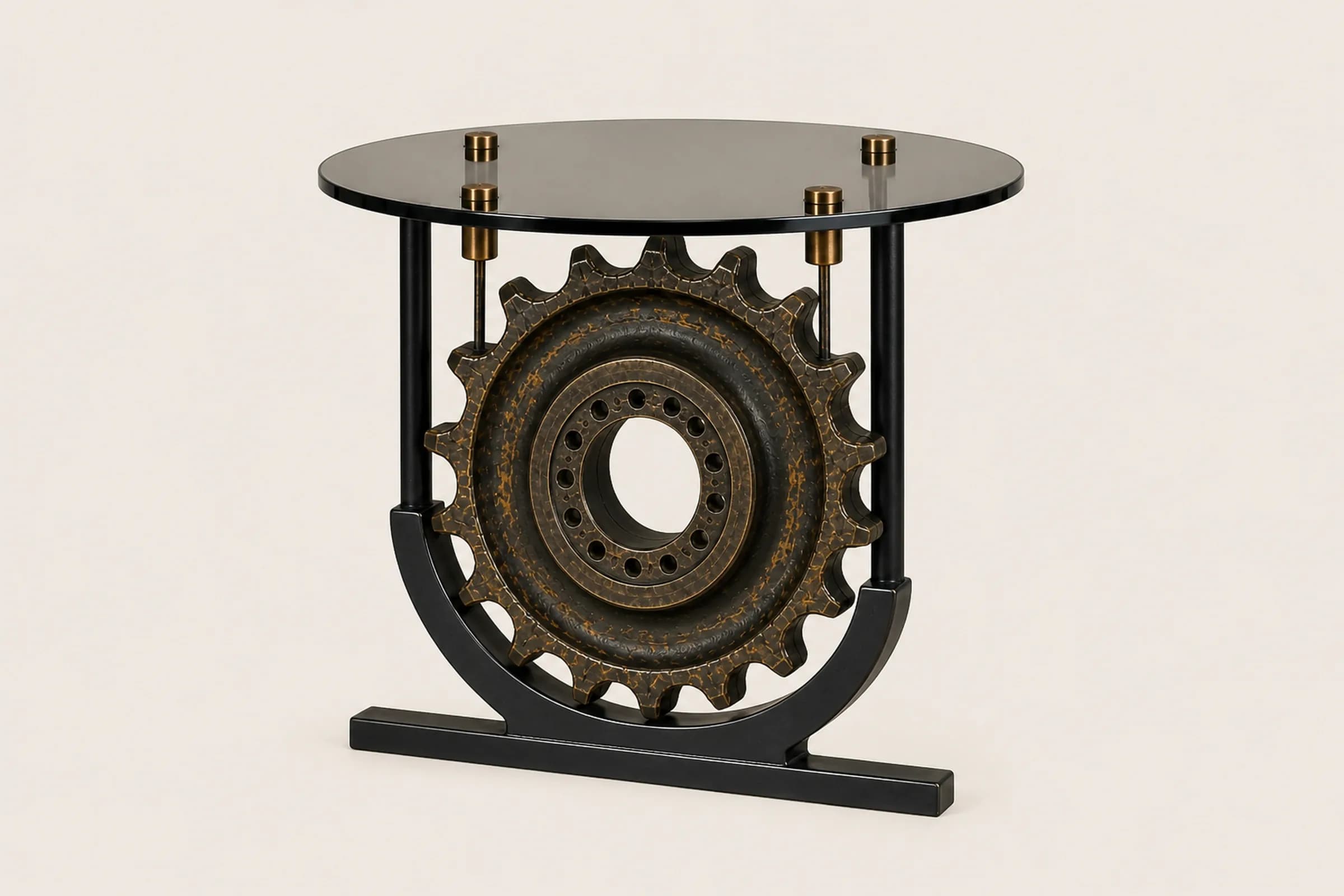
The idler sits at the front of the track frame and does no driving at all. Its job is to guide the chain and hold tension, which is why its faces are broad, smooth and polished into a shallow dish by years of contact. The sprocket sits at the opposite end and does the driving: its teeth engage the chain and transmit torque. That difference is visible in the metal. An idler wears as a surface; a sprocket wears as a profile, tooth by tooth, and a sprocket with even tooth wear had a well-tensioned life.
Nobody styled these shapes. They are the record of a force that had to be resisted.
03Working equipment: blades, buckets, rippers and teeth
The front of a machine is where forces stop being predictable. A dozer blade is a curved plate designed to move material, and its working face polishes to a bright, hard finish while its back keeps original coating — the sharpest contrast in the collection. Ripper shanks and bucket teeth are consumable: they are meant to be destroyed and replaced, so they arrive worn into asymmetric, purposeful shapes. Buckets take impact, and the wear tells you which corner met the ground first.
04Hydraulics and rotation: rams, swivels and slewing rings
Cylinders, rotary manifolds and slewing bearings are the precision end of a machine. A ram is a machined tube with a chromed rod and a tolerance measured in hundredths. A rotary manifold passes oil between a rotating upper structure and a fixed undercarriage, so its sealing lands are ground to microns and read as differences in surface rather than as marks. Slewing rings carry the whole superstructure and rotate it. These parts arrive geometrically true, which changes the design problem entirely: nothing needs correcting, only cleaning and presenting.
05Why the part decides the object
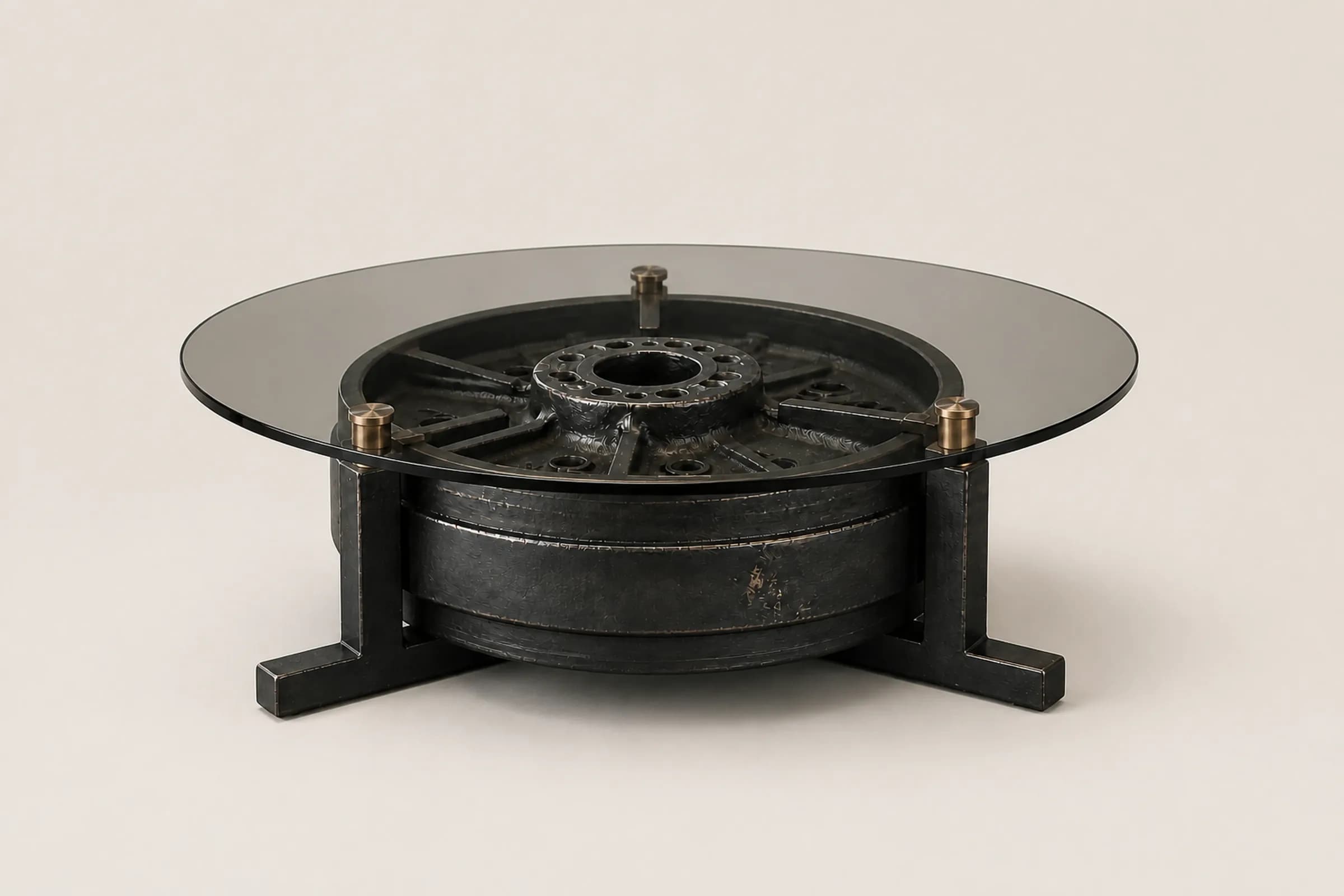
Once you can read the part, the design follows. A polished idler face wants to be seen flat and lit from the side. A sprocket wants height so its teeth read as a profile. A blade wants a long low span that lets the curve do the work. A manifold wants the glass to sit directly on its outer sealing land, because the machining is the ornament. None of these decisions are stylistic. They are what the component's original job left behind, and the transformation's only real duty is not to argue with it.
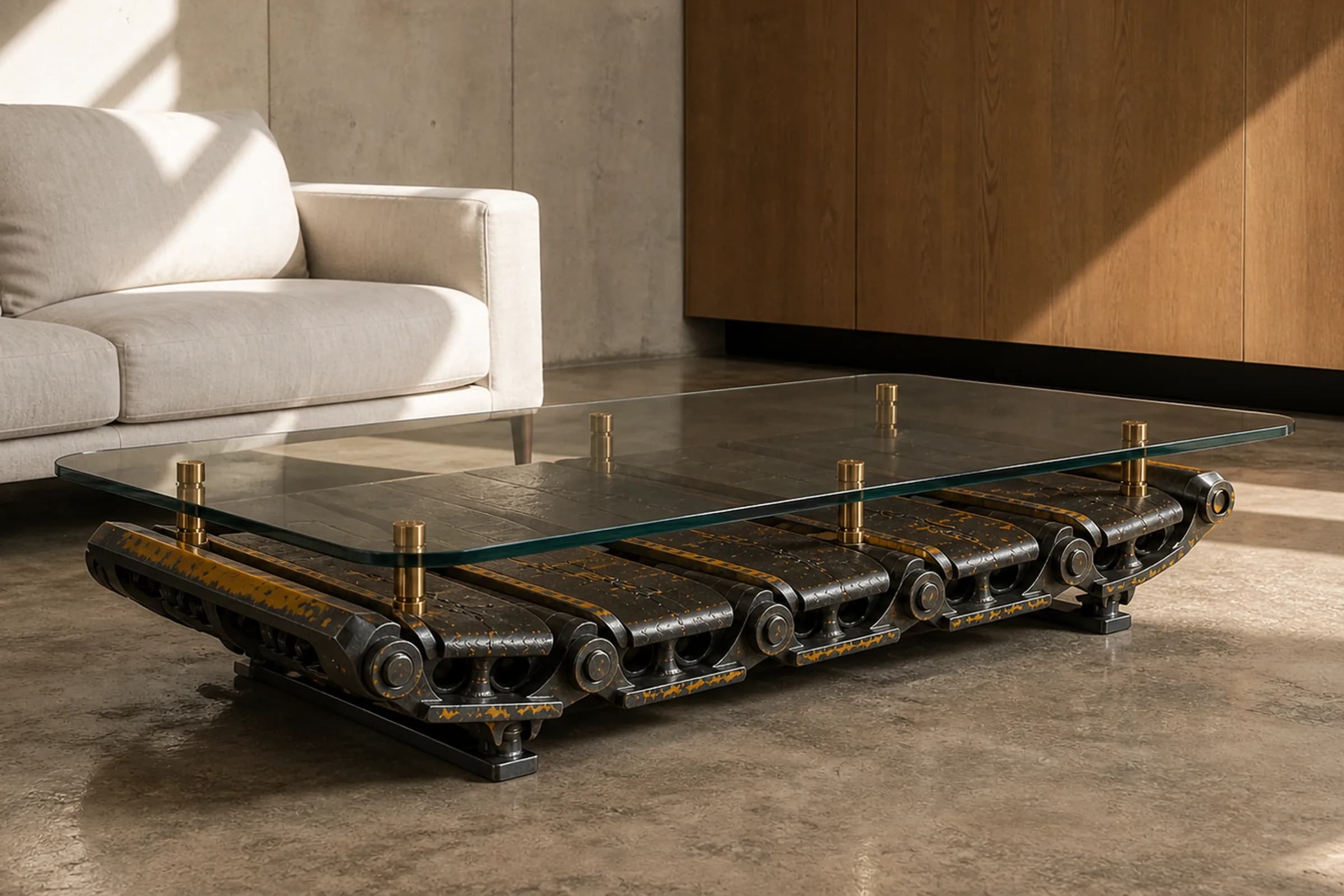
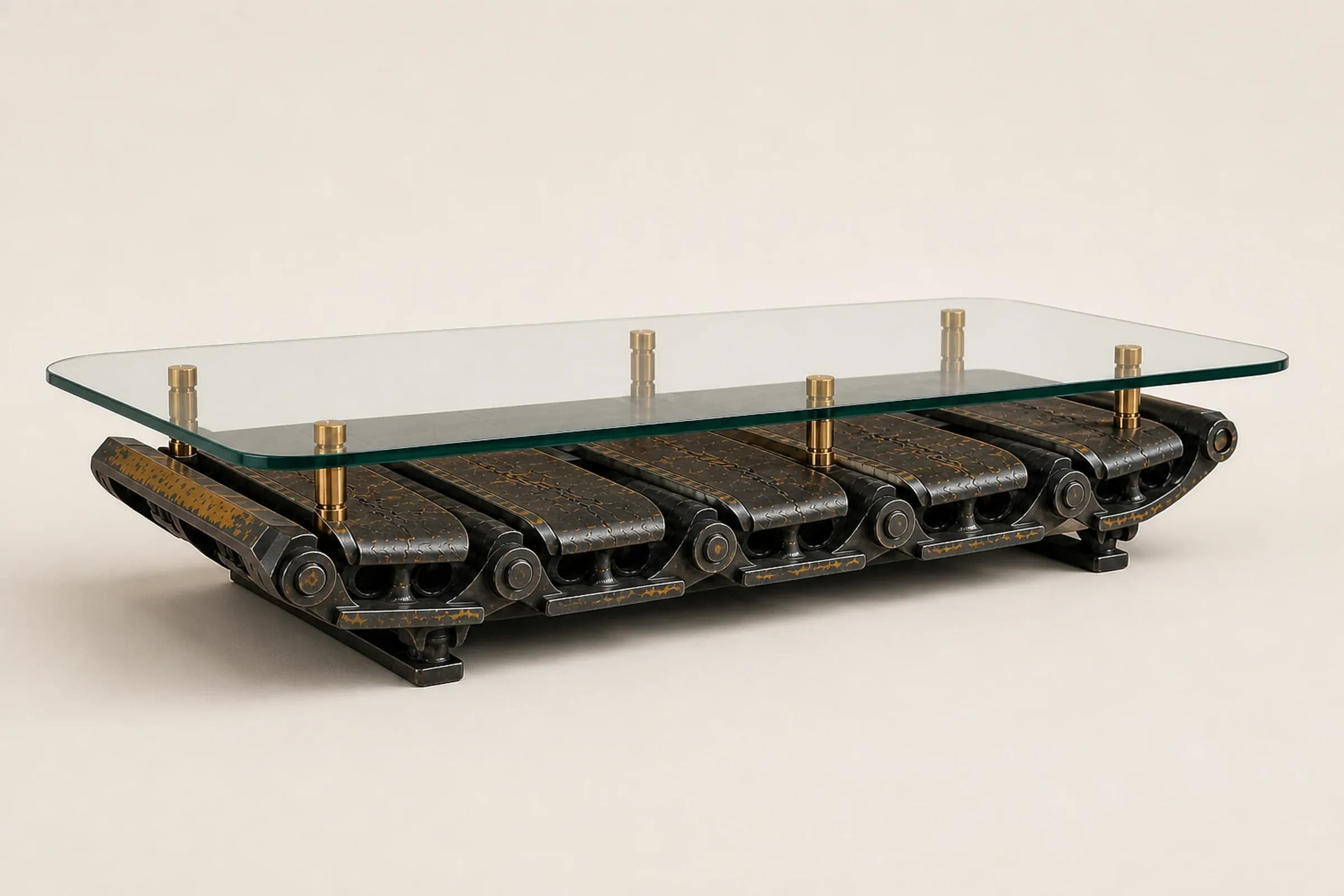
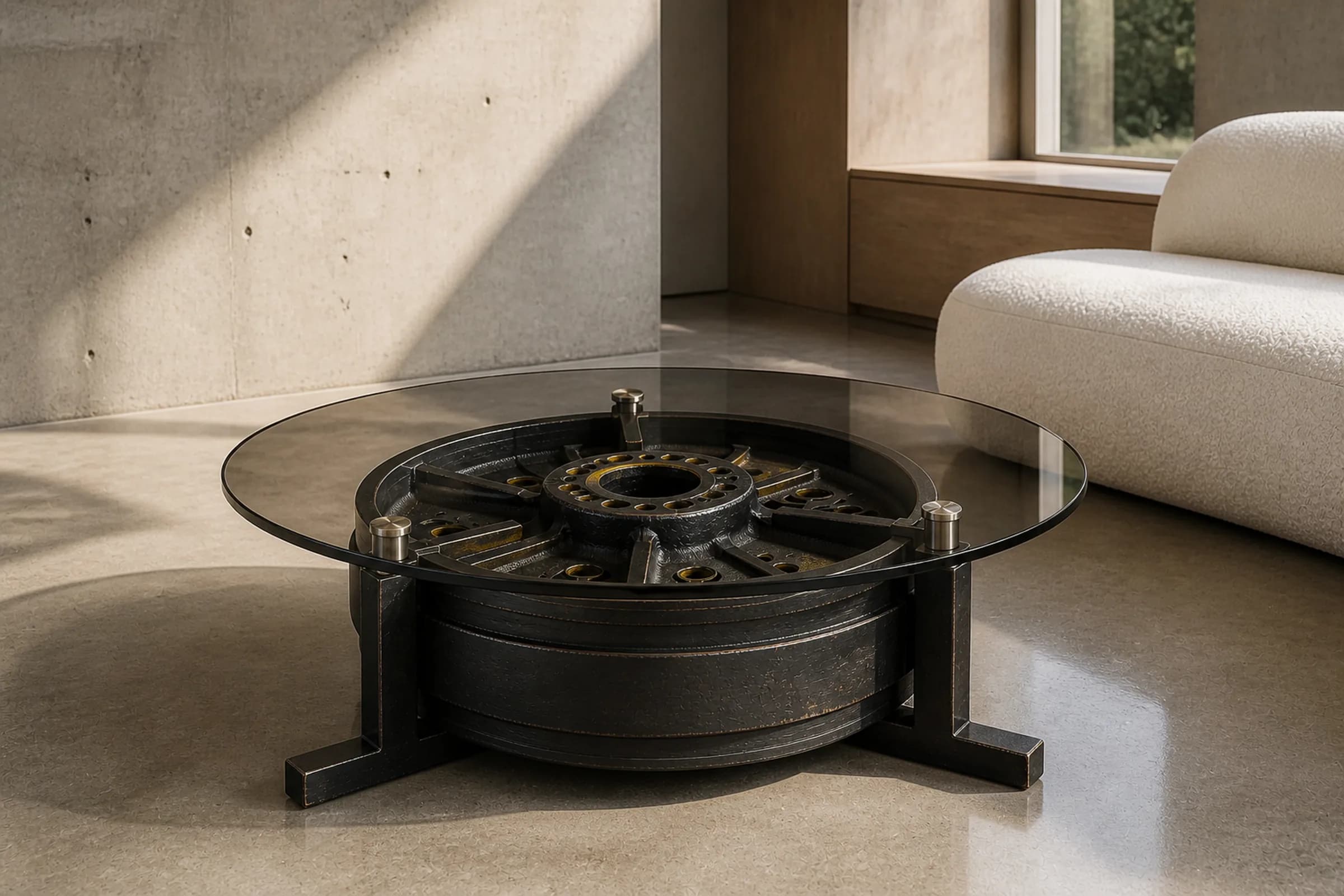
Objects in this note

Considering a commission?
Tell us about the space and the location. We answer with availability, customisation scope and a transport estimate.