Commissioning a one-off: how the process actually runs, and where it goes wrong
A commission built around salvaged material cannot be specified the way a bespoke sofa can. The form follows a component nobody has found yet, and the timeline follows the machine that has not been retired yet.

01Start with constraints, not with an image
The most productive first conversation is about limits rather than appearance: the room and its dimensions, the floor construction, the access route, the maximum footprint, the height that suits your seating, and the date beyond which the piece is no longer useful to you. These determine what is possible. Sending a reference image is helpful as a register — how heavy, how dark, how raw — but a commission that starts from a picture of somebody else's object usually ends in disappointment, because the donor part will not match it and the piece will be judged against something it was never going to be.
02Sourcing is the step with genuine uncertainty
We do not hold stock of every component class. Sourcing means waiting for a specific part to be retired from service and released, and that timing is outside anyone's control. A common bucket or track component might appear within weeks; a large slewing ring or a particular boom section can take months. This is the honest reason a firm delivery date cannot be given at the point of enquiry, and it is why we quote a sourcing window and confirm the schedule only once the part is physically in the workshop.
You are not ordering an object. You are agreeing on constraints and waiting for the right part to become available.
03Design happens after the part arrives, not before
Once the component is in hand it is cleaned, inspected and measured, and only then can the object be designed around it — because the wear, the distortion and the exact geometry are all specific to that piece and none of them are knowable in advance. You receive dimensioned drawings and photographs of the actual part at this stage. This is the point where the design can still change substantially, and it is the last point at which it can change cheaply.
04Where commissions go wrong
Three failure modes recur. First, an unstated deadline: a piece needed for a specific date should be flagged at the first conversation, because sourcing cannot be accelerated. Second, an access route that was never measured, which turns a finished object into a problem on delivery day. Third, expecting the salvaged material to look like the reference photograph — pitting, distortion and wear are not adjustable parameters, and a client who wants a uniform surface should be steered to fabricated steel instead, which we will say plainly rather than take the commission.
05What you receive at the end
A finished object, dimensioned drawings, photographs of the component before and after preparation, and documentation identifying the donor machine class, the approximate service period, the component's original function and the finish specification. Delivery is by two people minimum, with the route agreed in advance and the object positioned once — heavy pieces are placed, not moved afterwards. Aftercare is a single page, because a sealed steel object in a normal interior needs very little: a dry wipe, and a wax refresh if the finish is wax rather than lacquer.
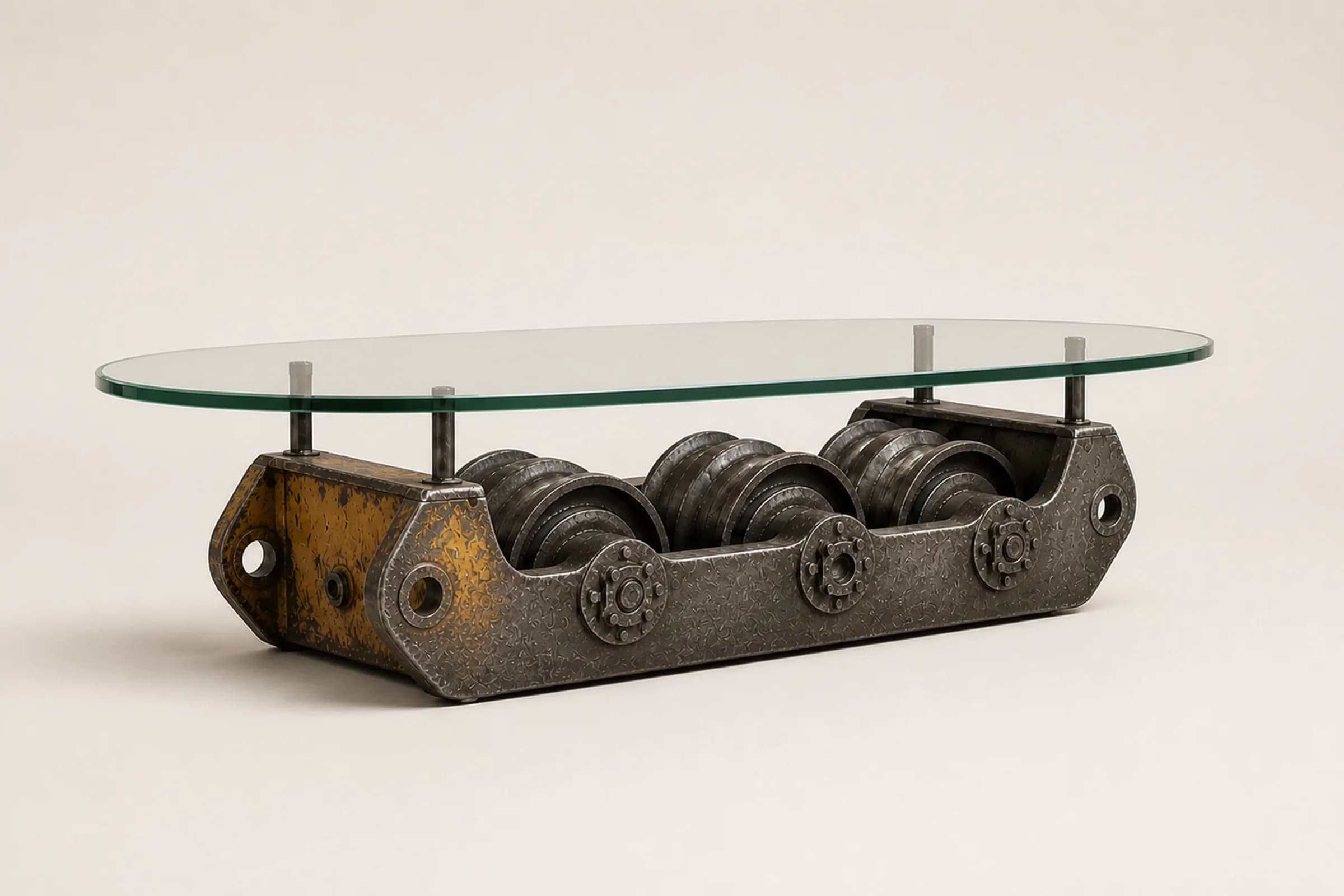
Objects in this note

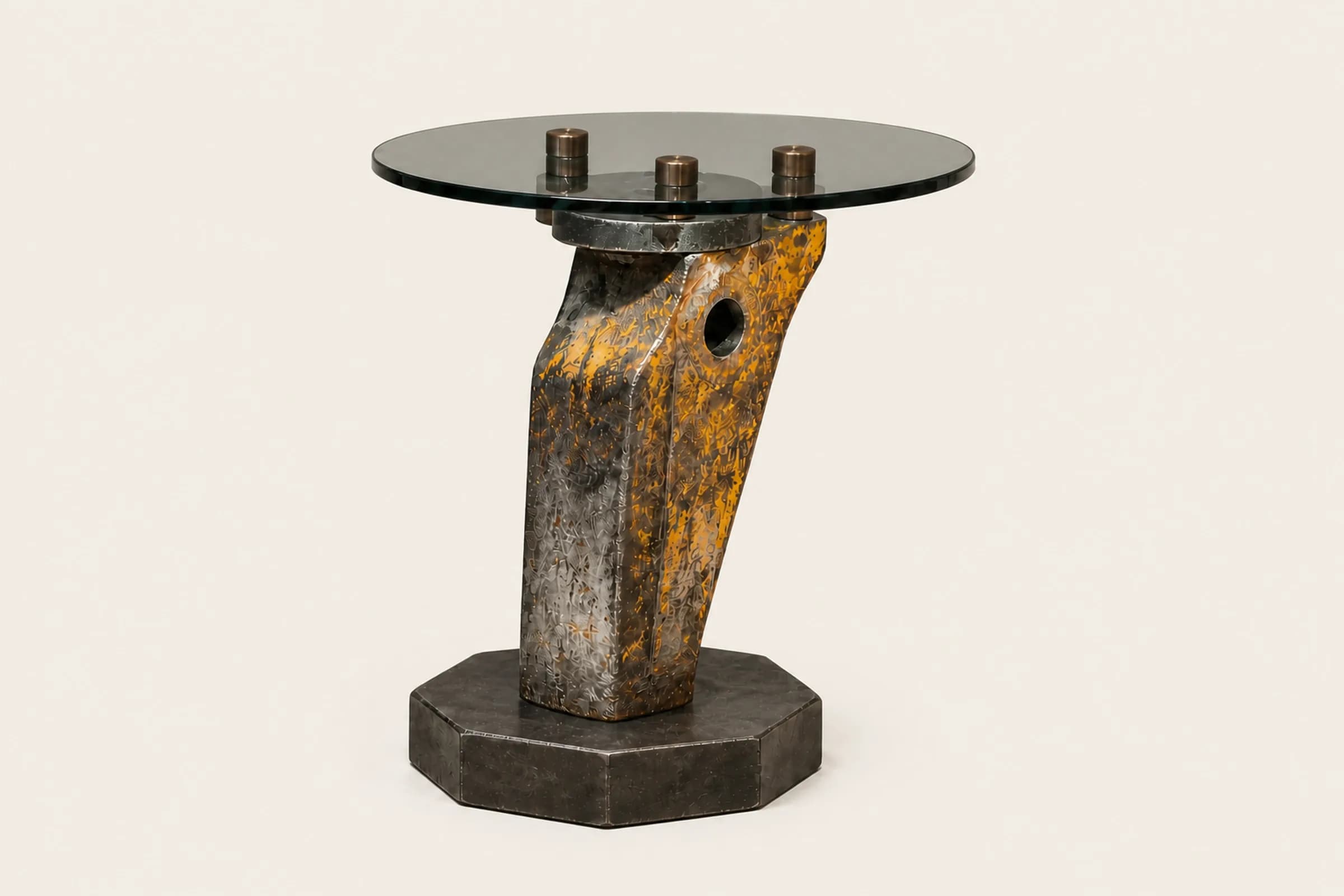
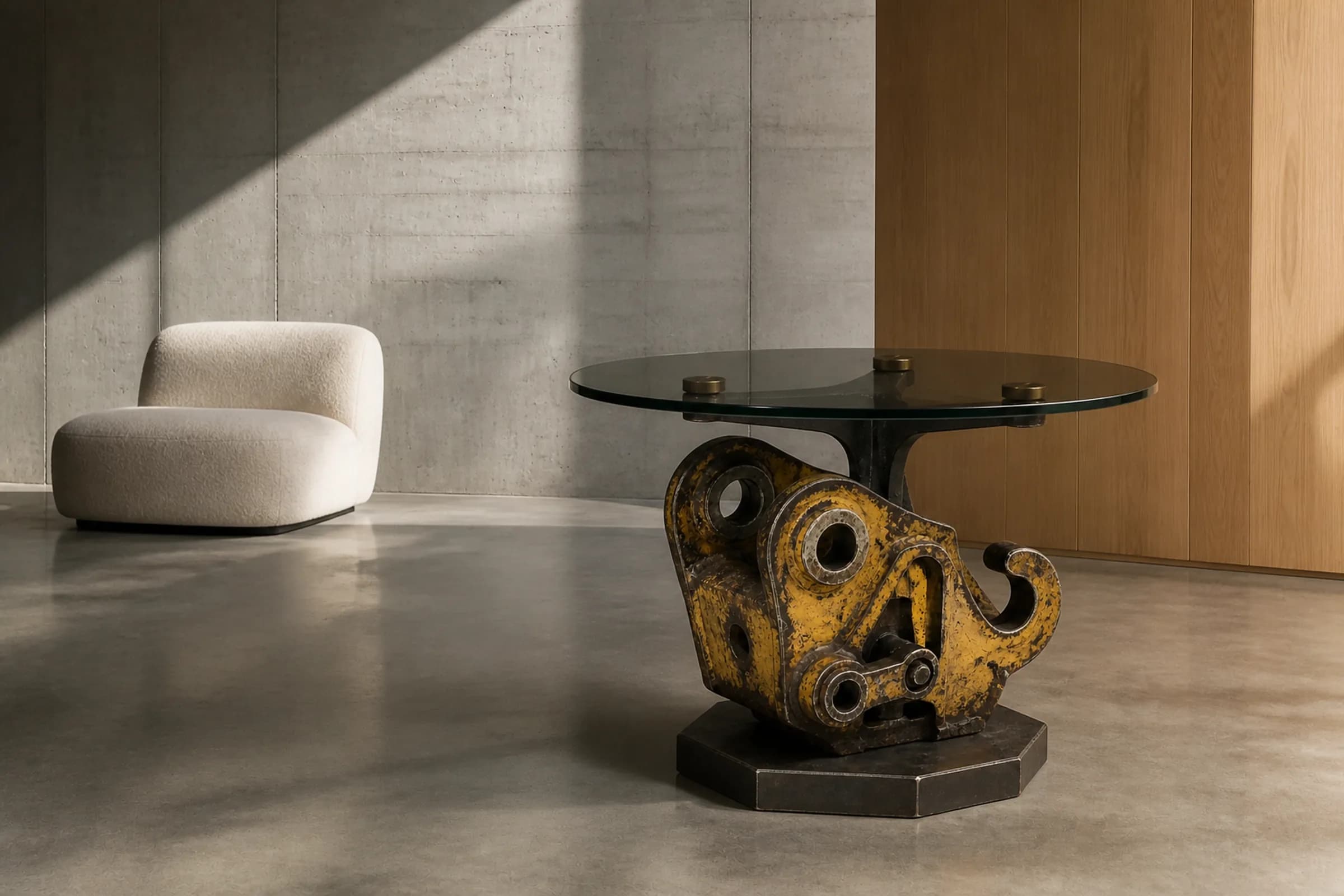
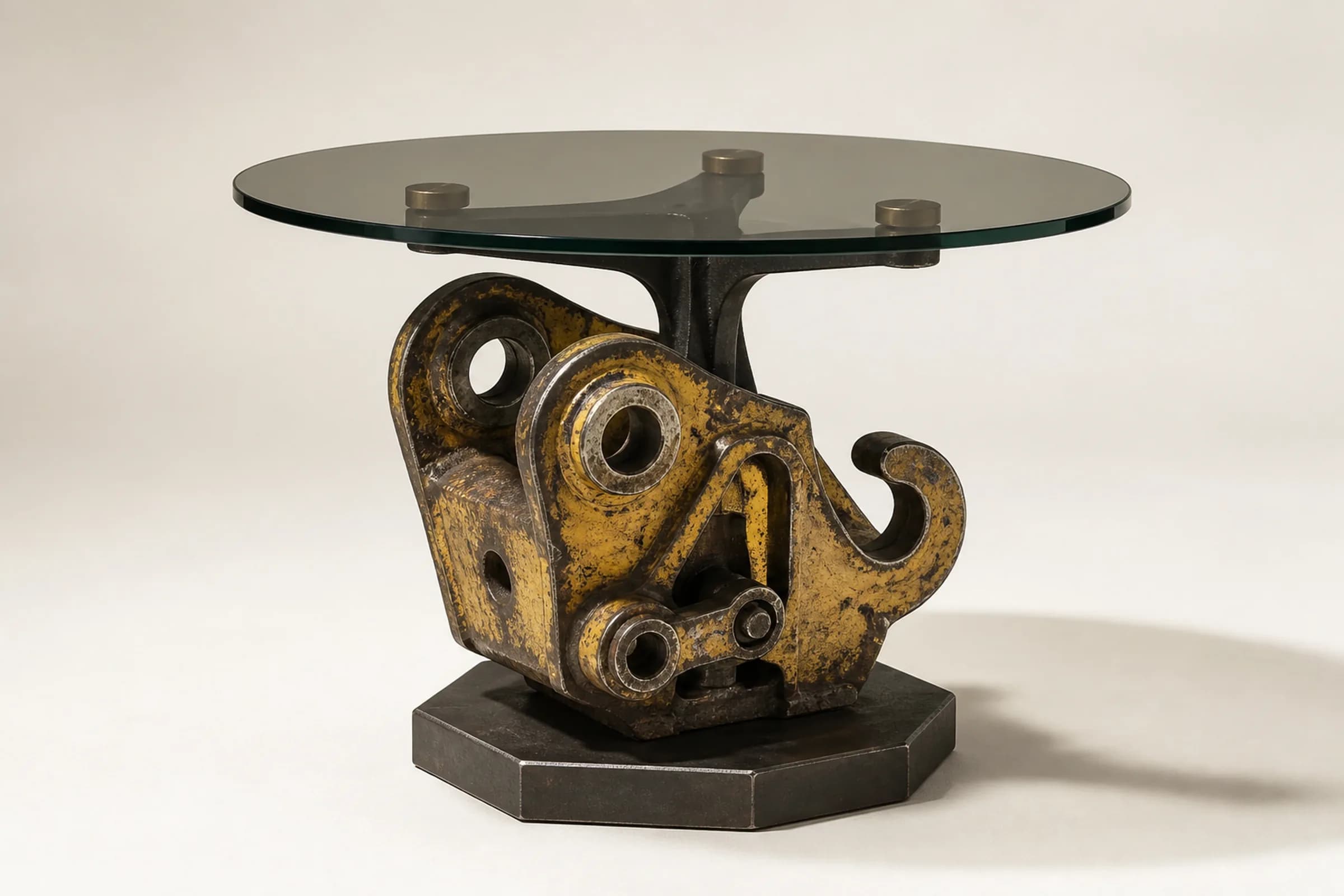
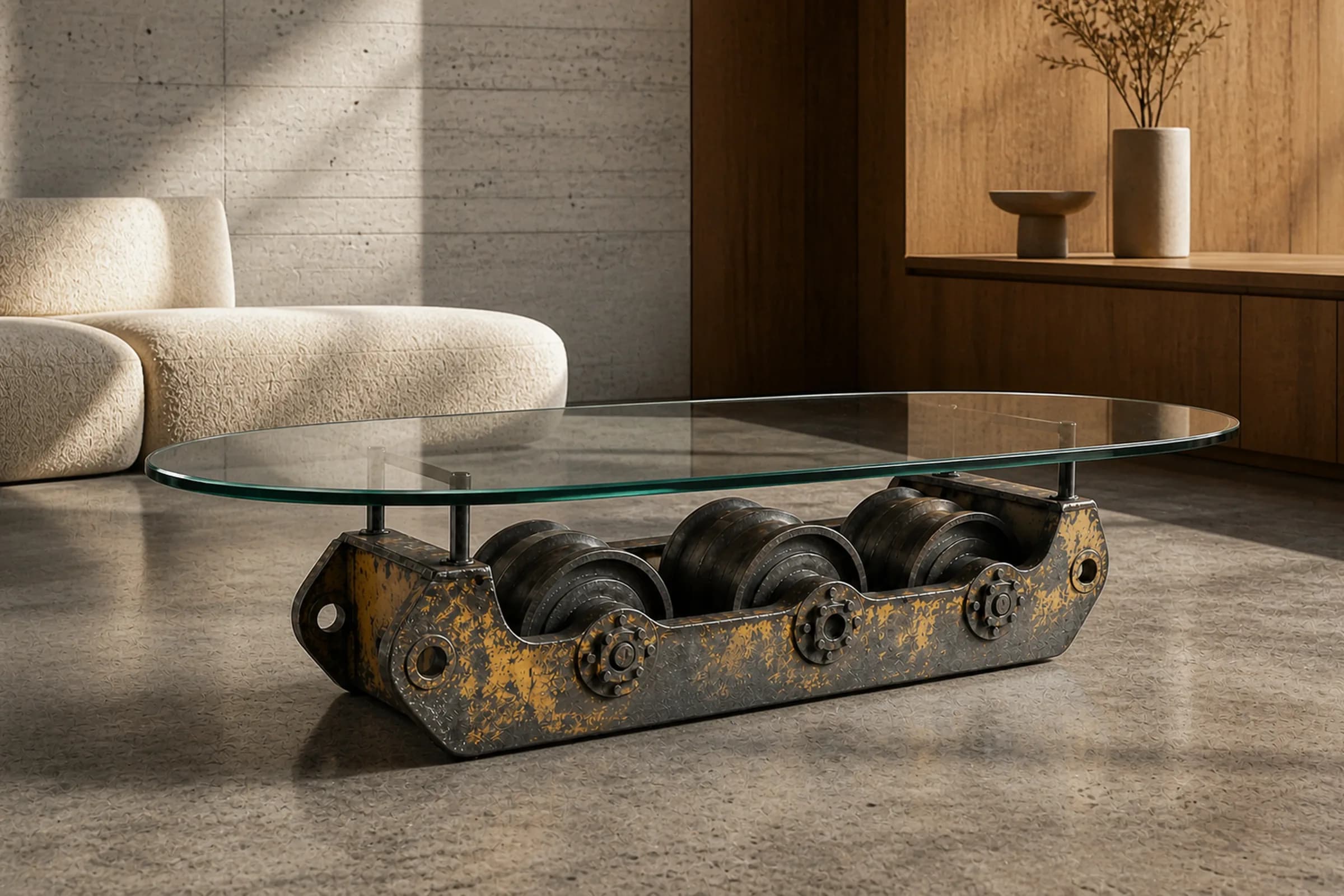
Considering a commission?
Tell us about the space and the location. We answer with availability, customisation scope and a transport estimate.