How to style a round coffee table when the table is the sculpture
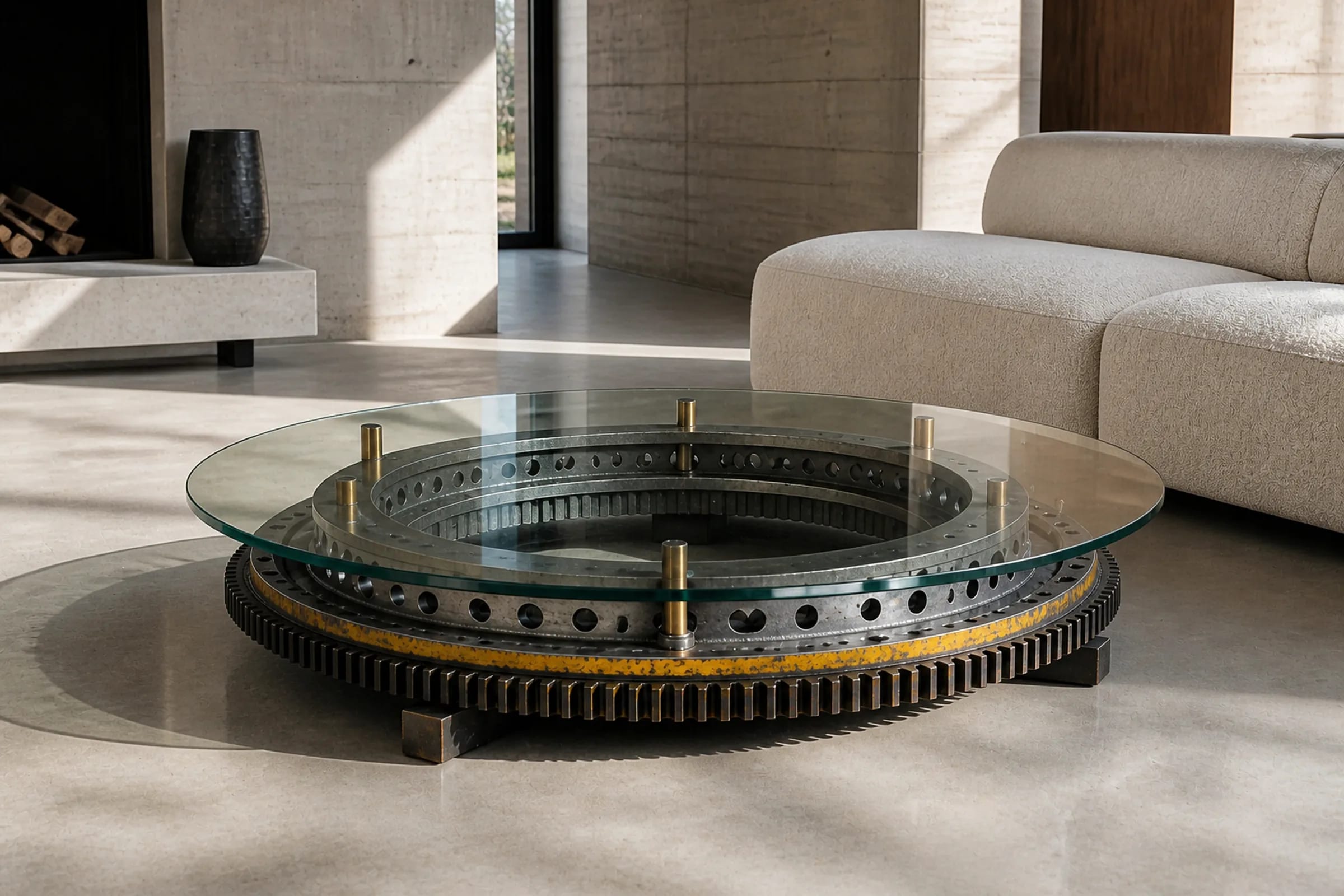
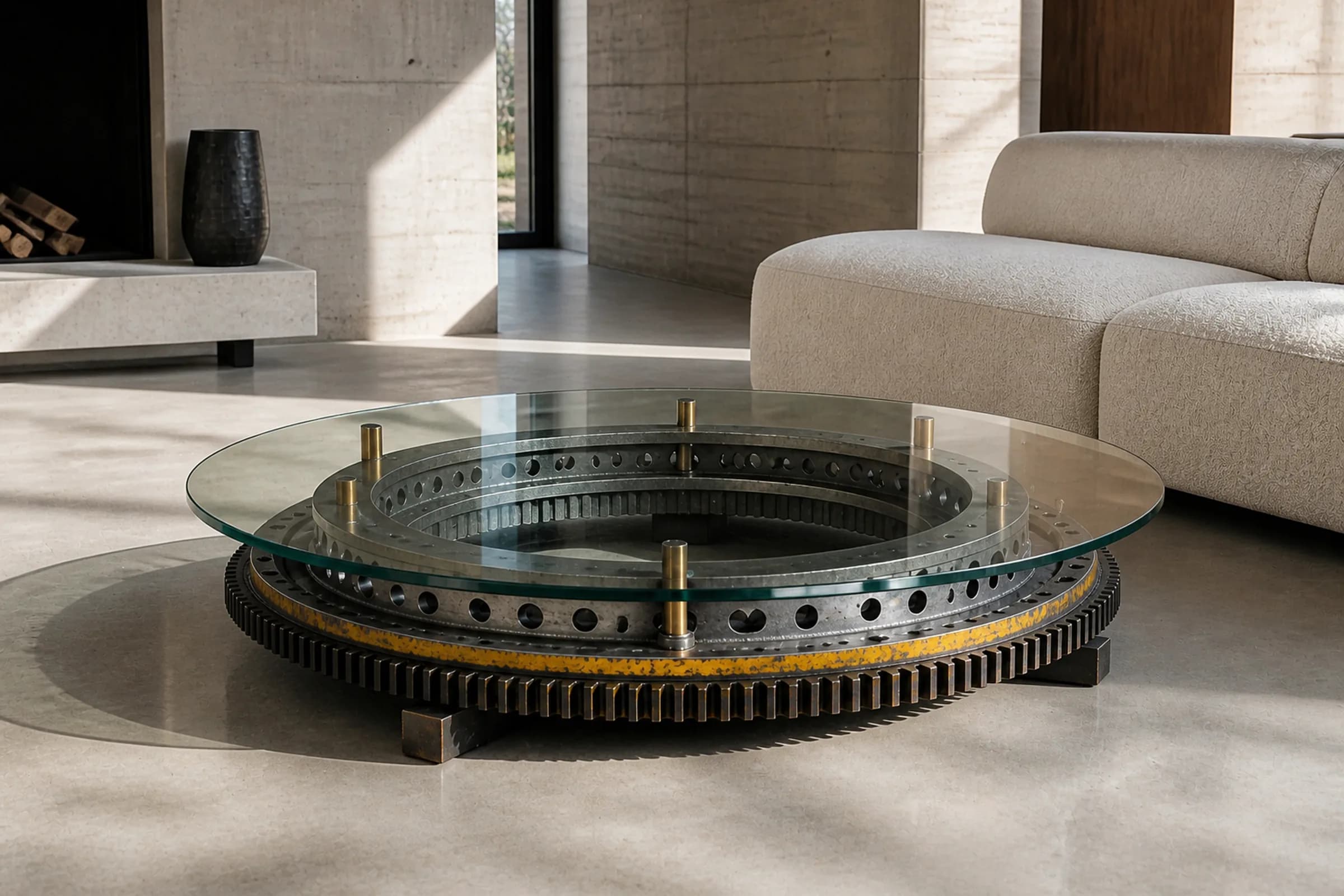
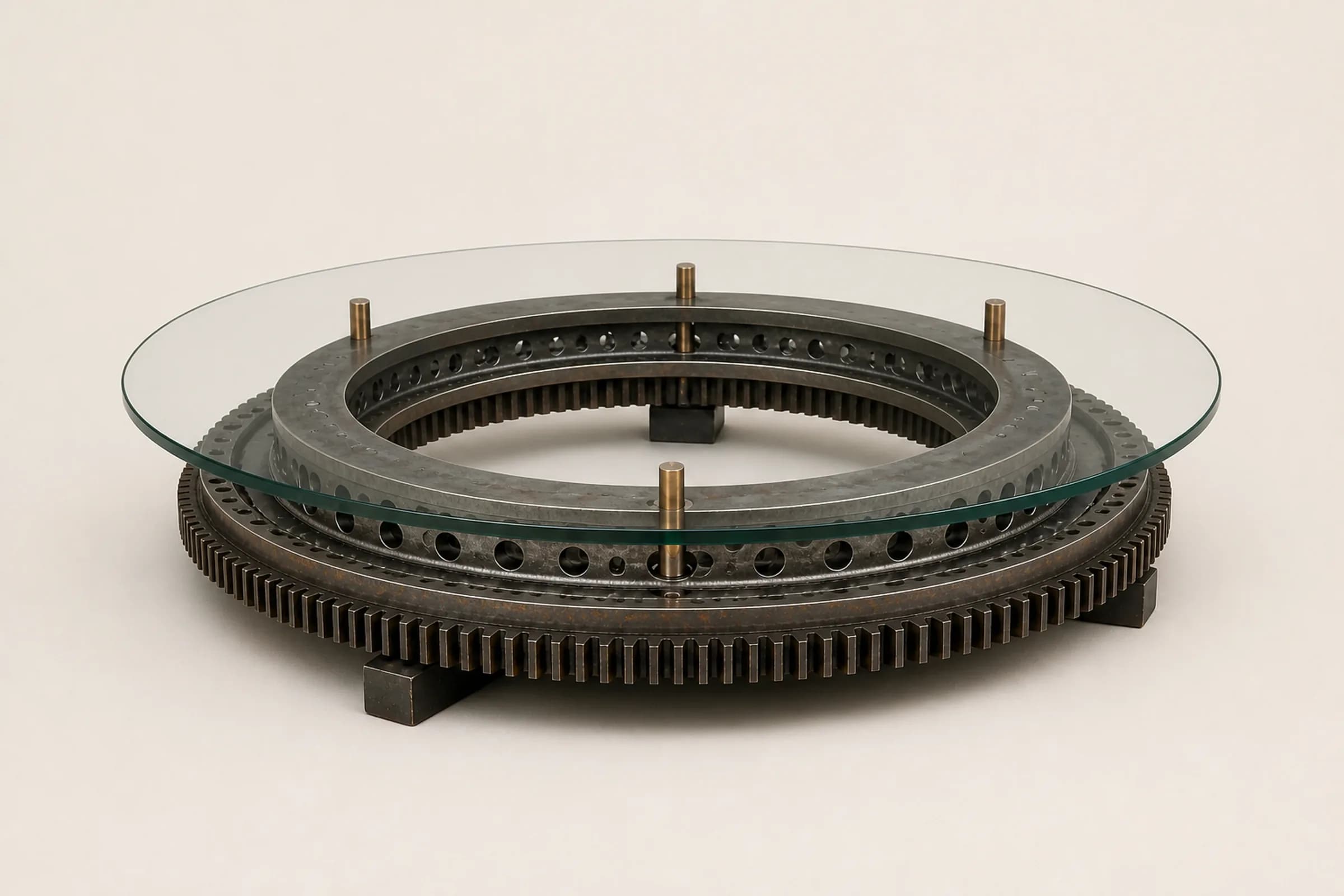
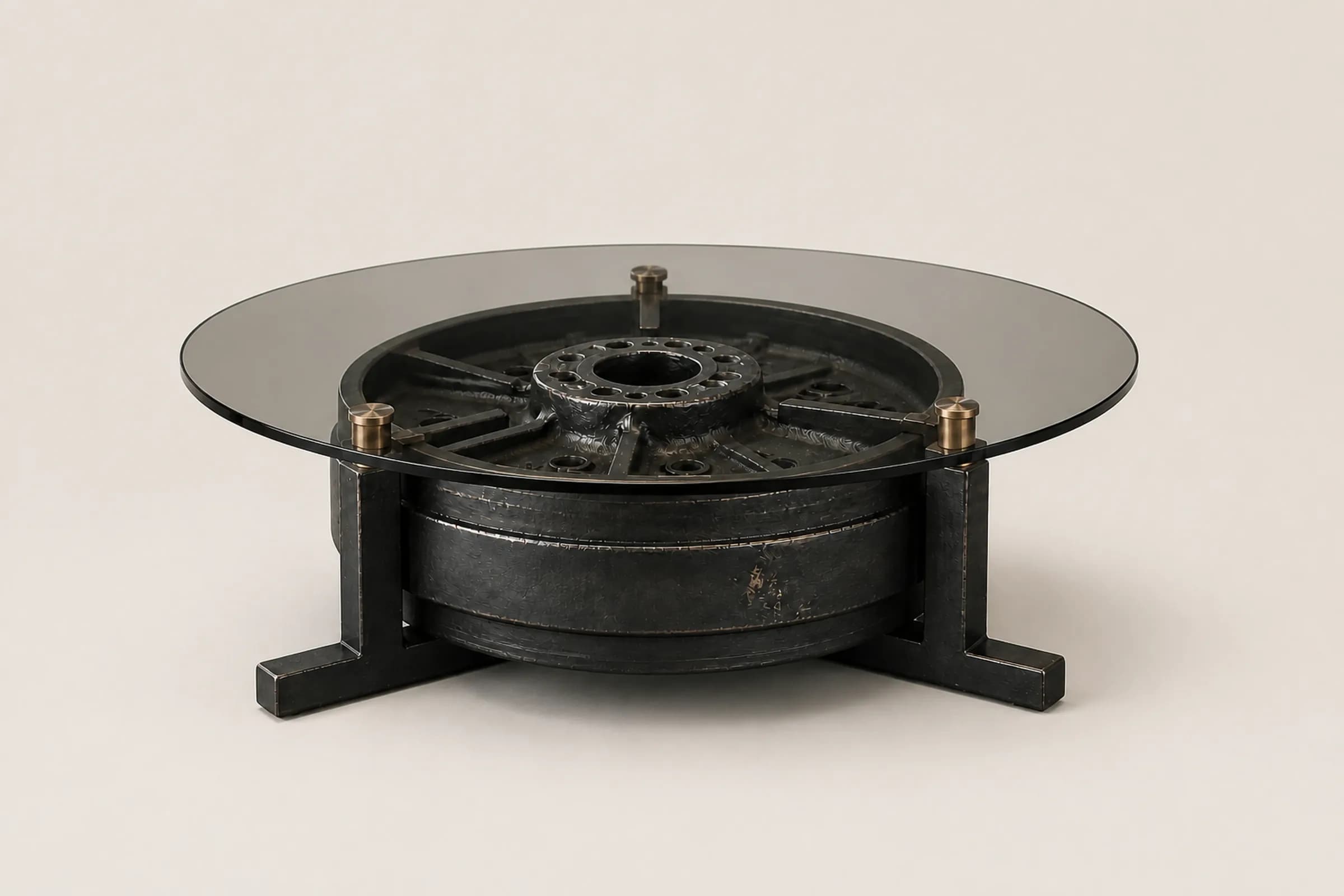
Standard advice — trays, stacks, a tall thing and a low thing — assumes the table is a background. When the base is a slewing ring and the top is glass, most of that advice actively harms the room.
01Why round tables break the usual rules
The conventional formula builds a triangle of objects and orients it toward the main seat, which works because a rectangular table has a clear front. A circle does not. It is approached and viewed from 360 degrees, so a composition that reads well from the sofa reads as a random scatter from the armchair. The workable approach on a round top is either radial — a single central group that looks correct from everywhere — or genuinely empty. There is no good asymmetric arrangement on a circle that survives being walked around.
02Glass changes what an object weighs visually
On a wooden top, an object sits on a surface. On a glass top it hovers above the base, and everything below is visible through it. That means each item you add is seen twice: itself, and its silhouette against the steel underneath. Three objects become six shapes. This is why glass-topped tables clutter faster than any other kind, and why the honest number here is one item, or none. A single vessel with real presence — a heavy ceramic bowl, one dense stone piece — reads as intentional; the same table with a tray, a candle, two books and a plant reads as a shelf.
A round glass top has no back. Anything you put on it is seen from every seat in the room.
03When the base is the point, style the room instead
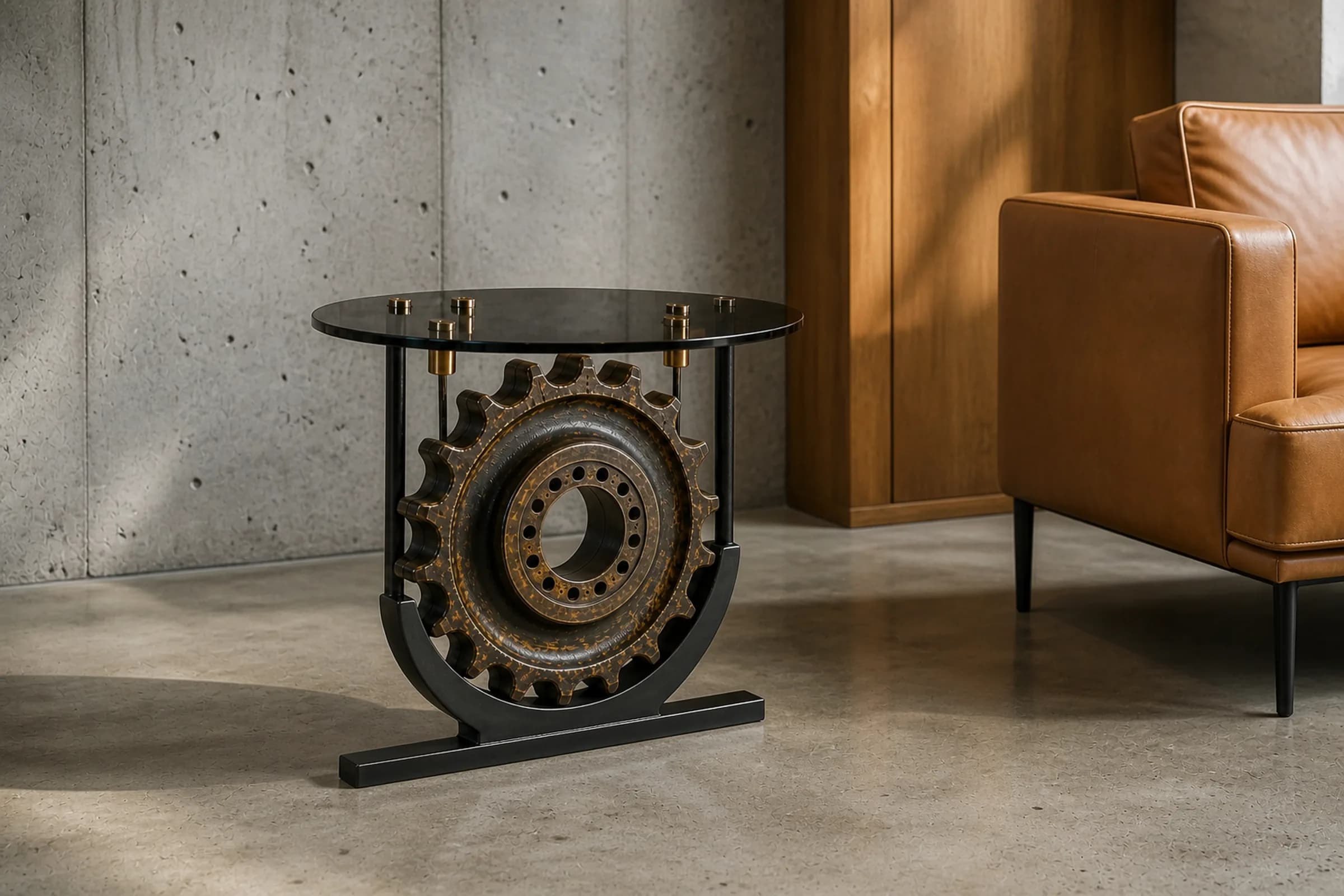
If the base is a machined structural component, it is already doing the work that a styled arrangement usually provides: texture, focal weight, something to look at. Adding objects on top competes with it and generally loses. Move the styling outward — a heavier rug under the table, a lamp placed to rake light across the steel at low angle, seating that leaves the base visible from the doorway. Sightlines matter more than surface: check what you actually see from where people enter the room, because that is where a sculptural base either registers or is hidden by a sofa arm.
04Scale, and the two numbers that matter
For a circular table, diameter should sit around half to two-thirds the length of the sofa; a Ø1100 mm top suits a 1900–2200 mm sofa. Keep 350–450 mm of clearance to the seat front, and remember that a round table is more forgiving here than a rectangle because the gap widens away from the centre. Height should match or sit slightly below the seat cushion — 340 mm reads correctly with most contemporary low seating and is considerably better than the 450 mm that dining-derived proportions produce.
05The maintenance reality nobody mentions
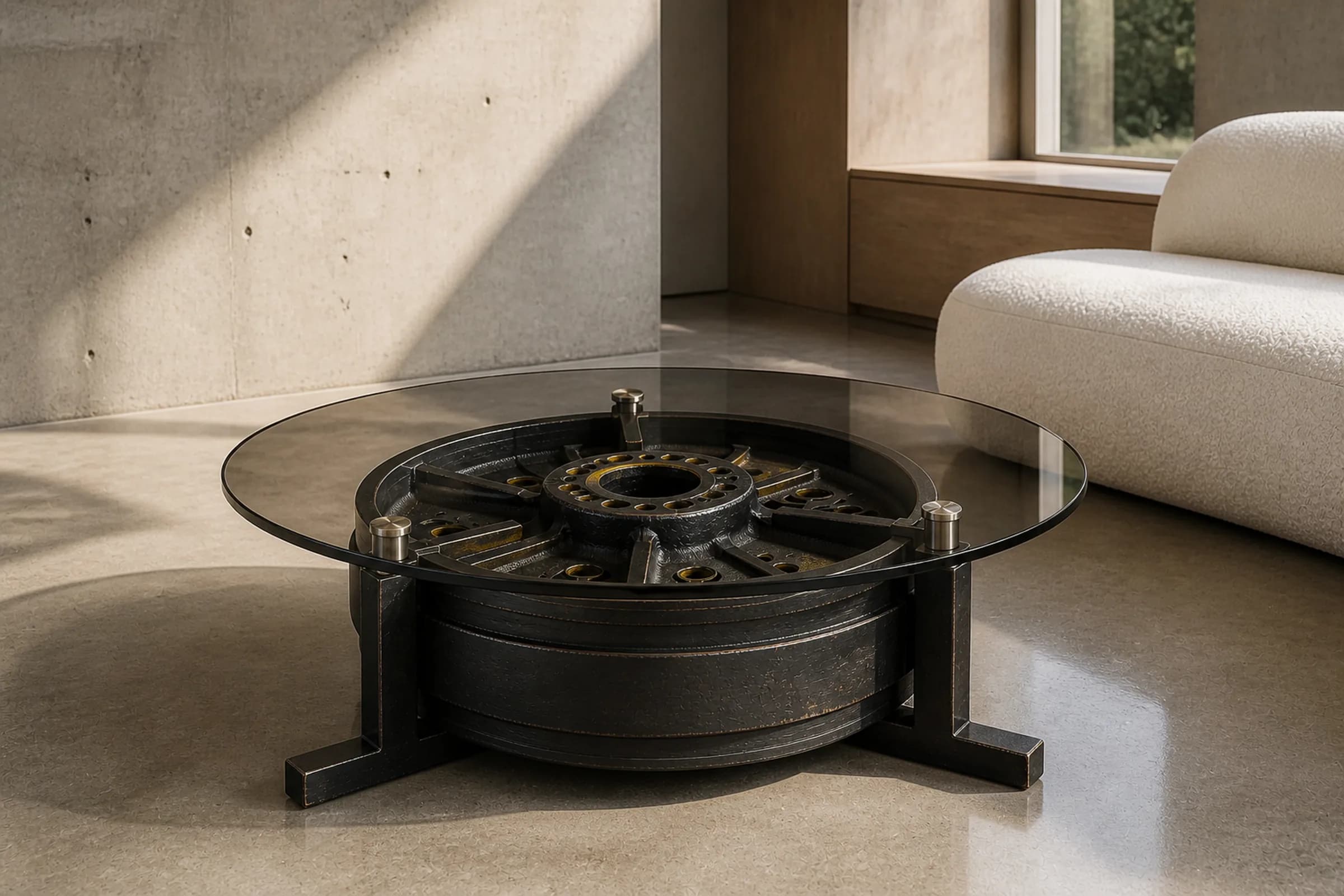
Glass shows everything: fingerprints, dust, the ring from a cold glass. On a round top with a visible base, that is more noticeable than on a matte surface, because the steel below gives every mark something to contrast against. Plan for a microfibre cloth within reach and accept a weekly wipe, or choose smoked glass, which hides fingerprints substantially better than clear at the cost of showing less of the structure beneath. That is a genuine trade — clarity of the object against ease of living with it — and it is worth making deliberately rather than discovering it.
Objects in this note
Considering a commission?
Tell us about the space and the location. We answer with availability, customisation scope and a transport estimate.