Glass on steel: why we never clamp the plate
Reclaimed steel moves with temperature and is never truly flat. A rigid clamp turns both facts into a crack. The answer is four points and an interface that gives.
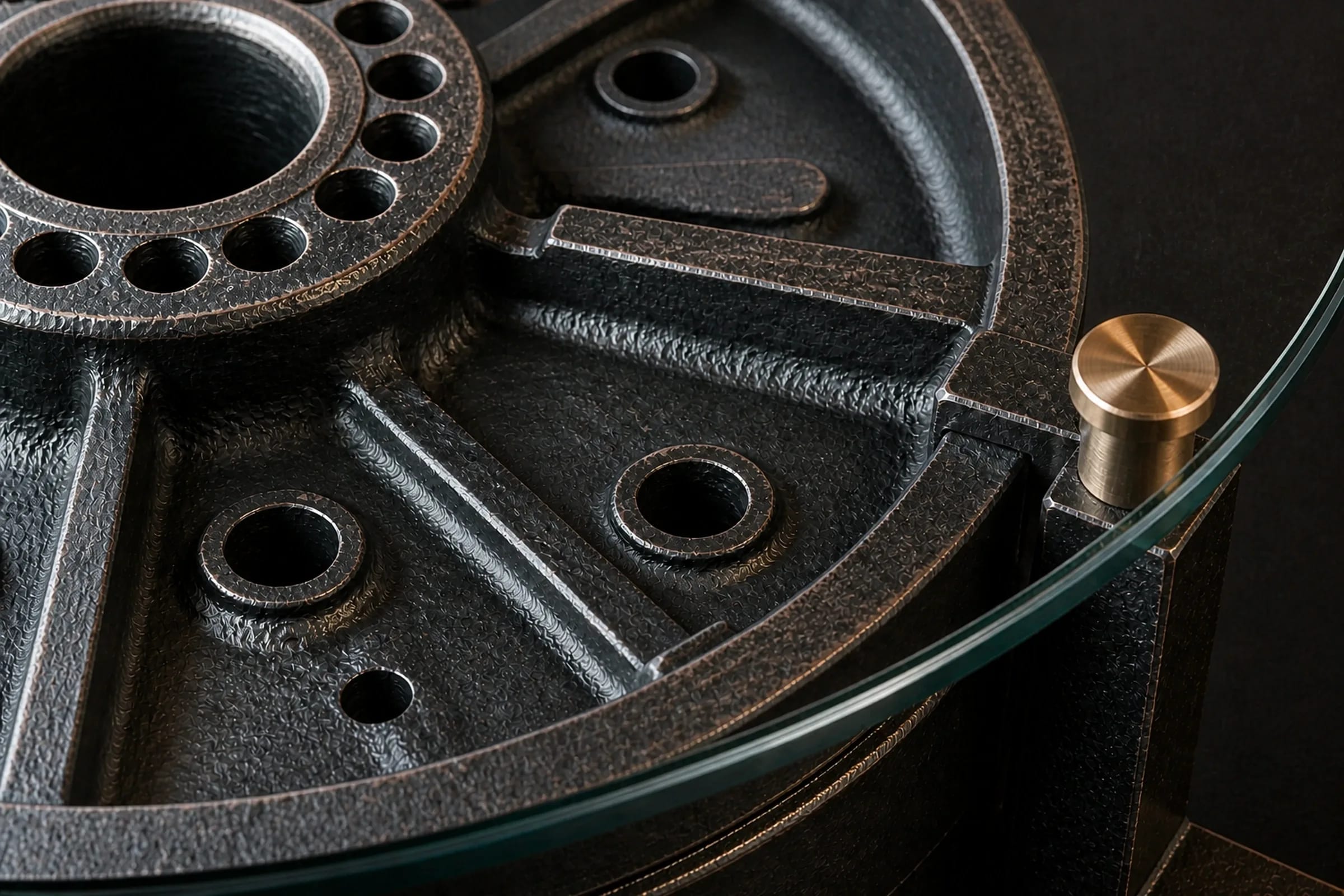
01Two facts that fight each other
Reclaimed steel is never truly flat, and it moves with temperature. A component that spent years under load carries residual distortion no straightening will fully remove, and steel expands roughly 12 micrometres per metre per degree Celsius. Glass expands at about two thirds of that rate. Over a 1200 mm span and a twenty-degree swing between a winter morning and a summer afternoon, the two materials disagree by a fraction of a millimetre — trivial unless something is holding them rigidly together.
02Four points, not a frame
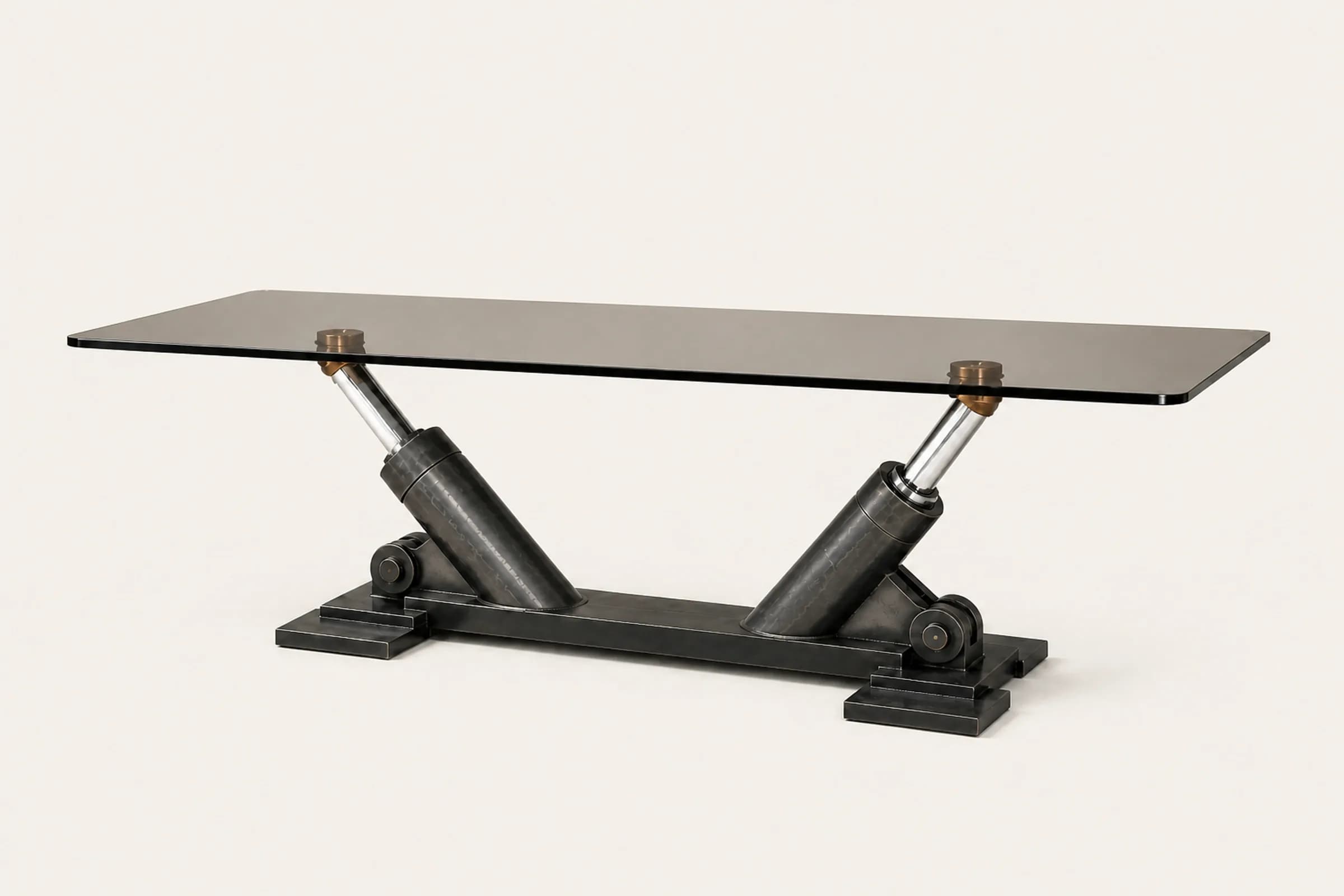
A rigid frame or a clamped edge turns both facts into a crack, because it forces the glass to follow the steel wherever the steel goes. We support instead: a small number of defined bearing points, levelled individually, with the pane free to sit on them. Three points define a plane and never rock; four are used where the geometry needs them, and then each one is shimmed until all four carry load, because a fourth point that does not touch is a hinge waiting for weight.
The glass never touches the steel. That is the whole rule.
03The interface has to give
Glass must never bear directly on steel. Point contact concentrates stress into the surface and creates exactly the edge and face damage that causes a pane to fail later, often weeks later and apparently without cause. Every bearing point gets a setting block of EPDM, neoprene or silicone, sized so the load spreads over an area rather than a spot. The block also absorbs the differential movement between the two materials, which is the second half of its job and the reason a hard plastic shim is not a substitute.
04Keeping the pane where it belongs
A top that is only resting can slide, and on a heavy sculptural base nobody wants to reposition a pane by hand. Clear silicone dots at the bearing points hold it without bonding it rigidly — enough grip to stop a shove, little enough that the glass can still be lifted off for cleaning or replacement. Where a base is irregular, as a machine component always is, each point is shimmed and checked with the pane in place rather than calculated in advance, and that slow fitting is a real part of how long a piece takes to finish.
05Specification, not preference
The glass is toughened as standard and laminated as well on larger spans, and thickness follows the unsupported span rather than the table's size: as a working guide 10 mm to about 700 mm, 12 mm to about 1000 mm, 15 mm to around 1300 mm, 19 mm beyond. Edges are polished and arrised, because toughened glass is strong in bending and vulnerable at the edge — a chip that reaches through the compressive layer releases the tension in the core, which is the mechanism behind panes that appear to shatter on their own. Treat a visible chip as a reason to replace, not as a cosmetic complaint.
Objects in this note
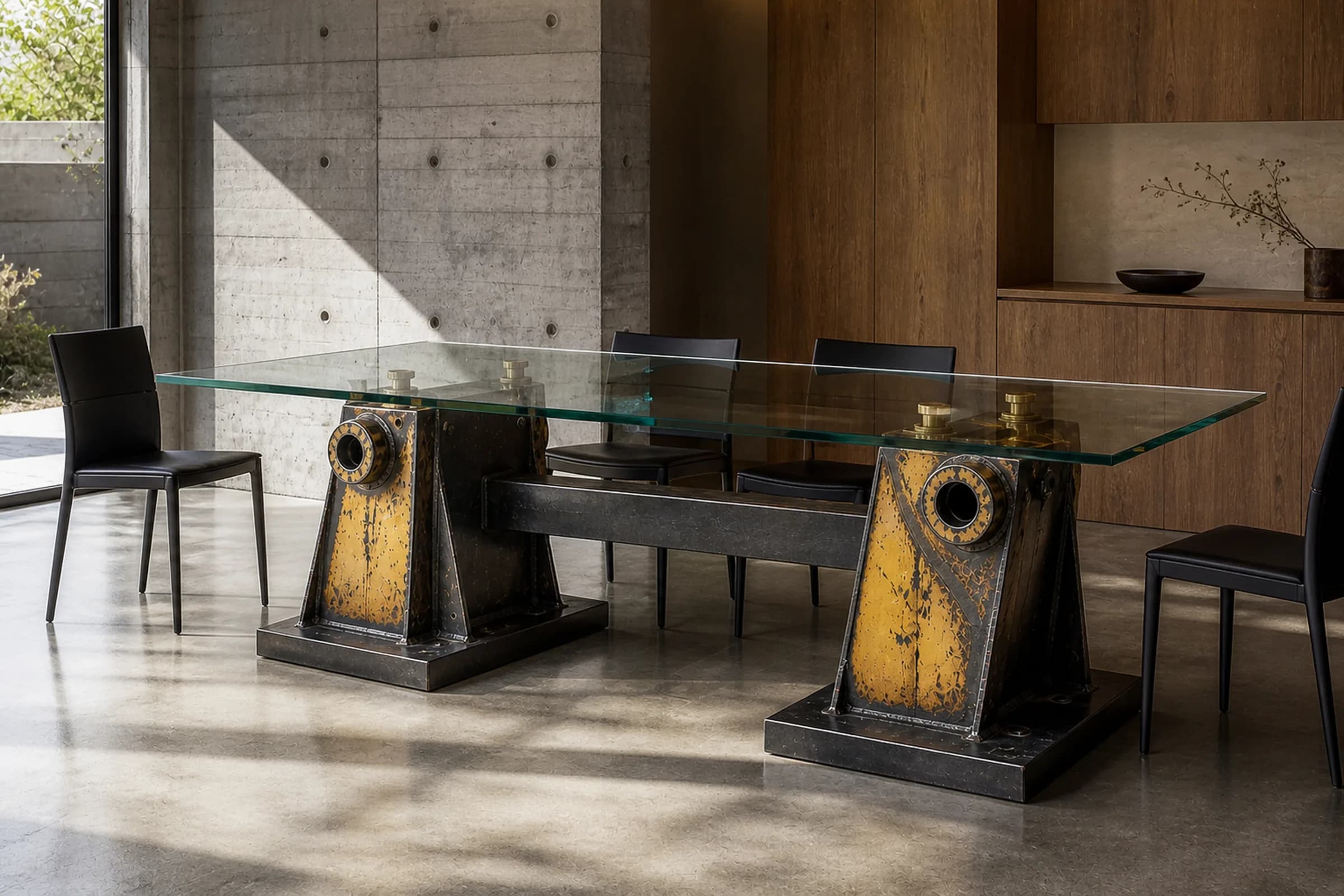
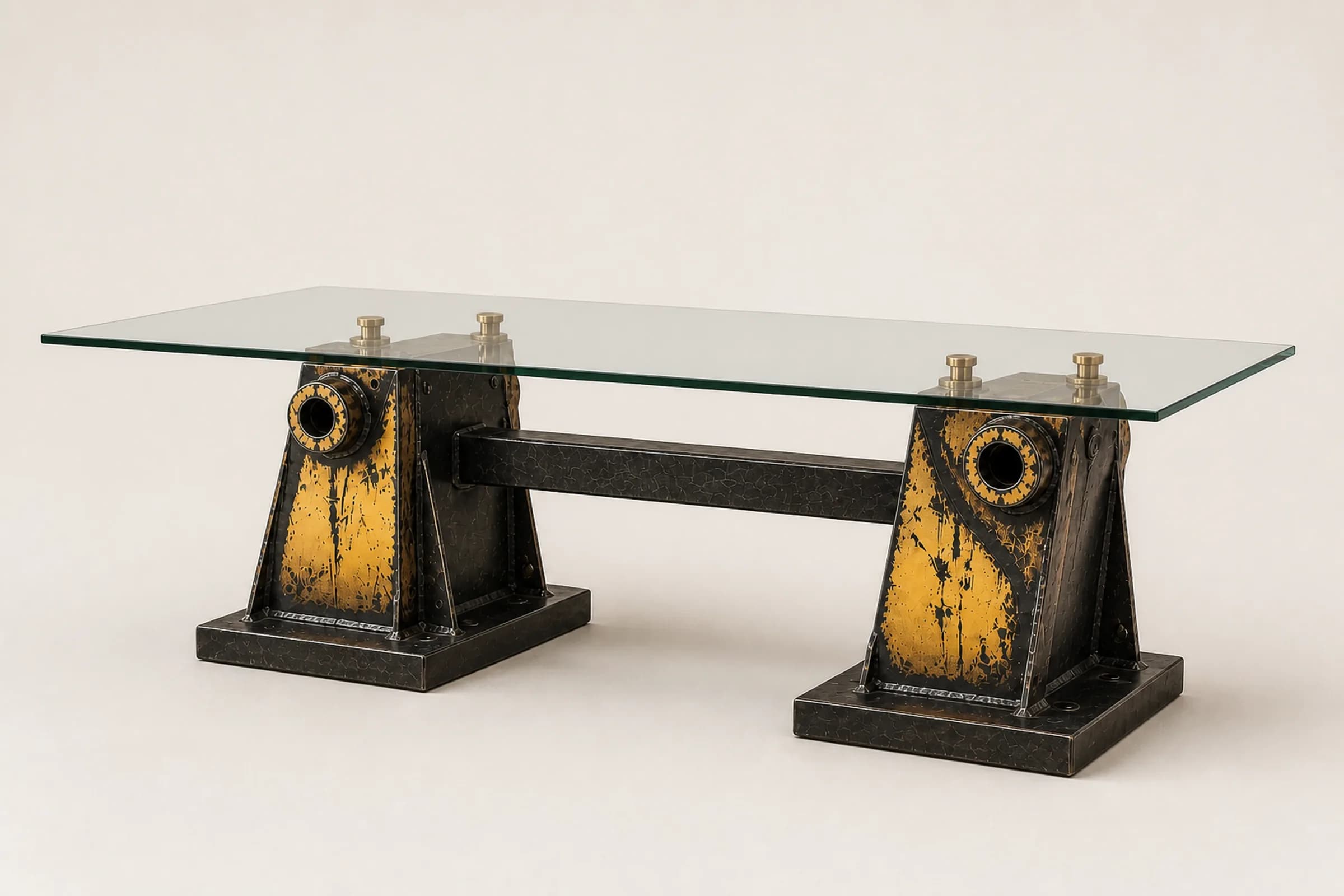
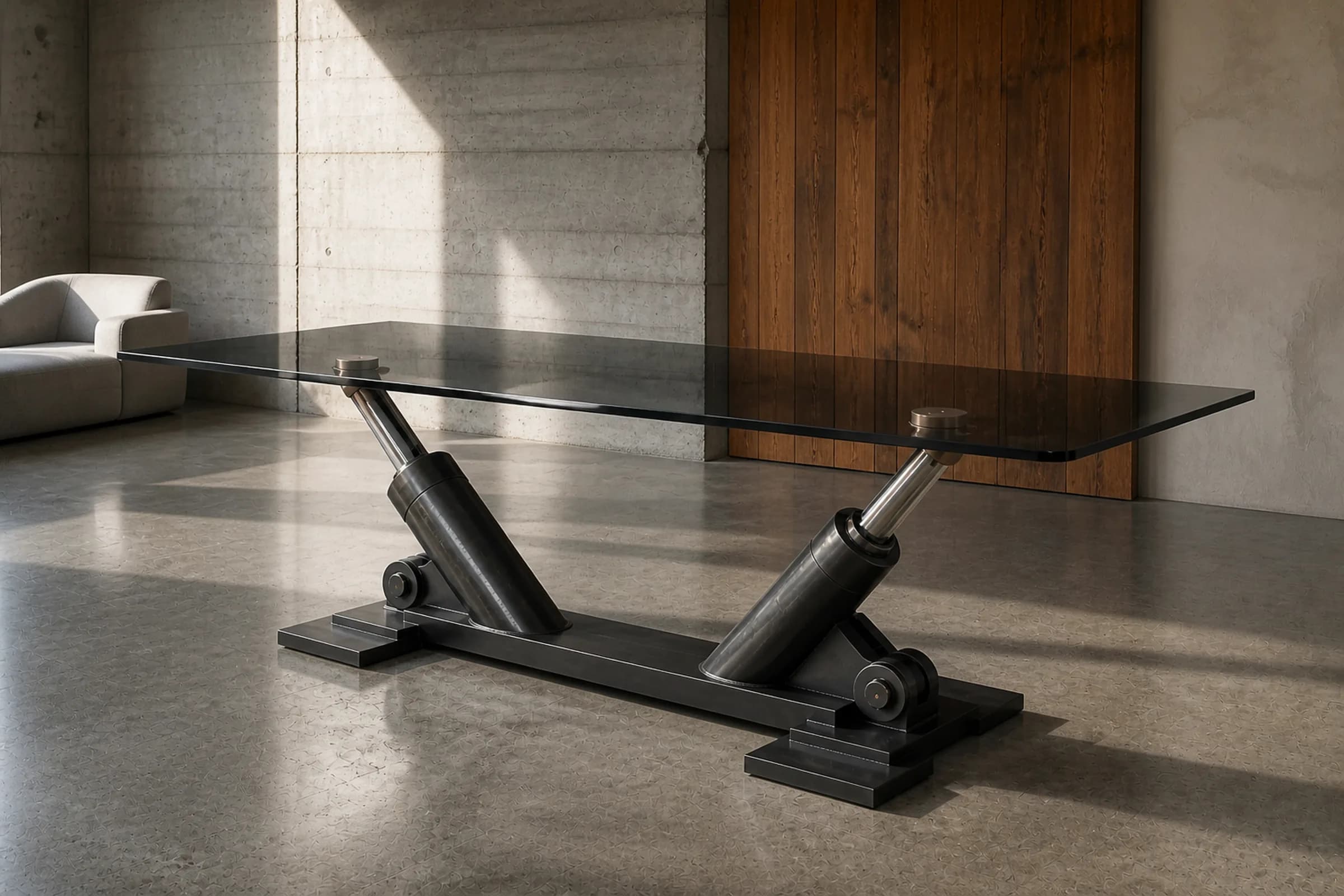
Considering a commission?
Tell us about the space and the location. We answer with availability, customisation scope and a transport estimate.