Where collectible design is actually bought: fairs, galleries and what happens at each
The category has a small number of places that set its prices and reputations. Knowing what each one is for saves a great deal of time, whether you are buying one object or building a collection.

01The fairs that define the calendar
Design Miami, founded in 2005, runs alongside Art Basel in Miami Beach in December and in Basel in June, and is the closest thing the field has to a centre of gravity. PAD — Pavilion of Art and Design — holds editions in Paris and London and is stronger on twentieth-century decorative arts alongside contemporary work. Salone del Mobile in Milan every April is an industry fair rather than a collectible one, but the satellite exhibitions across the city during that week are where a great deal of new independent work first appears. Collectible in Brussels focuses specifically on contemporary work by younger studios.
02What a fair is good for, and what it hides
A fair compresses a year of looking into three days and lets you compare directly, at scale, in person — which matters enormously for heavy objects that photograph poorly. It is also a selling environment designed to create urgency, with prices set for the occasion and a stand that will be gone on Monday. Use fairs to learn the field and to see material properly. Be more cautious about buying something substantial on the day, particularly anything where delivery, weight and installation have not been discussed in detail.
A fair tells you what the category currently believes. A gallery tells you what one dealer is willing to stand behind.
03Galleries, and why the relationship is the product
A gallery that represents makers does three things a fair stand cannot: it knows the work over time, it takes responsibility after the sale, and it will tell you when a piece is wrong for you. Good galleries in this field are specific about editions, keep records, arrange transport for objects that need it, and handle resale when a collector moves on. When assessing one, ask how long it has represented its makers, what documentation it issues, and what it does when a piece is damaged. The answers vary far more than the presentation suggests.
04Buying direct from the studio
For contemporary work, buying directly from the maker is increasingly normal and has real advantages: you can commission, you can ask technical questions and get answers from the person who built the object, and the pricing does not carry a gallery margin. What you give up is the gallery's filtering and its resale infrastructure. For one-off work built around salvaged components — where the exact piece cannot be shown in advance because the donor part is still being sourced — direct contact is often the only way the transaction can honestly work at all.
05Auction, and reading a result properly
Phillips, Wright, Sotheby's and Christie's all run design sales, and their results are the nearest thing to public price data in the category. Read them carefully: hammer prices exclude buyer's premium, unsold lots are often omitted from summaries, and results concentrate heavily in a small group of established names. A strong auction record for one maker says very little about the next. For most contemporary work, auction is where a collection is eventually dispersed rather than where it is assembled.
Objects in this note

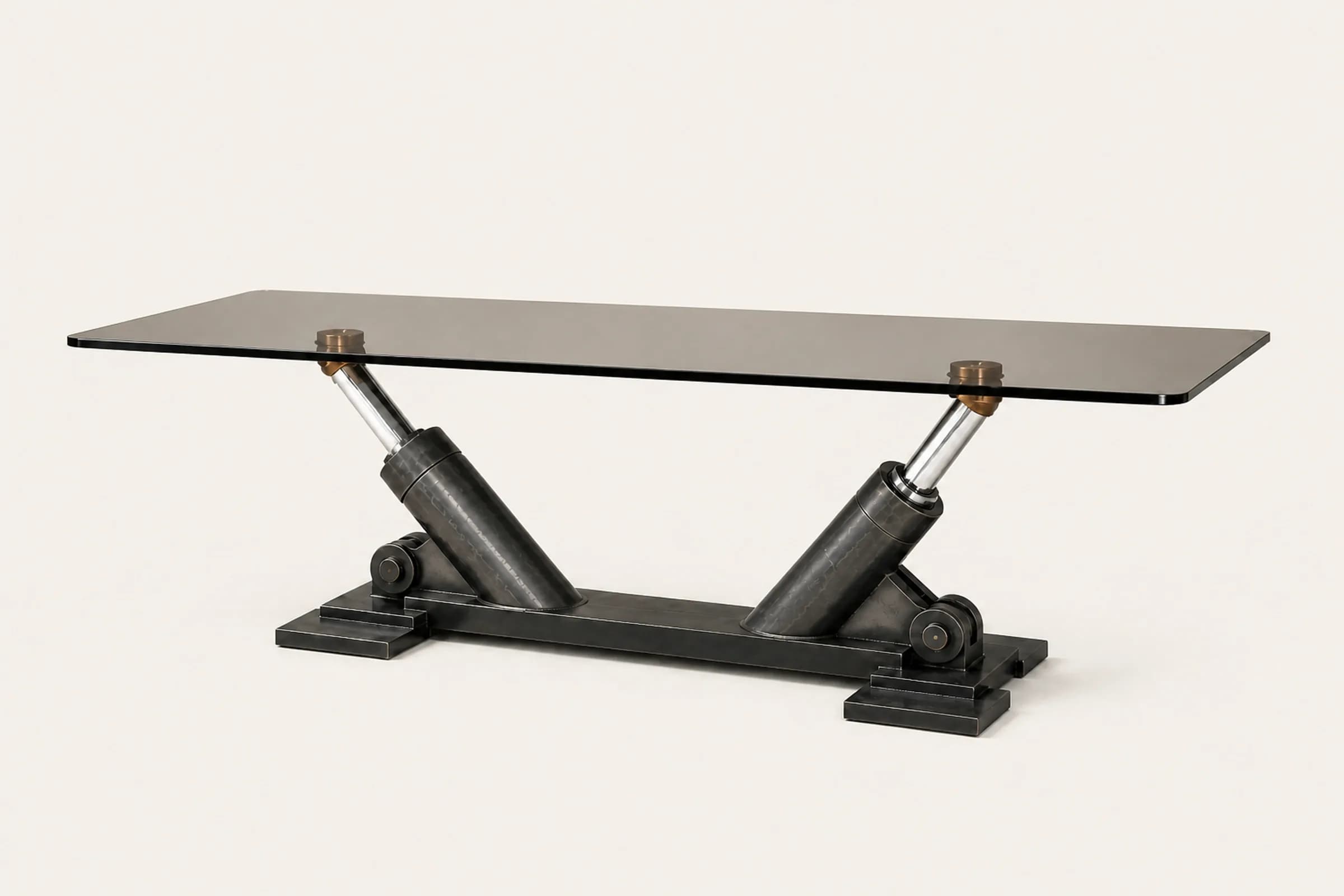

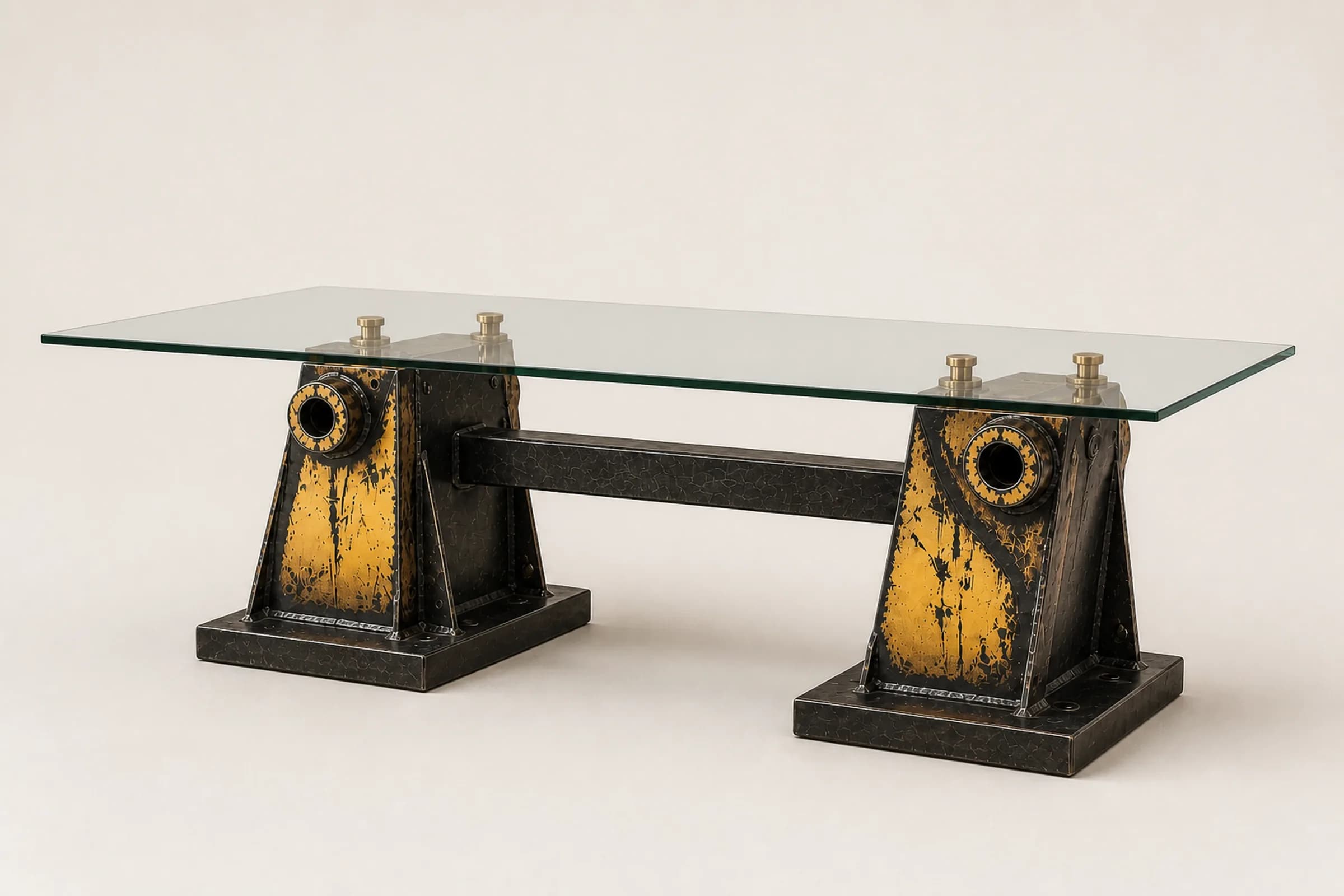
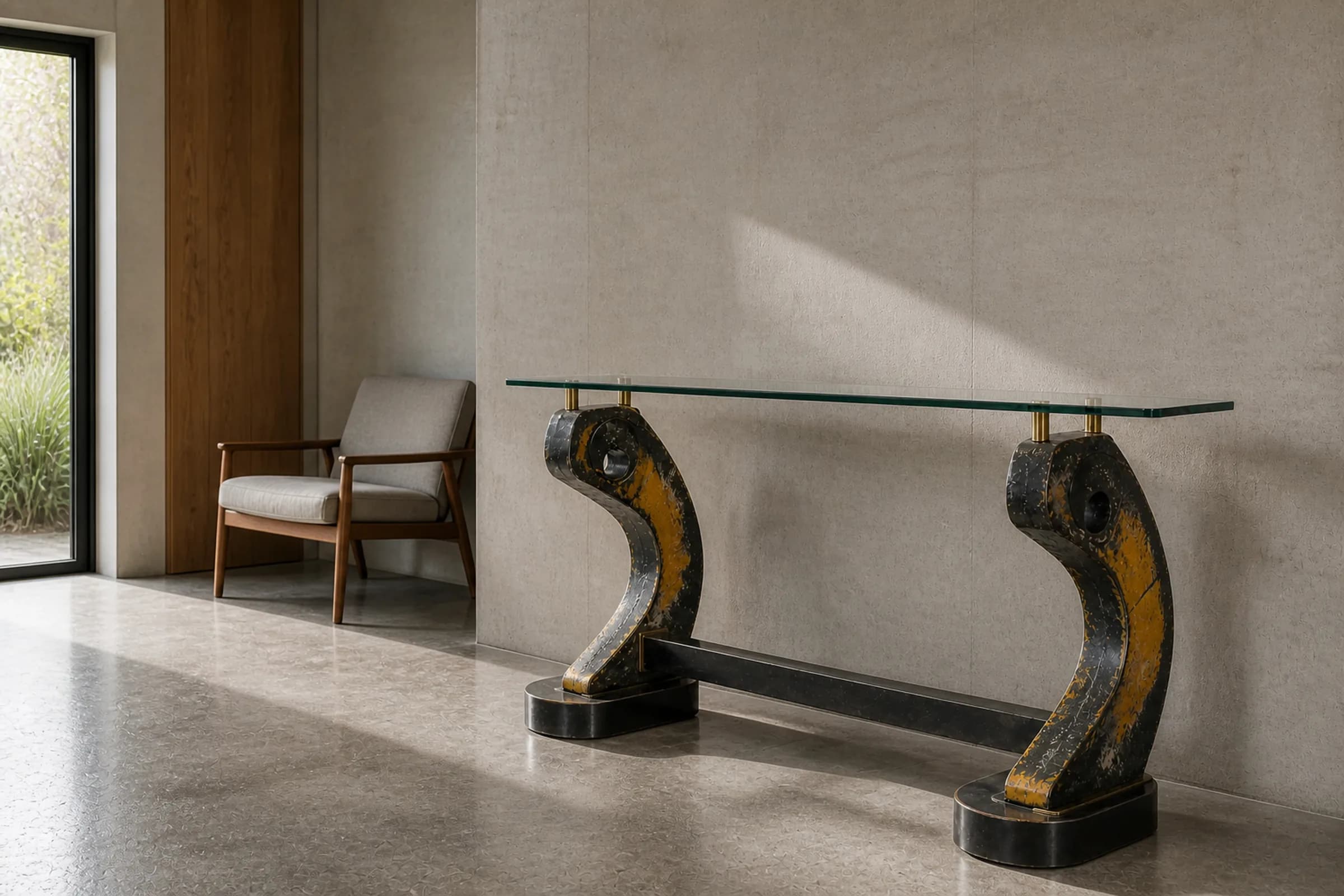
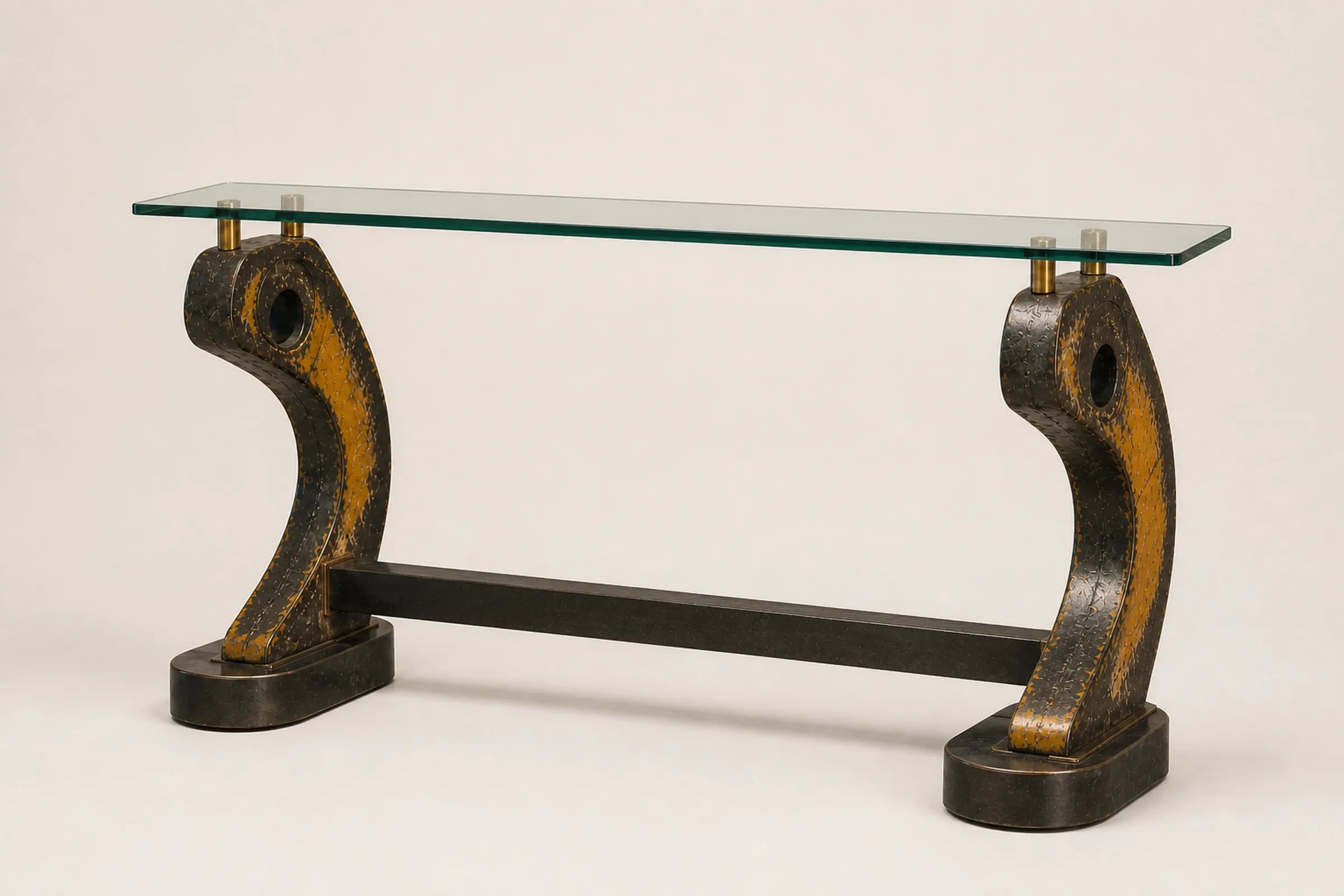
Considering a commission?
Tell us about the space and the location. We answer with availability, customisation scope and a transport estimate.