Getting it inside: the access survey nobody does until it is too late
Most delivery problems are not weight problems. They are geometry problems — a lift car, a turn on a landing, a door leaf that does not come off. Measure these six things before you order.
01The lift is the first question
Passenger lifts are rated by mass and by internal dimensions, and the second number defeats deliveries far more often than the first. A car of 1000 × 1250 mm will accept a 1200 mm object only diagonally, and only if the door aperture allows it to be angled in. Goods lifts are usually deeper and almost always taller, which matters when an object has to travel upright. Note the lift's rated capacity, the internal width, depth and height, and the door aperture — all four, not just the capacity plate.
02Stairs are measured at the turn, not the flight
A straight flight rarely causes trouble. Half-landings do. The controlling dimension is the diagonal clearance at the turn, measured between the inner handrail and the outer wall, and then again vertically against the soffit of the flight above. A 1400 mm object can climb a generous straight staircase and still be defeated by a tight quarter-turn three floors up. Photograph every landing before delivery day; a photograph settles arguments that a tape measure alone will not.
A heavy object does not fail to arrive because it is heavy. It fails because a stairwell turns ninety degrees at the wrong place.
03Doors, thresholds and the leaf you can remove
Standard interior doors give roughly 720–900 mm of clear opening, and removing the leaf typically buys another 40–60 mm because the stop and hinges come out of the equation. Thresholds matter too: a raised sill turns a smooth roll into a lift, and a lift needs people and standing room. Check the swing direction, whether the frame is original, and whether there is a straight run behind the door long enough to bring the object round.
04Protection and the route as a whole
Plan the route as one continuous path, not as a set of obstacles. Where the object passes, floors need covering and corners need padding — reclaimed steel is unforgiving to plaster. Establish where the object will be set down mid-route if the team needs to rest or re-grip, and make sure that place can take the load. For upper floors without a suitable lift, an external furniture lift through a window or balcony is often cheaper and far less risky than a stairwell attempt.
05What to send us
A useful access survey is short: lift dimensions and capacity, staircase width and the clearance at each turn, door apertures along the route, threshold heights, the floor construction and the parking or unloading situation at street level. Photographs of every turn are worth more than any of the numbers. Send that with an enquiry and the transport estimate stops being a guess — and we can tell you before you commit whether an object simply will not fit.
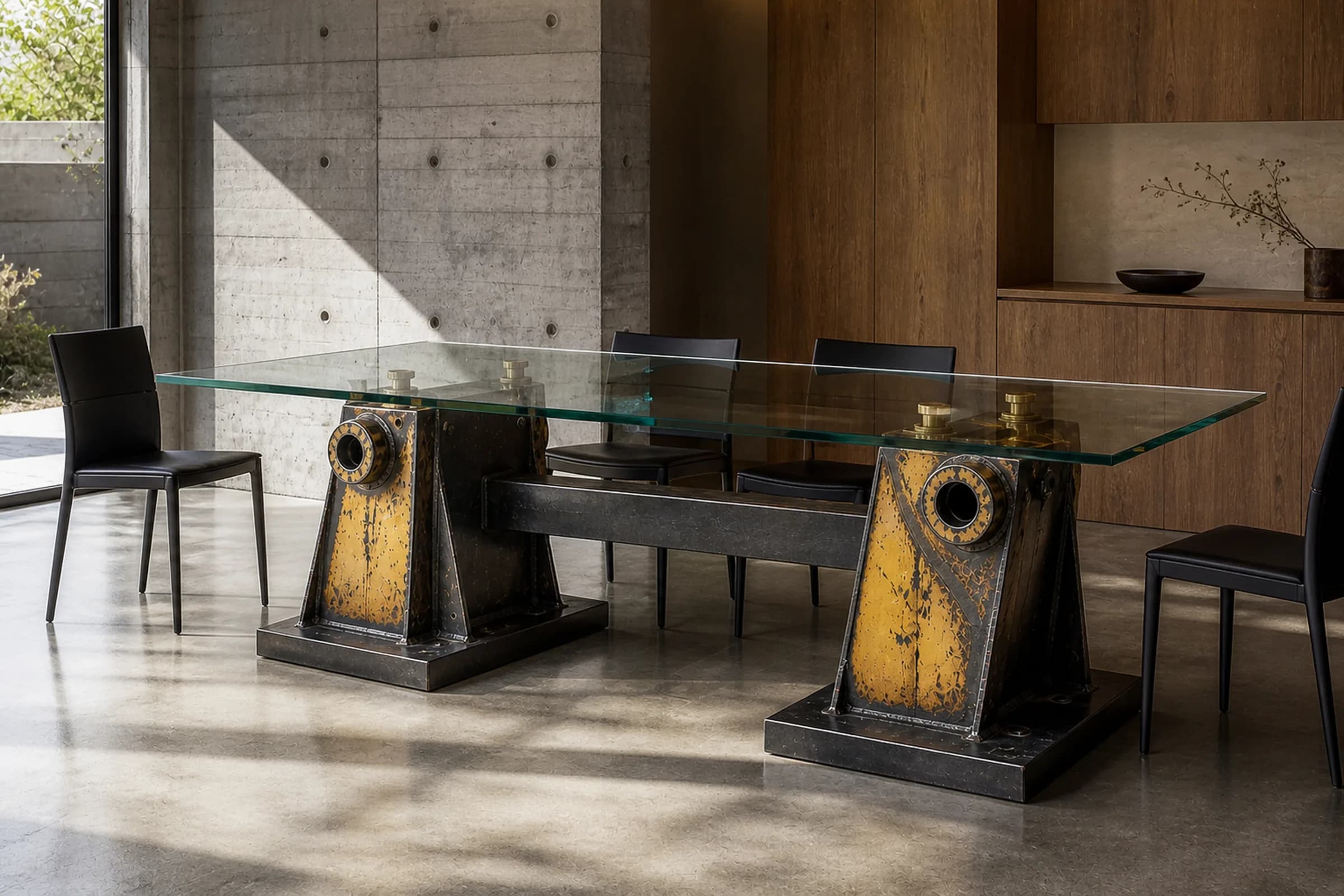
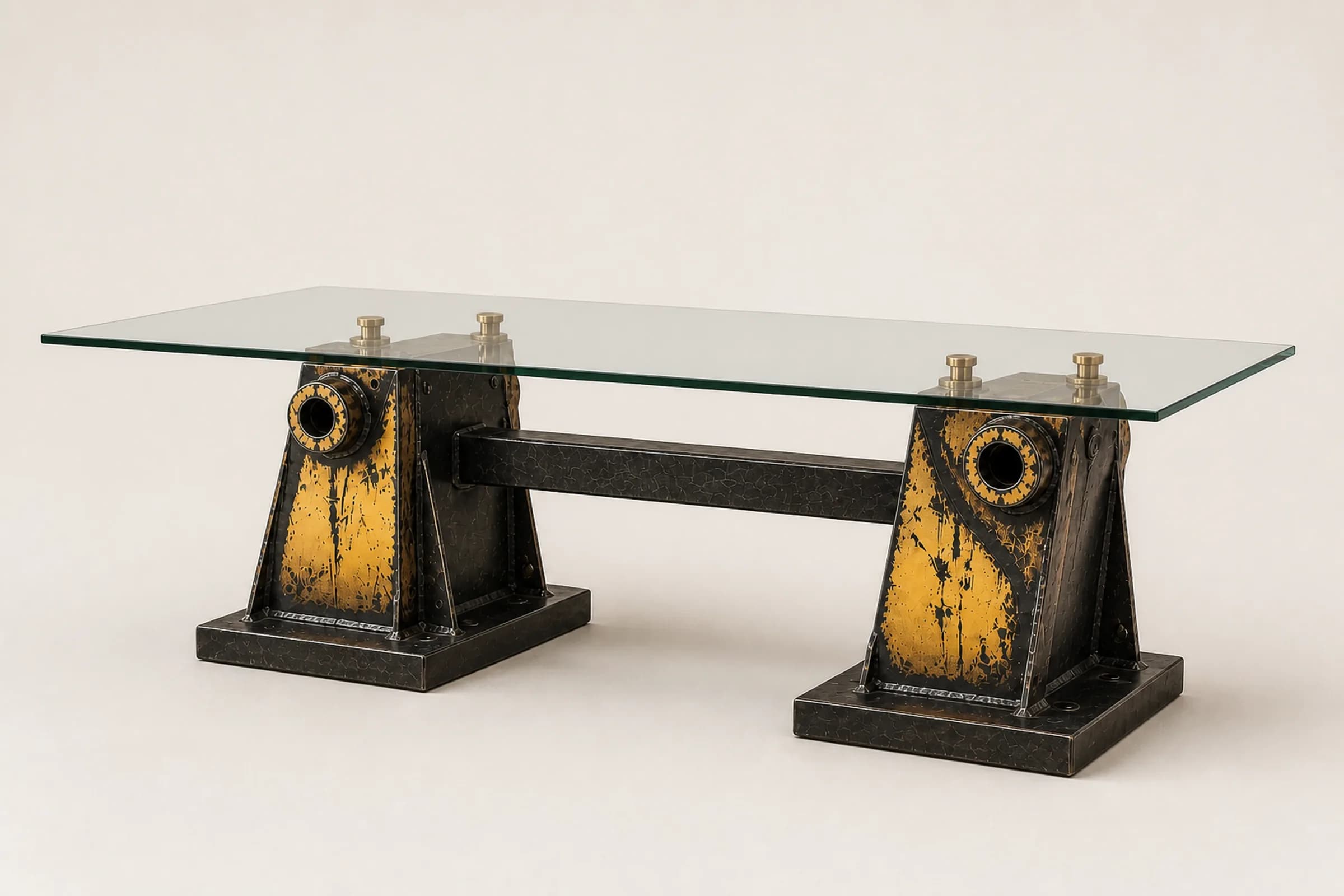
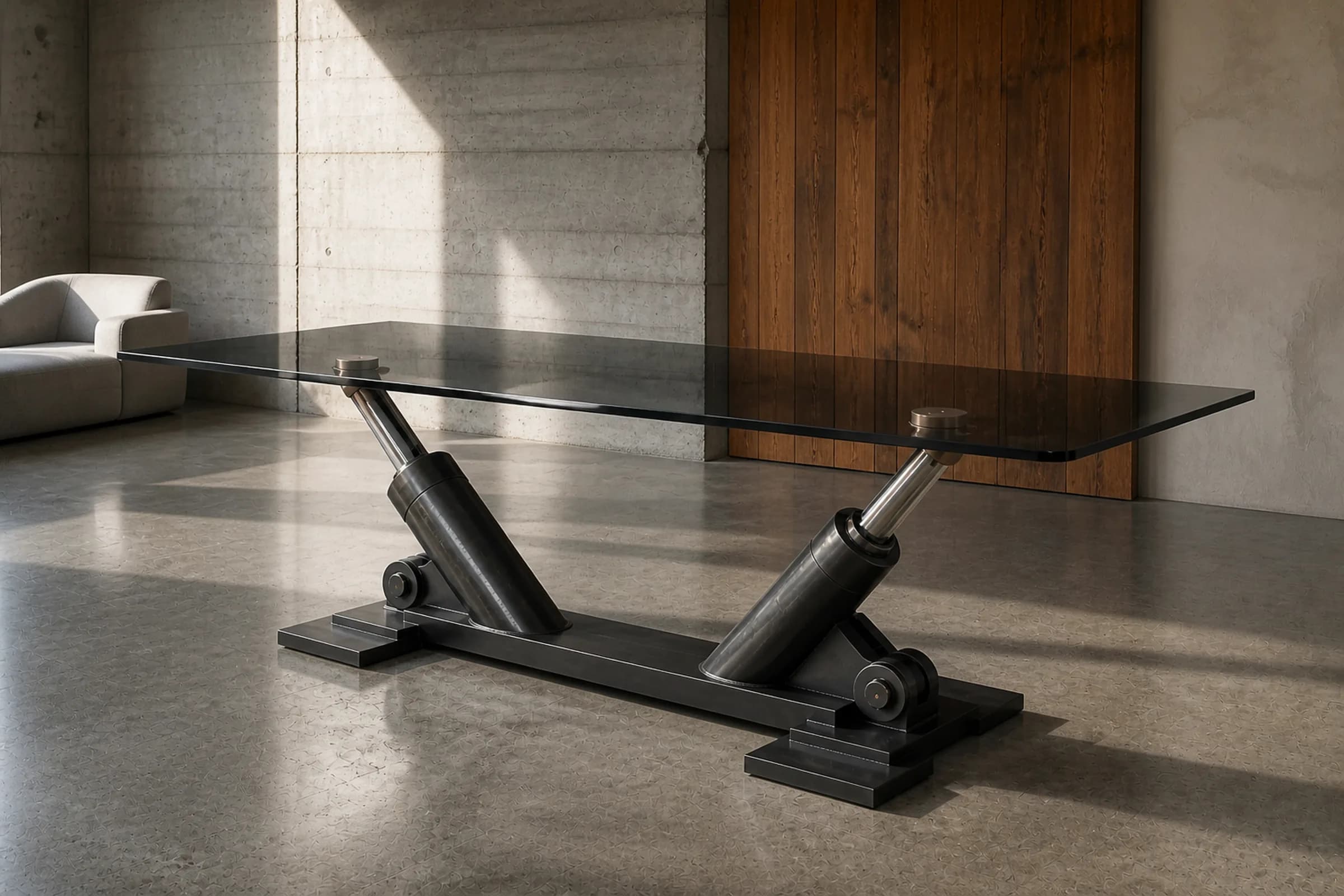
Objects in this note
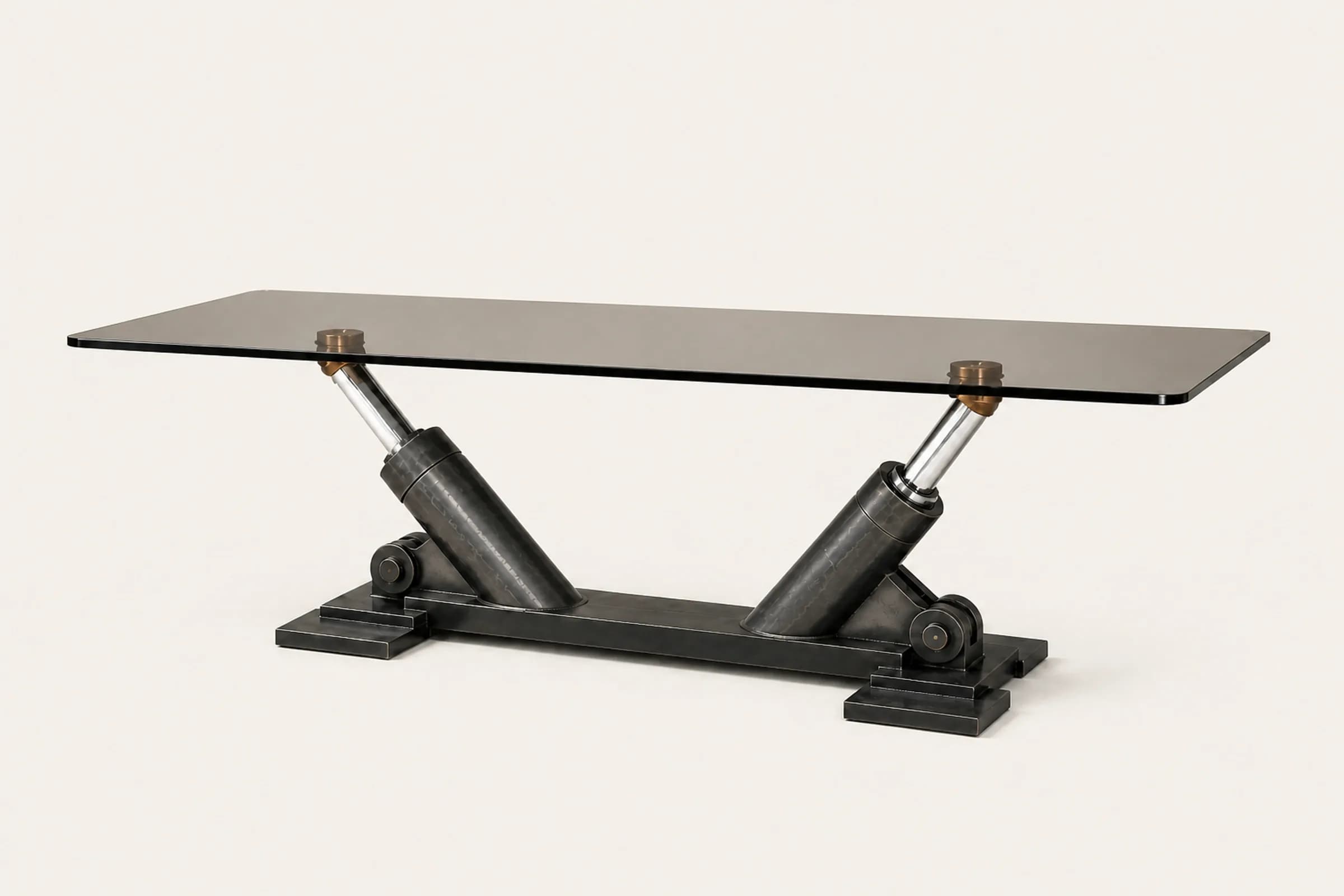
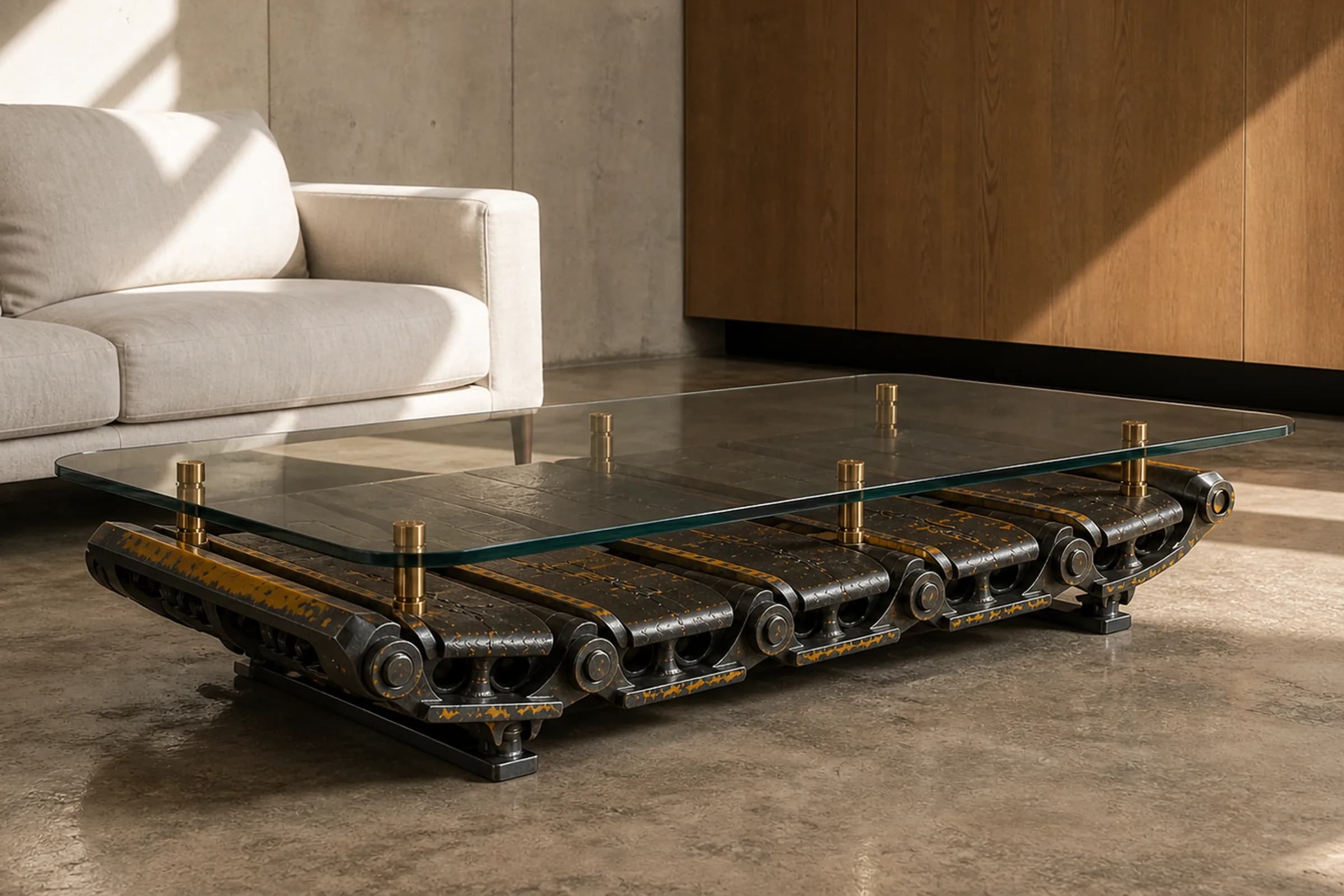
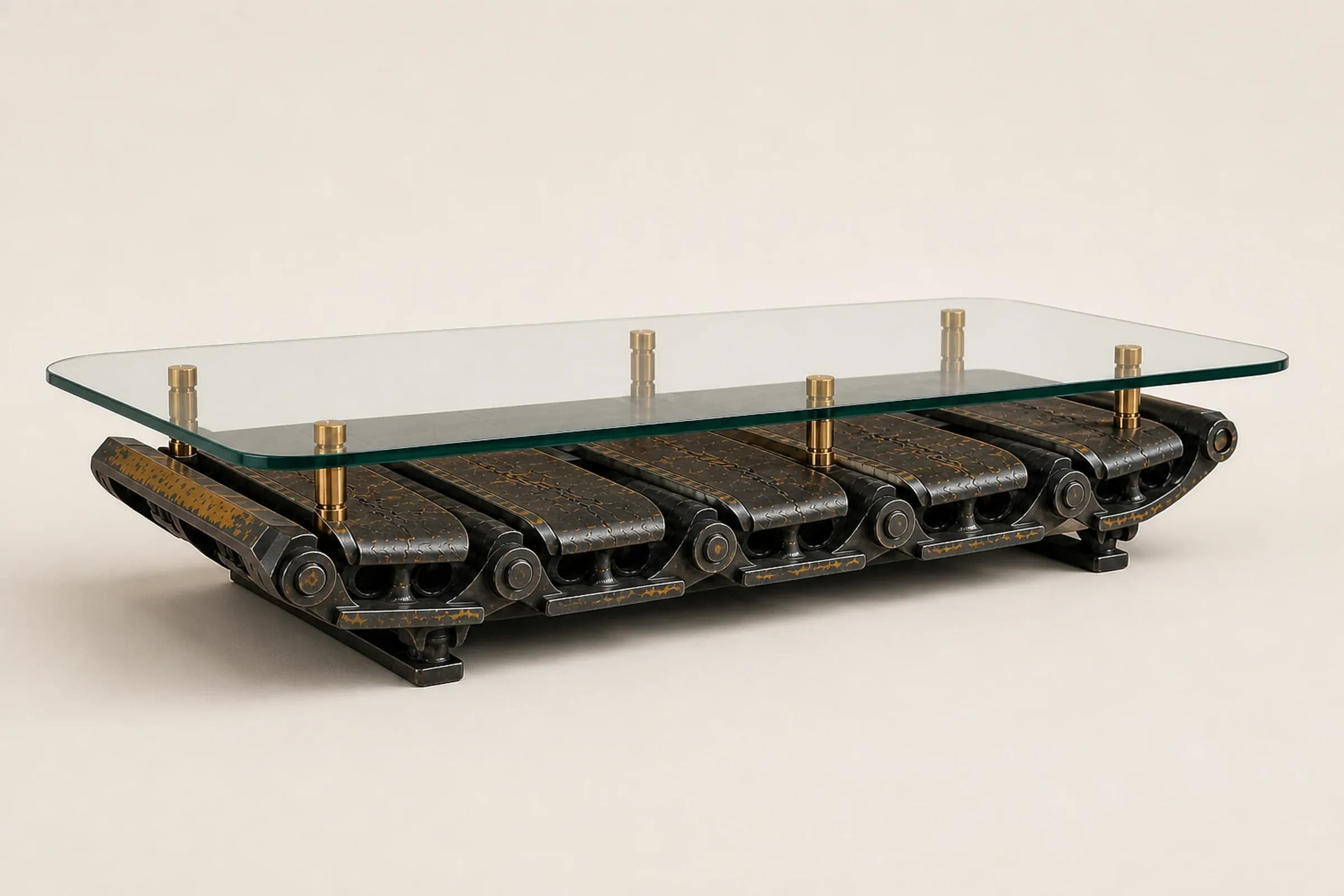
Considering a commission?
Tell us about the space and the location. We answer with availability, customisation scope and a transport estimate.