Hardox and wear plate: the steel inside a digging bucket
The cutting edge of an excavator bucket is not ordinary steel. It is quenched abrasion-resistant plate at 400–500 Brinell — and that hardness dictates everything about how such a part can be turned into furniture.
01What abrasion-resistant plate is
Wear plate — sold under names including Hardox, Raex, Dillidur, XAR and Brinar — is a quenched and tempered low-alloy steel specified by hardness rather than by yield strength. The common grades run 400, 450 and 500 Brinell, against roughly 120–180 HB for ordinary structural steel. Hardness is achieved by rapid quenching from austenitising temperature, giving a martensitic structure, followed by a low temper to recover some toughness. The result is a plate that resists gouging and sliding abrasion several times better than mild steel while remaining weldable, which is why it lines buckets, chutes, hoppers and truck bodies.
02Why the wear marks are worth looking at
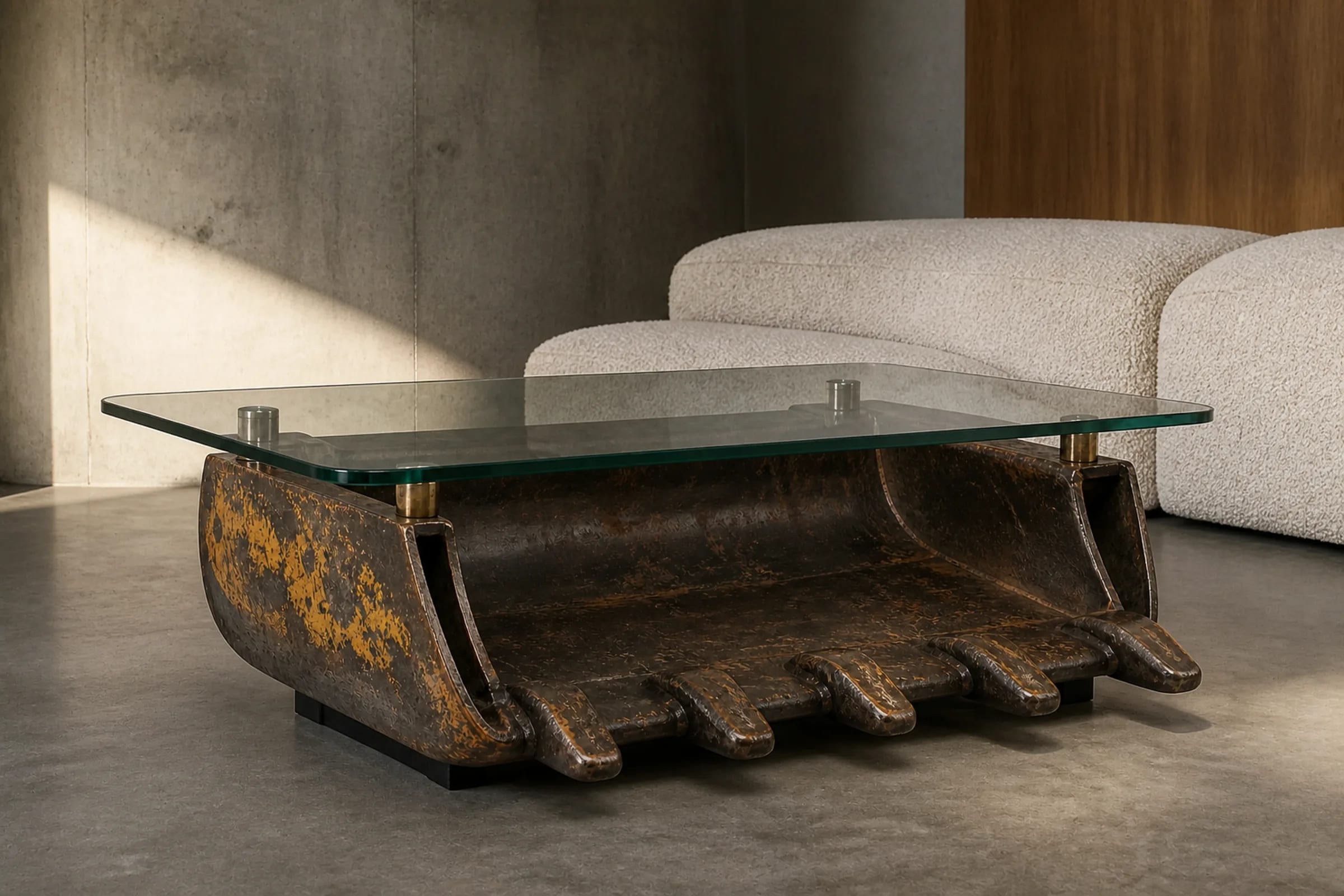
Because the material removes so slowly, what you see on a used bucket lip is a long integrated record rather than a few recent events. The polished band shows where material flowed constantly. Gouges show individual encounters with rock. The rounded profile at the leading edge is thousands of hours of abrasive contact, and its asymmetry shows the operator's habitual approach angle. On a soft steel the same history would have been erased and replaced continuously; on 450 HB plate it accumulates. This is the single strongest argument for using genuine wear components rather than fabricating a lookalike.
Wear plate is designed to lose material slowly. That is the whole specification, and it is why the wear marks are so legible.
03Working it is genuinely difficult
Hardness cuts both ways. Wear plate cannot be cut with ordinary tooling — plasma, laser or abrasive waterjet, and the last is preferred where the heat-affected zone matters. Drilling requires carbide and patience. Welding demands controlled heat input and, on the harder grades, preheat, because the martensitic structure is sensitive to hydrogen cracking and the heat-affected zone softens locally. Cold forming has a minimum bend radius several times plate thickness. Every one of these constraints adds hours to a build, and it is a substantial part of why an object made from a bucket costs what it does.
04Safety and preparation, which are not optional
A retired bucket arrives contaminated: hydraulic residue, grease, ground-in soil, sometimes traces of whatever the machine was working in. Preparation begins with degreasing and a full inspection, because cracks in a fatigued wear component are common and must be found before the piece is used structurally. Edges that were designed to cut are genuinely sharp and are dressed to a safe radius — a bucket lip left as it arrived would be a hazard on a coffee table, and dressing it is the one place where we deliberately remove original material.
05What survives into the finished object
After preparation we keep the hardness, the geometry and the wear record, and we change only what safety and stability require: sharp edges radiused, cracks assessed and either stabilised or the piece rejected, active corrosion removed, the surface sealed matte. The plate's hardness has a practical benefit indoors as well — a 450 HB surface is far more resistant to scratching from keys, buckles and dropped objects than any mild-steel or coated surface, which for a low table in daily use is a genuine advantage rather than a talking point.
Objects in this note
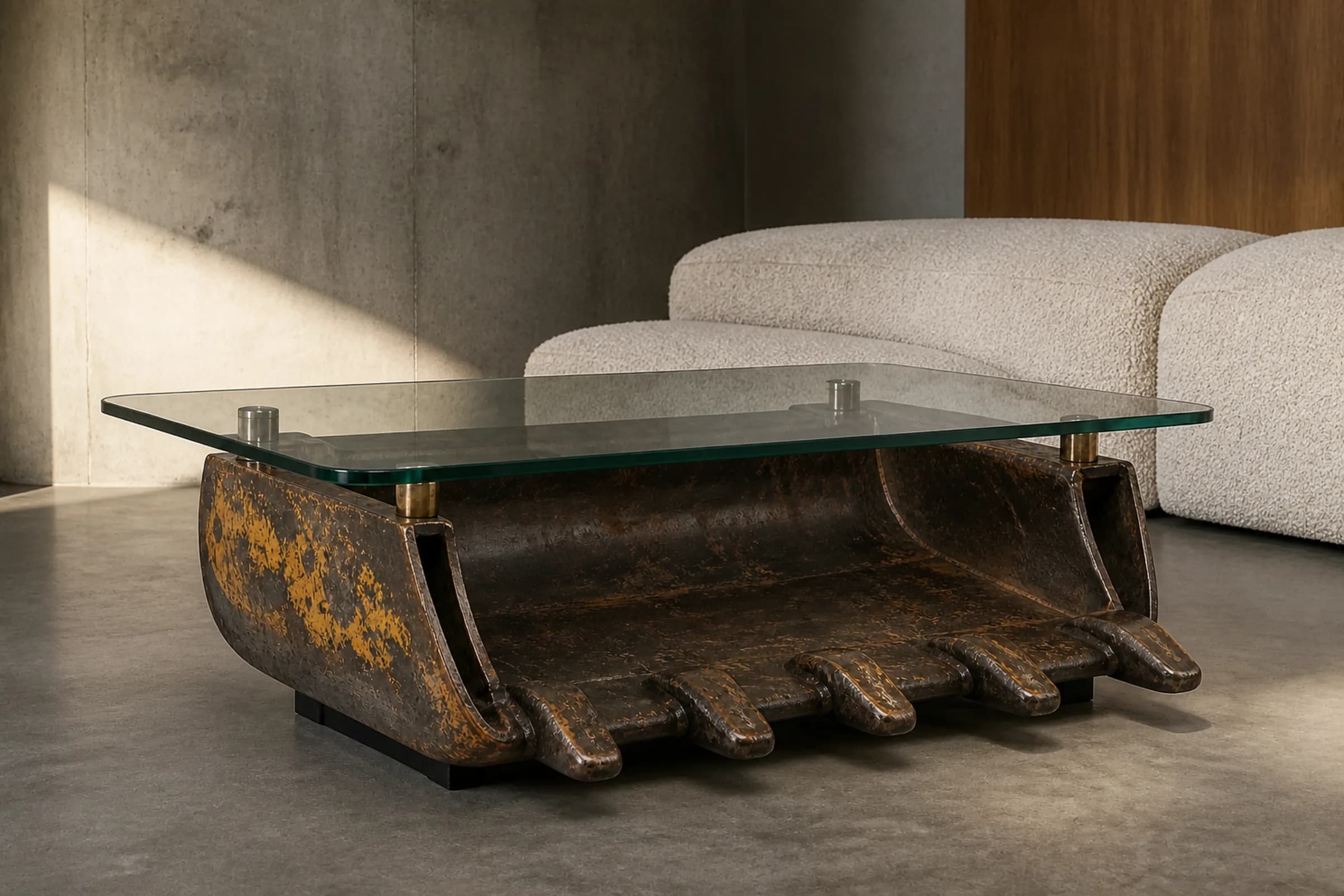
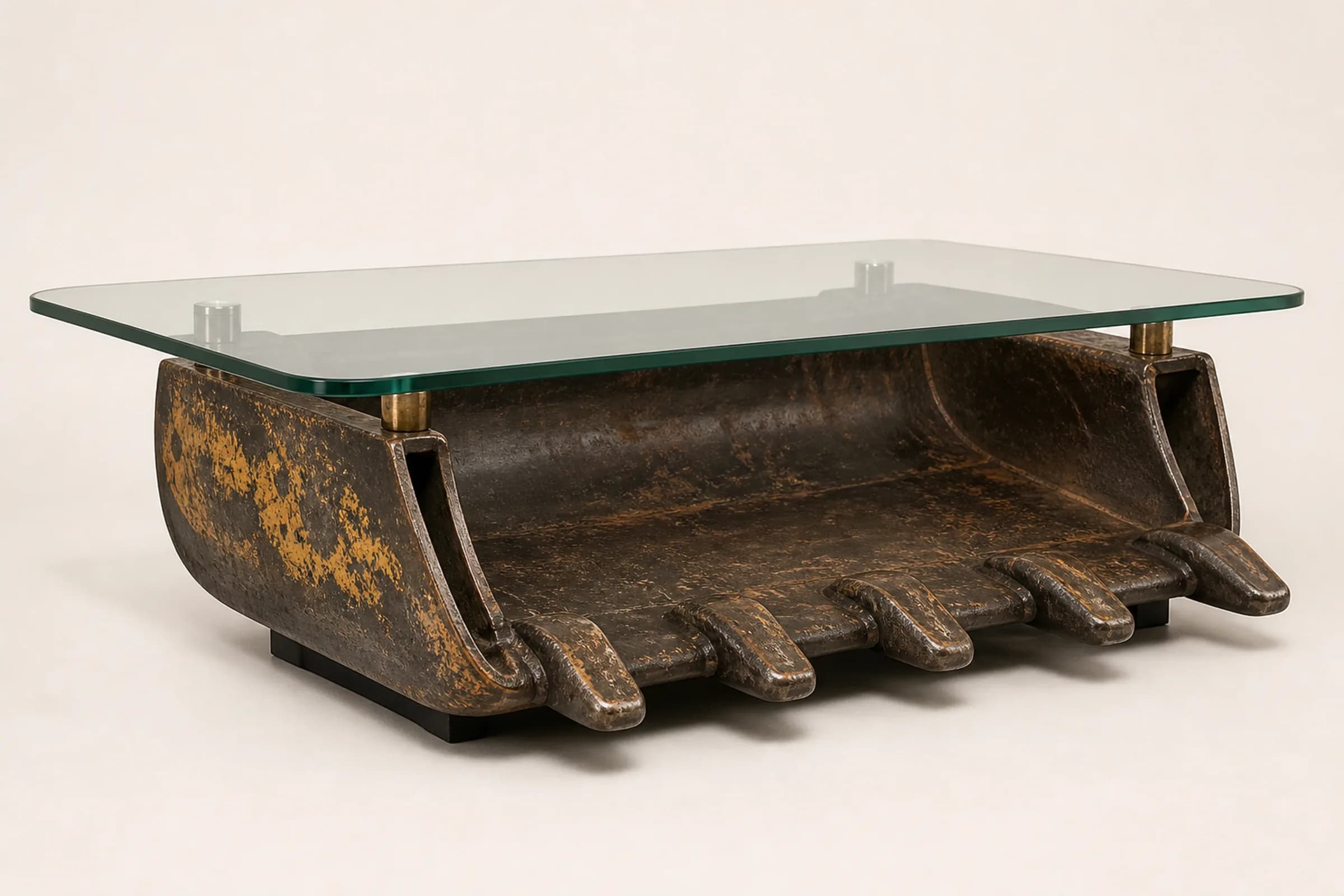
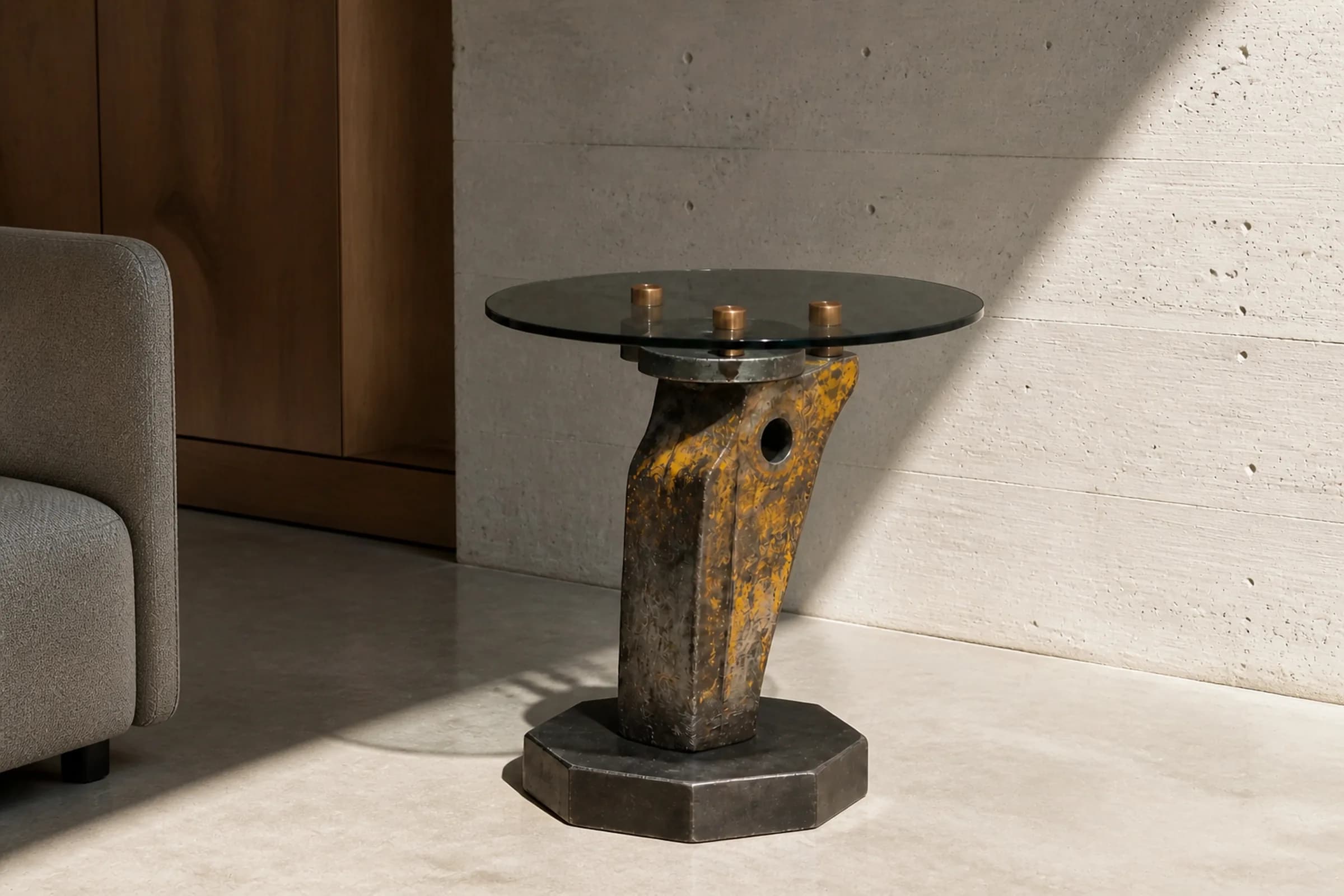
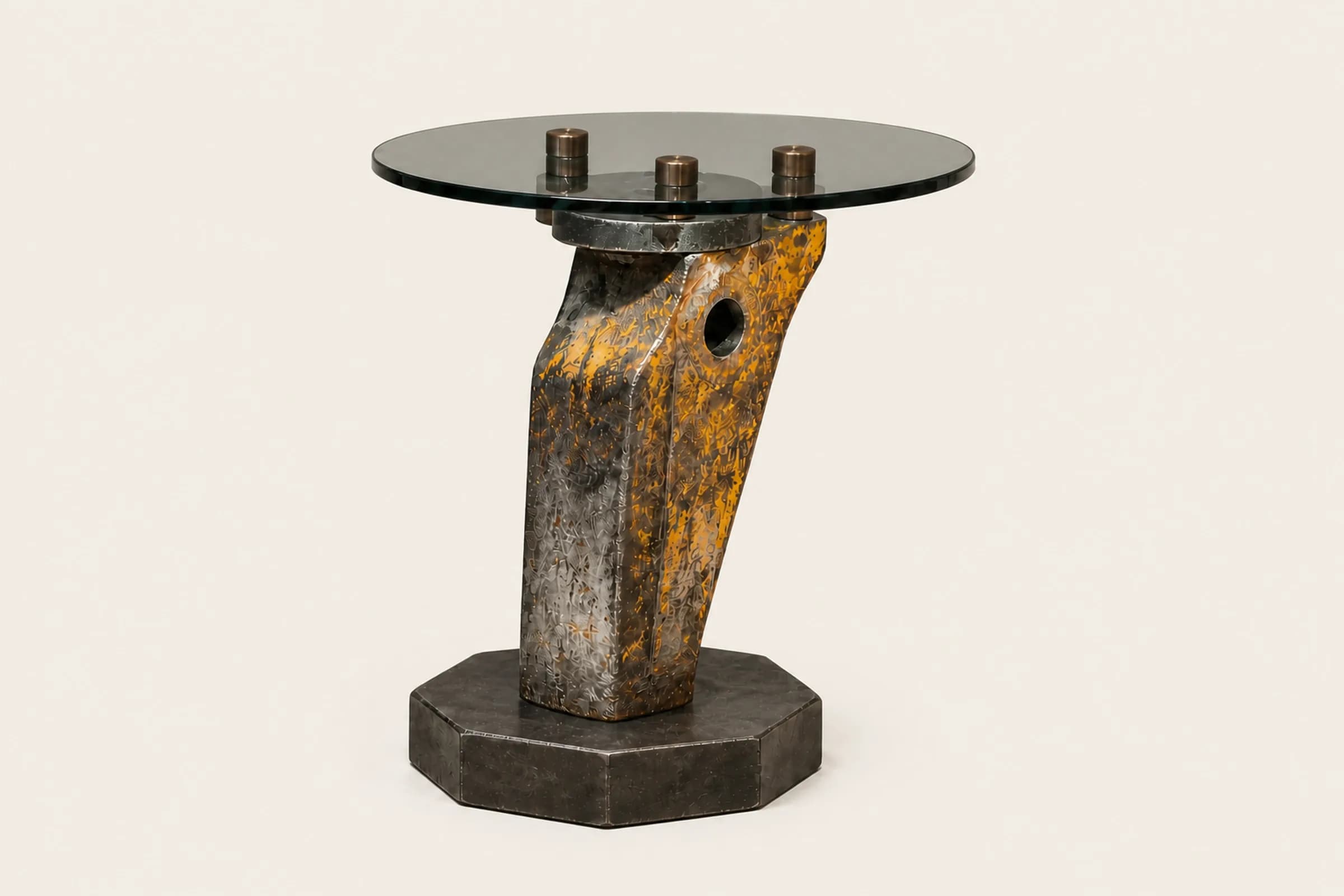
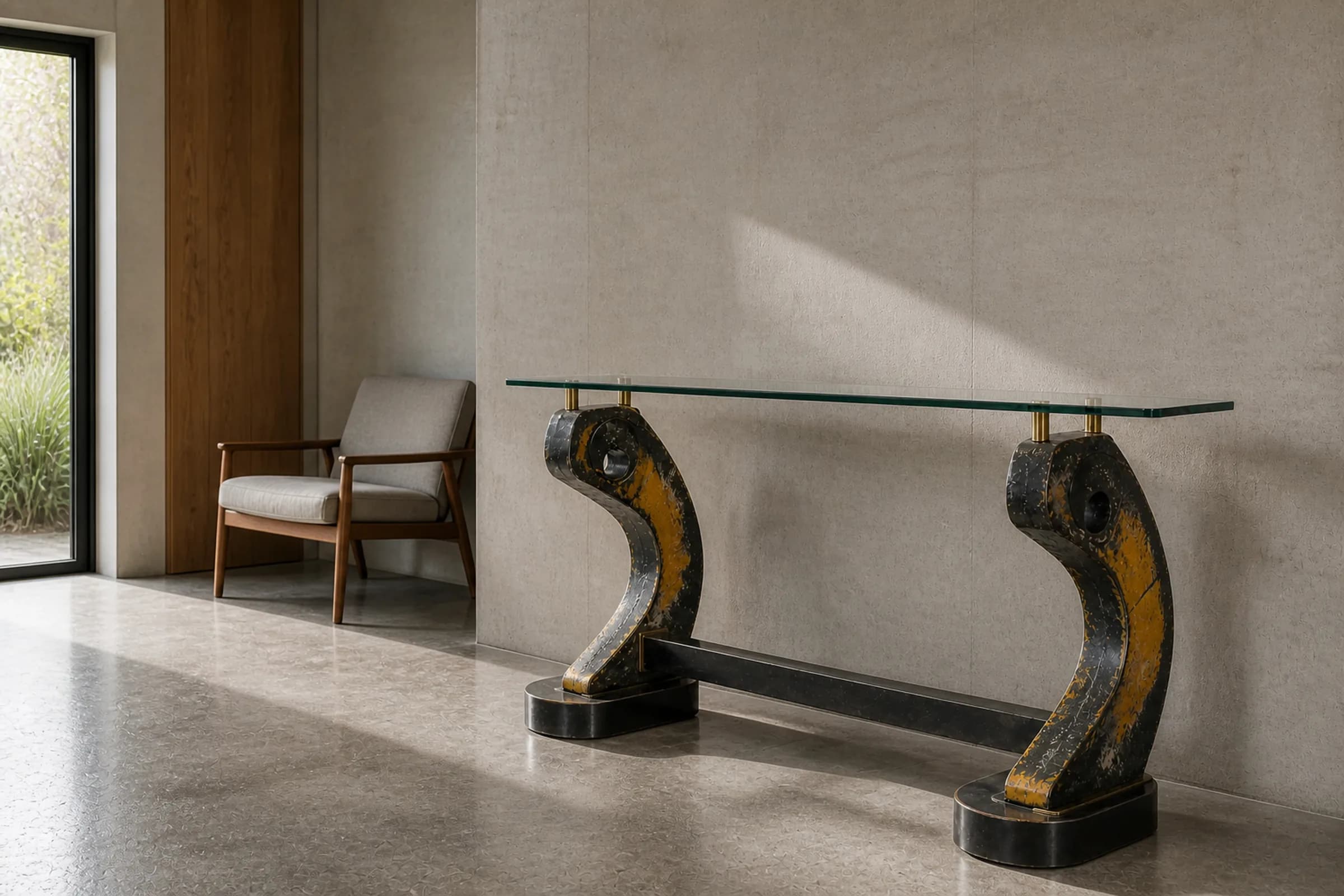
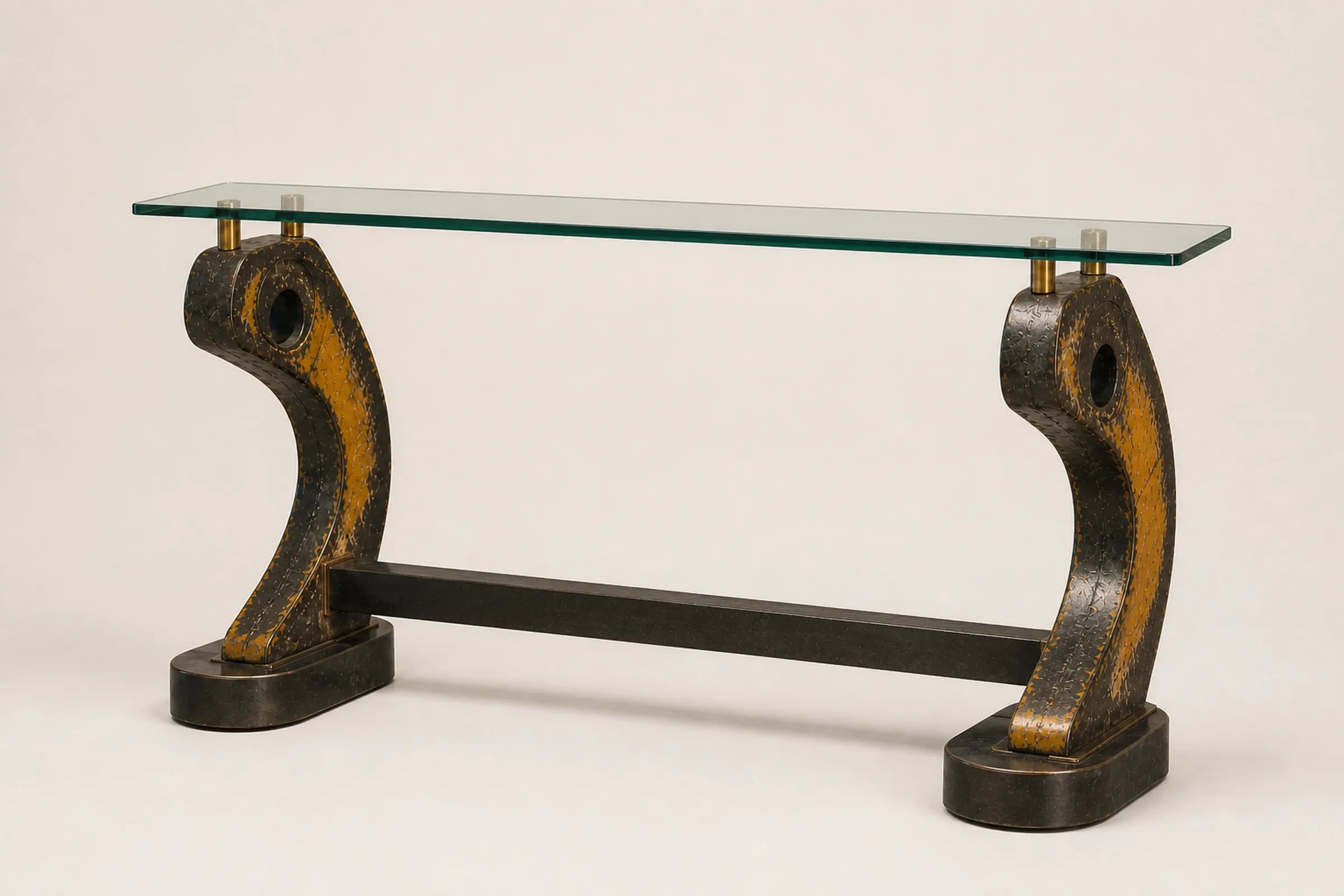
Considering a commission?
Tell us about the space and the location. We answer with availability, customisation scope and a transport estimate.