Sealed, not repainted: what stays on the steel
The difference between a restored part and a preserved one is a decision made in the first hour of work, and it cannot be reversed later.
01The decision made in the first hour
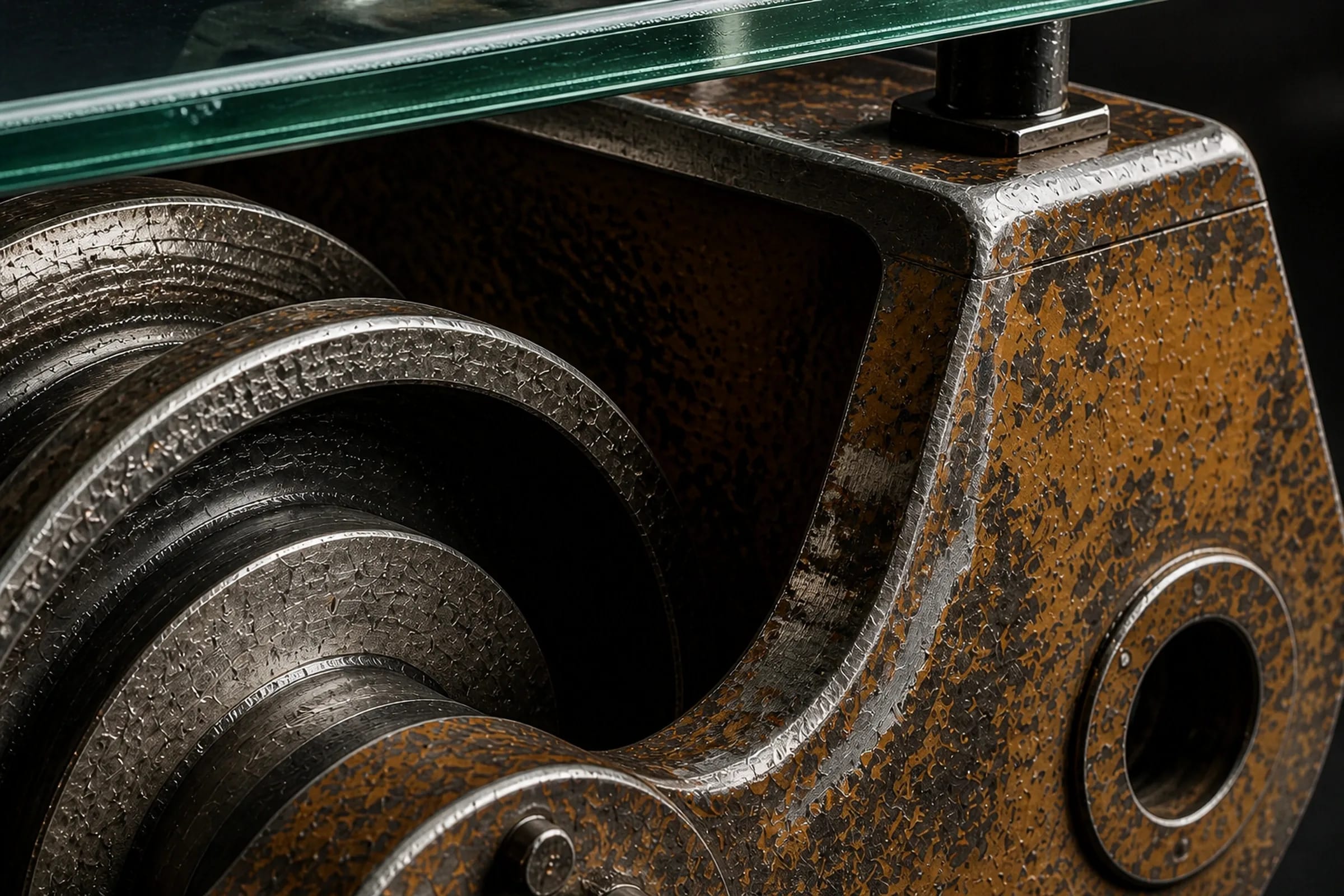
Restoration and preservation diverge at the very first pass, and the choice cannot be revisited once material is gone. A restorer takes the part back to bright metal and builds a new surface on it; a preserver removes only what is unstable and keeps everything that is sound. Both are legitimate crafts. Only one of them leaves the object able to say where it has been, which is why every piece here is assessed for what must go before anyone decides what it will look like.
02What we remove
Loose mill scale, flaking red rust and anything holding moisture come off mechanically, down to sound metal. Grease and hydraulic residue are washed out, because no finish bonds over oil. Sharp edges that were designed to cut are dressed to a safe radius — the one place we deliberately remove original material, because a bucket lip left as it arrived is a hazard at shin height. Where a component carries chlorides from salted or coastal service, the pits hold them and they will drive corrosion under any coating, so such pieces are stripped completely or rejected.
Removal stops the moment we reach sound material.
03What we keep
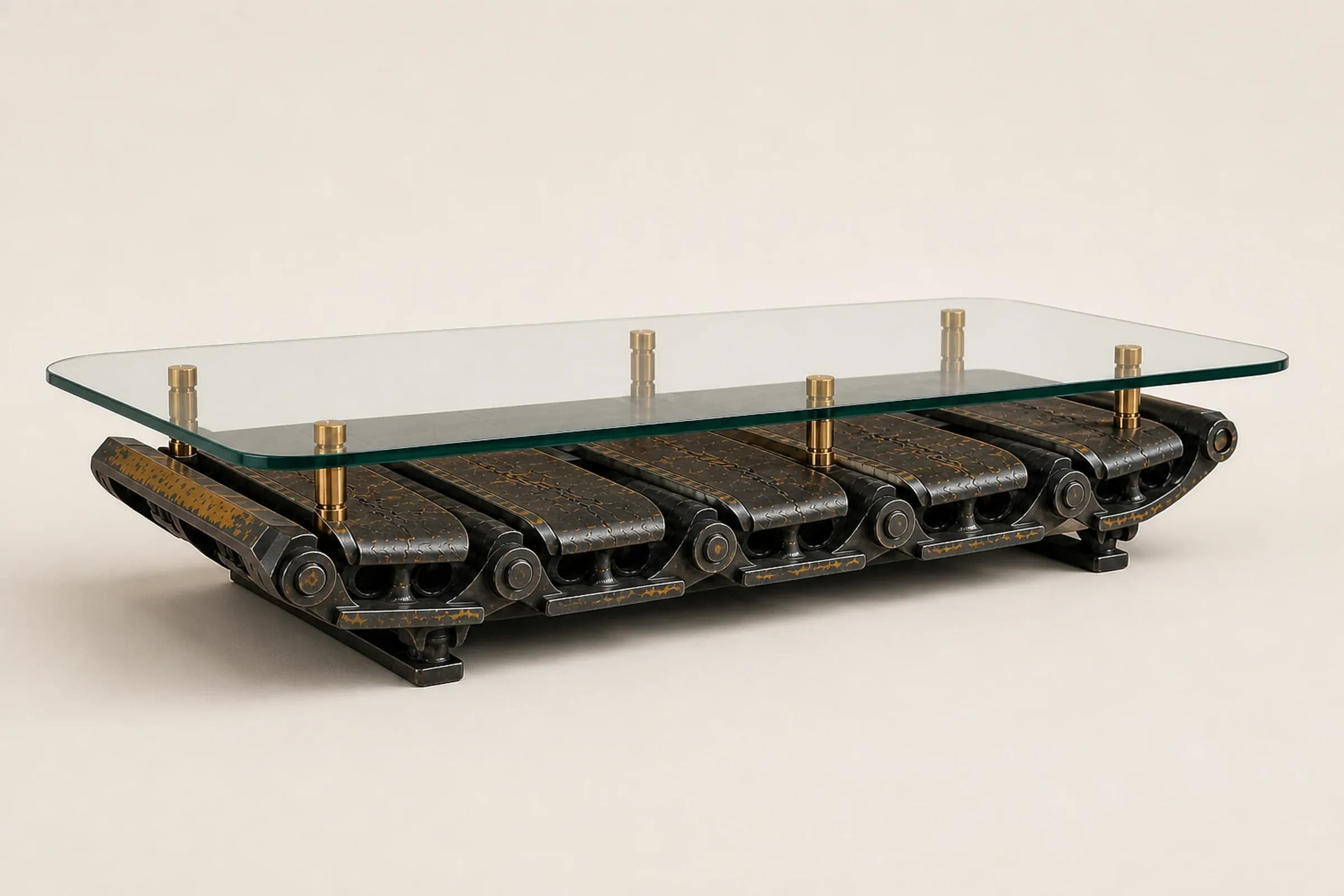
Adherent dark oxide stays. Temper colours stay — the straw and blue bands that record where a torch or a grinder passed. Polished wear patches stay, and so does pitting, because the pattern of pitting maps where water sat and how the part was stored. Factory paint that is still bonded stays, flaking and all, since the way it fails follows the stress map of the component. None of this can be reproduced, and all of it disappears the moment someone reaches for an abrasive pad.
04The finish system
The surface is degreased, any active corrosion is arrested, and the piece is sealed with a two-pack clear at low sheen, roughly 30 to 60 microns. That is thick enough to be a real barrier and thin enough that pitting still catches the light. We use a matte clear rather than gloss because a gloss coat reads as plastic over steel, and rather than a pigmented coating because pigment buries the very thing the part was chosen for. The test is simple: photograph the surface before and after, and if the marks lost definition, the finish was wrong.
05Living with a sealed surface
Sealed steel indoors is stable for years, but it is not inert. Strong direct sunlight shifts the tone slightly over several seasons. Standing water at a joint will eventually find its way under any clear coat. Care is a dry or barely damp cloth and nothing else — no abrasives, no solvents, and no wax or oil on top, because those build a film over the lacquer that holds dust rather than protecting anything. If a surface is ever damaged through the coat, it can be re-sealed, but re-sealing is a full strip, and a strip takes the record with it.
Objects in this note
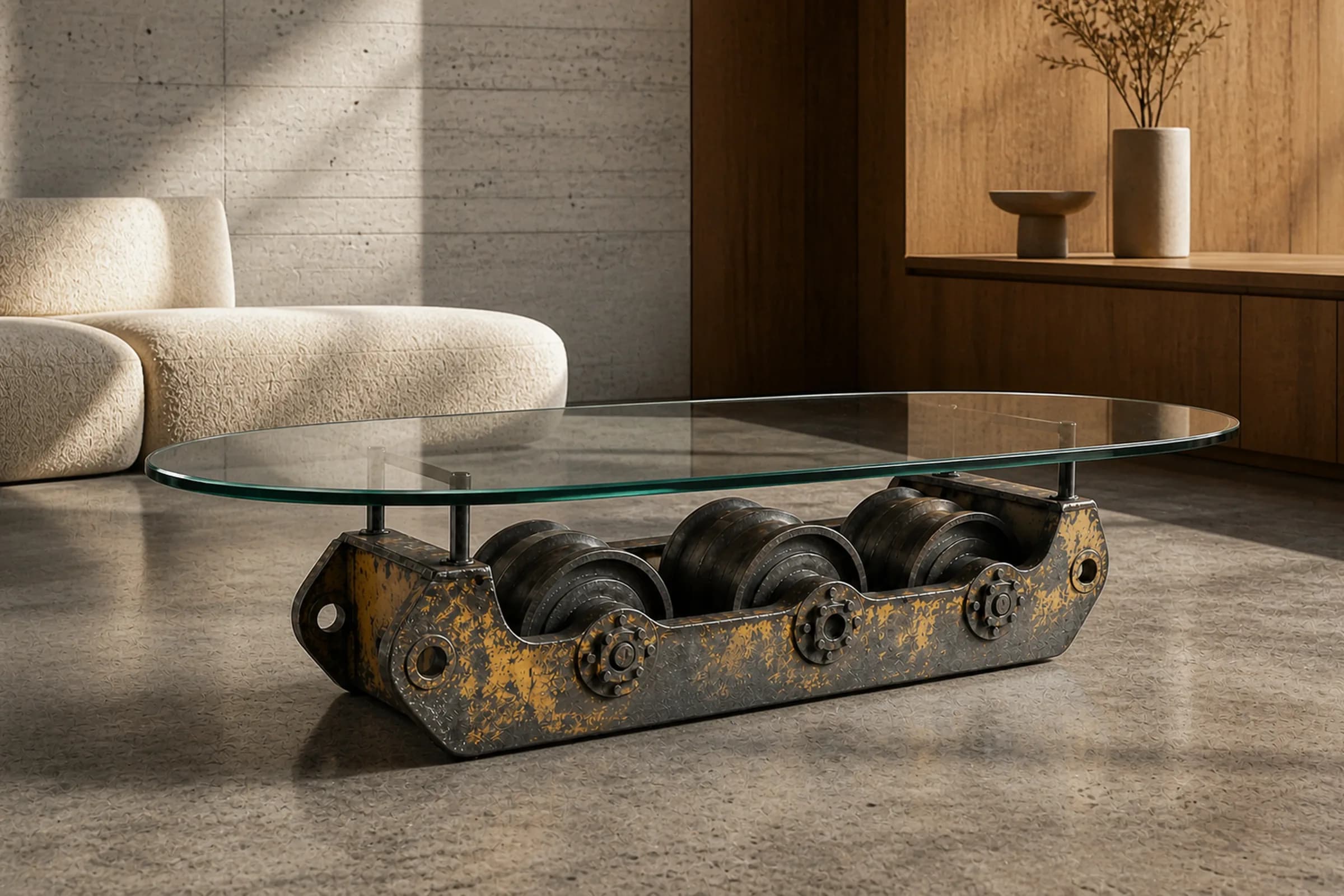
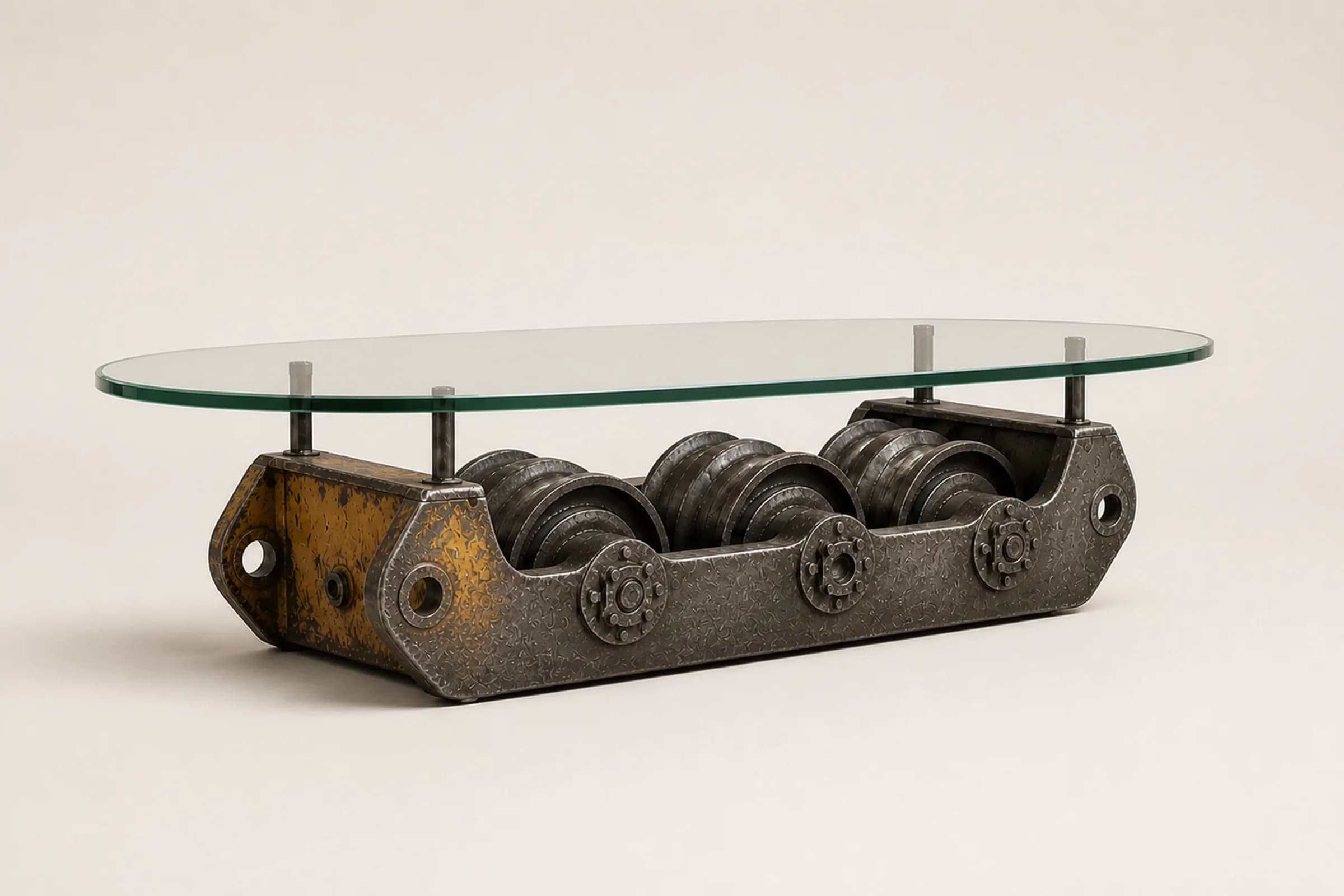
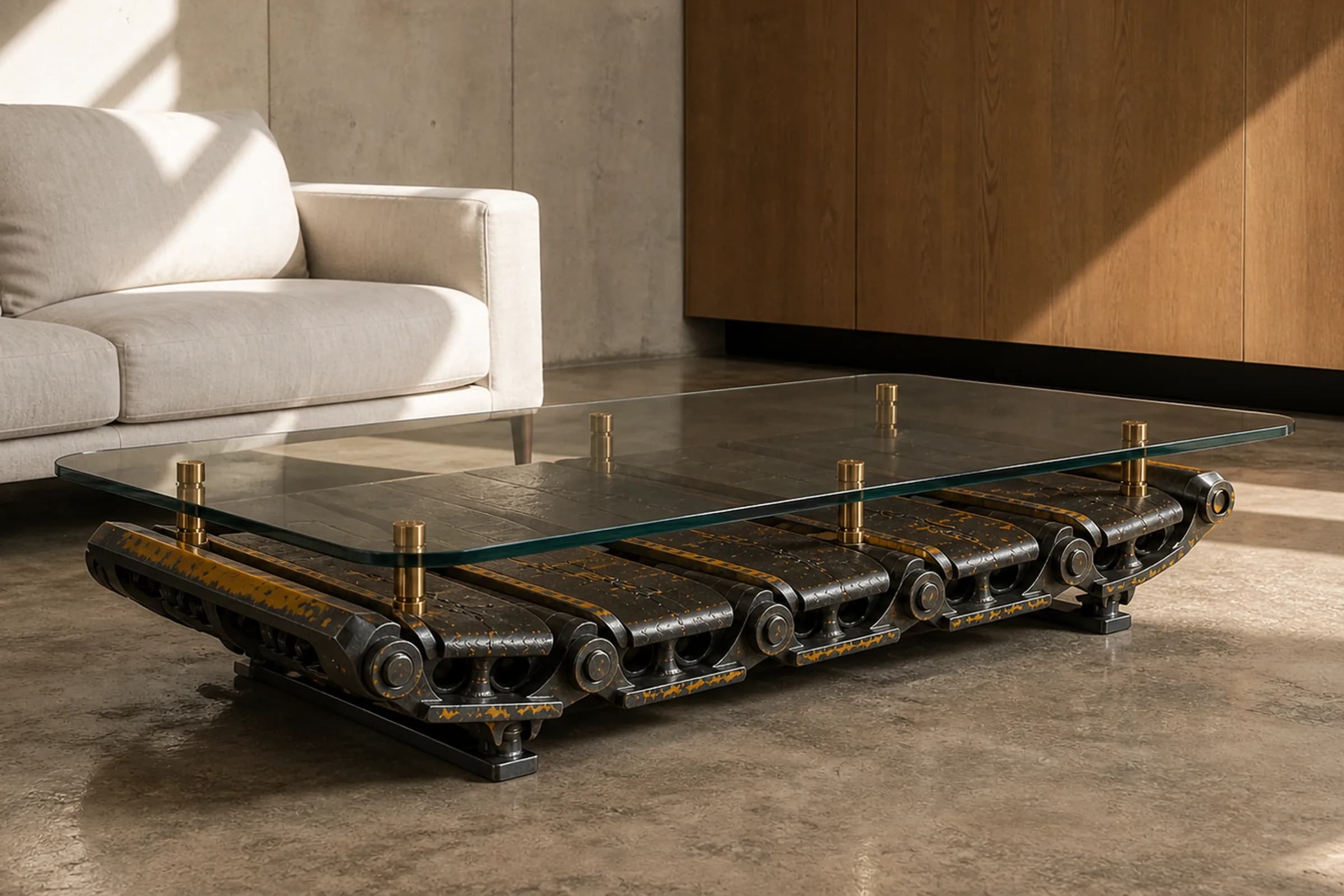
Considering a commission?
Tell us about the space and the location. We answer with availability, customisation scope and a transport estimate.