Cast iron, cast steel and cast aluminium: three metals people treat as one
They look similar in a photograph and behave nothing alike. One is brittle, one is tough, one is light — and the difference decides whether a heavy object can be repaired or is simply finished.
01Carbon content is the whole story
Cast iron contains roughly 2–4 % carbon, well above steel's maximum of about 2 %, and most of that carbon sits as free graphite in the structure. In grey iron the graphite forms flakes, which give excellent damping and machinability but act as internal crack initiators, making it brittle in tension. Ductile — or spheroidal graphite — iron uses magnesium treatment to form the graphite into nodules instead, and is dramatically tougher. Cast steel has under 2 % carbon and no free graphite, so it behaves like steel: ductile, weldable and tolerant of impact.
02Where each is used, and why
Grey iron is chosen where mass, damping and compressive strength matter and impact does not: machine bases, brake discs, stoves, historic garden furniture. Ductile iron takes over where shock loading is present — pipe, gears, some suspension components. Cast steel is used where a part must survive impact and may need repair, which is why the heavier structural castings on earth-moving machinery are steel rather than iron. Cast aluminium is roughly a third the density and is chosen for weight, not strength, which is exactly why cast aluminium garden furniture can be lifted by one person and its cast iron equivalent cannot.
Cast iron is strong until it isn't. There is very little warning between fine and cracked.
03The repair question, which matters most
Cast steel can be welded conventionally. Ductile iron can be welded with care and the right consumables. Grey cast iron is genuinely difficult: its carbon content and low ductility encourage cracking in the heat-affected zone, so repairs need preheat, nickel-based rods and slow controlled cooling, or a cold brazing approach — and even a good repair is often visible. For a heavy object you intend to keep for decades, this is not an abstract concern. It decides whether an accident is a repair or a loss.
04Telling them apart without a laboratory
A ground spot on grey iron shows a dull grey with a slightly matte, granular fracture surface; steel grinds brighter and throws longer, more branching sparks. Grey iron rings dead when tapped, where steel rings on. Aluminium is obvious on weight alone and does not attract a magnet. Antique garden furniture is a common source of confusion: nineteenth-century pieces are almost always grey iron and should be treated as brittle, while their modern reproductions are frequently cast aluminium, which is why the reproduction can be carried and the original cannot.
05What this means for our objects
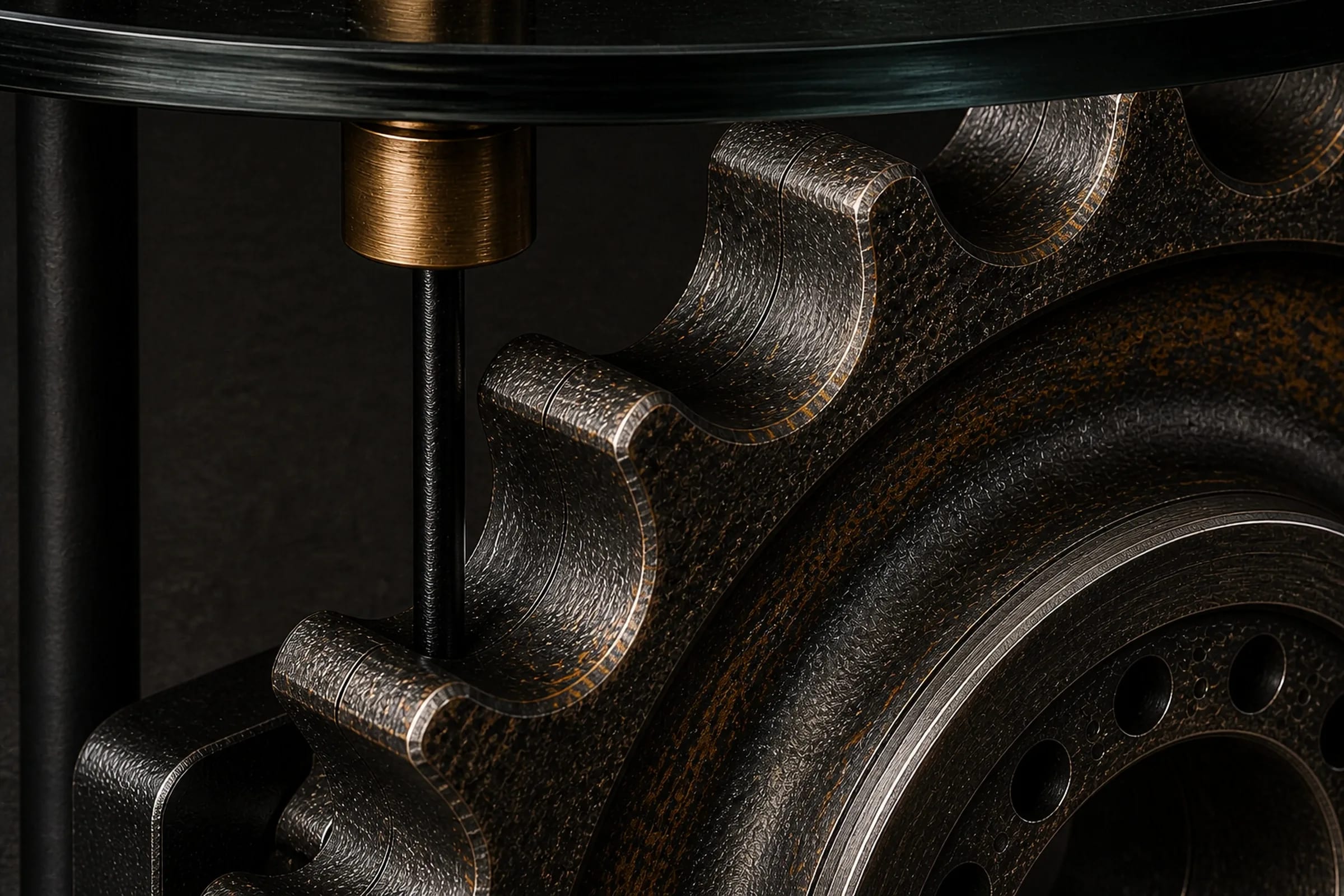
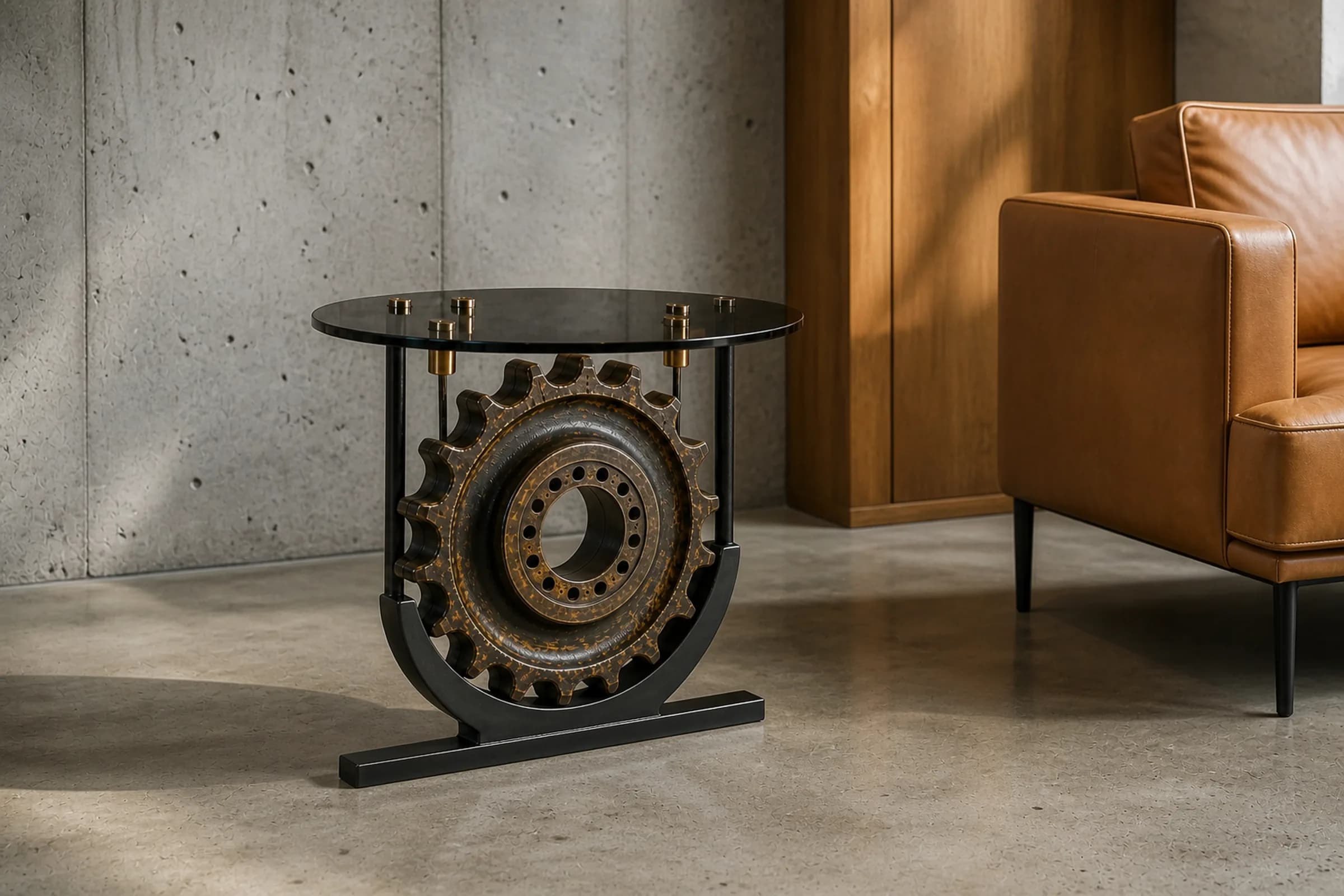
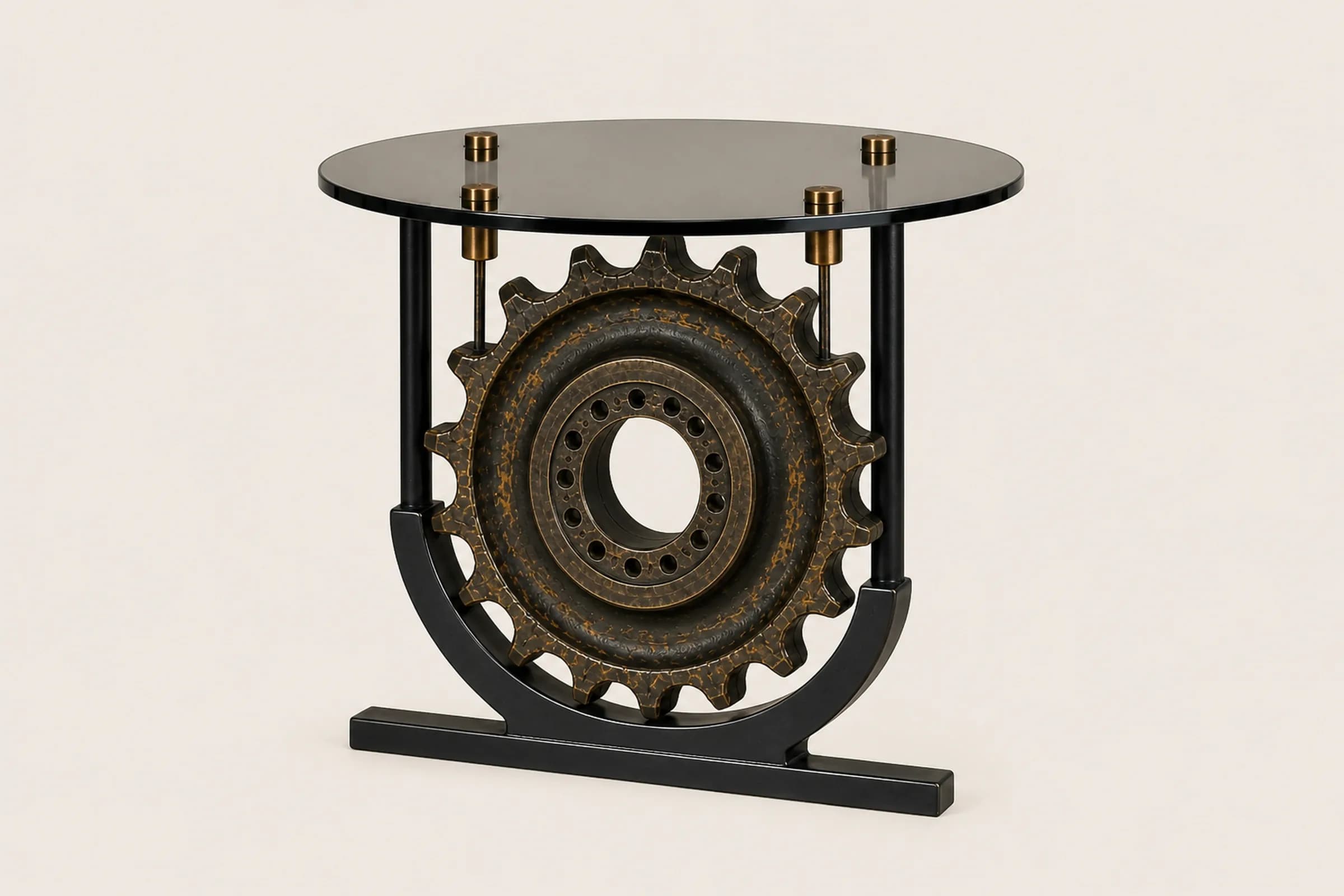
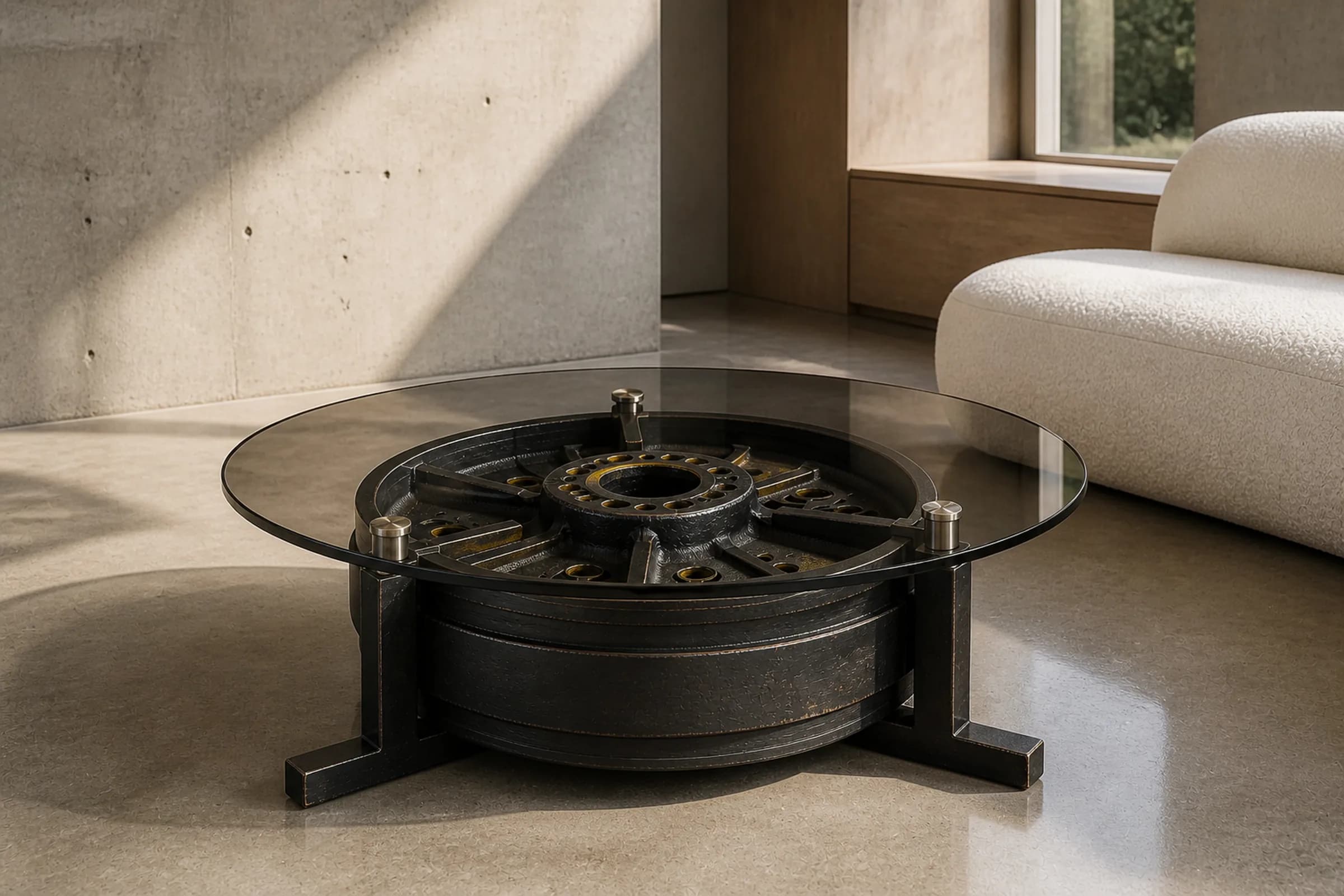
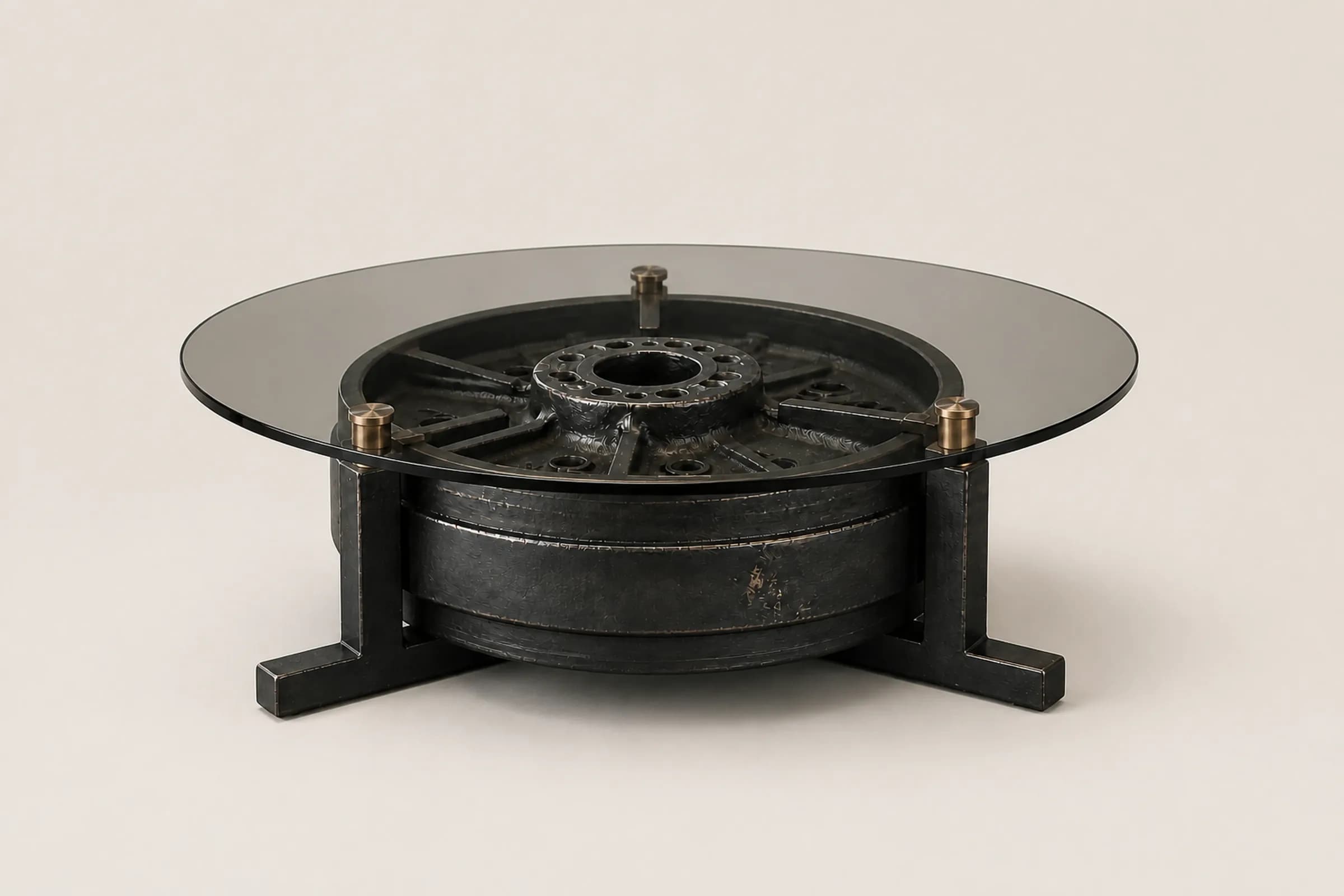
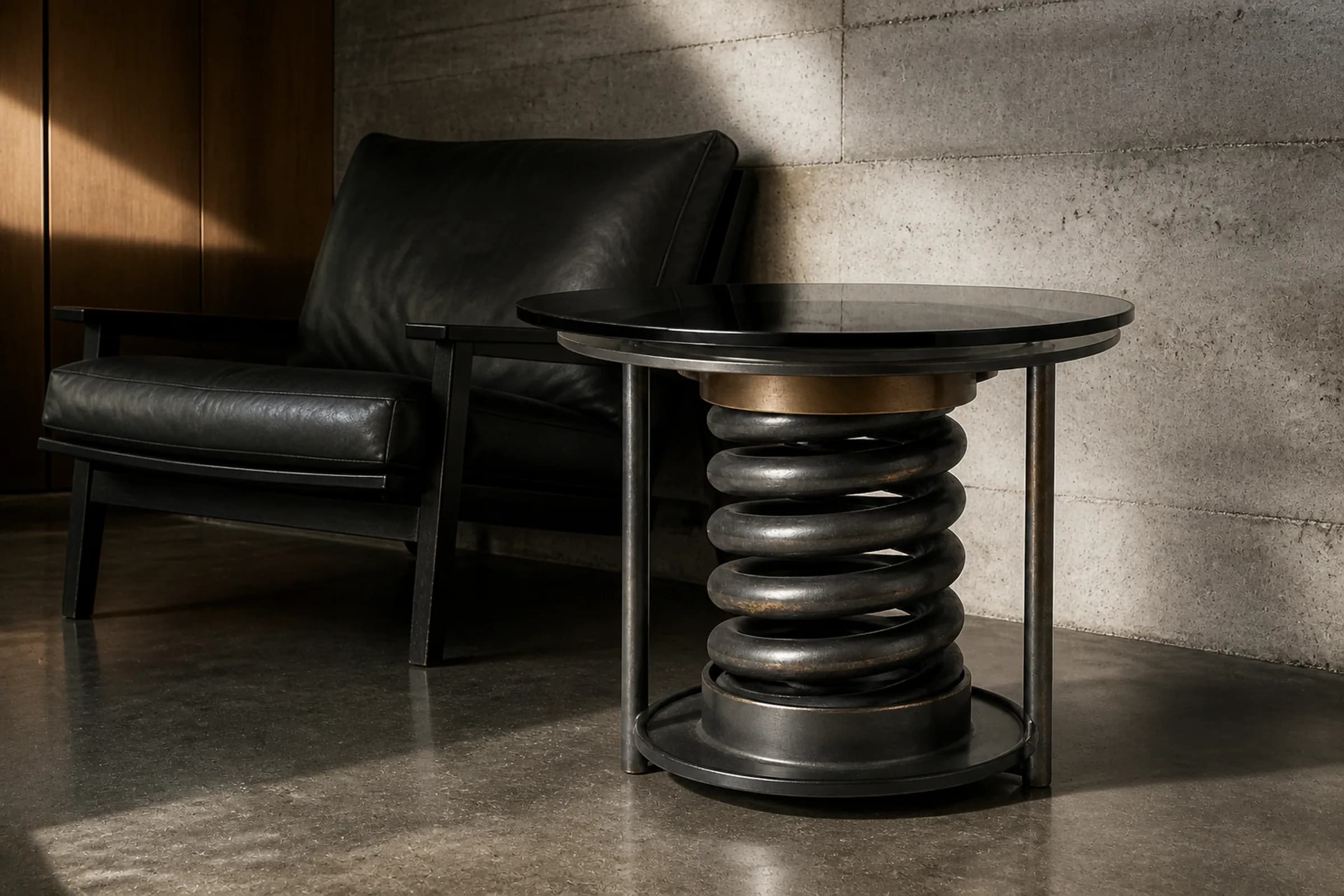
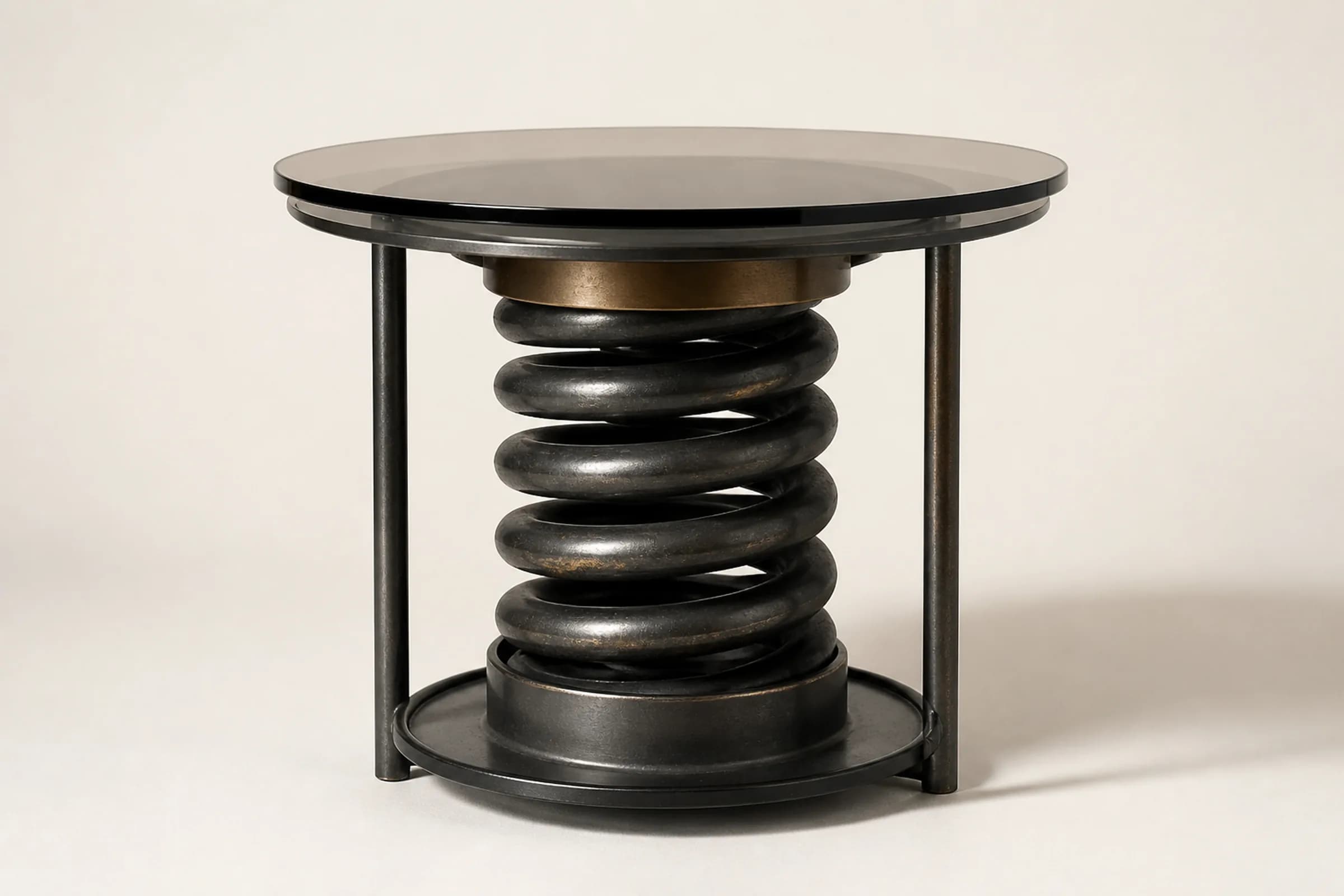
Almost everything we work with is steel — rolled plate, forged pins, quenched wear plate, and cast steel where the original component was cast, as in sprockets, idler bodies and coupler frames. That matters practically: these parts arrived having survived impact loading in service, they can be welded and dressed during the build, and a future repair is possible without heroics. Where a component turns out to be grey iron, it is treated as brittle throughout — supported over a wider area, never used where a point impact is likely, and documented as such.
Objects in this note
Considering a commission?
Tell us about the space and the location. We answer with availability, customisation scope and a transport estimate.