Modern brutalism in a small flat: one object, everything else quiet
Under sixty square metres you cannot afford a heavy room. You can afford one heavy thing. Here is how to choose it, where to stand it, and what has to get out of its way.
01Small rooms punish repetition, not weight
The instinct in a small flat is to keep everything light, and it is usually wrong. A room furnished entirely in slim legs and pale surfaces reads as provisional — nothing anchors it, so the eye keeps moving and the space feels smaller than it measures. What small rooms genuinely cannot absorb is repetition. Three medium-heavy items compete and cancel; one decisively heavy item creates a centre and lets everything else relax into a supporting role. The constraint is not weight. It is how many things are asking for attention.
02Choosing the object: round, compact, and up off the floor
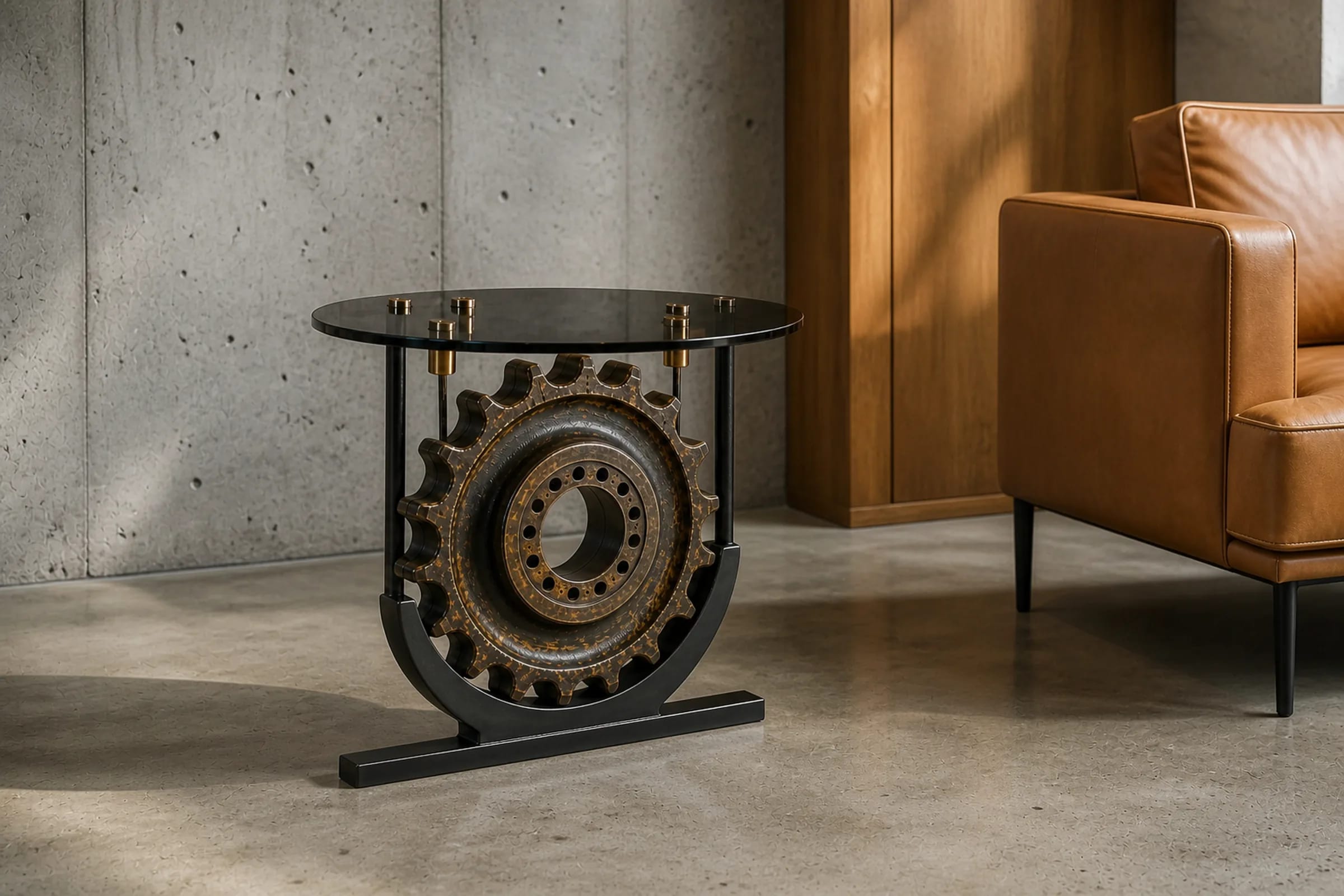
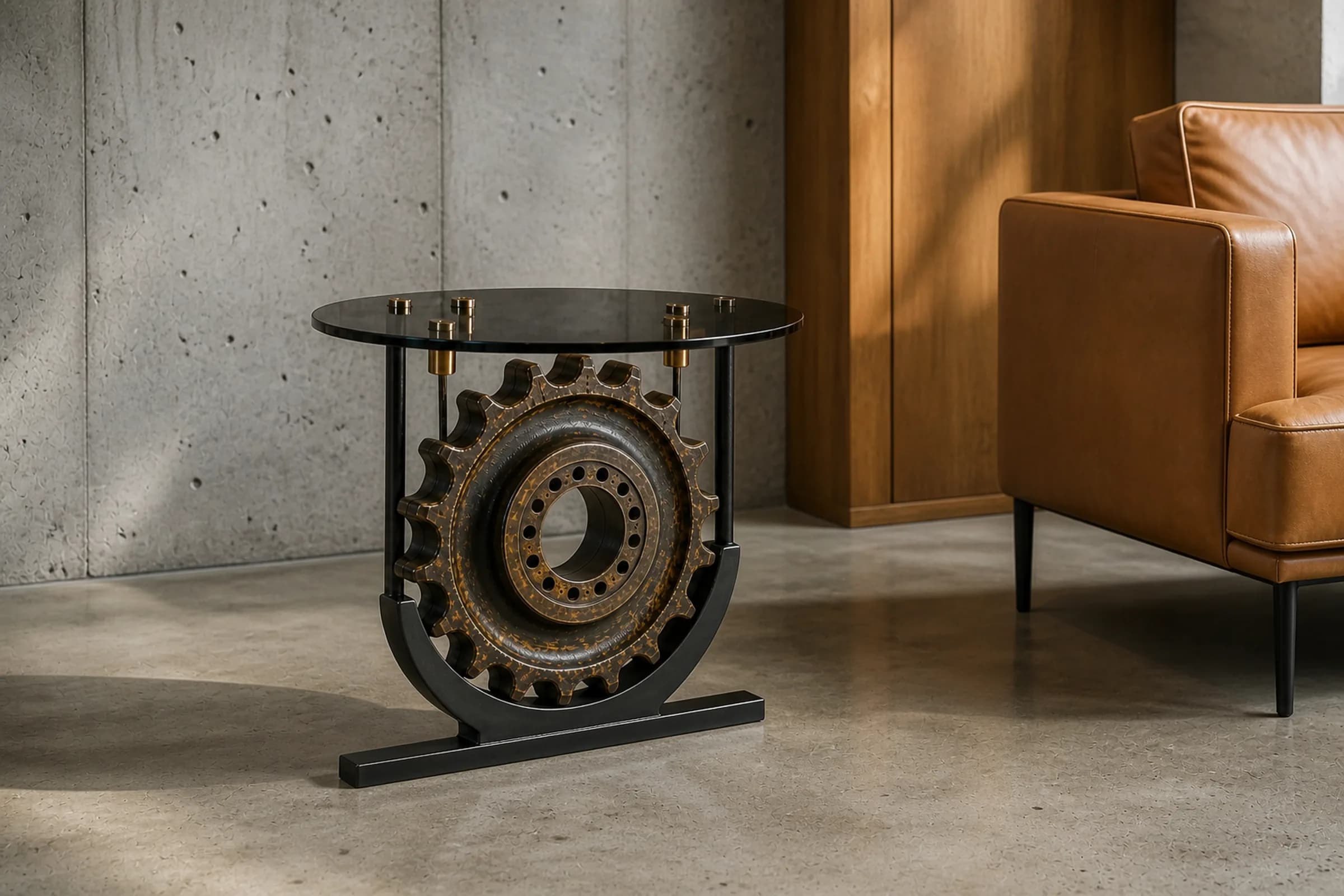
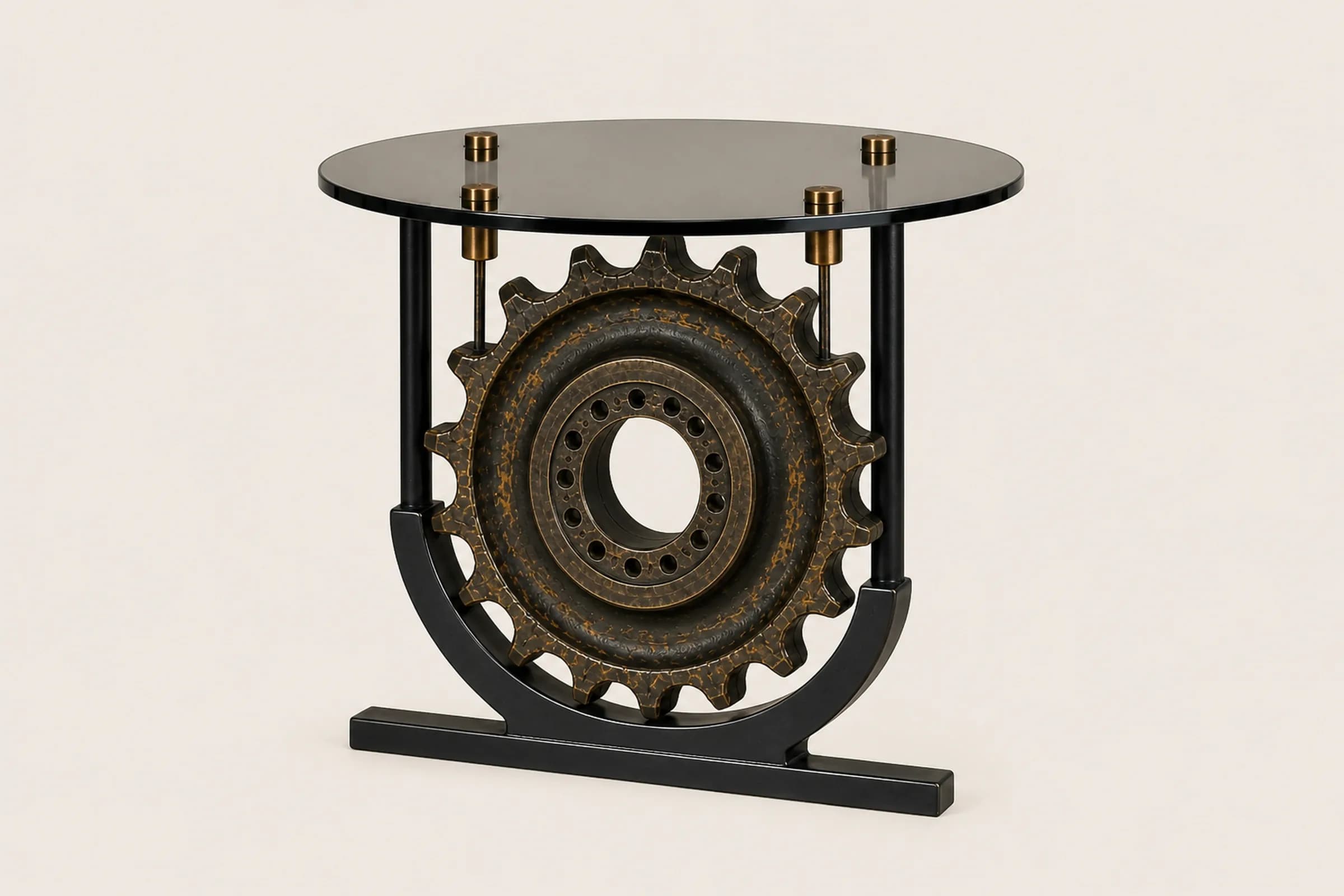
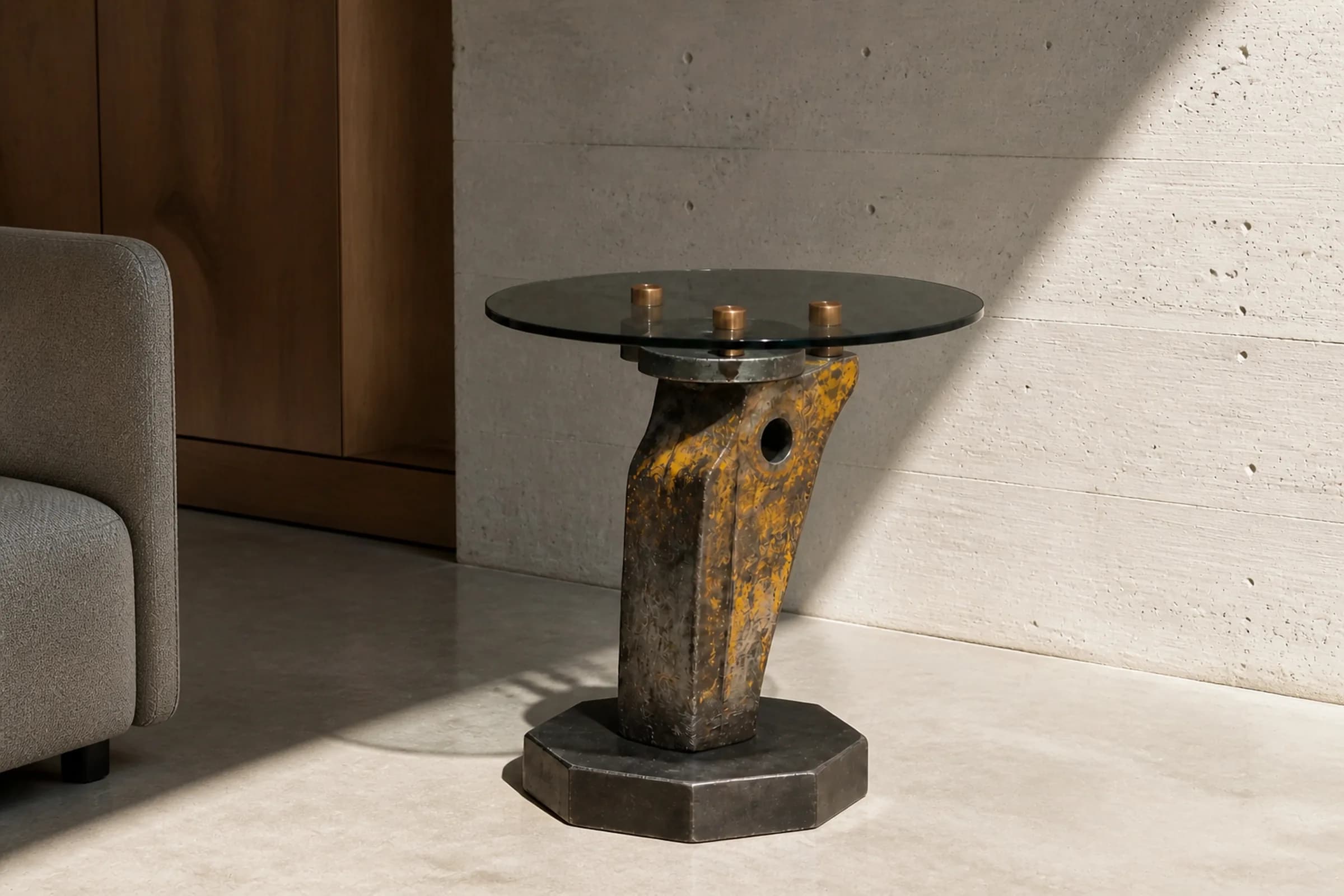
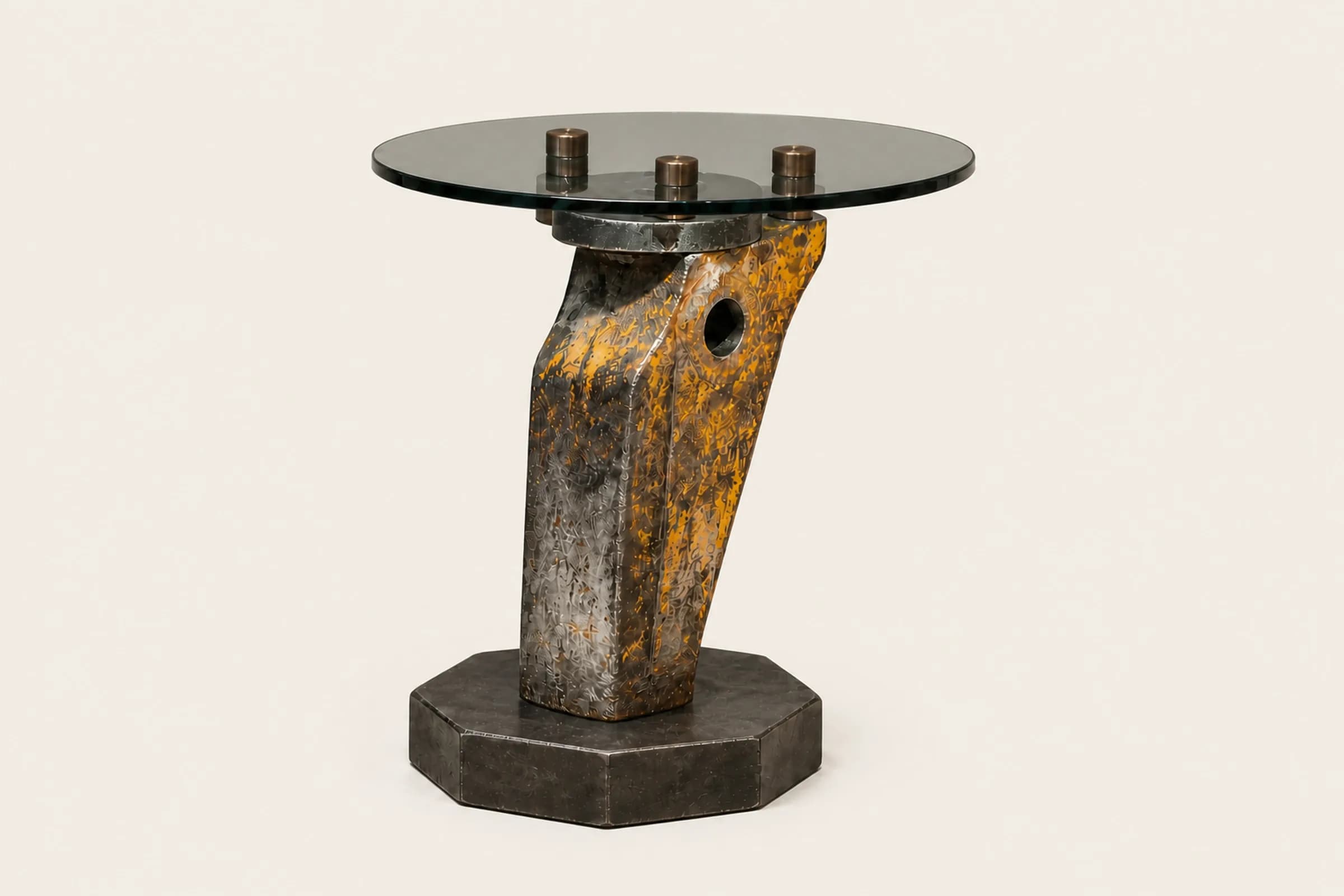
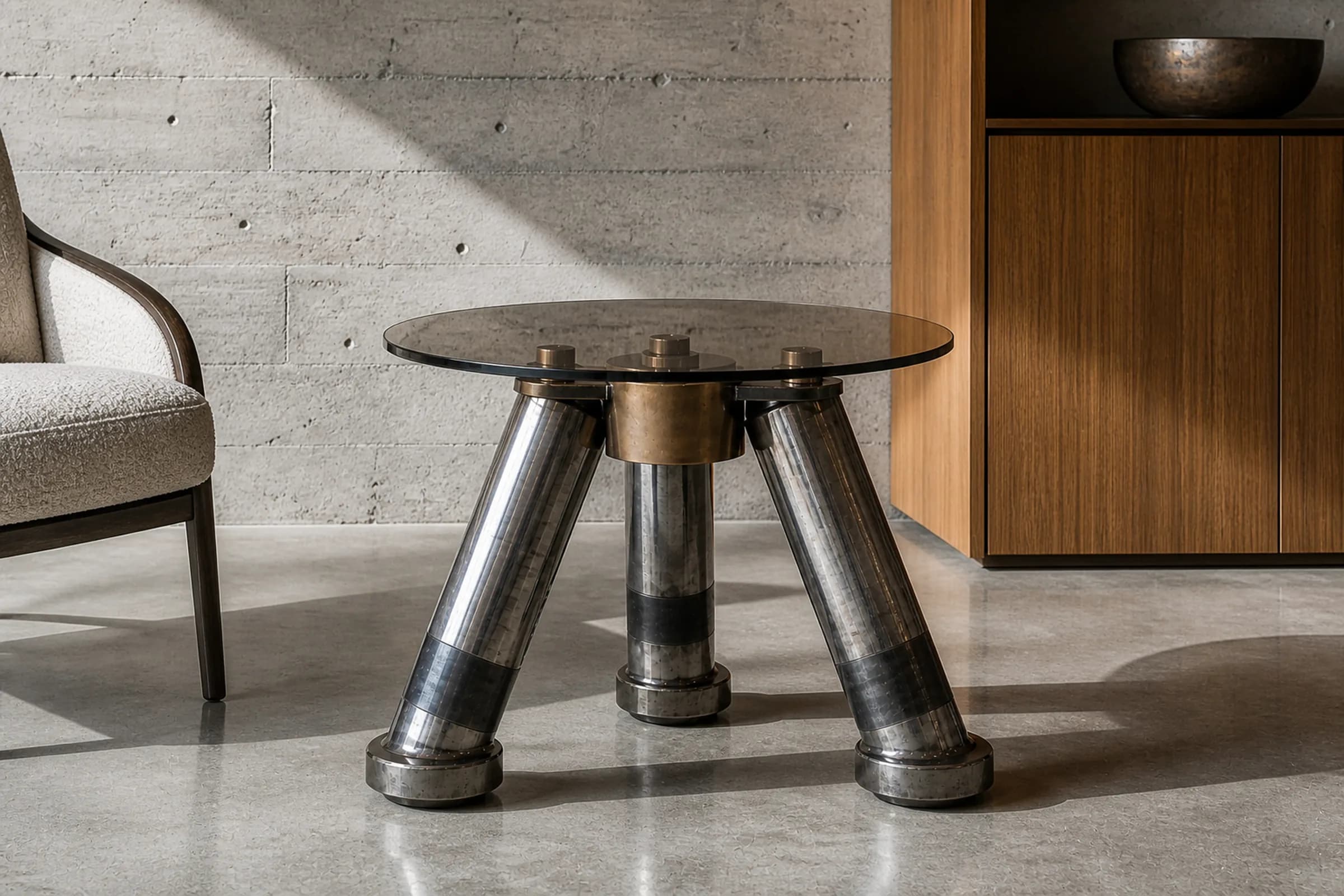
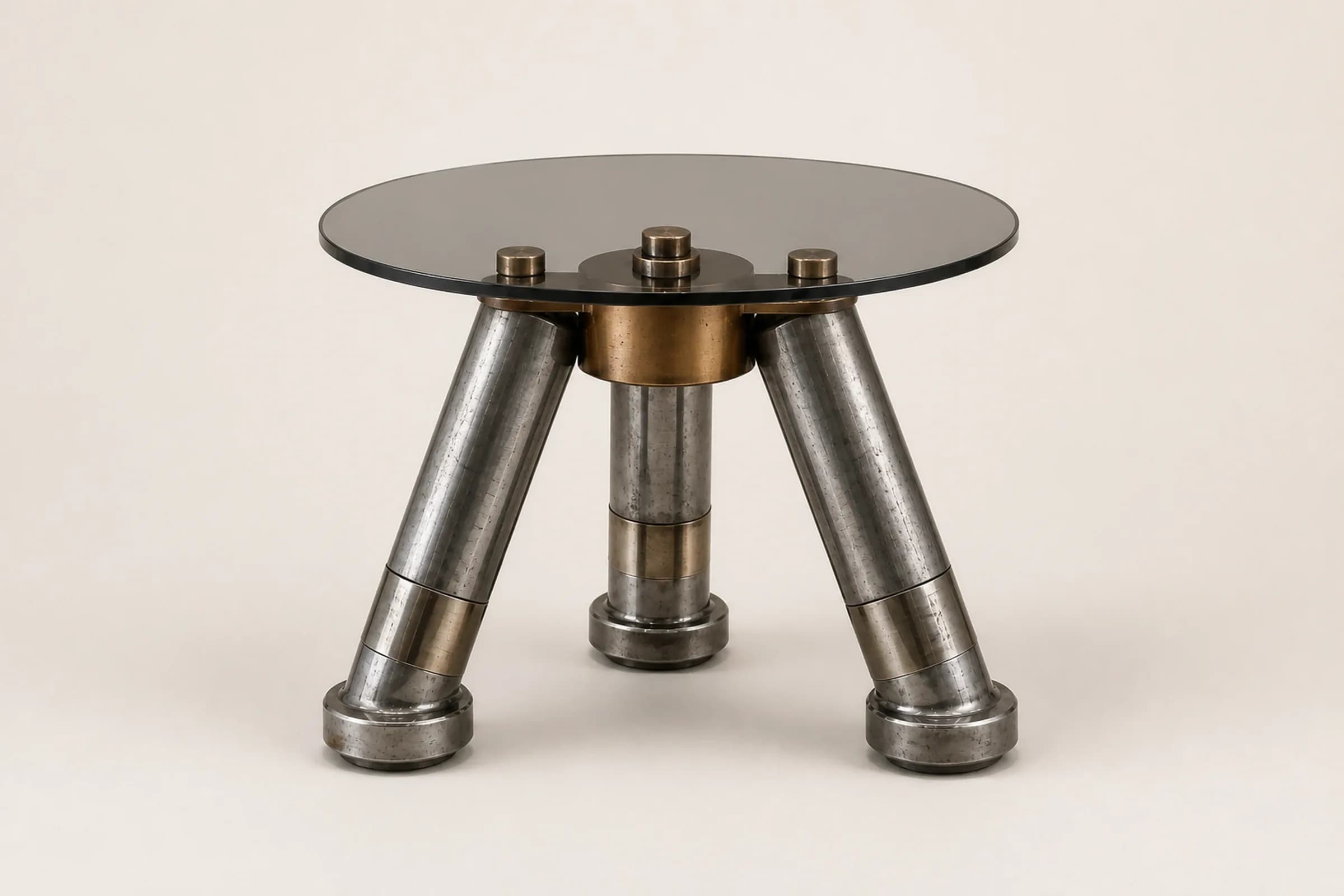
For tight plans, prefer a compact round form over a long rectangle. A drive sprocket at Ø550 × 520 mm occupies 0.24 m² and can be walked around from any side; a 1400 mm rectangle forces a circulation route and dictates the sofa position. Height matters too: an object that sits high and narrow, like a pivot-pin assembly at Ø600 × 550 mm, keeps floor visible around it, and visible floor is what makes a small room read as large. Where the top is glass, the floor stays visible through it as well, which is worth more in a small flat than in any other setting.
In a small flat, mass is a soloist. Give it a second heavy object and you have an argument, not a composition.
03Give it a metre and take away the rest
Set the object where it gets a clear metre on its main approach, then remove the nearest three decorative items. Side tables, floor lamps with wide bases, baskets and plant stands are the usual casualties, and the room improves every time. The rule is negative: the object earns its presence by what leaves, not by what joins it. If you find yourself wanting to add a tray, a stack of books and a candle to fill the top, the object was probably too large for the room.
04Colour discipline in a small plan
Keep the palette to three values and let the object hold the darkest one. Blackened steel or graphite reads as a deliberate anchor against bone, oatmeal or pale oak; the same object against mid-grey walls disappears into a general murk and the room loses both the anchor and the contrast. Avoid a second black item within sight of it — a black frame, a black lamp, a black shelf — because two dark masses in a small room start to feel like holes rather than weight.
05What this does not solve
A heavy object will not fix a badly planned flat, and it makes some problems worse. If your circulation is already tight, adding 260 kg you cannot casually slide is a commitment, so measure the route in and out before ordering, not after. If the floor is timber joists and the flat is pre-war, check where the joists run — the concentrated load question is real and cheap to answer in advance. And if you rent, remember that the object will outlast the tenancy: choose one you would carry to the next flat, not one that only works in this room.
Objects in this note
Considering a commission?
Tell us about the space and the location. We answer with availability, customisation scope and a transport estimate.