Reclaimed machine steel or a cut stone slab: how the two actually differ
A marble slab is quarried to be uniform. A dozer blade is shaped by twenty thousand hours of load. Both make a serious table, and they fail in completely different ways.
01The honest case for stone
Stone deserves a fair hearing before the argument for steel. A marble, travertine or granite slab gives an unbroken plane of natural material, a depth of surface that photographs beautifully, and a colour field that changes with the light through the day. It is quarried in slabs large enough to make a top with no joint, it is cool to the touch, and it carries several thousand years of association with permanence. If what a room needs is calm mass and an uninterrupted surface, stone is the better answer and no amount of provenance changes that.
02Where stone gives way
Marble is a soft calcite stone: it scratches at about 3 on the Mohs scale, and it etches on contact with anything acidic — lemon, wine, tomato, some cleaning products — because the acid dissolves the calcite rather than staining it. Etching is a change in the stone itself and cannot be wiped away. It is porous, so oil migrates in and darkens it unless it is sealed and resealed. Granite is far harder and mostly avoids this, but a stone slab of any kind is brittle in tension: a knock on an unsupported overhang chips it, and a chip in stone is permanent in a way a mark on steel is not.
We do not add history to furniture. We remove everything that is not history.
03The proportions are not a style choice
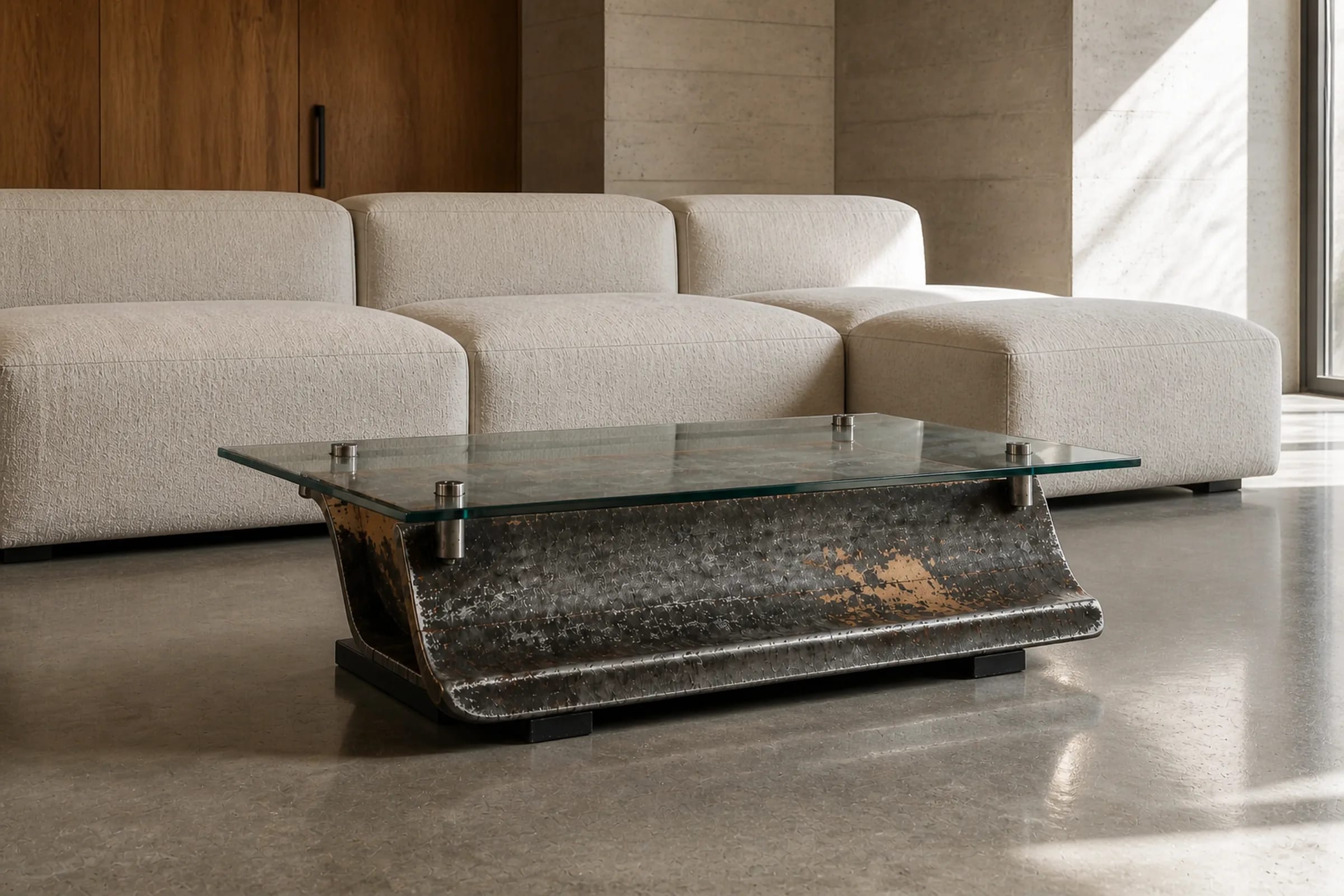
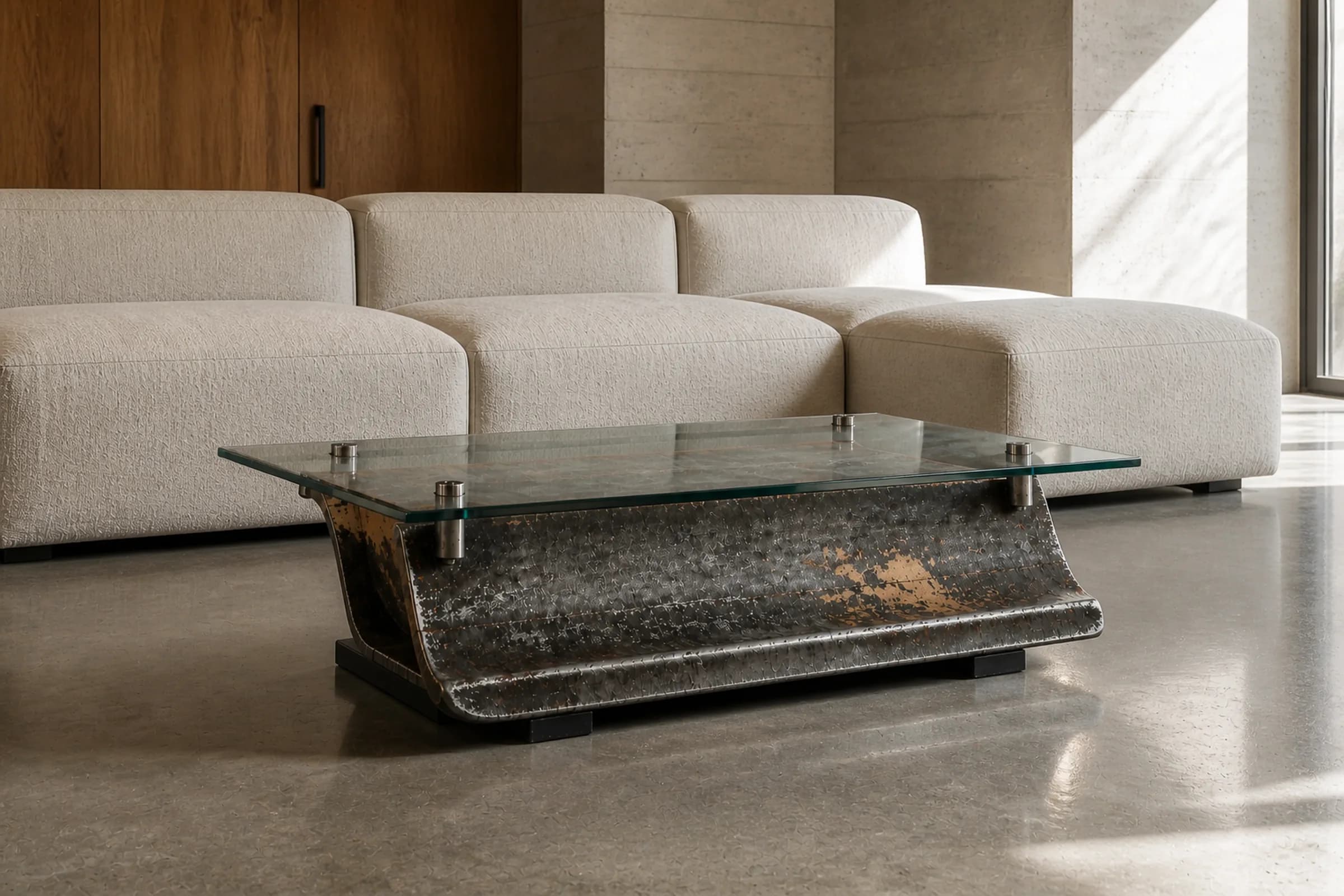
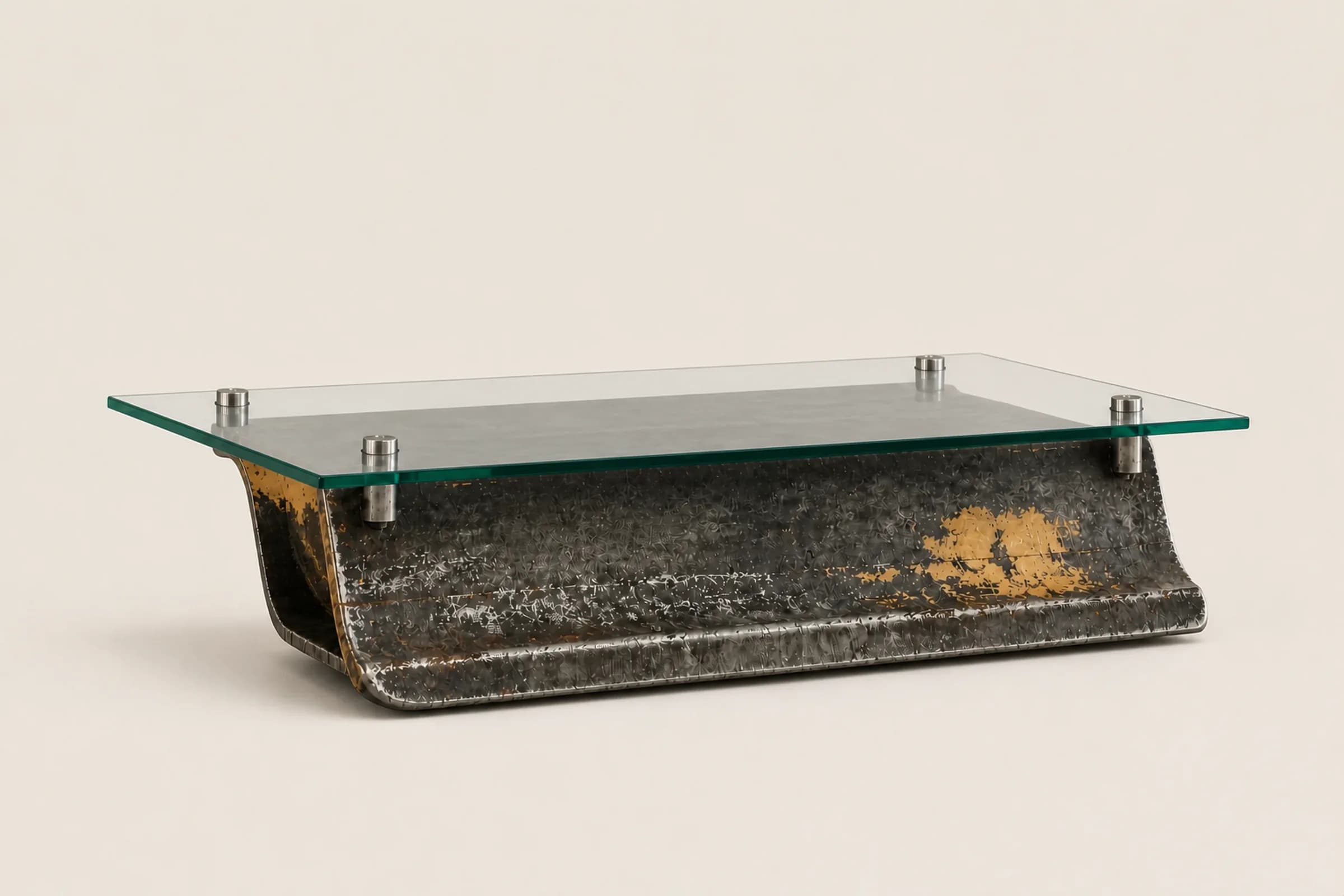
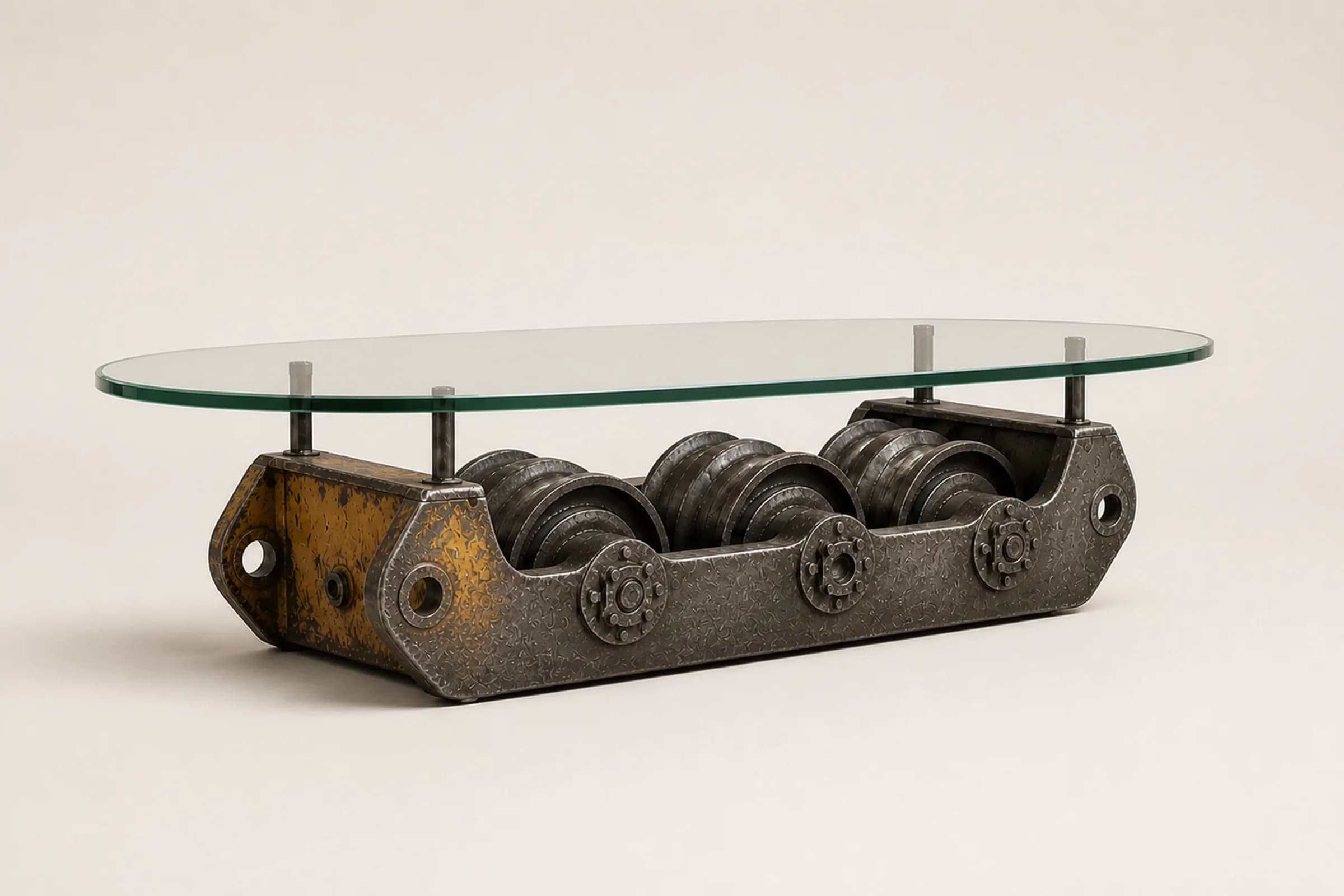
A cutting edge is thick where the load is and thin where it is not. That taper is structural arithmetic, and it reads as intention because it was intention — just not aesthetic intention. You cannot draw it convincingly from scratch; the eye knows when a curve was calculated against soil rather than taste. A stone slab has the opposite quality: it is deliberately without incident, cut to a plane precisely so that nothing interrupts the material. One is a form that was solved; the other is a form that was avoided.
04Wear is information, not damage
The working face of a blade is polished by earth to a finish no machine shop produces. The back face still carries factory coating, flaking in patterns that follow the stress map of the part. We seal both and remove neither, because between them they document the working life of the object. Stone accumulates marks too, but on stone a mark is a defect — it interrupts a surface whose whole value is that it is uninterrupted. On worn steel a new mark simply joins a record that was already there. That difference decides which material suits a room that gets used hard.
05Scarcity is structural, not marketed
Two blades from the same machine model wear differently depending on ground conditions. That makes short numbered editions a physical fact rather than a commercial device — we could not reproduce a piece exactly even if we wanted to. A stone slab is also unrepeatable, since no two blocks match, but the variation is geological rather than biographical: it records how the stone formed, not what it did. Both are singular. Only one of them worked for a living, and if that distinction matters to you it is the whole reason to choose steel.
Objects in this note
Considering a commission?
Tell us about the space and the location. We answer with availability, customisation scope and a transport estimate.