Glass table top thickness: how thick, which type, and why the edge matters most
Ten, twelve, fifteen or nineteen millimetres. The number depends on span and support, not on the size of the table — and the failure that actually happens is almost never a broken span.
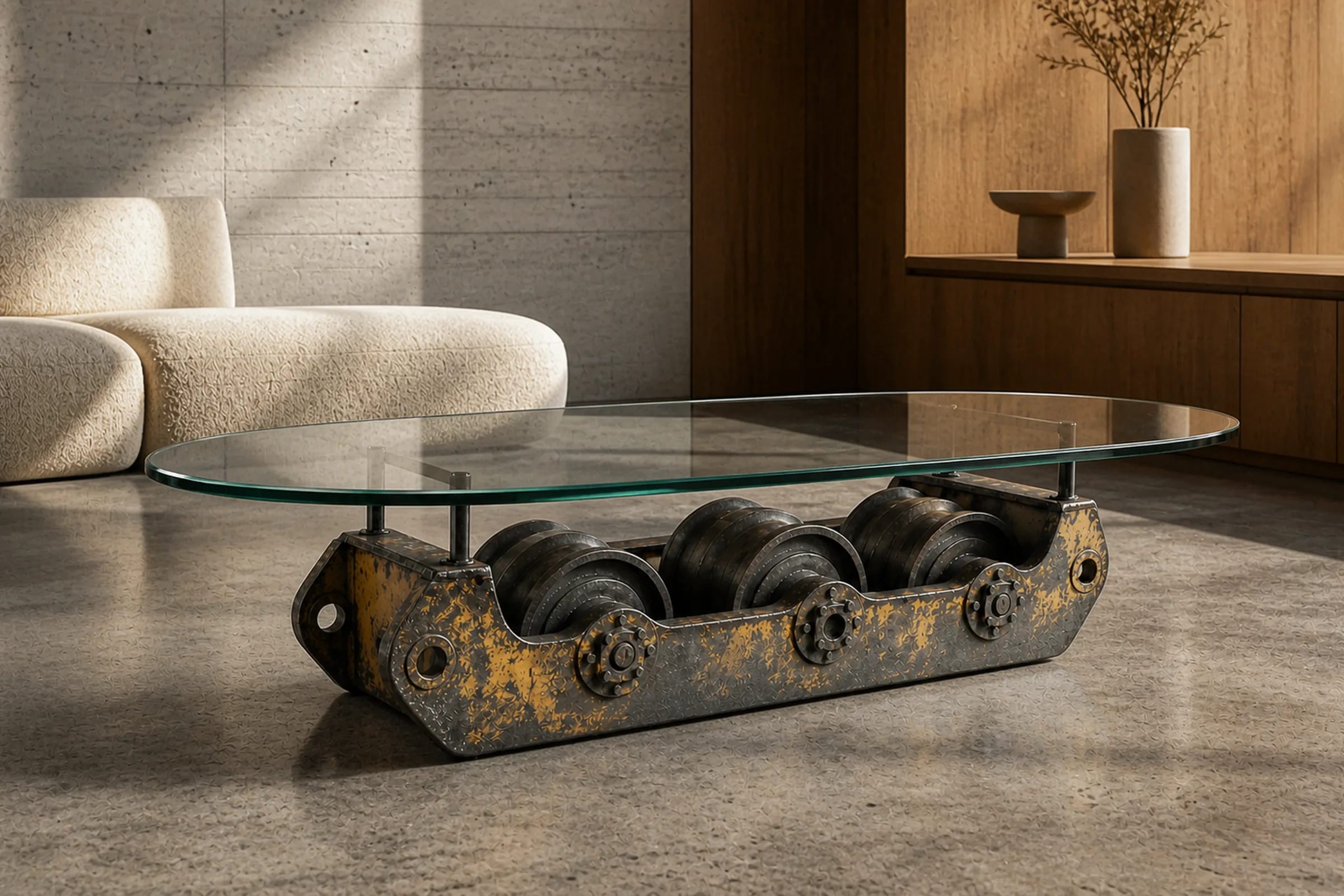
01Toughened, laminated or annealed
Annealed glass is ordinary float glass; it breaks into large sharp shards and is unsuitable for any horizontal surface people use. Toughened, or fully tempered, glass is heat-treated to put the surfaces into compression, giving roughly four to five times the bending strength and a break pattern of small blunt fragments. Laminated glass bonds two panes with an interlayer and holds together when broken. For a coffee table, toughened is the normal specification and is what safety standards expect for impact-prone furniture. Laminated toughened is the belt-and-braces option and is heavier, thicker and considerably more expensive.
02Thickness follows the span between supports
The controlling variable is unsupported span, not table length. As a working guide, 10 mm toughened suits spans up to roughly 700 mm, 12 mm to about 1000 mm, 15 mm to around 1300 mm, and 19 mm beyond that. A 1400 mm top supported continuously along a long steel structure can be thinner than a 900 mm top resting on two small pads, because the pads leave a long unsupported diagonal. This is why we specify glass per object rather than by size, and why the base geometry is settled before the glass is ordered.
Glass does not fail where it bends. It fails at a chipped edge you stopped noticing months ago.
03The edge is where tops actually fail
Toughened glass is extremely strong in bending and vulnerable at the edge, because tempering leaves the surface in compression and the interior in tension, and a chip that reaches through the compressive layer releases that stored energy. This is the mechanism behind tops that appear to shatter spontaneously — the damage was usually done earlier by an impact on the arris. Specify polished and arrised edges, avoid any detail that puts a hard object into contact with the edge, and treat a visible chip as a reason to replace the pane rather than a cosmetic complaint.
04Supports, setting blocks and the mistake of metal-on-glass
Glass must never bear directly on steel. Point contact concentrates stress and creates exactly the surface damage that causes later failure. Use setting blocks of EPDM, neoprene or silicone at every bearing point, sized so the load spreads, and level them so the pane is not forced to bridge an uneven set. Where the base is irregular — a machine component rather than a manufactured frame — each bearing point is shimmed individually, and this is slow work that materially affects how long a piece takes to finish. Clear silicone dots also stop the pane sliding, which matters on a heavy top that nobody wants to reposition.
05Clear versus smoked, and the practical difference
Clear glass shows the structure beneath in full and shows every fingerprint with equal honesty. Smoked or grey-tinted glass reduces transmission, mutes the base slightly, and hides marks substantially better in daily use. Both are toughened to the same standard, so this is an appearance and maintenance decision rather than a strength one. For a base worth looking at, clear is usually right in a room with good light; smoked is the better choice in a bright south-facing room where reflections would otherwise flatten the object beneath.
Objects in this note
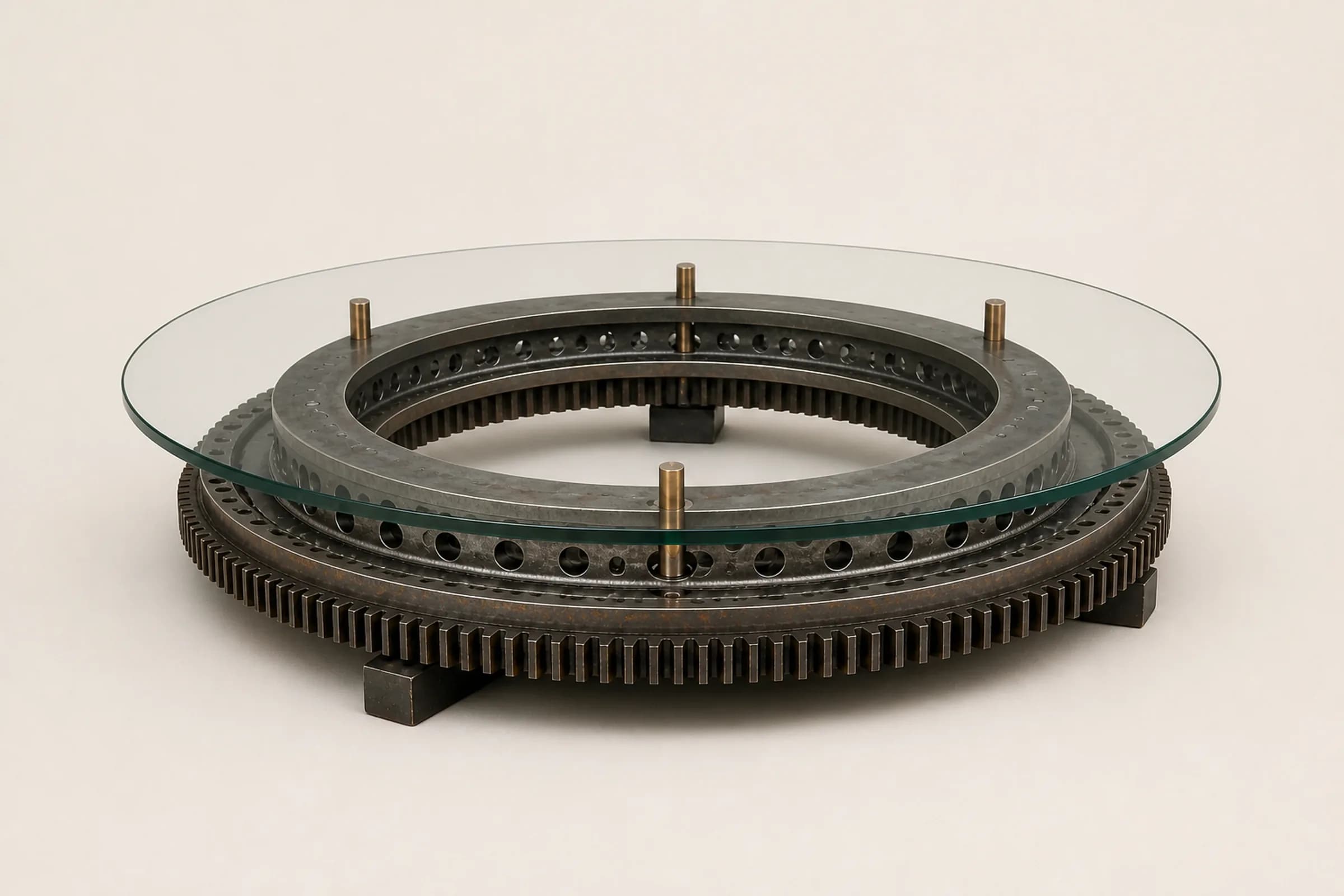
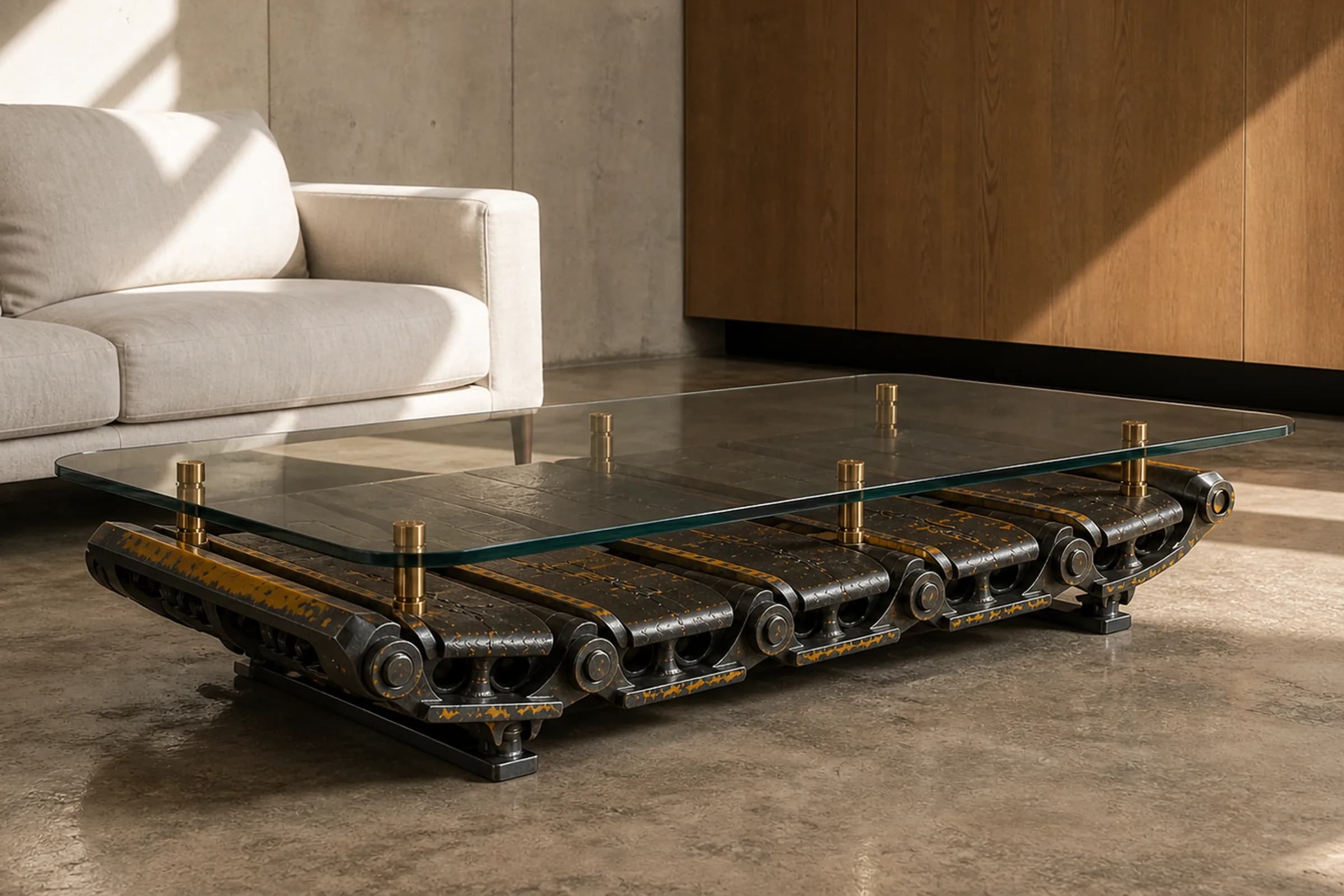
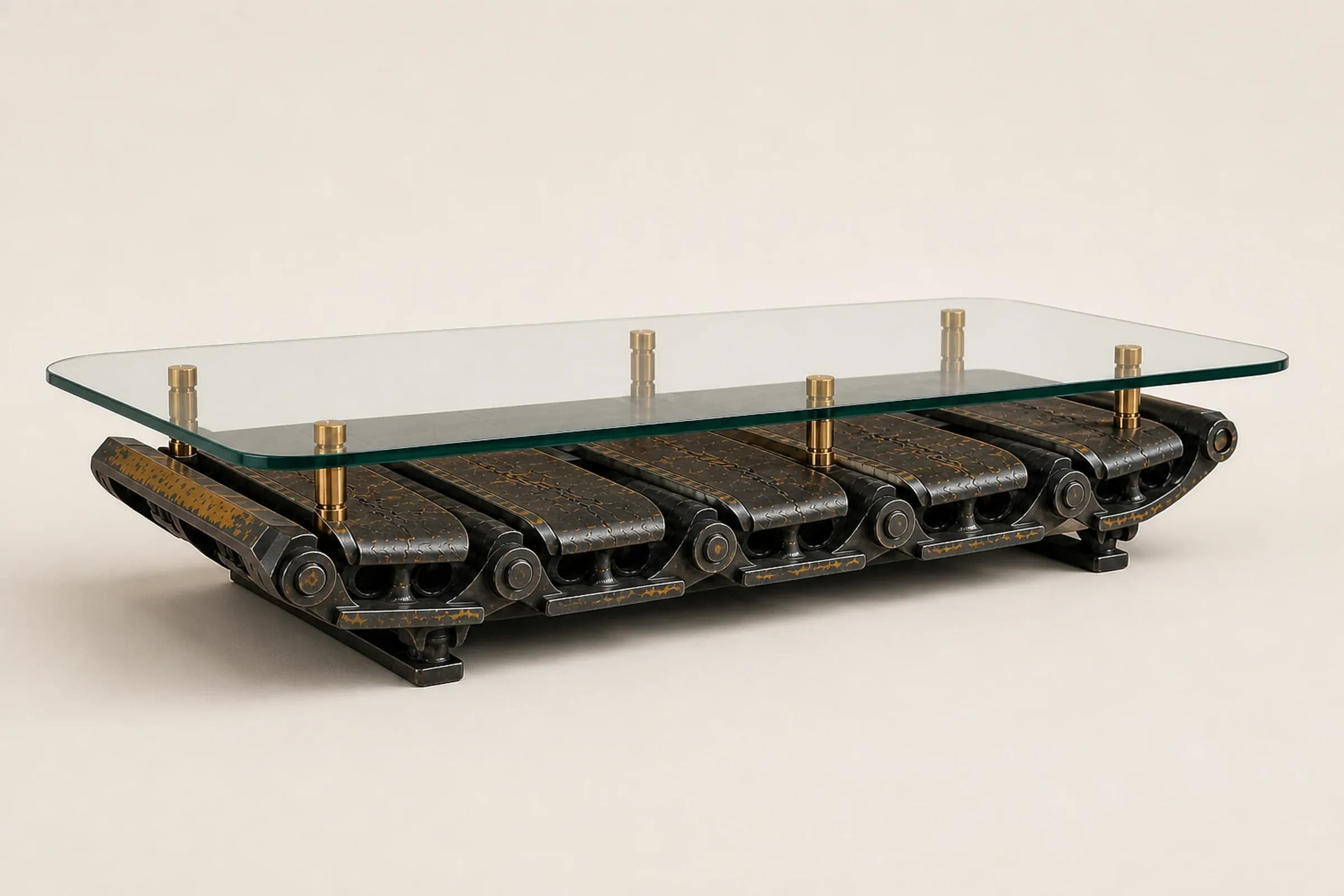
Considering a commission?
Tell us about the space and the location. We answer with availability, customisation scope and a transport estimate.