Clear lacquer, wax, oil or powder coat: choosing a finish for reclaimed steel
Every finish is a trade between how much of the surface you keep and how little maintenance you accept. There is no option that gives you both.
01What a finish is being asked to do
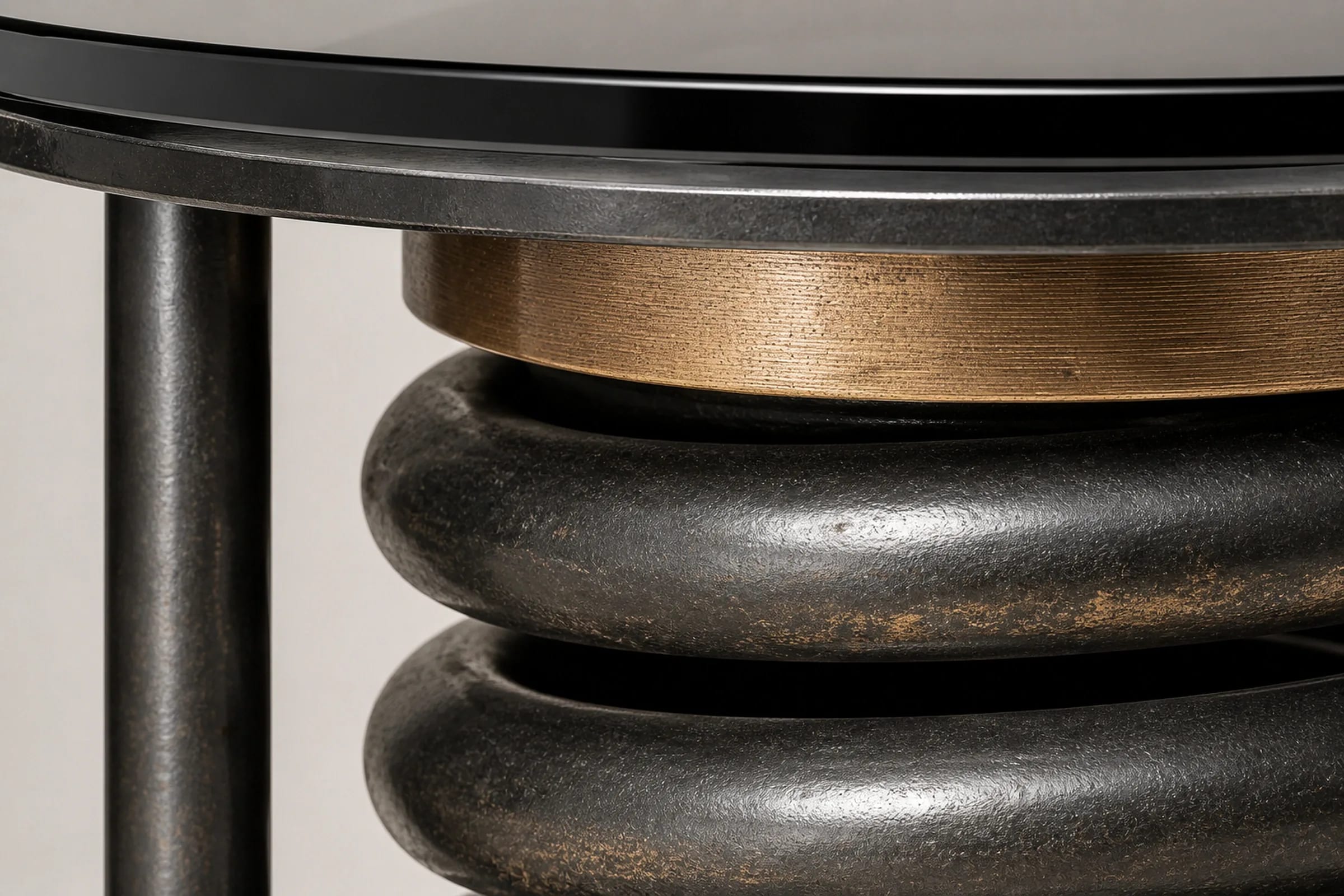
On reclaimed steel a finish has three jobs: exclude moisture and oxygen so corrosion stops, protect the surface from handling, and do both without burying the history that made the piece worth using. Those goals conflict. Barrier performance improves with film thickness, and legibility falls with it. The decision is therefore not which finish is best in the abstract, but how far along that trade a particular object should sit — a piece with deep pitting and temper colours deserves a thin finish; a piece whose interest is entirely in its form can take a thicker one.
02Matte clear lacquer, which is our default
A two-pack polyurethane or acrylic clear at low sheen gives real barrier protection at 30–60 microns and changes colour very little. It is hard enough for daily use, resists fingerprints better than wax, and is the only option here that reliably stops corrosion restarting under humid conditions. The costs are honest: it will darken the surface slightly, it cannot be spot-repaired invisibly, and a full refinish means stripping. We use it because on a table that people put cups and keys on, nothing thinner survives, and because at low sheen it does not add the plastic look that gloss clear coats produce.
The thicker the coating, the less of the object survives underneath it.
03Wax and oil, which look best and ask most
Microcrystalline wax over a de-greased surface is the least intrusive option there is. It keeps the surface almost exactly as found, gives depth to dark oxide, and is completely repairable — a scuff is fixed by re-waxing that patch. It is also a weak barrier. Wax needs reapplying every six to twelve months indoors, it will not survive standing water, and it marks with hot objects. Oil behaves similarly with slightly better penetration and slightly worse handling. Both are the right answer for a display piece in a controlled interior and the wrong answer for a family coffee table.
04Powder coat, and when it is honest
Powder coating gives the most durable surface available: 60–100 microns of thermoset polymer, excellent impact and abrasion resistance, no maintenance. It also completely conceals what is underneath. Applied to a component whose value is its wear record, it destroys the reason the component was chosen — which is why we do not use it on the objects. It is the correct choice for fabricated steelwork that has no history to preserve, for anything going outdoors, and for a client who genuinely wants a uniform colour rather than a surface, and in those cases we will say so rather than talk them out of it.
05Blackening, and what it is not
Cold blackening chemically converts the surface to black iron oxide. It is extremely thin, does not build up on threads or tolerances, and looks deep and even. On its own it offers almost no corrosion protection — it must be oiled or waxed to be stable, and unsealed blackening will rust in a humid room. It also cannot cover a repair: welded areas and ground patches take the conversion differently and remain visible. We use it where an even dark surface is wanted and the original patina was already lost, and never as a way of hiding preparation work.
Objects in this note
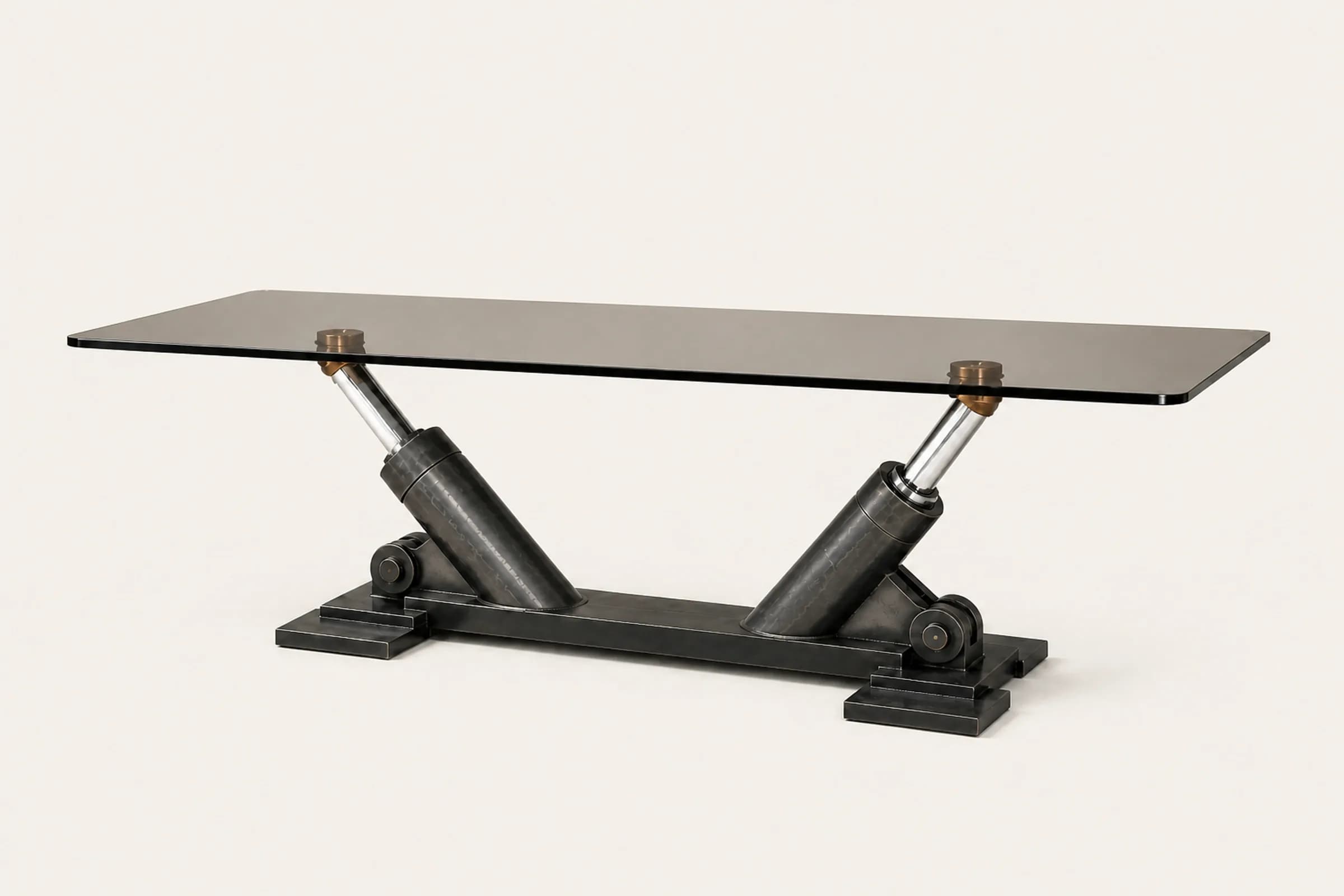
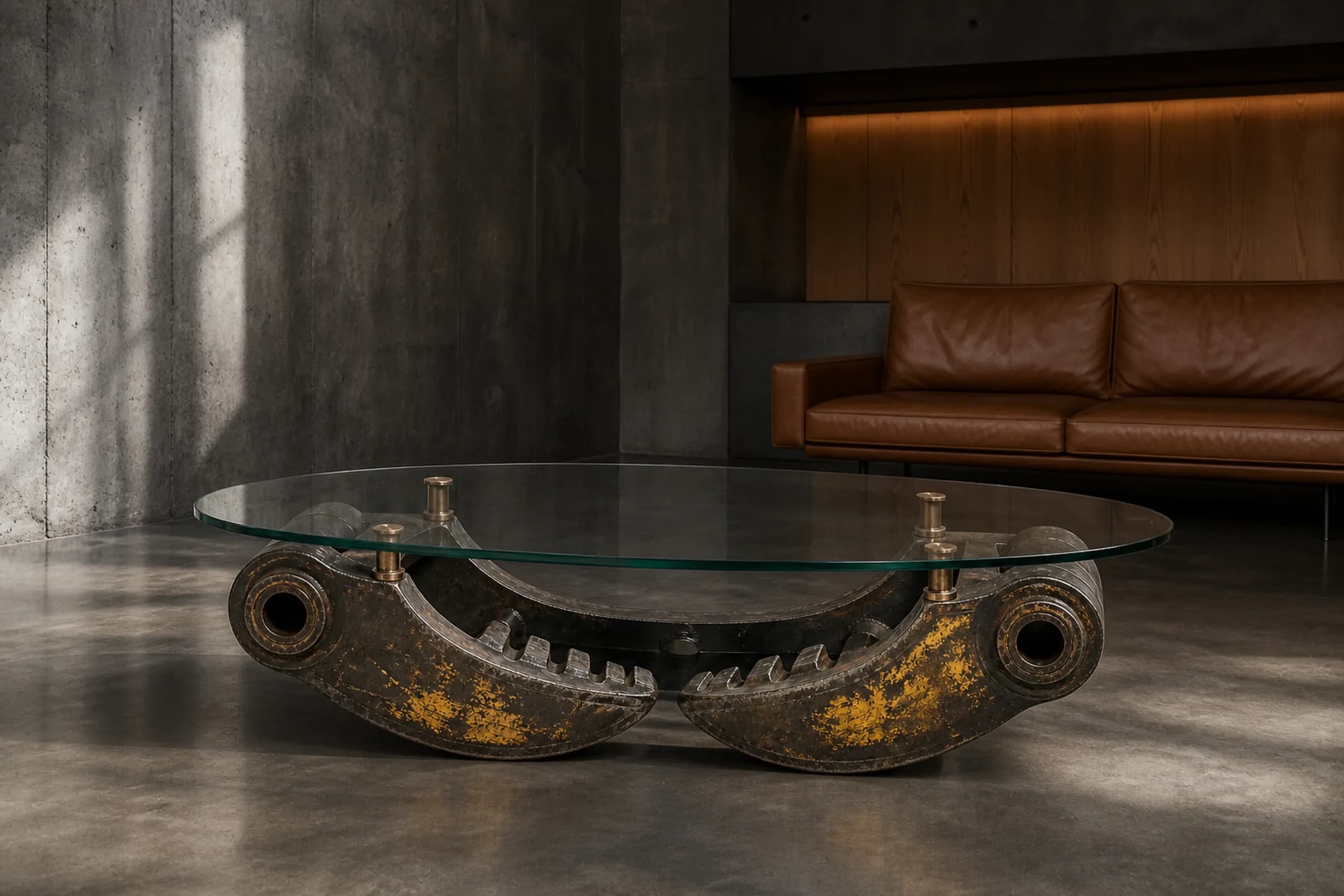
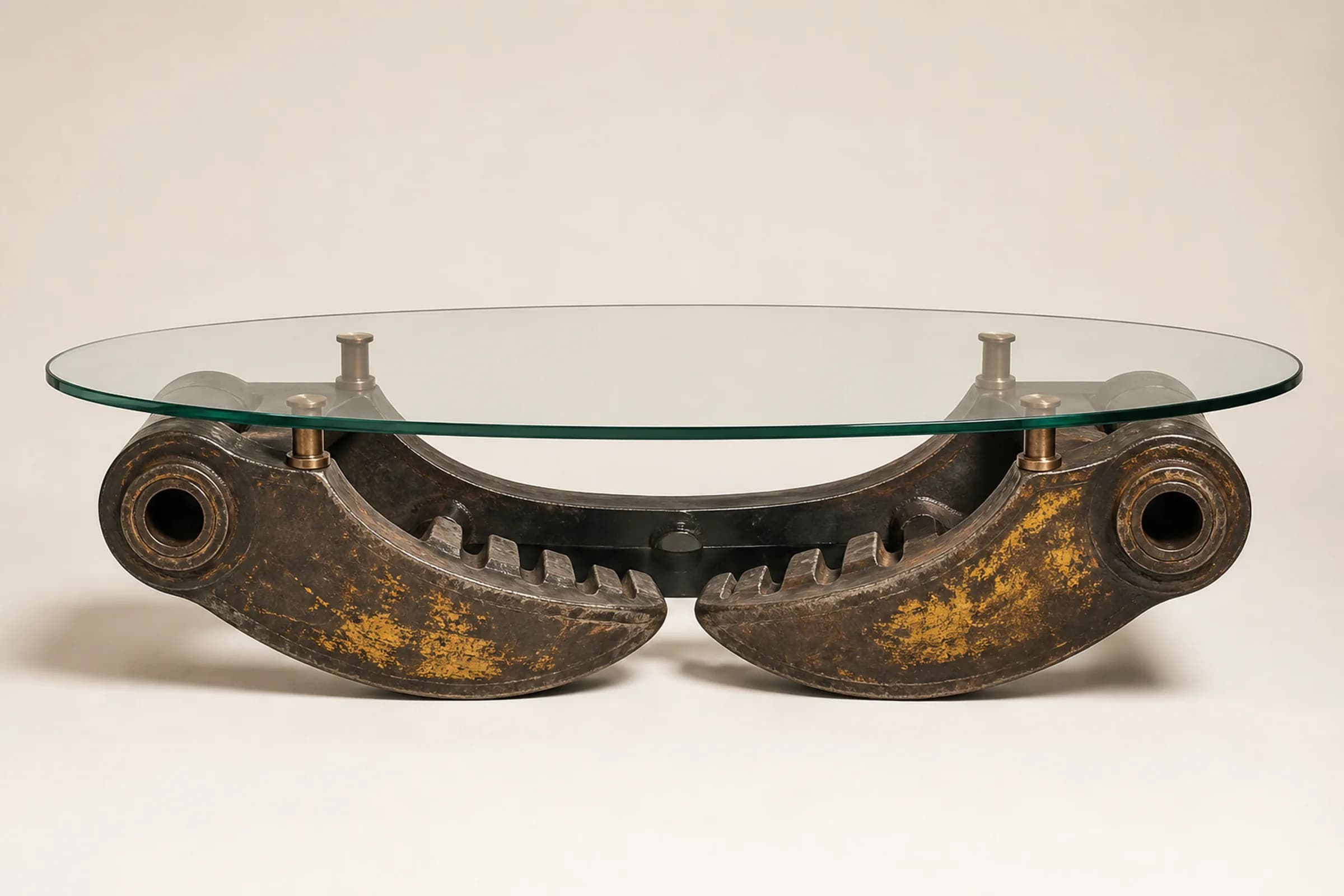
Considering a commission?
Tell us about the space and the location. We answer with availability, customisation scope and a transport estimate.