LEXICONMaterials and finishes
Mill scale
Also called: Rolling scale, hot-rolled finish
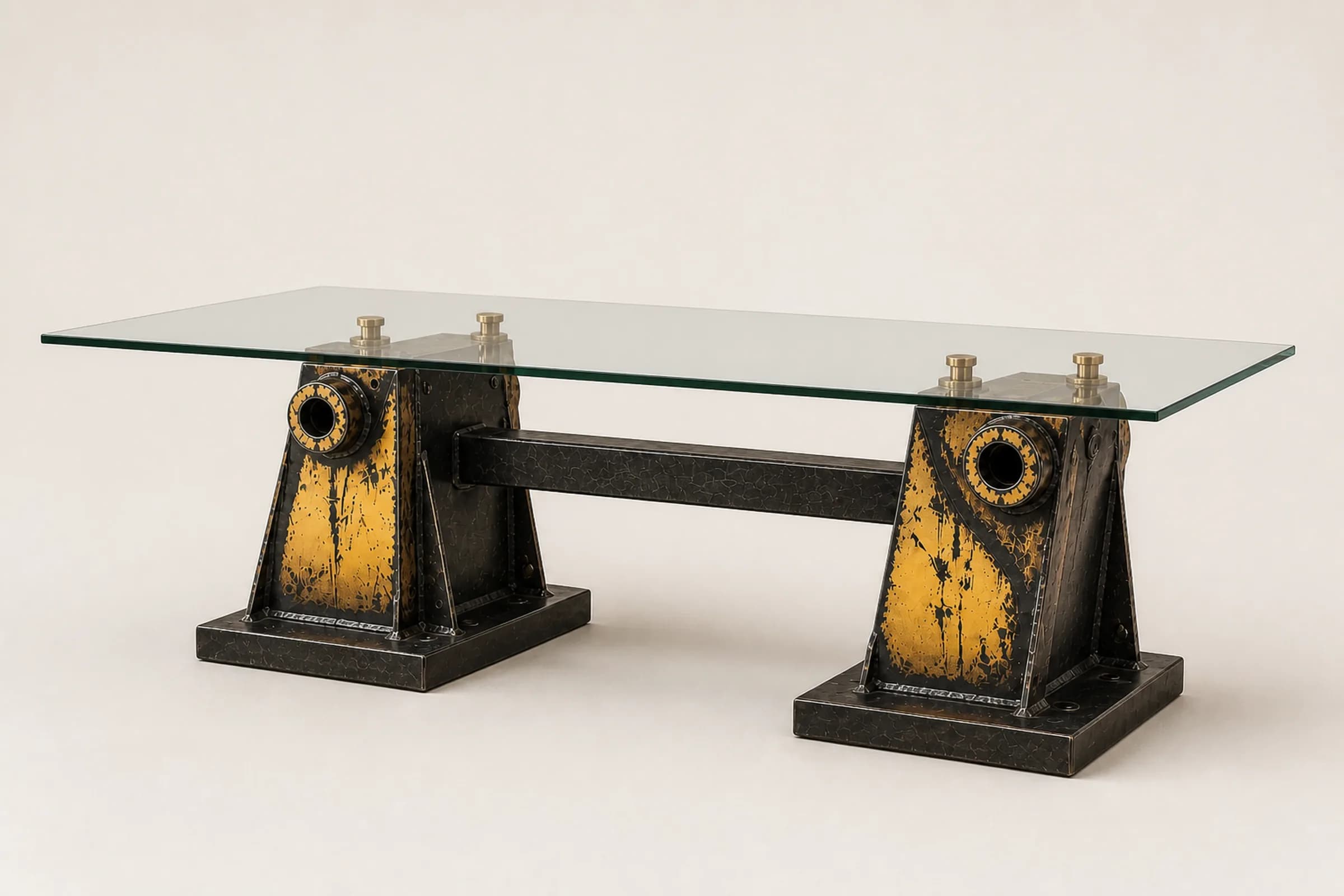
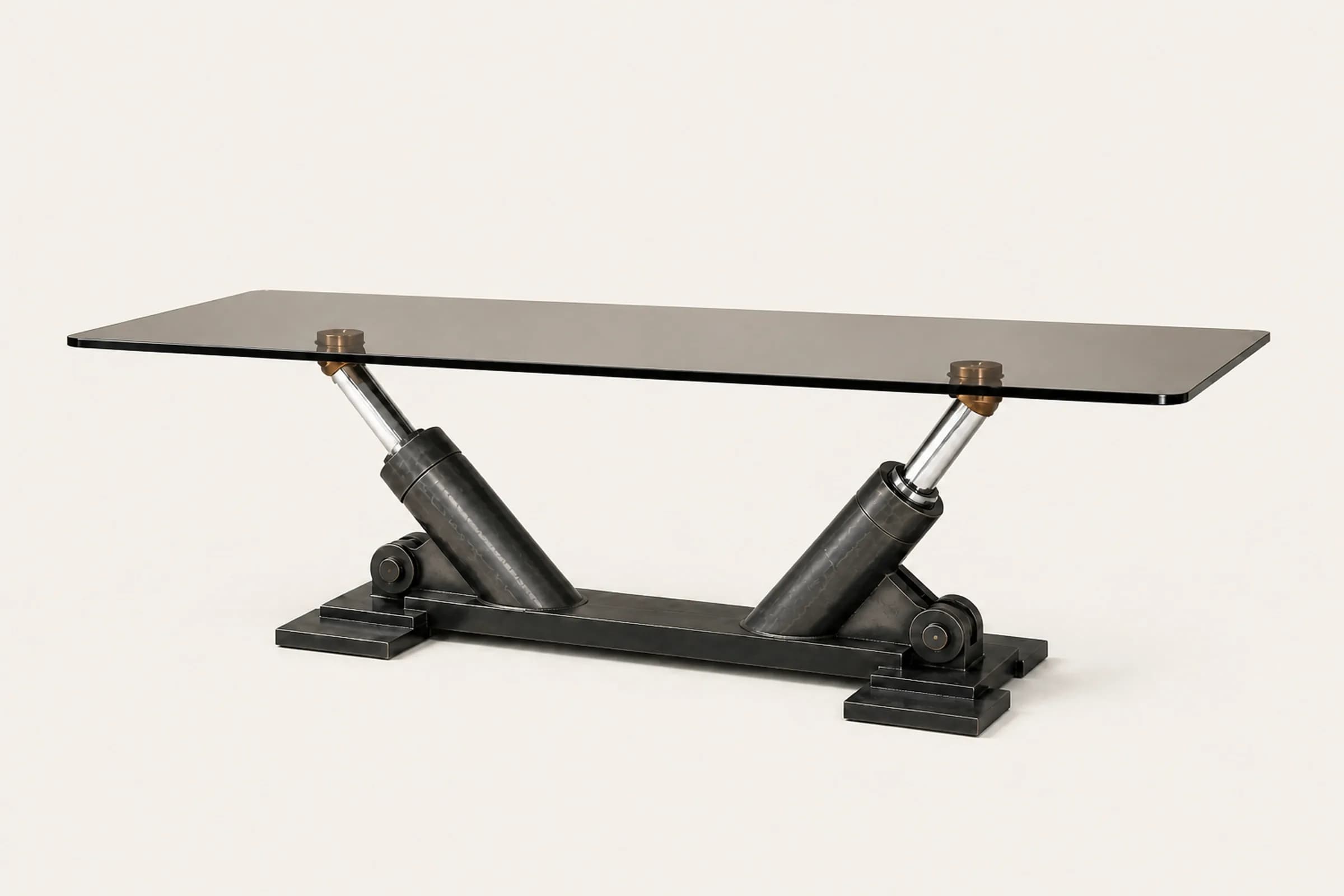
The blue-grey layer of iron oxides that forms on steel during hot rolling and remains on the surface as it leaves the mill — hard, adherent and frequently mistaken for a deliberate dark finish.
What it is
At rolling temperature, steel reacts with air to form a layered oxide skin: wüstite closest to the metal, then magnetite, then hematite at the surface. Cooling and rolling leave it bonded to the plate as a hard blue-grey layer under a hundred microns thick, with the mottled, slightly iridescent character that makes hot-rolled steel look the way it does.
Why it cannot simply be sealed and forgotten
Mill scale is cathodic to the steel beneath it. Where it remains continuous, it does slow corrosion; where it cracks or lifts — and it does both, under flexing, impact or thermal cycling — corrosion at the break is accelerated rather than slowed, because a small anodic area is coupled to a large cathodic one. Intact scale is worth keeping and sealing. Lifting scale must be removed, since coating over it traps an active problem under the finish. Structural coating standards require its complete removal for this reason.